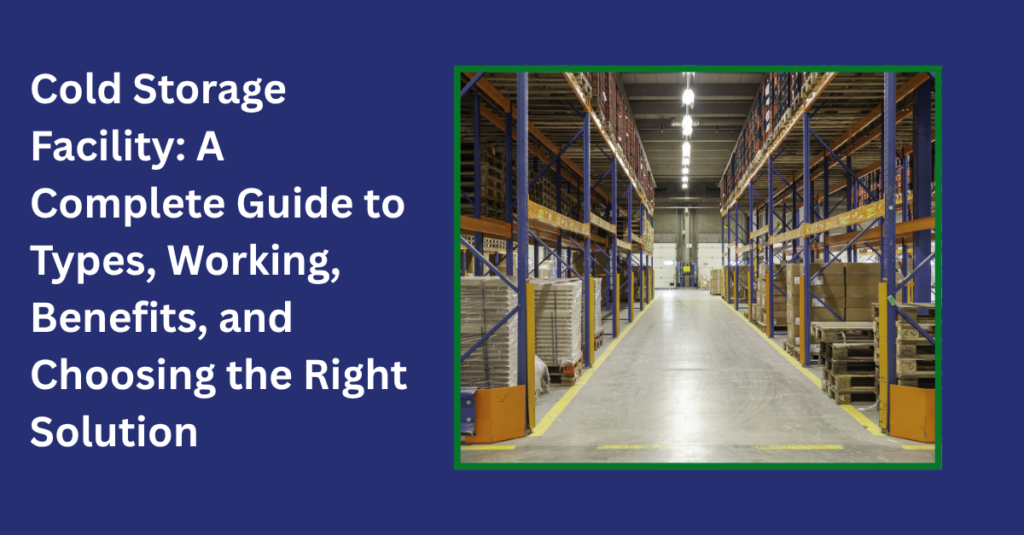
A cold storage facility is a temperature-controlled space designed to preserve perishable products such as food, dairy, frozen goods, seafood, and pharmaceuticals. By maintaining the right temperature and humidity, it extends shelf life, reduces spoilage, ensures product safety, and supports an efficient cold chain from storage to distribution.
Keeping temperature-sensitive products fresh and safe depends on choosing the right cold storage facility. Whether you manage a food brand, cloud kitchen, dairy business, or frozen food company, understanding how cold storage works helps improve product quality and reduce losses. At JustDeliveries, we support businesses with technology-enabled cold chain logistics, refrigerated transportation, and reliable storage solutions that help products move efficiently across the supply chain. In fast-growing markets, dependable cold chain logistics bangalore support helps businesses maintain this efficiency at scale.
What Is a Cold Storage Facility?
A cold storage facility is a specialised warehouse where products are stored under controlled temperature and humidity conditions to maintain their quality, freshness, and safety. Unlike conventional warehouses, these facilities are equipped with refrigeration systems, insulation, and monitoring technology that keep products within specific temperature ranges throughout their storage period.
Businesses rely on cold storage for products that can quickly lose quality if exposed to unsuitable temperatures. These include fresh produce, dairy products, frozen foods, meat, seafood, beverages, confectionery, and certain pharmaceutical products.
Beyond preserving products, a cold storage facility also helps businesses meet food safety standards, minimise wastage, and maintain consistent product quality throughout the supply chain. Comprehensive cold storage solutions that combine warehousing with technology make this consistency easier to achieve.
How Does a Cold Storage Facility Work?
Every cold storage system combines specialised infrastructure with continuous monitoring to create a stable storage environment.
Refrigeration System
Industrial refrigeration equipment continuously removes heat from the storage space to maintain the required temperature for different products.
Insulation and Temperature Control
High-quality insulated panels minimise heat transfer from outside, allowing the refrigeration system to operate efficiently while reducing energy consumption.
Air Circulation and Humidity Management
Proper airflow ensures that temperature remains consistent throughout the warehouse. Humidity control also helps prevent dehydration, frost build-up, or moisture damage depending on the stored products.
Real-Time Monitoring
Modern facilities use sensors to monitor temperature and humidity around the clock. Any deviation can be identified immediately, helping businesses protect valuable inventory.
Types of Cold Storage Facilities
Different products require different storage conditions. Selecting the appropriate cold storage facility depends on the temperature range and storage duration required.
Chilled Storage
Typically maintained between 0°C and 5°C, chilled storage is suitable for dairy products, fruits, vegetables, beverages, and ready-to-eat food.
Frozen Storage
Frozen storage generally operates between -18°C and -25°C for frozen snacks, meat, seafood, desserts, and packaged frozen foods.
Blast Freezing
Blast freezers rapidly lower product temperatures, helping preserve texture, flavour, and nutritional quality before long-term storage.
Controlled Atmosphere Storage
These facilities regulate oxygen, carbon dioxide, and humidity levels to extend the freshness of produce such as apples, pears, and other fruits. Understanding what is cold storage warehouse infrastructure can help businesses choose the right facility type for these specialised needs.
Modular Cold Rooms
Flexible cold rooms are ideal for businesses that require customised storage capacity without investing in large warehouse infrastructure.
Temperature Ranges for Different Products
| Storage Type | Typical Temperature | Common Products |
| Chilled | 0°C to 5°C | Dairy, fruits, vegetables, beverages |
| Frozen | -18°C to -25°C | Frozen foods, seafood, meat |
| Deep Frozen | Below -25°C | Long-term frozen inventory |
| Blast Freezing | Up to -40°C | Fresh meat, seafood, prepared foods |
Maintaining these temperature ranges consistently is essential to preserving quality and meeting food safety requirements.
Industries That Depend on Cold Storage
A modern cold storage facility plays an important role across several industries.
- Food and beverage manufacturers
- Dairy companies
- Frozen food brands
- Meat and seafood suppliers
- Cloud kitchens
- Restaurant chains
- Quick service restaurants (QSRs)
- Pharmaceutical businesses
- FMCG companies
- Fresh produce distributors
As consumer demand for faster deliveries grows, cold storage has become increasingly important for businesses serving multiple cities and retail channels. Nationwide frozen food transportation india services help businesses meet this growing demand across regions.
Benefits of a Cold Storage Facility
Choosing the right cold storage facility provides several operational and commercial advantages.
Extends Product Shelf Life
Controlled temperatures help preserve freshness for longer periods without compromising quality.
Reduces Food Waste
Maintaining proper storage conditions significantly lowers spoilage caused by temperature fluctuations.
Maintains Product Quality
Freshness, taste, texture, and nutritional value remain consistent throughout storage and transportation.
Supports Regulatory Compliance
Temperature-controlled storage helps businesses comply with food safety regulations and quality standards.
Improves Inventory Management
Reliable storage allows businesses to better plan production, distribution, and seasonal demand.
Enables Business Growth
Scalable storage solutions make it easier for brands to expand into new markets while maintaining product consistency. Understanding how much cold storage cost can help businesses plan this expansion more accurately.
Choosing the Right Cold Storage Facility
Not every storage solution is suitable for every business. Before selecting a cold storage facility, consider the following factors:
- Required temperature range
- Type of products stored
- Storage capacity
- Warehouse location
- Compliance and certifications
- Technology for temperature monitoring
- Scalability for future growth
- Integration with transportation services
Working with a logistics partner that combines storage and refrigerated transportation can simplify operations and improve visibility across the supply chain. Businesses in the capital region can rely on dedicated cold chain logistics delhi support to achieve this integration.
Cold Storage and the Rise of Quick Commerce
The rapid growth of quick commerce has transformed how temperature-sensitive products move through the supply chain. Consumers now expect groceries, dairy products, frozen foods, beverages, and ready-to-cook meals to arrive within minutes while maintaining freshness and safety.
To support this evolving model, businesses require dependable cold-chain logistics that connect fulfilment centres, distribution hubs, and dark stores without compromising temperature integrity. In fast-growing markets, dependable frozen food transport bangalore services help maintain this connectivity across regions.
JustDeliveries powers temperature-controlled logistics for leading quick commerce platforms, including Swiggy Instamart, Zepto, Blinkit, Amazon, JioMart, and BigBasket. The company specialises in hub-to-hub and dark store deliveries, ensuring every shipment is transported under controlled temperatures with real-time GPS tracking and continuous temperature monitoring. This enables food brands to maintain product quality while meeting the speed and reliability expected by today’s consumers. This includes dedicated cold chain logistics hyderabad operations supporting the region’s growing quick commerce sector.
Technology That Improves Cold Chain Visibility
Technology has become just as important as refrigeration in modern cold chain operations.
JustDeliveries offers its proprietary HQ App, a central dashboard that gives food and beverage brands complete visibility across their logistics operations. Businesses can monitor live vehicle locations, temperature compliance, service-level agreements (SLAs), billing, and AI-driven performance insights from one platform. This real-time visibility helps identify operational trends, improve delivery performance, and support faster decision-making.
As highlighted by Mansi Mahansaria, building a resilient cold chain requires more than transportation—it requires continuous visibility, proactive monitoring, and data-driven optimisation that helps businesses respond quickly to changing operational needs.
Why End-to-End Cold Chain Matters
A cold storage facility performs best when it is integrated into a larger cold chain ecosystem. Storage alone cannot preserve product quality if transportation, handling, and distribution are not equally reliable.
Businesses benefit from working with partners that offer refrigerated transportation, temperature monitoring, warehouse visibility, and dedicated logistics support throughout the journey. This integrated approach reduces operational complexity while improving consistency across every shipment.
According to Mansi Mahansaria, successful food supply chains are built on dependable execution supported by technology, transparent communication, and operational excellence from warehouse to final delivery point.
Conclusion
A reliable cold storage facility is essential for protecting product quality, reducing waste, and supporting business growth. From chilled storage to frozen warehousing, selecting the right solution depends on your products, operational requirements, and future expansion plans.
For food and beverage businesses looking to strengthen their cold chain, JustDeliveries offers technology-enabled cold storage, refrigerated transportation, real-time temperature monitoring, and nationwide logistics support. Whether you’re supplying retail stores, restaurants, cloud kitchens, or quick commerce platforms, JustDeliveries helps you maintain product integrity from warehouse to destination with complete visibility and operational efficiency.
Frequently Asked Questions
Q1. What is a cold storage facility?
A cold storage facility is a temperature-controlled warehouse used to store perishable products such as food, dairy, frozen goods, seafood, and pharmaceuticals while maintaining their quality and safety.
Q2. How does a cold storage facility preserve food quality?
It maintains consistent temperature, humidity, and airflow, preventing spoilage and helping products retain their freshness, texture, and nutritional value.
Q3. Why is a cold storage facility important for food businesses?
It reduces food wastage, extends shelf life, supports food safety compliance, and ensures products remain in excellent condition before distribution.
Q4. What products are commonly stored in cold storage facilities?
Fresh fruits, vegetables, dairy products, frozen foods, seafood, meat, beverages, confectionery, and selected pharmaceutical products are commonly stored.
Q5. Can a cold storage facility support quick commerce operations?
Yes. Modern facilities work alongside refrigerated transportation to supply distribution hubs and dark stores efficiently while maintaining temperature-controlled conditions.
Q6. Is temperature monitoring necessary in cold storage?
Yes. Continuous temperature monitoring helps detect fluctuations early, protects inventory, and ensures compliance with food safety standards.
Q7. Will choosing the right cold storage partner improve supply chain efficiency?
Yes. Reliable storage combined with integrated transportation, real-time tracking, and operational visibility helps improve inventory management, delivery performance, and customer satisfaction.
Q8. How do businesses choose the right cold storage facility?
Businesses should evaluate temperature requirements, storage capacity, location, technology, compliance standards, scalability, and whether the provider offers integrated cold chain logistics.

Mansi Mahansaria
I’m Mansi Mahansaria, CEO and Founder of JustDeliveries, a B2B logistics company specializing in the food and beverage sector. With a background in Chemical Technology (ICT Mumbai), an MBA (FMS Delhi), and experience at IDFC Private Equity and Tata Group, I’ve built a plug-and-play logistics network helping F&B brands scale efficiently. I also share insights on entrepreneurship and logistics at industry and academic events.