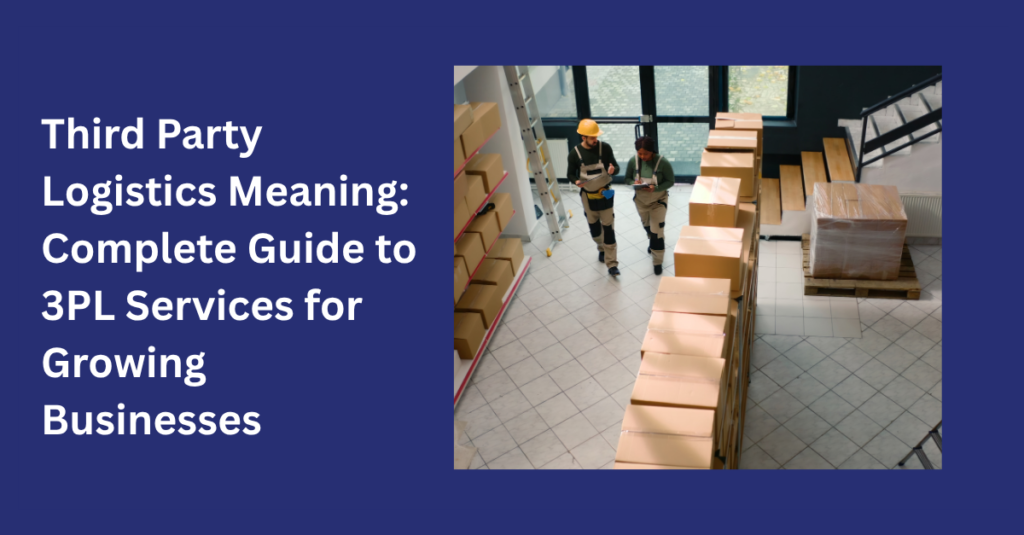
Third-party logistics (3PL) refers to outsourcing supply chain operations such as warehousing, transportation, inventory management, and order fulfillment to a specialized logistics provider. Businesses use 3PL services to reduce operational costs, improve delivery efficiency, scale faster, and streamline distribution without investing heavily in infrastructure.
If you’re wondering what is third party logistics, it simply means outsourcing logistics operations to an external expert that manages storage, transportation, and fulfillment on behalf of a business. As supply chains become more complex, companies increasingly rely on providers like JustDeliveries to improve efficiency, reduce delivery delays, and scale operations seamlessly across cities and regions.
What Is Third Party Logistics?
The third party logistics meaning refers to the practice of outsourcing logistics and supply chain operations to a specialized external company. These providers handle services such as warehousing, transportation, inventory management, packaging, and delivery fulfillment.
Instead of managing logistics internally, businesses partner with 3PL companies to simplify operations and focus on growth, sales, and customer experience.
In simple words, if a company manufactures or sells products but another company stores, transports, and delivers those products, that logistics partner is called a third-party logistics provider.
The concept has become increasingly important for ecommerce brands, food businesses, retailers, FMCG companies, and cloud kitchens that require reliable delivery systems and scalable logistics support.
How Does a 3PL Company Work?
A third-party logistics provider acts as an operational extension of a business.
Here’s how the process usually works:
- Products are stored in warehouses or fulfillment centers.
- Inventory is tracked digitally.
- Orders are received from stores, distributors, or customers.
- The 3PL provider packs and dispatches the products.
- Transportation teams handle deliveries.
- Returns and replacements are managed when needed.
Modern 3PL companies also use technology tools for:
- real-time shipment tracking
- inventory visibility
- temperature monitoring
- route optimization
- automated replenishment planning
For businesses dealing with perishables or high-volume distribution, efficient logistics management directly impacts profitability and customer satisfaction.
Types of Third Party Logistics Services
Understanding the different services offered by 3PL companies helps businesses choose the right operational partner.
Warehousing and Storage
Warehousing includes inventory storage, stock management, and distribution handling.
Advanced providers offer third party logistics warehousing solutions including:
- cold storage facilities
- temperature-controlled inventory
- distribution hubs
- multi-city storage networks
This is especially critical for food and beverage brands where freshness and shelf life matter.
Transportation and Freight Management
Transportation services involve moving goods between warehouses, retail outlets, distributors, and customers.
These services may include:
- intra-city logistics
- intercity transportation
- refrigerated transportation
- scheduled replenishment
- route planning
Efficient transportation reduces delays, minimizes spoilage, and improves delivery consistency.
Order Fulfillment Services
Order fulfillment includes:
- picking and packing
- dispatch management
- retail replenishment
- B2B order processing
Businesses that experience fluctuating demand often rely on fulfillment partners to scale operations quickly without building internal infrastructure.
Reverse Logistics
Reverse logistics involves managing returns, damaged inventory, replacements, and unsold stock.
A strong reverse logistics system helps businesses:
- reduce losses
- improve customer experience
- streamline inventory cycles
Benefits of Using Third Party Logistics Providers
The growing demand for outsourced logistics is directly linked to operational efficiency and business scalability.
Reduced Operational Costs
Building warehouses, hiring logistics staff, and maintaining transportation fleets require significant investment.
3PL providers allow businesses to:
- avoid infrastructure costs
- reduce fixed operational expenses
- access shared logistics networks
This makes expansion more financially manageable.
Faster Scalability
One of the biggest advantages of outsourcing logistics is scalability.
Businesses can:
- expand into new cities quickly
- increase delivery volumes during peak seasons
- adapt operations without large capital expenditure
This flexibility is particularly valuable for growing ecommerce and food delivery brands.
Improved Delivery Efficiency
Experienced logistics providers optimize:
- delivery routes
- inventory movement
- warehouse operations
This leads to:
- faster deliveries
- lower transit times
- improved order accuracy
In competitive industries, delivery performance directly affects customer retention.
Access to Logistics Technology
Many businesses struggle with inventory visibility and operational coordination.
Modern 3PL providers offer:
- GPS-enabled tracking
- real-time dashboards
- automated reporting
- digital inventory systems
Technology-driven logistics improves operational transparency and decision-making.
Better Temperature-Controlled Logistics
For food and beverage companies, cold chain logistics is essential.
Temperature-sensitive products require:
- refrigerated storage
- controlled transportation
- fast replenishment cycles
Reliable cold-chain logistics reduces spoilage and helps maintain product quality throughout the supply chain.
Industries That Commonly Use 3PL Services
The third party logistics meaning has evolved significantly as industries increasingly depend on outsourced supply chain support.
Ecommerce and Retail
Ecommerce brands use 3PL services for:
- inventory management
- warehousing
- fulfillment
- returns handling
Fast delivery expectations have made logistics efficiency a major competitive advantage.
Food and Beverage Industry
F&B companies require:
- cold-chain transportation
- scheduled replenishment
- freshness management
- temperature monitoring
Specialized logistics support helps maintain food quality and operational consistency.
Quick Commerce Brands
Quick-commerce businesses rely on rapid fulfillment systems and hyperlocal delivery networks.
Quick commerce logistics providers help manage:
- dark store replenishment
- inventory movement
- last-mile coordination
Restaurant Chains and Cloud Kitchens
Cloud kitchens and restaurant chains often partner with logistics providers to streamline ingredient movement and improve supply chain reliability.
FMCG Companies
FMCG brands require large-scale distribution systems capable of handling:
- frequent deliveries
- retail replenishment
- multi-location inventory management
When Should a Business Use a 3PL Partner?
Businesses typically seek logistics support when operations become difficult to manage internally.
Common signs include:
- delayed deliveries
- inventory losses
- rising transportation costs
- inconsistent fulfillment
- expansion into multiple cities
If operational complexity begins affecting customer experience, partnering with a third party logistics company becomes a strategic necessity.
The third party logistics meaning is closely associated with operational scalability because businesses use 3PL support to grow faster while maintaining efficiency.
Challenges Businesses Face Without a Reliable 3PL
Managing logistics independently often creates operational bottlenecks.
Some common challenges include:
- Poor Inventory Visibility: Without integrated systems, businesses struggle to track stock movement accurately.
- Delivery Delays: Unoptimized transportation networks lead to inconsistent delivery schedules and customer dissatisfaction.
- High Operational Costs: Maintaining warehouses, fleets, and manpower internally increases long-term expenses.
- Product Damage and Spoilage: For perishables, inefficient cold-chain handling can lead to heavy inventory losses.
- Limited Scalability: Businesses attempting to scale without logistics infrastructure often face fulfillment delays and operational breakdowns.
How to Choose the Right Third Party Logistics Provider
Selecting the right logistics partner requires careful evaluation.
Industry Expertise
A logistics company with sector-specific expertise understands operational requirements better.
For example, food logistics differs significantly from fashion or electronics logistics.
Technology Capabilities
Look for providers that offer:
- real-time tracking
- automated reporting
- inventory dashboards
- temperature monitoring
Technology improves visibility and accountability.
Geographic Reach
Businesses expanding across cities require logistics partners with established transportation and warehousing networks. For instance, companies operating in the capital region benefit greatly from a reliable third party logistics partner in Delhi with strong local infrastructure.
Scalability and Flexibility
A strong logistics provider should adapt to changing business volumes without operational disruption.
Compliance and Safety Standards
This is especially important for food, pharmaceuticals, and temperature-sensitive products.
Why Third Party Logistics Is Growing Rapidly in India
India’s logistics ecosystem is evolving rapidly due to:
- ecommerce growth
- rising urban consumption
- quick-commerce expansion
- increased demand for cold-chain infrastructure
Businesses now prioritize faster fulfillment, inventory optimization, and operational agility.
The third party logistics meaning has become increasingly relevant because companies want to improve delivery efficiency without investing heavily in infrastructure and fleet management.
According to logistics industry observations shared by supply chain specialists including Mansi Mahansaria, businesses are increasingly prioritizing tech-enabled distribution systems that improve reliability and scalability.
Third Party Logistics for Food & Beverage Brands
The food and beverage sector has unique logistics requirements that standard transportation systems often fail to address.
Challenges in F&B Logistics
Food businesses face issues such as:
- spoilage
- inconsistent temperature control
- delayed replenishment
- inventory wastage
These operational gaps can directly impact profitability and brand reputation.
Importance of Cold Chain Infrastructure
Cold-chain logistics ensures products remain within controlled temperature ranges throughout transportation and storage.
This is essential for:
- dairy products
- frozen food transportation
- beverages
- ready-to-eat items
- restaurant supply chains
Why Specialized 3PL Partners Matter
Specialized logistics providers understand the operational complexity of perishable supply chains.
Companies like JustDeliveries focus specifically on food and beverage logistics by offering:
- cold-chain transportation
- tech-enabled tracking
- scheduled replenishment
- intra-city distribution
- scalable logistics infrastructure
This helps brands maintain consistency, reduce wastage, and improve supply chain visibility.
Industry experts such as Mansi Mahansaria have also highlighted the growing need for specialized logistics ecosystems that are built specifically for modern food businesses.
Conclusion
Understanding the third party logistics meaning is essential for businesses aiming to improve supply chain efficiency and scale sustainably. From warehousing and transportation to fulfillment and cold-chain management, 3PL providers play a critical role in modern business operations.
As customer expectations continue to evolve, reliable logistics partnerships are becoming a long-term strategic advantage rather than just an operational necessity.
For food and beverage businesses in particular, choosing a specialized logistics partner can significantly improve delivery consistency, inventory management, and operational scalability.
Looking for a Reliable Third Party Logistics Partner?
If your business depends on fast, reliable, and temperature-controlled logistics, partnering with the right 3PL provider can transform your supply chain operations.
JustDeliveries specializes in tech-enabled cold-chain logistics solutions designed specifically for food and beverage brands. From warehousing and replenishment to intra-city distribution and temperature-sensitive transportation, JustDeliveries helps businesses streamline operations while maintaining product quality and delivery efficiency.
Whether you’re scaling across cities, managing quick-commerce fulfillment, or optimizing your cold-chain network, JustDeliveries provides flexible logistics solutions tailored for modern F&B businesses.
Frequently Asked Questions
Q1. What is third party logistics in simple words?
Third-party logistics means outsourcing storage, transportation, and delivery operations to an external logistics company that manages supply chain activities for a business.
Q2. How does third-party logistics help businesses grow?
3PL providers help businesses reduce operational complexity, improve delivery efficiency, lower infrastructure costs, and expand into new markets faster.
Q3. Can small businesses use 3PL services?
Yes. Small businesses often use 3PL providers to avoid investing in warehouses, transportation fleets, and logistics manpower during early growth stages.
Q4. Is third-party logistics suitable for food businesses?
Yes. Food businesses benefit significantly from temperature-controlled storage, cold-chain transportation, and scheduled replenishment systems provided by specialized 3PL companies.
Q5. Why do ecommerce companies use third-party logistics?
Ecommerce companies use 3PL providers to improve order fulfillment speed, manage inventory efficiently, and handle increasing delivery volumes during peak demand periods.
Q6. What is the difference between 3PL and 4PL?
A 3PL provider handles logistics operations directly, while a 4PL provider manages the overall supply chain strategy and coordinates multiple logistics partners.
Q7. Will outsourcing logistics reduce operational costs?
In many cases, yes. Outsourcing logistics reduces capital investment in warehouses, fleets, staffing, and technology infrastructure.
Q8. How do businesses choose the right 3PL provider?
Businesses should evaluate industry expertise, technology capabilities, delivery network, scalability, cold-chain infrastructure and operational reliability.

Mansi Mahansaria
I’m Mansi Mahansaria, CEO and Founder of JustDeliveries, a B2B logistics company specializing in the food and beverage sector. With a background in Chemical Technology (ICT Mumbai), an MBA (FMS Delhi), and experience at IDFC Private Equity and Tata Group, I’ve built a plug-and-play logistics network helping F&B brands scale efficiently. I also share insights on entrepreneurship and logistics at industry and academic events.