
Blog
Frozen Food Transportation Services for F&B Brands in India
29 October 2026By Abhishek Kumar
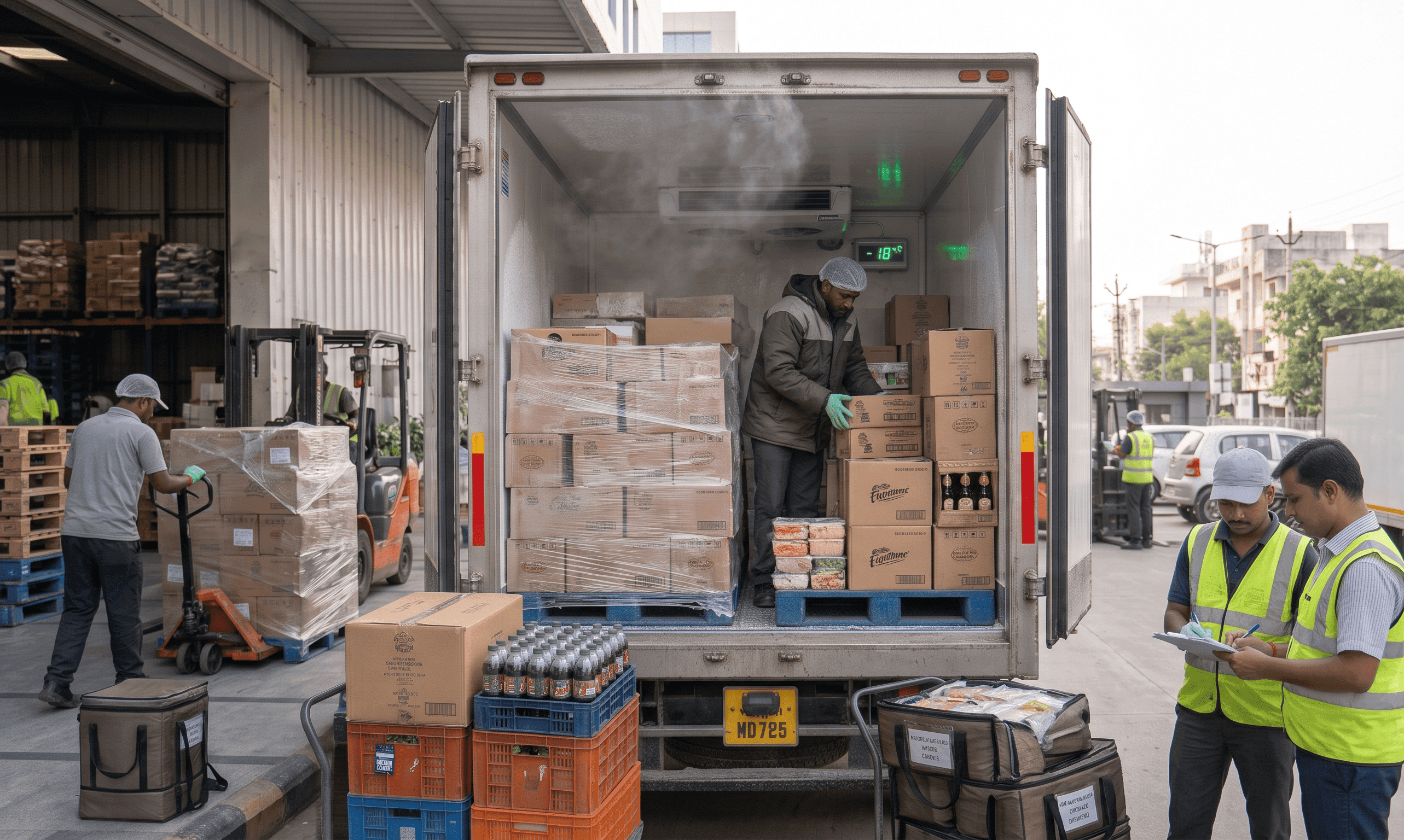
Frozen food transportation services for F&B brands in India use temperature-controlled vehicles, appropriate handling procedures and shipment monitoring to move frozen products safely between manufacturers, warehouses, distribution centres and business outlets. Reliable cold chain logistics helps maintain product quality, manage spoilage risks, improve delivery coordination and support consistent distribution across multiple locations.
Frozen food transportation services for F&B brands in India help businesses move frozen products while maintaining the required storage conditions throughout transit. JustDeliveries supports food and beverage businesses with temperature-controlled transportation, on-demand vehicle options and cold storage solutions. Choosing the right logistics model can make a significant difference to distribution efficiency, especially as frozen food businesses expand.
What Are Frozen Food Transportation Services for F&B Brands in India?
Frozen food transportation involves moving products such as ice cream, frozen snacks, ready-to-cook meals, meat and seafood in vehicles equipped to maintain the required temperatures. Unlike ordinary freight, frozen goods transport F&B India operations must account for product sensitivity, loading practices, transit times and temperature monitoring.
For food manufacturers, restaurant chains and distributors, these services connect production facilities, cold storage warehouses, distribution centres and individual outlets.
A reliable transportation arrangement typically includes:
- Temperature-controlled vehicles: Equipment suited to the product’s specified temperature range.
- Planned dispatch and delivery: Coordinated schedules that reduce unnecessary delays.
- Appropriate handling: Loading and unloading practices that minimise exposure to unsuitable conditions.
- Shipment visibility: Tracking and delivery records that help businesses monitor consignments.
- Operational coordination: Communication between dispatch teams, drivers, warehouses and receiving locations.
The objective is to maintain suitable conditions throughout transportation while ensuring products reach their intended destinations on schedule.
Why Is Cold Chain Logistics Important for F&B Brands?
A frozen product’s quality depends on more than the condition of the vehicle at dispatch. Storage, loading, transportation and receiving procedures must work together to maintain the required conditions.
An effective cold chain for food and beverage brands helps businesses manage several operational priorities.
Maintaining Product Quality
Temperature fluctuations can affect product texture, appearance and quality. Some products may also become unsuitable for sale if handling or storage conditions are compromised.
Appropriate vehicle settings, temperature checks and documented handling procedures help reduce these risks.
Reducing Spoilage and Product Loss
Spoilage and rejected deliveries can increase operating costs and disrupt inventory planning. Consistent cold chain practices help businesses identify potential problems and respond before they affect more stock.
Supporting Consistent Outlet Replenishment
QSR chains, cloud kitchens and restaurant groups often need frozen ingredients delivered according to specific production and service schedules. Dependable transportation helps maintain stock availability across multiple outlets.
Protecting Customer Confidence
Product quality affects customer experience and brand reputation. Reliable distribution practices help food businesses maintain consistent standards as order volumes and distribution networks grow.
Key Features to Look for in Frozen Food Transportation Services
When comparing frozen food transportation services for F&B brands in India, businesses should evaluate operational capabilities rather than relying on price alone.
1. Suitable Temperature-Controlled Vehicles
The vehicle must support the temperature requirements of the specific products being transported. Frozen food categories can have different handling needs, so businesses should confirm equipment suitability before booking.
Ask the provider about temperature monitoring, equipment checks and procedures for responding to temperature deviations.
2. Shipment Tracking and Delivery Visibility
Live tracking helps logistics teams follow shipments and coordinate with receiving locations. Depending on the service, useful visibility features may include:
- GPS-based vehicle tracking.
- Temperature records or monitoring alerts.
- Delivery status updates.
- Proof of delivery.
- Exception reporting and escalation procedures.
These features improve operational oversight and help businesses investigate delays or handling concerns.
3. Reliable Scheduling and Handling
Delivery planning should account for route conditions, receiving hours, loading requirements and the time needed to unload products. Well-coordinated schedules reduce avoidable waiting and help maintain product conditions.
4. Flexible Fleet Options
Businesses with recurring distribution requirements may benefit from planned vehicle arrangements. Companies with changing order volumes or occasional urgent shipments may need on-demand options.
The best model depends on shipment frequency, volume, routes and service requirements.
How to Choose the Best Frozen Food Logistics Company in India
Finding the best frozen food logistics company India businesses can rely on requires a practical assessment of service quality, equipment, coverage and operating costs.
Consider the following factors before making a decision:
- Product compatibility: Confirm that the provider can maintain the required conditions for your frozen products.
- Route coverage: Check whether the service supports your warehouses, distribution centres and business outlets.
- Delivery performance: Ask about service-level commitments, scheduling procedures and how delays are handled.
- Technology: Evaluate tracking, reporting and temperature visibility capabilities.
- Scalability: Determine whether the provider can accommodate changes in shipment volume or distribution frequency.
- Cost structure: Compare vehicle charges, minimum booking requirements, waiting time policies and any additional fees.
- Accountability: Establish clear communication channels and procedures for handling damaged goods, delays or temperature deviations.
A lower transport rate does not necessarily mean a lower total operating cost. Missed delivery slots, wasted stock and inconsistent service can create additional expenses.
Frozen Food Supply Chain Management in India: From Storage to Delivery
Frozen food supply chain management India businesses require involves coordinating inventory, storage, transportation and distribution. Each stage must support the product’s handling requirements.
Cold Storage and Inventory Management
Cold storage facilities help maintain suitable conditions before products are dispatched. Accurate inventory records, appropriate stock rotation and clear dispatch schedules help businesses coordinate warehouse operations with transportation.
Distribution to Restaurants, QSRs and Retail Networks
Food brands may need to distribute frozen products to central kitchens, restaurant outlets, dark stores, distribution centres or other business locations. Delivery planning should reflect the receiving location’s operating hours and storage capacity.
Technology-Enabled Coordination
Digital inventory systems, shipment tracking and delivery records help logistics teams coordinate multiple stages of distribution. Where temperature-monitoring data is available, it can also support investigations into potential cold chain interruptions.
An integrated approach to refrigerated logistics food companies use can improve visibility across the supply chain and reduce avoidable operational gaps.
Common Challenges in Frozen Food Transportation and How to Address Them
Temperature Fluctuations During Transit
Solution: Confirm vehicle suitability, establish product-specific temperature requirements and follow documented procedures for monitoring and responding to deviations.
Traffic and Delivery Delays
Solution: Plan realistic routes, coordinate receiving slots and establish escalation procedures for unexpected delays.
Inconsistent Distribution Across Locations
Solution: Standardise dispatch procedures, delivery documentation and communication across warehouses and receiving outlets.
Limited In-House Infrastructure
Solution: Evaluate outsourced transportation, cold storage or combined logistics services where these better match the business’s distribution requirements.
Frozen food transportation services for F&B brands in India work most effectively when transport providers and food businesses share clear responsibilities for packaging, storage, loading, monitoring and delivery acceptance.
How JustDeliveries Supports Frozen Food Transportation for F&B Brands
JustDeliveries provides B2B logistics solutions for food and beverage businesses that need dependable transportation and distribution support. Its service offerings include JD Regular, JD Instant and JD Storage, allowing businesses to explore different logistics arrangements according to their operating needs.
JD Regular and JD Instant
JD Regular supports planned transportation requirements, while JD Instant provides an on-demand vehicle option for eligible shipments. These models can help businesses select an arrangement based on recurring delivery schedules, changing volumes and route requirements.
Businesses should confirm vehicle availability, temperature capabilities, service coverage and booking conditions for their specific routes.
JD Storage
JD Storage supports businesses that require storage and inventory-related services alongside transportation. Coordinating storage with dispatch planning can help improve stock visibility and distribution readiness.
Support for Growing Food Businesses
Frozen food manufacturers, ice cream brands, QSR chains and restaurant groups may need to coordinate deliveries across several business locations. JustDeliveries can help businesses explore transportation and storage options suited to these requirements.
For companies evaluating frozen food transportation services for F&B brands in India, the right arrangement should reflect actual shipment volumes, product requirements, delivery frequency, and distribution geography rather than a one-size-fits-all model.
Move Your Frozen Food Business Forward with JustDeliveries
Reliable frozen food distribution requires more than getting products from one location to another. It depends on suitable transportation, coordinated storage, clear delivery processes, and visibility throughout the journey.
JustDeliveries helps food and beverage businesses explore temperature-controlled transportation, on-demand vehicle options, and storage support for their distribution requirements.
Looking for frozen food transportation services for F&B brands in India? Contact JustDeliveries to discuss your routes, shipment volumes, delivery schedules, and cold chain requirements, and explore a logistics solution suited to your business.
Frequently Asked Questions
Q1. How do frozen food transportation services work?
They use suitable temperature-controlled vehicles and planned handling procedures to move frozen products between facilities and business locations while maintaining the required conditions.
Q2. Can frozen food be transported over long distances?
Yes. Frozen food can be transported over long distances when the vehicle, temperature controls, route planning and handling procedures are appropriate for the products and journey.
Q3. Is refrigerated transport the same as frozen food transport?
Not always. Refrigerated transport covers chilled as well as frozen goods. Frozen products generally require more specific temperature settings based on their product requirements.
Q4. Will temperature-controlled transportation prevent all food spoilage?
No. It helps manage temperature-related risks, but spoilage can also result from poor packaging, unsuitable storage, contamination, handling errors or previous temperature abuse.
Q5. What should businesses check before choosing a frozen food logistics provider?
Check vehicle suitability, temperature monitoring, route coverage, delivery reliability, tracking capabilities, escalation procedures and the complete cost structure.
Q6. Why do F&B brands need specialised frozen food logistics?
Specialised logistics helps businesses maintain required product conditions, coordinate replenishment, manage inventory and reduce the risks associated with unsuitable transportation.
Q7. How can businesses improve frozen food supply chain management in India?
They can coordinate cold storage, inventory records, dispatch schedules, temperature monitoring and delivery documentation across the supply chain.
Q8. Can JustDeliveries support frozen food transportation and storage?
JustDeliveries offers B2B transportation and storage-related services. Businesses should discuss their product requirements, routes, volumes and temperature needs with the team to confirm a suitable arrangement.