
Your Quick Commerce fulfilment partner
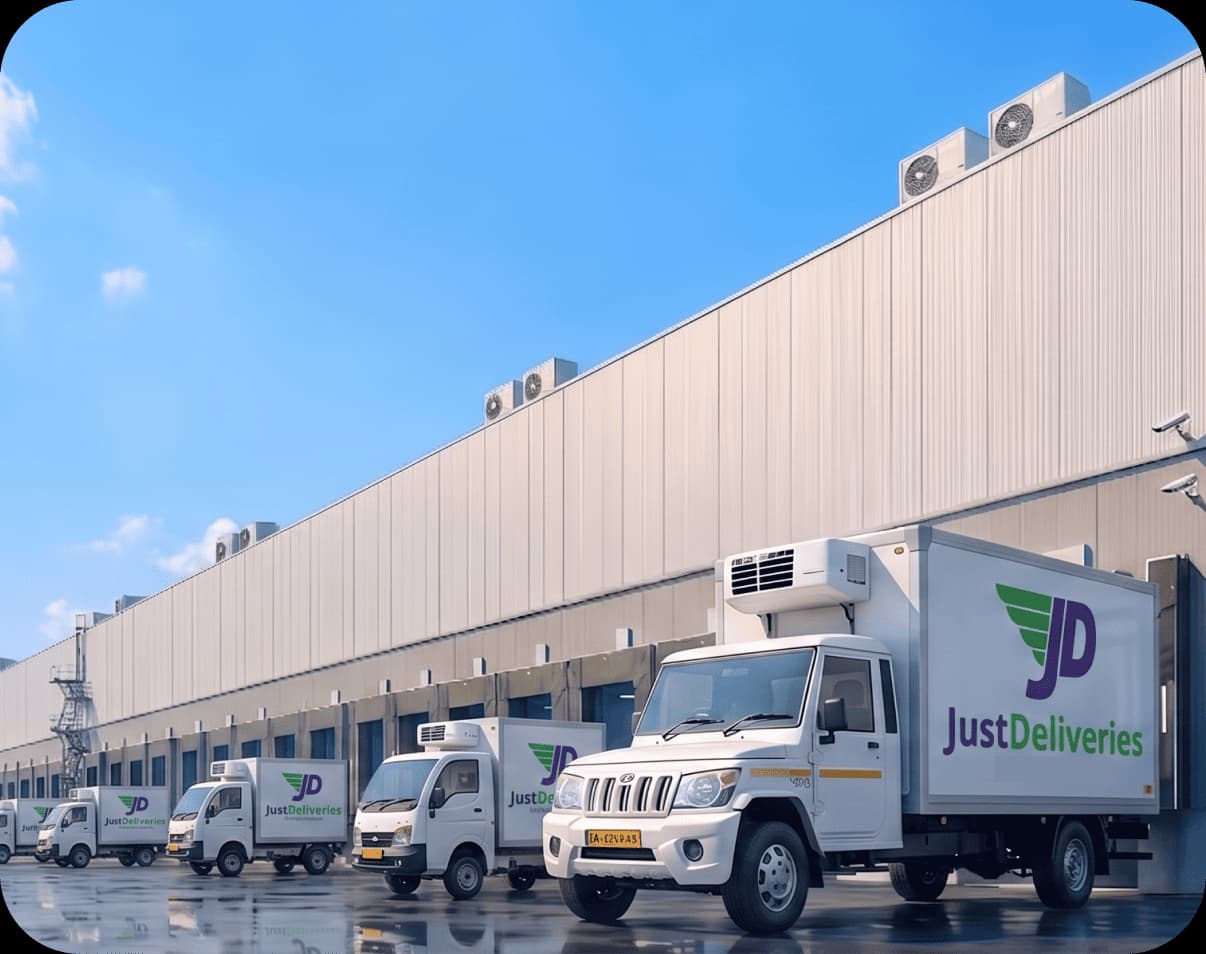
We ensure correct temperature and on time deliveries ensuring zero rejections at quick com DCs. PODs uploaded instantly.
- 6 cities
- fulfilment network
- Weeks
- not months to launch
- ₹0
- warehouse capex
- −18°C to +18°C
- temperature range
Trusted by F&B & quick commerce brands pan-India










Trusted by India’s best F&B brands
Reliable cold chain logistics helped us scale frozen inventory across multiple outlets.

Biggies Burger
QSR · Frozen Inventory
Temperature-controlled deliveries kept our ice cream frozen during peak summer demand.

Go Zero
Ice Cream · Seasonal Demand
Early morning refrigerated deliveries keep our production running without delays.

Subko
Café · Production Supply
Temperature-controlled transport keeps our cakes and desserts fresh for every delivery.

Theobroma
Bakery · Fresh Desserts
Fresh ingredients reach every outlet on time with reliable refrigerated transport.

California Burrito
QSR · Fresh Ingredients
Temperature-controlled logistics ensure fresh ingredient supply across all outlets.

GOPIZZA
QSR · Multi-Outlet Supply
Built for the Way Your Business Grows
Launch on quick commerce. Without building a supply chain.
- Expand across Mumbai, Delhi NCR, Bengaluru, Hyderabad, Pune and Chennai using JustDeliveries' temperature-controlled fulfillment network. No warehouse setup. No operations hiring. No inventory headaches.
- We store your products, manage inventory, pick and pack orders, replenish quick commerce dark stores on time, and ensure temperature integrity throughout the journey.
- Whether you're launching on Blinkit, Zepto, Swiggy Instamart or expanding into new cities, our plug-and-play cold chain infrastructure lets you scale faster while we manage the operations.
What we manage
- Temperature-controlled storage
- Inventory management with FEFO/FIFO rotation
- Order processing and pick & pack
- Appointment replenishment to quick commerce DCs
- Live shipment tracking with temperature assurance
- Returns and inventory reconciliation
Why brands choose JustDeliveries
- Ready fulfillment network across 6 cities
- Launch in weeks instead of months
- No warehouse leases or infrastructure investment
- No warehouse staffing or operations management
- One logistics partner across multiple cities
- Purpose-built for chilled and frozen food brands
Focus on Growing Your Brand
From warehousing to last-mile delivery, we manage your cold supply chain so you can focus on scaling your business with confidence.
Ready to Simplify Your Cold Chain?
Get a custom quote or speak with our team to find the right cold storage and logistics solution for your business.
Get your customized quotationOr
Warehouse Management System
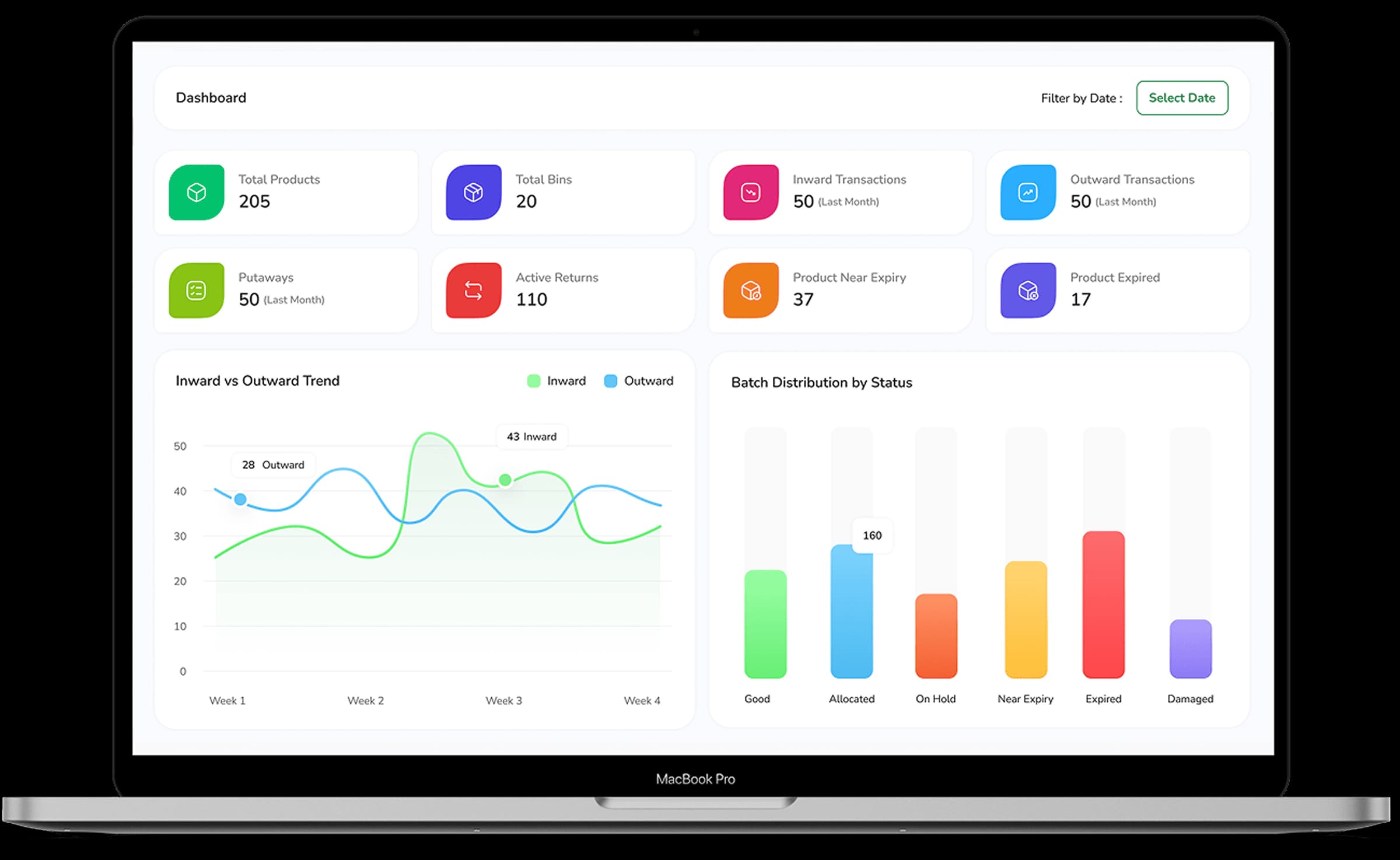
Every pallet, every temperature reading, every movement — visible to you in real time through our WMS. No chasing your 3PL for an update on where your stock is.
- Real-time inventory tracking, down to pallet level
- Live temperature monitoring & alerts across facilities
- Inbound, outbound & replenishment movement logs
- Case-break and pick/pack visibility
- Reverse logistics & returns tracking
- Daily, weekly and monthly dashboard reports
From onboarding to your first replenishment.
Share your storage & volume needs
Product type, temperature range, target cities and expected volume.
Onboard to a JD facility
Get matched to cold storage & warehousing capacity in your target city.
We manage inbound & outbound
Inbound via ASN, outbound via PO — our pickers, supervisors and drivers handle the rest.
Track everything via dashboard
Real-time inventory, temperature logs and replenishment reports, always on.
Frequently Asked Questions
A 3PL (third-party logistics) partner manages storage, inventory and distribution on your behalf. Instead of running your own warehouse, staff and vehicles, you use the partner's facilities, systems and team, and pay based on what you use.
Usually earlier than most brands expect. By the time stockouts, spoilage and missed delivery SLAs become visible, the business has often been overpaying for a while. The six most common signs are: 1. You're expanding to new cities. Selling beyond your home city, especially through quick commerce or modern trade, needs stock close to demand. Doing it in-house means a new lease, deposit, staff, FSSAI storage licence and GST additional place of business in every city. A 3PL lets you enter a market with a few pallets instead. 2. Your products need temperature control. Dairy, frozen foods, bakery, ready-to-eat, chocolates and ice cream need chillers or freezers, power backup, temperature monitoring and reefer transport. A single compressor failure or a few hours without power can wipe out a month's margin. 3. Wastage and expiry losses are rising. Write-offs from near-expiry stock, poor FEFO (first-expiry-first-out) rotation or handling damage signal a need for professional inventory systems. 4. Your volumes are seasonal. Festive gifting, summer peaks and marketplace sale events create sharp swings. A 3PL turns this into a variable cost instead of idle space or overloaded capacity. 5. Channel compliance is getting tougher. Quick commerce, e-commerce marketplaces and modern trade have strict appointment slots, labelling, documentation and fill-rate requirements, with penalties and delisting for misses. 6. Logistics problems keep reaching the founder's desk. Chasing drivers and reconciling stock are hidden costs. Leadership time is better spent on product and growth. If capital is tight or you're raising funds, freeing cash from warehouse deposits and equipment is also a strong reason to outsource.
In-house can still work well for: • Single-city or hyperlocal businesses, such as cloud kitchens or local bakeries, with short delivery radii and daily production • Very low volumes, where a 3PL's minimum billing may exceed your own costs • Products needing highly specialised handling that can't be standardised • Very large, stable volumes in one location that justify your own facility
Yes. The moment you're adding a second city, a temperature-sensitive range, or a demanding B2B or quick commerce channel, it's time to seriously evaluate a 3PL. If logistics issues are regularly landing on your desk, you're probably already late.
The most common mistake is comparing a 3PL quote against just rent and salaries. A true in-house cost includes: • Rent, plus the security deposit as blocked capital • Electricity, DG backup, cooling equipment and maintenance • Staff, including supervisors and leave cover • Software, insurance, pest control and compliance • Spoilage and damage write-offs • Vehicles or freight • Management time Convert these into a cost per pallet per month and a cost per order or case shipped. Then compare them with the 3PL's storage, handling, pick-pack and transport rates, at today's volume and at the volume you expect in 12 to 18 months.
Because many costs are hidden or fixed. In-house often looks cheaper today but loses significantly at 2 to 3 times the scale, or the moment a second city is added.
Beyond storage, ask about inward and outward handling, labelling and relabelling, repacking, detention, disposal of expired stock, minimum charges per dispatch, and whether storage is billed per pallet or per square foot.
Goods arrive in cartons, are stored as cartons and leave as cartons, without being opened. It is the simplest and most cost-efficient model, suited to distributors, modern trade, bulk replenishment to quick commerce warehouses, and HoReCa orders in full cases.
Goods arrive in cartons, but orders need loose units or mixed cartons. The warehouse opens cases, stores loose units in pick bins and repacks outgoing orders. It suits kiranas, cafés, dark stores and retailers ordering less than a full case or several SKUs in one box.
Individual units are received, stored and dispatched one by one, with every unit scanned, picked, packed and labelled. It is typical of D2C e-commerce.
In warehousing, you pay for touches. If a case holds 24 units, CICO treats it as one movement, while PIPO turns it into 24 picks, 24 scans and possibly several packages. Even a small per-piece rate adds up quickly. Case break sits in between but carries hidden costs: partly used cartons, repacking material, more damage and loss on loose units, more pick locations, and harder expiry tracking. For F&B, extra handling also means extra risk to product quality, especially for glass, liquids and cold-chain goods.
It depends more on where your orders go than on your size: • Mostly B2B: stay on CICO. It is the most economical and the easiest for a 3PL to take on. • Mostly D2C: you'll need PIPO. At smaller volumes, marketplace fulfilment programmes or D2C-focused fulfilment providers can sometimes be more economical. • A mix of both: use a hybrid. Keep bulk stock in full cases and break only what's needed into a small pick area, so you pay case-break rates only where required.
1. Match case sizes to real order sizes. If retailers order 6 units, a case or inner pack of 6 avoids case breaking. 2. Set order multiples for B2B customers, such as full cases or inner packs. 3. Barcode every level: units, inner packs and outer cases. 4. Keep your SKU list lean. Slow movers sitting in pick bins are expensive to hold.
• Start with a pilot: one new city or one channel, such as quick commerce replenishment, while your existing operation keeps running. • Agree on SLAs upfront: inventory accuracy, dispatch turnaround, temperature compliance, damage percentage and fill rates. • Insist on visibility: real-time stock by batch and expiry, ideally integrated with your order and marketplace systems. • Check credentials: FSSAI licences, temperature monitoring and audit trails, category experience, and clear liability terms. • Scale gradually once the partner has proven reliable.
Define your requirements first. Scope: cities, temperature zones (ambient, chilled, frozen), SKU count, and expected monthly volume in cases and orders. Operations: handling model (CICO, case break, PIPO) and channels served (distributors, modern trade, quick commerce, D2C). Growth: your volume plan for the next 12 to 18 months. Evaluate the partner's network, category and temperature capabilities, handling fit, WMS and technology, transport, SLAs and KPIs, commercials, contract terms, financial stability and service quality. Check for clear rates, minimum billing, extra charges, liability and insurance terms, and stock handover on exit. Shortlist three to five partners, send them the same requirement brief, visit their warehouses, inspect cleanliness and temperature logs, and speak to at least two current clients. Use a weighted scorecard and start with a pilot before expanding.
Shortlist three to five partners and send them the same requirement brief. Visit each warehouse and check cleanliness, temperature displays and logs, stock labelling, and how organised the pick areas are. Speak to at least two current clients, ideally F&B brands of a similar size.
No. Use a weighted scorecard where price is one factor, not the deciding one. For cold-chain F&B, temperature capability, inventory accuracy and technology usually matter most. The cheapest quote often becomes the most expensive through spoilage, stockouts and penalties.
It is rarely personal. It usually comes down to economics: • Fixed onboarding effort: setting up SKUs, systems, integrations and processes takes almost the same work for 50 orders a month as for 5,000. • Fixed space costs: a chiller or freezer position costs the same to run whether it is full or half-empty. • Labour-heavy work: case break and PIPO at small volumes mean many touches for limited billing. • Complexity: many low-volume SKUs, plus batch and expiry tracking, raise the chance of errors. • Unpredictability: without forecasts, it is hard to plan manpower and space. • Commercial risk: delayed payments or near-expiry stock left behind can lead to disputes.
• Be open to a minimum monthly billing. You can often negotiate a lower minimum at the start, with a step-up as you grow. • Share a realistic forecast and growth plan. • Keep operations simple: CICO wherever possible, standard barcoded packaging, and clean product data (SKU codes, dimensions, weights and shelf life). • Start narrow: one city, one temperature zone and a focused set of SKUs. • Consider shared, multi-client warehouses, which are often better placed to serve growing brands.
You need a single view of every SKU in every location, updated at least daily. That rests on three things: 1. A clean, common SKU master. One code per product, used in your ERP, every warehouse system and every marketplace portal, with barcodes at unit, inner and case level, pack configuration, dimensions, weight, shelf life and storage temperature. 2. Batch- and expiry-level tracking in every warehouse, with dispatch on FEFO. 3. One central system that receives data from each location, ideally through API integration with each warehouse's WMS, or at minimum a standard daily stock report. What should I be able to see for each SKU? • Stock on hand, available to sell, and allocated to open orders • Stock in transit between cities or from the factory • Damaged or quarantined stock • Batch-wise expiry and ageing • Days of cover at current sales How do I keep inventory data accurate? Ask for weekly or fortnightly cycle counts on fast movers, plus periodic full audits. Investigate receiving mismatches immediately. Include quick commerce and marketplace stock too, since it is part of your total picture. If you use more than one 3PL, write the reporting format and frequency into each contract.
A warehouse management system tracks every unit of stock from the moment it enters the warehouse until it leaves. It replaces paper registers, spreadsheets and people's memory.
• Exact locations: every product sits in a barcoded location, so picking is faster. • Batch and expiry tracking: every batch is recorded with its manufacturing and expiry dates. • FEFO enforcement: the system directs pickers to the batch expiring first, reducing write-offs and shelf-life rejections. • Higher accuracy: every movement is scanned, keeping system stock and physical stock closely matched. • Fewer errors: wrong SKUs, quantities or batches are flagged before dispatch. • Real-time visibility: brands see stock by SKU, batch, expiry and location without waiting for reports. • Faster operations: guided putaway and optimised picking help teams handle peaks. • Audit trail: every action is logged, supporting food safety traceability, recalls and FSSAI or customer audits. • Early alerts: near-expiry, slow-moving and low-stock items are flagged before they become losses. • Integration: connects with ERP, order management and marketplace systems.
No. A WMS is only as good as the discipline behind it. Clean master data, proper barcoding, trained staff and regular cycle counts are what make it work. Working with a 3PL gives you a professional WMS, trained teams and the processes around them, without having to buy and run the system yourself.
Ready to outsource your operations?
Get a customised quotation in minutes, or speak to our fulfilment experts today.