
India’s Trusted F&B
Logistics Partner
Dedicated drivers and vehicles on annual contracts — built for brands moving daily volume, at scale, across India.
- 150+
- F&B brands trust us
- 100s
- of vehicles on the road
- 24/7
- control tower
- Pan-India
- presence
Trusted by 150+ F&B brands pan-India








One contract. Every mile covered.
Intra-City Logistics
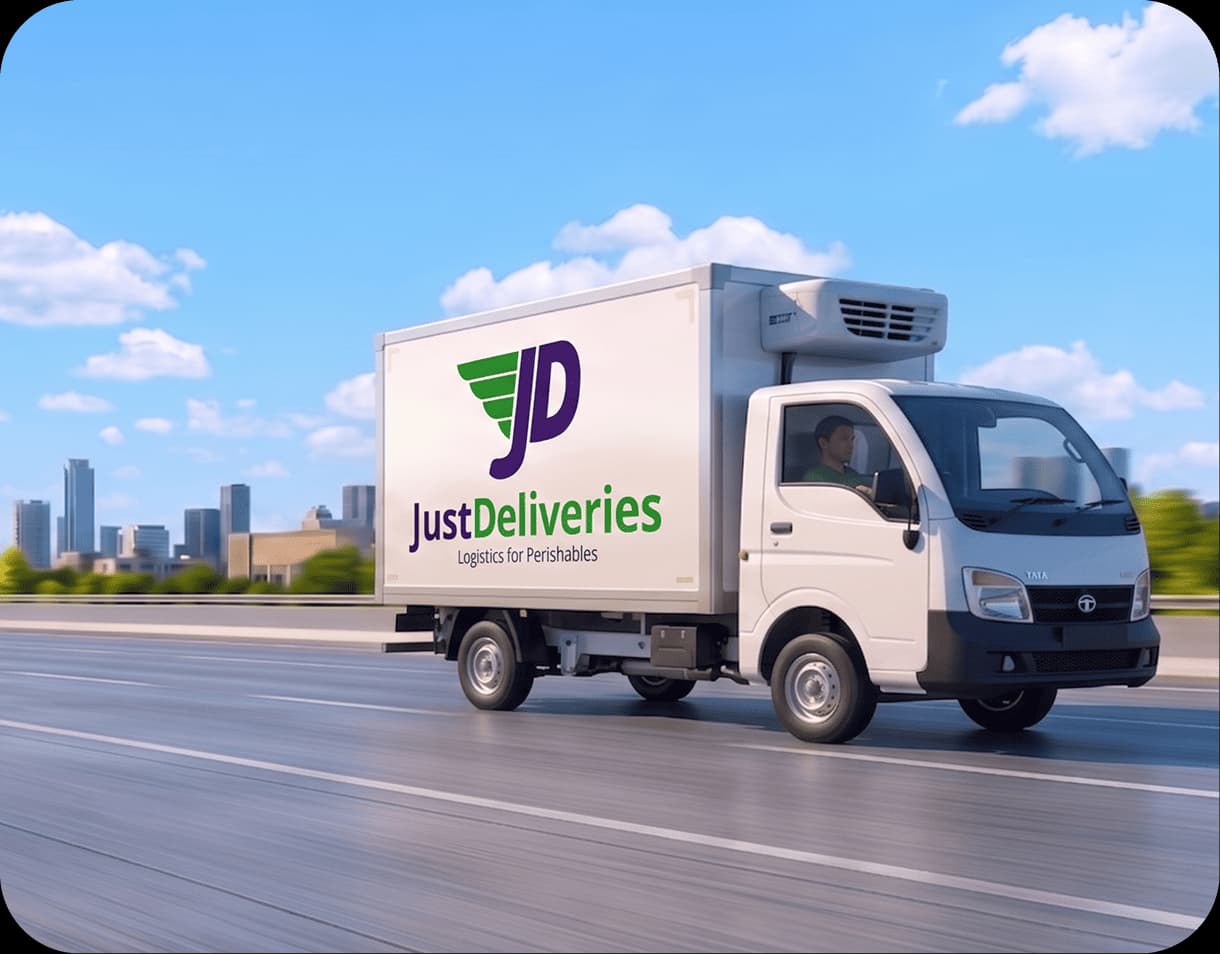
Dedicated drivers and temperature-controlled vehicles for daily deliveries within a city — same driver, same van, every day.
Inter-City Logistics
Reliable cold chain movement between cities, connecting your production facilities to outlets and dark stores pan-India.
Warehousing & 3PL
Cold storage, inventory management and fulfillment — plug into our network instead of building your own.
Built for brands that can't afford a bad delivery day.
What you get
- Same driver, same vehicle, daily — no re-booking
- Dedicated account manager & 24/7 control tower
- Temperature-controlled fleet, live GPS & temp logs
- ERP integration for seamless order flow
- Contract billing, no per-trip admin
Built for scale
- Pan-India network across major cities
- 150+ F&B brands, hundreds of vehicles on the road
- Purpose-built for chilled and frozen food — nothing else
- Onboarding designed for multi-city, multi-outlet rollouts
- One partner instead of coordinating multiple vendors
From Request to Reliable Delivery
Share your route & volume
Tell us your pickup points, drop points and daily/weekly volume.
Get a custom quote
We size a dedicated fleet and driver plan around your routes.
Onboard & go live
Dedicated driver and vehicle assigned, account manager introduced.
Track via dashboard
Live GPS, temperature logs and daily reports through the control tower.
Trusted by India’s best F&B brands
Reliable cold chain logistics helped us scale frozen inventory across multiple outlets.

Biggies Burger
QSR · Frozen Inventory
Temperature-controlled deliveries kept our ice cream frozen during peak summer demand.

Go Zero
Ice Cream · Seasonal Demand
Early morning refrigerated deliveries keep our production running without delays.

Subko
Café · Production Supply
Temperature-controlled transport keeps our cakes and desserts fresh for every delivery.

Theobroma
Bakery · Fresh Desserts
Fresh ingredients reach every outlet on time with reliable refrigerated transport.

California Burrito
QSR · Fresh Ingredients
Temperature-controlled logistics ensure fresh ingredient supply across all outlets.

GOPIZZA
QSR · Multi-Outlet Supply
Get your quote in minutes, not meetings.
Use our quotation calculator for an instant estimate, or talk to a person if your requirement is more particular — same day response, either way.
Instant quotation calculator
Routes, volume, vehicle type — get an estimate in under 2 minutes.
Open Quotation CalculatorOr
+91 96194 40499Frequently asked questions
Mid-mile is the movement of goods between your warehouse, factory or central kitchen and your outlets, stores, dark stores, distributors or institutional customers, usually within a city or region. It sits between inbound supply (first mile) and delivery to the end consumer (last mile).
It is the daily link that keeps your outlets stocked. Late, missed or temperature-abused deliveries mean empty shelves, lost sales, wasted product and unhappy customers. For restaurant chains, cafés, QSRs and retail brands, reliable mid-mile is what makes every outlet run smoothly.
For most F&B businesses, outsourcing to a reliable partner is simpler and more cost-effective. Upfront investment: owning a van means buying the vehicle, reefer unit and registration, while outsourcing needs none. Driver: owning means hiring, salary, leave cover and attrition, while outsourcing means it is managed for you. Fuel: owning means purchase, tracking and risk of pilferage, while outsourcing includes it in the agreed rate. Maintenance and breakdowns: owning means your cost and your downtime, while outsourcing means we handle it, with backup vehicles. Insurance, permits and compliance: owning makes them your responsibility, while outsourcing means we handle them. Visibility: owning depends on what you install and monitor, while outsourcing gives you live location, temperature and trip history in the JD app. Flexibility: owning means fixed capacity whether you need it or not, while outsourcing scales with your business. Management time: owning means daily follow-ups, while outsourcing lets you focus on running your business.
If your routes are highly specialised, your volumes are very large and stable, and you have a team to manage drivers, fuel and maintenance. For most growing brands, the hidden costs and management effort outweigh the benefits.
Capital locked in a depreciating asset; idle time on weekends, holidays or low-demand days; breakdown downtime with no backup vehicle; driver absenteeism and attrition; fuel pilferage and inflated fuel claims; reefer maintenance and temperature failures; time spent managing all of the above.
Long relationships are valuable, and many local transporters work hard for their clients. The question is whether the setup can keep up as your business grows. Ask yourself: Can you see where your vehicle is right now, and what temperature your goods are at? Do you have a complete record of every trip, stop and temperature reading? Are your bills based on verified trip data, or on what is reported to you? What happens when the driver is absent or the vehicle breaks down? Can they add vehicles quickly when you open new outlets? If goods are damaged or short, is there a clear process and accountability? If the honest answer to several of these is "no" or "not really", you are relying on trust alone, and trust is hard to scale.
Visibility: live vehicle location and temperature, plus full trip history, instead of phone calls to find out; Accountability: clear SLAs, documented processes and a single point of responsibility; Transparent billing: charges based on system-recorded trips, not manual entries; Reliability: backup vehicles and drivers, so a breakdown or absence doesn't stop your supply; Cold-chain expertise: maintained reefer vehicles, trained drivers and active temperature monitoring; Compliance: proper documentation, insurance, permits and food safety practices; Scalability: add vehicles, routes and outlets without building your own fleet.
No. Many customers start with a few routes or outlets, compare the experience, and then expand.
The JD app gives you complete visibility and control over your deliveries, without calling the driver or transporter. Real-time vehicle location: see exactly where your vehicle is at any moment; Live temperature: see the temperature inside the vehicle while goods are in transit; Full trip history: every trip, route, stop, delivery time and temperature reading is recorded and available whenever you need it; Automated billing: bills are generated from system-recorded trip data.
With manual billing, trips, kilometres, waiting time and extra stops depend on what is reported, which leaves room for errors, disputes and malpractice. With automated billing, every charge is backed by recorded trip data, so what you pay matches what actually happened.
Resolve delivery disputes with facts, such as when a delivery arrived and at what temperature; support food safety audits and customer quality checks; spot patterns, like outlets with repeated delays or routes that can be optimised; verify every line on your invoice.
Talk to us about setting up access for the people who need it, such as operations, outlet managers and accounts.
Blind delivery means we deliver and stock your outlet even when your staff are not present to receive the goods. With your authorised access to the outlet, our team unloads and places the stock in your storage, such as chillers, freezers or the store room, under camera supervision.
Deliveries before opening hours: outlets are fully stocked before staff arrive, often when traffic is lighter; No waiting for a receiver: no missed or delayed deliveries because nobody was available; Better cold-chain protection: goods move straight from the vehicle into cold storage; Staff time saved: your team can focus on preparation and customers instead of receiving goods.
The delivery happens under camera supervision, so every entry, unloading and placement is recorded. Combined with trip records in the JD app, you have a clear record of when the delivery was made and what was delivered.
Authorised access to the outlet, working cameras covering the entry and storage areas, clear instructions on where each product should be stored, and an agreed process for confirming deliveries. We'll work out the details with you before the first delivery.
For regular mid-mile deliveries, you don't need to book every day. We set up a dedicated schedule with you once, and the same van comes to you every day as planned. 1. Share your requirements: pickup points, outlets, delivery windows, product types, temperature needs and typical volumes. 2. We plan the route and vehicle: the right vehicle size and temperature setting, and a daily schedule. 3. Agree on terms: service levels, rates and billing. 4. Daily operations begin: the same van arrives at the scheduled time every day, with live tracking in the JD app.
It's like owning your own vehicle, without the headaches. You get a van that works on your schedule, every day, while we take care of the driver, including leave cover and replacements; fuel, with no risk of fuel pilferage on your side; maintenance, breakdowns and backup vehicles; and insurance, permits and compliance.
Yes. Let us know in advance about changes to routes, timings or volumes, or if you need an extra trip for a busy day, festival or new outlet launch.
Talk to us about your requirement and we'll advise the best option.
Yes. We specialise in food and beverage logistics, and our operations follow food safety practices at every stage, from vehicle hygiene to how goods are handled and delivered. Food is not just cargo to us, and we treat it with the care it needs.
Clean, food-grade vehicles: vehicles are cleaned and sanitised regularly and used for food, never alongside chemicals or other contaminating goods; Segregation: products are kept apart where needed, such as vegetarian and non-vegetarian, raw and cooked, or strong-smelling and odour-sensitive items; Temperature control: frozen, chilled and ambient goods are each kept in their correct range; Careful handling: packaging is kept intact, fragile items are stacked safely, and goods are never dropped, thrown or placed on the ground; Minimal exposure: doors are opened only when needed, and goods move quickly from vehicle to storage.
Yes. Our drivers are trained specifically for food logistics, including: Hygiene: clean uniforms, hand hygiene, and no eating or smoking near food products; Food handling: correct lifting, stacking and placement, keeping packaging intact; Cold-chain discipline: keeping the reefer running, minimising door-open time, and escalating temperature alerts; Outlet conduct: following each outlet's receiving and storage instructions, including blind delivery protocols; Documentation: handing over invoices and challans, and recording deliveries correctly.
Your customers judge your brand by the quality and safety of your food. A partner that understands food handling protects product quality, reduces wastage and complaints, and helps you stay ready for food safety and customer audits.
A cheaper, non-compliant vendor can cost far more in the end. A PR nightmare: one photo or video of an unhygienic van, food kept next to fuel cans, or a driver smoking beside your products can go viral on social media within hours, and customers blame your brand, not the transporter; Food safety incidents: dirty vehicles, pests, or food carried alongside chemicals and other goods can contaminate your products, and if a customer falls ill the damage to health, trust and reputation can be severe; Temperature abuse: reefers switched off to save fuel, doors left open, or vehicles parked in the sun, so products may look fine on arrival but be spoiled or unsafe, often discovered only when a customer complains; Pilferage and short deliveries: missing cartons, tampered packaging or quantities that don't match the invoice, with no records to prove what happened; Regulatory and audit trouble: as the food business, your brand remains responsible for the safety of its products, and poor transport practices can lead to failed audits, penalties or action from authorities; Lost business: rejected deliveries, failed quality checks at modern trade and quick commerce partners, and damaged relationships with outlets and franchisees; No accountability: without documentation, tracking or insurance, there is little recourse when something goes wrong.
Ask yourself: Are the vehicles clean, well maintained and used only for food? Can you see live location and temperature, and the history of every trip? Are drivers trained in hygiene and food handling? Is there a clear process when goods are short, damaged or temperature-abused? Are bills backed by recorded trip data? If you can't confidently answer yes to these, your brand may be carrying risks you can't see.
Planning: fix delivery windows for each outlet and share them with outlet teams; plan routes so temperature-sensitive and high-priority outlets are served first; share order quantities in advance so loads can be planned properly; plan ahead for peaks such as weekends, festivals and new outlet launches. At dispatch: keep orders picked, packed and labelled by outlet before the vehicle arrives; ensure goods are at the right temperature before loading; load in delivery order so each stop is quick and door-open time is minimal; send accurate invoices or delivery challans with each consignment. At the outlet: keep storage space in chillers, freezers and store rooms ready for incoming stock; have a receiver available, or set up blind delivery; check quantities and temperatures on arrival, and record any issues immediately; move cold-chain goods into storage straight away. Ongoing: use the JD app to monitor deliveries and review trip history; review performance regularly, covering on-time deliveries, temperature compliance and shortages; share feedback early so issues are fixed before they repeat.
Yes. The reefer is brought to the required temperature before it reaches your pickup point, so your product goes into a cold vehicle, not a warm one.
A control tower is a dedicated team that watches every shipment in real time, using GPS tracking and temperature sensors in the vehicle. When something goes wrong, they act immediately, while the shipment is still on the road.
A post-mortem report is a temperature log downloaded after the trip ends. It tells you what went wrong, but only once the damage is done and your product may already be unsellable. Active monitoring by a control tower works while the trip is happening. In cold chain, the goal is not to prove a loss happened. It is to prevent it.
• Temperature moving outside the agreed range • Reefer unit switched off or malfunctioning • Doors opened at unscheduled points • Unplanned or long stoppages • Route deviations • Delays that put delivery appointments at risk
The team contacts the driver right away to diagnose the issue, for example restarting or adjusting the reefer, closing the door, or getting the vehicle moving. If the issue can't be fixed on the spot, the escalation plan kicks in, such as arranging support or a replacement vehicle. You are kept informed throughout.
Ready to move your cold chain, every day?
Get an instant quote, or speak to a person on our team today.