
Blog
Cold Chain Compliance FSSAI India: Regulations, Food Safety and Audit Checklist
24 October 2026By Abhishek Kumar
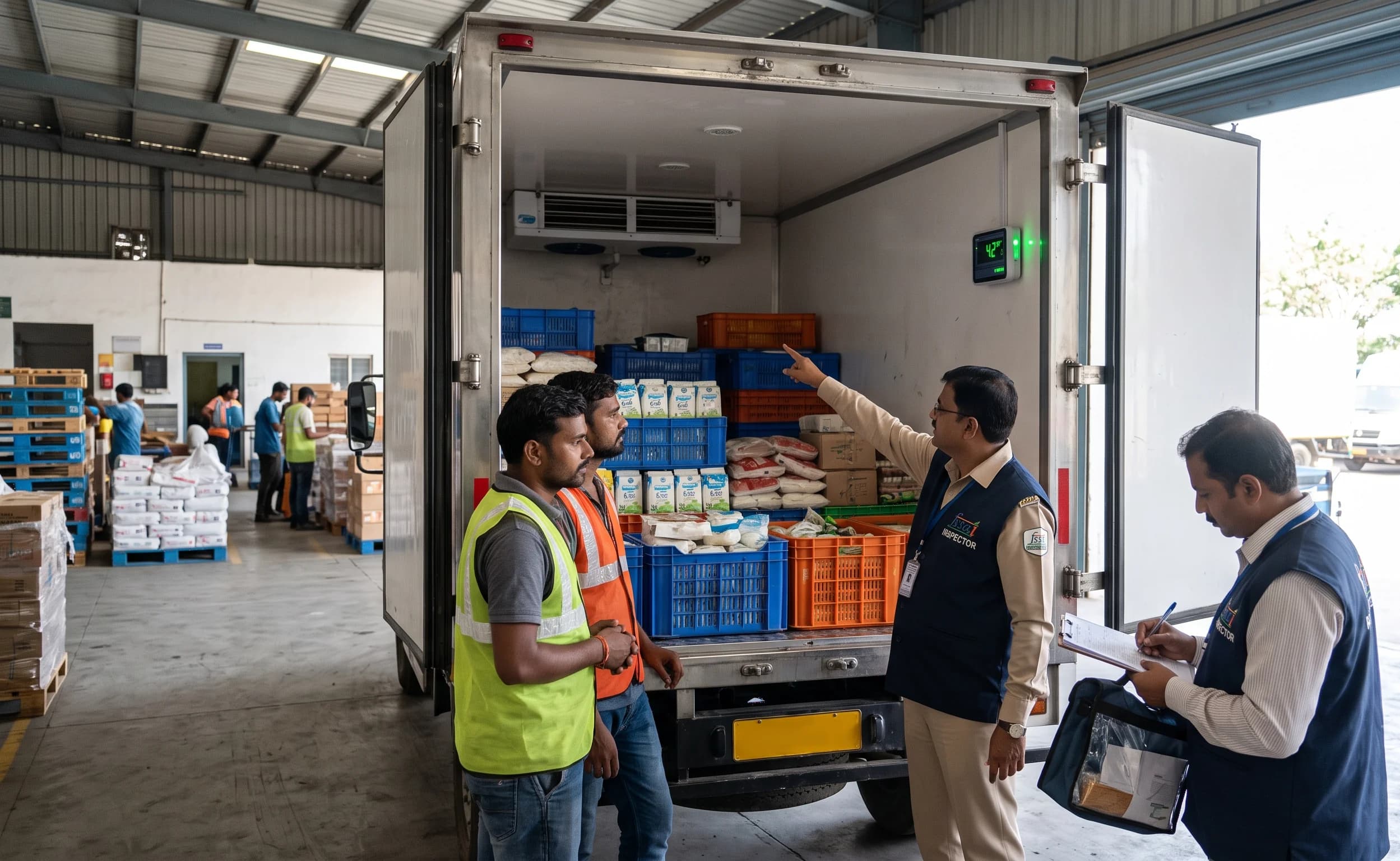
Cold chain compliance under FSSAI in India involves maintaining appropriate food storage and transportation conditions, following applicable hygiene and licensing requirements, monitoring temperatures, and keeping traceability records. Food businesses must establish documented procedures to protect perishable products throughout storage, handling, distribution, and delivery.
Cold chain compliance FSSAI India is essential for food businesses handling temperature-sensitive products. It combines safe storage, hygienic transportation, temperature monitoring, and documented food safety procedures. For F&B brands managing multiple locations and frequent deliveries, a reliable cold chain logistics system helps maintain control from warehouse to customer. JustDeliveries supports temperature-controlled B2B distribution for food and beverage businesses. Understanding these requirements is the first step towards building a safer, more dependable food supply chain.
Key FSSAI Cold Chain Regulations in India
The FSSAI framework requires food businesses to follow applicable licensing conditions, hygiene practices, and food safety management procedures. Schedule 4 of the Food Safety and Standards (Licensing and Registration of Food Businesses) Regulations, 2011, sets out hygiene requirements for different food business activities.
Licensing, hygiene and food safety management
The correct licence or registration depends on the activity, scale, capacity, and applicable eligibility criteria. FoSCoS provides separate categories for activities such as cold storage and food transportation. Businesses should verify the requirements for their specific operations rather than assume that one licence covers every activity.
Essential practices include:
- Maintaining clean storage areas, vehicles, and food-contact equipment.
- Preventing contamination and keeping incompatible products appropriately separated.
- Following documented cleaning, sanitation, and pest-control procedures.
- Training staff in hygienic food handling.
- Maintaining a food safety management system appropriate to the business.
These measures form the operational foundation of cold chain compliance FSSAI India. However, a clean vehicle or refrigerated warehouse alone does not establish compliance; businesses must also meet the requirements applicable to their products and activities.
FSSAI Rules for Perishable Food Transportation in India
Transportation is a critical part of the food safety cold chain in India. Even when food leaves a properly managed facility, unsuitable vehicles, extended loading times, poor handling, or temperature fluctuations can compromise product quality.
What should food businesses check?
Before dispatch, businesses should verify that:
- The vehicle is clean, maintained, and suitable for the food being transported.
- Refrigeration or insulation can maintain the required conditions.
- Products are protected against contamination during loading and unloading.
- Raw and ready-to-eat foods are separated appropriately.
- Delivery routes and handover schedules minimise unnecessary delays.
- Temperature checks and delivery records are maintained as required by the food safety plan.
FSSAI’s food safety materials include requirements and guidance concerning hygienic transportation and appropriate food temperatures. The applicable limits depend on the food category and handling context.
Cold chain compliance FSSAI India therefore requires more than switching on refrigeration. It requires businesses to plan transportation, monitor conditions, and establish procedures for responding when something goes wrong.
Temperature Monitoring Across the Cold Chain
Temperature control should continue across storage, dispatch, transit, and delivery. Businesses must identify the correct conditions for each product instead of applying a single temperature to every perishable item.
For example, FSSAI materials commonly refer to storage at or below 5°C for certain high-risk chilled foods and −18°C or below for frozen foods. These figures should be applied in the appropriate context and checked against the relevant current requirements and product instructions.
Practical temperature-control measures
- Before loading: Check the vehicle’s condition and confirm that it is ready for the intended cargo.
- During transit: Monitor temperature at appropriate intervals or continuously where suitable equipment is available.
- At delivery: Review product condition, temperature records, and any deviations.
- When a deviation occurs: Record the incident, assess the affected food, and follow documented corrective-action procedures.
Digital visibility can help teams identify delays and temperature deviations sooner. It does not replace suitable equipment, trained personnel, or established food safety procedures.
How to Prepare for a Cold Chain Audit for an F&B Brand in India
A cold chain audit for an F&B brand in India should assess whether documented procedures match actual operations. Internal audits, customer audits, and regulatory inspections may have different scopes, so businesses should identify the applicable criteria before preparing.
Audit preparation checklist
- Verify relevant FSSAI licences and registrations.
- Review food safety plans, SOPs, and staff training records.
- Inspect refrigeration equipment, storage areas, and vehicles.
- Check temperature logs and equipment calibration records where applicable.
- Review supplier, receiving, dispatch, and traceability documentation.
- Confirm cleaning, sanitation, and pest-control procedures.
- Record deviations, corrective actions, and follow-up checks.
An effective audit should identify gaps and assign responsibility for correcting them. Keeping records organised throughout the year is more reliable than assembling documents immediately before an inspection.
Cold Chain Compliance Checklist India
Use this cold chain compliance checklist India as a starting point for routine operational reviews:
Operational review
- Confirm applicable FSSAI licences and registrations
- Verify product-specific storage and transport conditions
- Inspect vehicle cleanliness and refrigeration readiness
- Maintain temperature and delivery records
- Prevent cross-contamination during handling
- Keep receiving, dispatch and traceability records
- Train staff on hygiene and deviation reporting
- Document corrective actions and review recurring issues
This is a practical internal checklist, not an official FSSAI audit form or a substitute for applicable legal requirements.
A documented checklist helps operations and quality teams identify gaps consistently across multiple locations. Review it against current regulations, product-specific requirements, and your business’s food safety management system.
How JustDeliveries Supports Food Safety and Cold Chain Operations
Maintaining cold chain compliance FSSAI India becomes more manageable when food brands coordinate storage, transportation, monitoring, and delivery through reliable operating processes.
JustDeliveries provides specialised B2B logistics for the food and beverage industry, including temperature-controlled transportation, cold storage, and distribution support.
Its HQ App gives F&B brands a central dashboard to monitor:
- Live vehicle locations and shipment progress.
- Temperature compliance across monitored deliveries.
- Service-level agreements (SLAs) and delivery performance.
- Billing and AI-driven operational insights in real time.
Quick commerce has increased the need for frequent replenishment, shorter delivery windows, and reliable temperature control. JustDeliveries powers cold-chain logistics for Swiggy Instamart, Zepto, Blinkit, Amazon, JioMart, and BigBasket, supporting hub-to-hub transportation and dark store deliveries with real-time tracking and temperature monitoring.
As Mansi Mahansaria, author at JustDeliveries, highlights through the company’s operational focus, combining technology with disciplined logistics processes helps businesses improve visibility across their supply chains.
The HQ App supports operational oversight, but cold chain compliance FSSAI India still depends on each food business meeting its applicable legal responsibilities and maintaining appropriate food safety procedures.
Build a More Reliable Food Cold Chain with JustDeliveries
Cold chain compliance FSSAI India requires consistent attention at every stage, from storage and loading to transportation and delivery. The right processes help food businesses protect product quality, improve traceability, and identify operational gaps before they become recurring problems.
For F&B brands managing multiple outlets, central kitchens, distribution hubs, or quick-commerce orders, a coordinated logistics system can improve visibility and day-to-day control.
JustDeliveries brings together dedicated transportation, temperature-controlled logistics, cold storage, and the HQ App to support the changing needs of India’s food and beverage industry.
Ready to strengthen your food logistics operations? Explore JustDeliveries to discuss a logistics setup suited to your products, delivery frequency, and distribution requirements.
Frequently Asked Questions
Q1. How can businesses maintain cold chain compliance FSSAI India?
Businesses should follow applicable FSSAI requirements, maintain product-specific temperatures, use suitable storage and transport facilities, prevent contamination, and keep accurate monitoring and traceability records.
Q2. Can F&B brands outsource cold chain logistics?
Yes. Brands can work with specialised logistics providers for transportation, storage, and monitoring. They should verify the provider’s capabilities, documentation, and applicable licences while retaining responsibility for their own food safety obligations.
Q3. Is an FSSAI licence required for cold storage?
Cold storage activities may require an FSSAI licence or registration depending on the applicable eligibility criteria, capacity, and business circumstances. Check the current FoSCoS requirements for the specific operation.
Q4. Will temperature monitoring alone ensure compliance?
No. Monitoring helps identify deviations, but compliance also involves appropriate facilities, hygienic handling, staff training, documentation, and corrective actions.
Q5. What should a cold chain audit checklist include?
It should cover applicable licences, temperature records, vehicle and facility hygiene, equipment maintenance, traceability, staff training, and corrective-action documentation.
Q6. Why is cold chain compliance important for quick commerce?
Quick commerce depends on frequent replenishment and rapid deliveries. Reliable temperature-controlled transportation and monitoring help protect perishable products as they move between distribution hubs and dark stores.
Q7. How does JustDeliveries help businesses manage cold chain operations?
JustDeliveries offers temperature-controlled transport, cold storage, distribution support, and its HQ App for live vehicle tracking, temperature compliance, SLA monitoring, billing, and operational insights.