
Blog
How to Reduce Food Wastage in Restaurants: 10 Practical Strategies
30 October 2026By Mansi Mahansaria
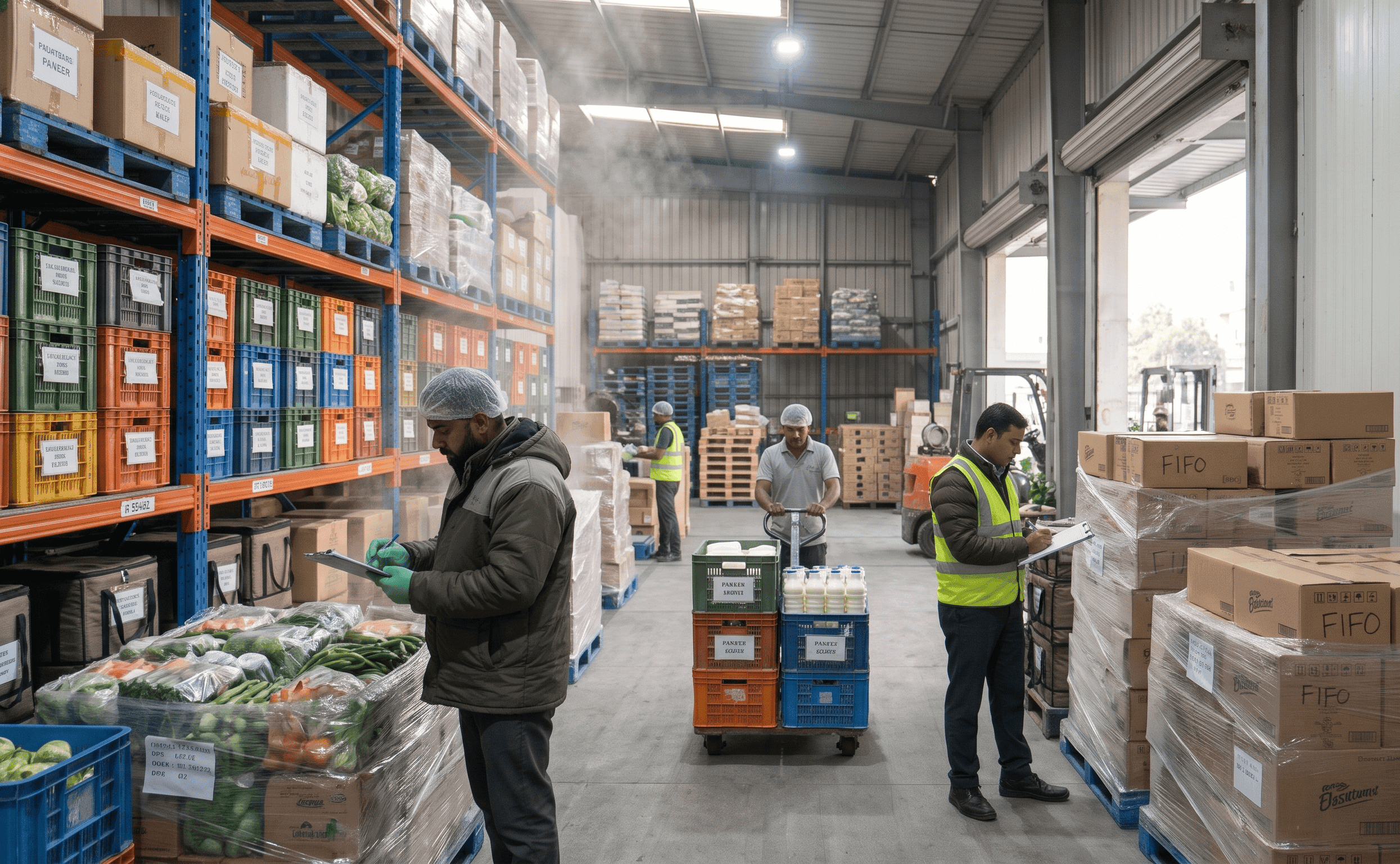
To reduce food wastage in restaurants, forecast demand accurately, purchase ingredients according to actual requirements, follow FIFO inventory rotation, maintain appropriate storage temperatures, standardise portion sizes, and track discarded food. Restaurants can also minimise supply chain losses through reliable temperature-controlled transportation, efficient replenishment, and regular waste audits.
Learning how to reduce food wastage in restaurants starts with better planning, inventory control, and food handling. From excess purchasing to delivery delays, small inefficiencies can increase costs and compromise food quality. At JustDeliveries, we help food businesses strengthen their logistics operations through temperature-controlled transportation and storage solutions. But what practical steps can restaurants take to prevent avoidable food loss at every stage?
What Is Food Waste Management in Restaurants?
Food waste management involves preventing, measuring, and responsibly handling food that is discarded during purchasing, storage, preparation, service, or consumption. Effective food waste management in restaurants India requires coordination between procurement teams, kitchen staff, suppliers, warehouse operators, and delivery partners.
Restaurant food waste generally falls into four categories:
- Spoilage: Ingredients become unsuitable for use because of improper storage, temperature deviations, or excessive storage time.
- Preparation waste: Food is discarded during trimming, peeling, or cooking.
- Overproduction: Prepared food remains unsold because demand was overestimated.
- Plate waste: Customers leave edible food uneaten.
Identifying these categories helps restaurant managers understand where losses occur and which corrective measures will deliver the greatest operational benefit.
Why Is Reducing Food Waste Important for Restaurants?
Food waste affects more than purchasing budgets. It also influences kitchen productivity, inventory utilisation, environmental performance, and customer satisfaction.
Restaurants that control waste can benefit from:
- Lower operating costs: Fewer ingredients are lost through spoilage, overproduction, and unnecessary disposal.
- Better inventory utilisation: Stock moves more efficiently through the kitchen, reducing the likelihood of expired ingredients.
- Improved food quality: Appropriate handling and storage help maintain product quality.
- More consistent operations: Staff can plan preparation and replenishment with greater accuracy.
- Reduced environmental impact: Preventing avoidable food waste also reduces the resources wasted in producing, transporting, and storing food.
For restaurants operating across several outlets, even small, recurring losses can accumulate. Establishing consistent procedures makes it easier to identify inefficiencies and improve performance over time.
10 Effective Ways to Reduce Food Wastage in Restaurants
1. Conduct Regular Food Waste Audits
A food waste audit reveals what gets discarded, where the waste originates, and why it occurs. Record discarded food by category, quantity, and estimated ingredient cost.
For example, separate expired vegetables from unsold prepared meals and plate waste. Review the records weekly to identify recurring patterns.
Use the findings to establish a baseline, assign responsibility, and prioritise the areas with the highest avoidable losses.
2. Improve Demand Forecasting and Menu Planning
Accurate forecasting helps restaurants purchase and prepare food according to expected demand rather than guesswork.
Review historical sales, seasonal variations, local events, promotional campaigns, and peak dining periods before planning ingredient requirements. Adjust preparation quantities when certain dishes consistently sell more slowly than expected.
Restaurants can also review their menus to identify ingredients that are purchased frequently but used infrequently. Better menu planning helps reduce excess inventory without compromising menu availability.
3. Strengthen Inventory Management
Effective inventory management prevents ingredients from remaining unused until they expire.
Follow these practices:
- Use first-in, first-out (FIFO) rotation, placing older stock ahead of newer stock.
- Apply first-expired, first-out (FEFO) where expiry dates determine which stock should be used first.
- Label ingredients with appropriate dates and storage information.
- Check stock levels before placing new orders.
- Set reorder points according to consumption rates and supplier lead times.
These measures support restaurant food spoilage reduction and make purchasing decisions more reliable.
4. Maintain Proper Storage and Food Handling
Incorrect storage conditions can cause otherwise usable ingredients to deteriorate prematurely. Different foods require different storage temperatures, packaging, and handling procedures.
Keep refrigerators and freezers within the appropriate temperature ranges, monitor them regularly, and document any deviations. Separate raw and ready-to-eat foods, maintain hygienic storage areas, and minimise unnecessary exposure to unsuitable temperatures.
Staff should also follow established procedures for receiving, cooling, labelling, and storing food. These restaurant food spoilage reduction tips are particularly important for dairy products, fresh produce, meat, seafood, and other perishable ingredients.
5. Prevent Food Loss During Transportation
Food waste prevention must begin before ingredients arrive at the restaurant. Delays, inappropriate transport conditions, and poor coordination between suppliers and outlets can compromise perishable products.
To reduce food waste restaurant supply chain risks, businesses should:
- Use suitable temperature-controlled vehicles for chilled and frozen products.
- Plan delivery routes and schedules around product requirements.
- Check product condition and relevant temperature records at handover.
- Coordinate delivery schedules with receiving staff.
- Align replenishment quantities with outlet-level demand.
At JustDeliveries, our temperature-controlled logistics solutions support the movement and storage of perishable food products. Reliable transport and coordinated replenishment can help reduce avoidable logistics-related spoilage.
6. Standardise Recipes and Portion Sizes
Inconsistent preparation often leads to excess ingredient usage and uneven serving sizes. Standardised recipes help kitchen teams use predictable quantities and maintain consistent food quality.
Provide staff with recipe cards, measured ingredient quantities, and appropriate portioning tools. Review customer feedback and plate waste to determine whether serving sizes meet actual needs.
Consistent portion control can reduce unnecessary preparation costs while helping restaurants maintain the dining experience customers expect.
7. Train Employees to Minimise Kitchen Waste
Food waste management works best when every team member understands their role.
Train kitchen staff to handle ingredients correctly, rotate stock, measure portions, record discarded food, and follow safe storage procedures. Encourage employees to report recurring problems, such as damaged deliveries or ingredients that frequently remain unused.
Managers should review waste records with staff regularly and use the findings to improve daily processes rather than treating waste reporting as a compliance exercise.
8. Use Surplus Ingredients Safely
Restaurants can plan dishes that use suitable ingredients across multiple menu items. For example, appropriately stored vegetables may be used in more than one recipe, reducing the risk of unused stock.
However, ingredient reuse must always follow food safety requirements. Never reuse food that has been contaminated, stored improperly, or held under unsafe conditions. Donations and surplus food redistribution should also comply with applicable safety and handling requirements.
9. Apply Food Waste Control Strategies for QSR Operations
Quick-service restaurant (QSR) chains face additional challenges because they must maintain consistent quality and availability across multiple outlets.
Practical food waste control strategies QSR operators can implement include:
- Forecasting demand by outlet, day, and service period.
- Preparing smaller batches where appropriate.
- Standardising recipes and preparation procedures.
- Monitoring unsold prepared food and rejected deliveries.
- Coordinating central kitchens, warehouses, and individual outlets.
- Comparing waste levels across locations to identify recurring problems.
A standardised operating process helps multi-outlet businesses maintain consistency while adapting inventory and preparation to local demand.
10. Monitor Results and Improve Continuously
Measuring waste helps restaurants determine whether their prevention measures are working.
Track food discarded by weight, category, estimated cost, and outlet. Review the results regularly and compare equivalent reporting periods.
A simple food waste rate can be calculated as:
Food waste rate (%) = (Weight of food discarded ÷ Total food handled) × 100
Define the measurement period and denominator consistently. Restaurants can also monitor waste per meal served, spoilage incidents, and rejected deliveries to understand performance more clearly.
How to Minimise Food Loss in Restaurant Operations Across India
Minimizing food loss in restaurant operations requires coordination across procurement, warehousing, transportation, and kitchen management. This becomes especially important for restaurant chains sourcing ingredients from multiple suppliers or distributing products across several cities.
Start by mapping the movement of ingredients from suppliers to storage facilities and outlets. Identify delays, repeated handling, temperature-control issues, and mismatches between delivered quantities and actual demand.
Reliable cold-chain logistics can help maintain suitable conditions for perishable products during transportation and storage. Accurate inventory records and planned replenishment can also reduce unnecessary stock accumulation at individual outlets.
Mansi Mahansaria, whose work at JustDeliveries focuses on food logistics and operational efficiency, emphasises the importance of treating transportation and inventory planning as connected parts of the supply chain.
Restaurants should evaluate transport arrangements according to product requirements, delivery frequency, route complexity, and storage capacity. These measures complement kitchen-level waste prevention rather than replacing it.
How JustDeliveries Supports Efficient Food Logistics
Food businesses need reliable logistics to protect product quality and maintain consistent replenishment. JustDeliveries offers temperature-controlled transportation and storage solutions designed for food and beverage businesses.
Our services include:
- JD Regular: Dedicated logistics support for recurring transportation requirements.
- JD Instant: On-demand access to suitable vehicles for time-sensitive transportation needs.
- JD Storage: Cold storage and inventory support for businesses managing temperature-sensitive products.
These services can help restaurants coordinate deliveries, manage perishable inventory, and address transport-related spoilage risks. The right arrangement depends on each business’s products, operating locations, volumes, and delivery requirements.
Mansi Mahansaria and the JustDeliveries team recognise that efficient food logistics is one part of a broader food waste prevention strategy. Combining appropriate transport and storage with accurate forecasting, stock rotation, and portion control gives restaurants a more structured approach to reducing avoidable losses.
Build a More Efficient Food Supply Chain with JustDeliveries
Reducing restaurant food waste requires more than better kitchen practices. It demands reliable procurement, appropriate storage, accurate demand planning, and efficient transportation.
JustDeliveries supports food and beverage businesses with temperature-controlled logistics, dedicated vehicles, on-demand transportation, and storage solutions. If your restaurant or QSR chain wants to improve replenishment, protect perishable inventory, and strengthen supply chain efficiency, our team can help you explore a suitable logistics arrangement.
Contact JustDeliveries today to discuss your food logistics requirements and request a customised quotation.
Visit JustDeliveries to get started.
Frequently Asked Questions
Q1. How can restaurants reduce food wastage?
Restaurants can reduce food wastage by forecasting demand, purchasing appropriate quantities, rotating inventory, maintaining suitable storage conditions, standardising portions, and tracking discarded food.
Q2. Can cold-chain logistics help reduce restaurant food waste?
Yes. Appropriate temperature-controlled transportation and storage help maintain the quality of perishable products and reduce spoilage risks caused by unsuitable conditions.
Q3. Is portion control effective in reducing food waste?
Yes. Standardised portions help restaurants control ingredient usage, maintain consistency, and reduce unnecessary preparation and plate waste.
Q4. Will better inventory management prevent food spoilage?
Better inventory management can reduce spoilage by improving stock rotation, expiry-date monitoring, purchasing decisions, and visibility into available ingredients.
Q5. What are the best food waste control strategies for QSR chains?
Effective strategies include outlet-level demand forecasting, standardised recipes, smaller preparation batches where appropriate, centralised inventory visibility, and consistent waste tracking.
Q6. Why is food waste management important for Indian restaurants?
It helps restaurants control food costs, improve inventory utilisation, protect product quality, and reduce avoidable losses across procurement, storage, preparation, and delivery.
Q7. How can restaurants measure their food waste?
Restaurants can weigh discarded food, categorise it by cause, estimate its ingredient cost, and calculate waste as a percentage of the total food handled.
Q8. Can JustDeliveries help restaurants reduce food loss?
Yes. JustDeliveries provides temperature-controlled transportation and storage solutions that can help food businesses manage perishable products and reduce logistics-related spoilage risks.