
Blog
Onion Cold Storage Guide for Longer Shelf Life: Best Practices in India
31 October 2026By Mansi Mahansaria
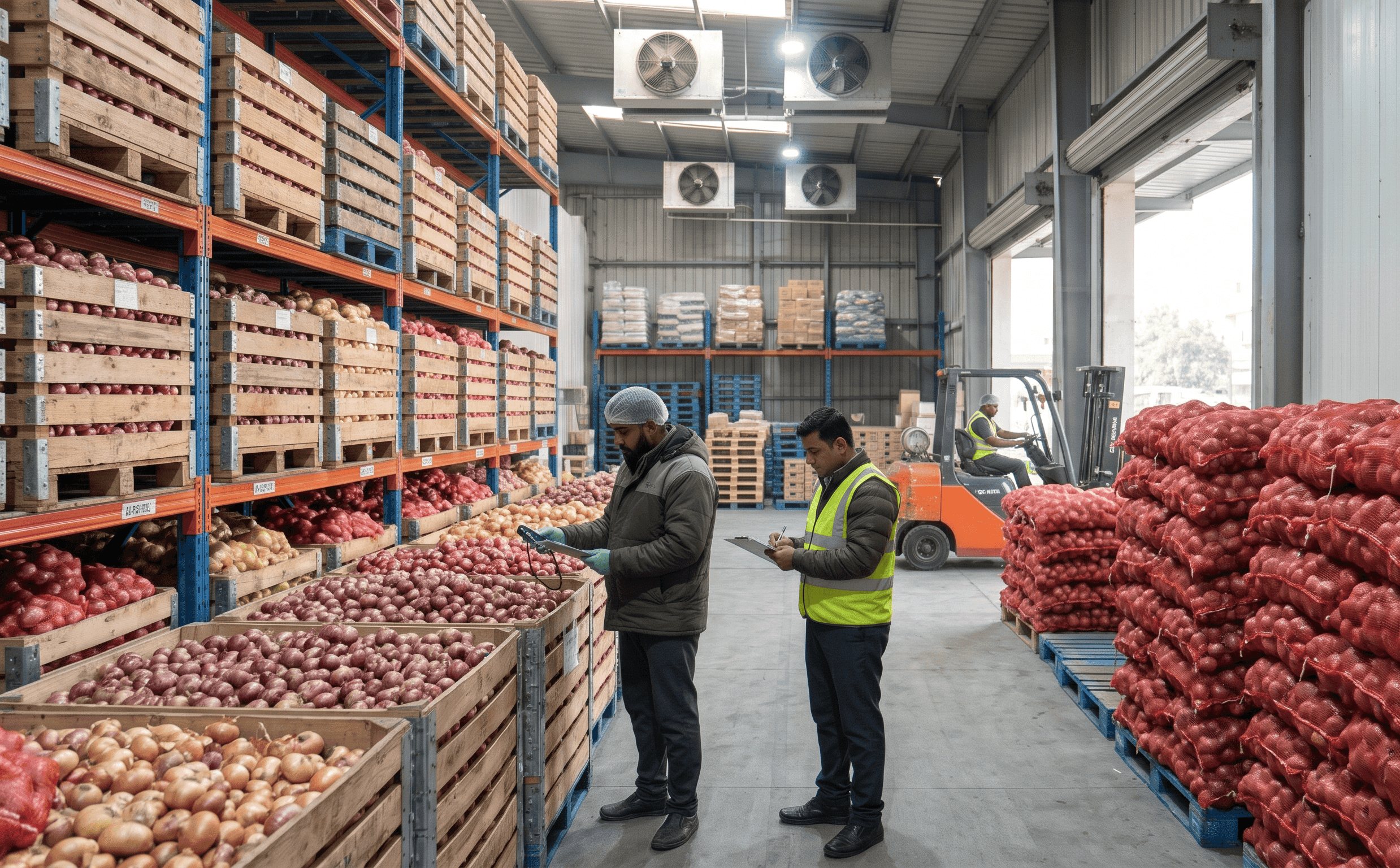
An onion cold storage guide for longer shelf life starts with proper curing, sorting, suitable temperature and humidity control, adequate ventilation, and regular quality inspections. The right storage method depends on onion variety, maturity, and storage duration. Coordinated handling, warehousing, and transportation also help reduce spoilage and maintain quality throughout the supply chain.
An onion cold storage guide for longer shelf life helps farmers, wholesalers, distributors, and food businesses reduce avoidable spoilage and manage inventory more effectively. Successful storage depends on preparing onions correctly and maintaining suitable environmental conditions from storage to dispatch. With JustDeliveries, businesses can explore coordinated warehousing and cold-chain logistics solutions to support more reliable distribution. The key is understanding what onions need before they enter storage.
What Is Onion Cold Storage and How Does It Work?
Onion cold storage involves maintaining suitable environmental conditions to preserve onion quality, control deterioration, and extend the period during which bulbs remain marketable. Depending on the onion variety and storage system, this may involve refrigerated facilities or specially designed ventilated structures.
Unlike many perishable vegetables, mature, dry bulb onions generally require careful moisture management and effective airflow. Excess moisture can encourage decay, while unsuitable temperatures can contribute to sprouting, condensation, or quality loss.
An effective onion cold storage guide for longer shelf life considers four essential factors:
- Temperature: Maintain conditions appropriate for the onion variety and selected storage method.
- Relative humidity: Control moisture to limit decay, rooting, and unnecessary weight loss.
- Ventilation: Allow sufficient airflow to remove excess heat and moisture.
- Initial quality: Store healthy, properly cured bulbs and remove damaged onions before storage.
These factors work together. Refrigeration alone cannot compensate for poor curing, damaged bulbs, or inadequate ventilation.
Why Is Onion Cold Storage Important in India?
Onions are an important ingredient in Indian households, restaurants, food processing, and wholesale markets. Seasonal harvesting and fluctuating demand make effective storage valuable for maintaining supply between harvest periods.
Proper storage can help businesses:
- Reduce avoidable post-harvest losses.
- Maintain onion quality for longer periods.
- Manage inventory during seasonal price and supply fluctuations.
- Plan dispatches according to demand.
- Reduce waste caused by premature spoilage.
- Improve consistency across wholesale and distribution operations.
An onion cold storage guide for longer shelf life is particularly relevant to businesses handling large volumes, where even a modest percentage of spoilage can affect margins.
What Are the Ideal Onion Storage Temperature and Conditions?
The correct onion storage temperature and conditions depend on the variety, maturity, curing quality, intended storage period, and facility design. There is no single setting that suits every onion storage system.
For long-term commercial storage, temperature, humidity, and airflow must be managed together. Indian onion storage practices include ventilated structures as well as purpose-designed cold storage facilities.
Temperature management
Select the temperature range according to the storage method and the onions being handled. Avoid sudden temperature changes that may encourage condensation when cold bulbs encounter warmer, humid air.
Humidity and moisture control
Onions need a carefully managed environment. Excessive moisture encourages decay and rooting, while excessively dry conditions can increase shrinkage and weight loss. Monitoring relative humidity helps operators maintain a suitable balance.
Ventilation and airflow
Adequate airflow helps prevent localized heat and moisture buildup. Storage layouts should allow air to move around stacked onions without overloading the facility or blocking ventilation paths.
Monitoring and inspection
Use calibrated monitoring equipment where appropriate, record environmental readings, and investigate unexpected fluctuations. Regular inspections help identify sprouting, rot, and other signs of deterioration before losses spread.
An onion cold storage guide for longer shelf life should always distinguish between refrigerated storage and conventional ventilated onion storage rather than treating them as interchangeable.
How to Store Onions in Cold Storage in India
Correct preparation before storage is just as important as maintaining the right conditions afterward. Follow these practical steps to protect onion quality.
1. Harvest mature, healthy onions
Handle onions carefully during harvesting and collection. Cuts, bruises, and damaged skins create opportunities for deterioration during storage.
2. Cure onions thoroughly
Curing allows the outer skin and neck to dry before storage. Properly cured onions are generally better prepared for storage than bulbs placed into storage while their necks and outer layers remain wet.
3. Sort and grade the bulbs
Separate damaged, diseased, sprouting, or soft onions from healthy stock. Mixing deteriorating bulbs with good-quality onions can increase the risk of losses.
4. Choose suitable packaging and stacking
Use appropriate ventilated containers or storage arrangements. Avoid excessive stacking that restricts airflow or causes mechanical damage.
5. Maintain the required storage conditions
Monitor temperature, humidity, and ventilation according to the chosen system. Keep storage areas clean and address condensation or equipment problems promptly.
6. Inspect stock and manage rotation
Check stored onions regularly and maintain batch-level inventory records. Use planned dispatch and inventory rotation to prevent older stock from remaining unattended.
An onion cold storage guide for longer shelf life is most effective when these steps form part of a consistent operating procedure.
Best Cold Storage Practices for Onions
Good storage practices combine preparation, environmental control, monitoring, and careful handling. Businesses can improve storage outcomes by following a few essential principles.
- Store properly cured onions rather than freshly harvested, wet bulbs.
- Maintain suitable temperature and humidity for the selected storage method.
- Keep ventilation routes clear and avoid overcrowding.
- Inspect stored stock regularly for decay, sprouting, and damage.
- Maintain clean floors, equipment, containers, and handling areas.
- Record storage conditions and investigate unusual changes.
- Separate deteriorating stock promptly.
- Plan loading and dispatch to reduce unnecessary exposure to unsuitable conditions.
Mansi Mahansaria, writing for JustDeliveries, emphasizes the importance of treating storage and distribution as connected parts of the same operation.
Onion Shelf Life Extension Methods That Help Reduce Spoilage
Several practical measures can help extend onion shelf life, but results depend on onion variety, initial quality, and storage conditions.
Proper curing and sorting
Dry the outer skin and neck adequately before storage. Remove damaged bulbs to reduce the risk of decay spreading through stored stock.
Consistent environmental control
Maintain suitable temperature, humidity, and ventilation for the chosen storage system. Avoid abrupt changes that may create condensation or encourage deterioration.
Regular quality checks
Inspect stored onions for sprouting, soft spots, rot, and unusual moisture. Document findings and remove affected bulbs promptly.
Careful handling during dispatch
Minimize bruising during loading, unloading, and transportation. Coordinate dispatch schedules to reduce unnecessary delays and exposure to unsuitable conditions.
These onion shelf life extension methods work best as part of a coordinated storage and distribution plan rather than as isolated measures.
Onion Preservation Cold Chain in India: Why Logistics Matter
Storage is only one part of preserving onion quality. Poor handling during transportation, prolonged delays, and unsuitable environmental conditions can undermine the benefits of proper storage.
An effective onion preservation cold chain in India requires coordination between collection, storage, inventory management, and distribution. Businesses should consider:
- Reliable warehousing: Choose facilities with appropriate storage arrangements and monitoring procedures.
- Planned transportation: Coordinate collection and dispatch to minimize unnecessary delays.
- Inventory visibility: Maintain accurate records of stock quantities, condition, and storage duration.
- Careful handling: Reduce physical damage during transfers between storage and transport.
- Shipment monitoring: Use available tracking and monitoring systems to improve operational visibility.
Mansi Mahansaria of JustDeliveries highlights the importance of connecting warehousing with transportation and inventory planning. For businesses handling large volumes of onions, coordinated logistics can improve stock visibility and help identify avoidable inefficiencies.
JustDeliveries offers logistics solutions for food and beverage businesses, including warehousing, temperature-controlled transportation, and inventory management. Businesses can explore these services to determine which arrangements suit their operational requirements.
How Long Can Onions Be Stored in Cold Storage?
Onion shelf life varies according to variety, curing, initial quality, storage conditions, and the intended storage system. Properly managed commercial storage can preserve onions for extended periods, but no fixed duration guarantees that every bulb will remain marketable.
To manage storage duration effectively:
- Record the date each batch enters storage.
- Monitor temperature, humidity, and stock condition.
- Inspect batches at planned intervals.
- Track weight loss, sprouting, and spoilage.
- Prioritize dispatch according to condition, storage duration, and business requirements.
Avoid relying on storage duration alone to judge quality. Regular inspections and accurate inventory records provide a more reliable basis for dispatch decisions.
Common Onion Cold Storage Mistakes to Avoid
Even well-equipped facilities can experience losses when basic storage practices are overlooked.
- Storing uncured onions: Excess moisture can increase deterioration risks.
- Ignoring ventilation: Poor airflow can contribute to uneven conditions and localized moisture buildup.
- Mixing damaged and healthy bulbs: Deteriorating onions can compromise surrounding stock.
- Overloading storage areas: Excessive stacking may restrict airflow and damage bulbs.
- Neglecting inspections: Problems can remain undetected until losses become significant.
- Overlooking transportation: Poor handling and delays can reduce the benefits of appropriate storage.
Preventing these mistakes requires consistent procedures, trained handling teams, and clear accountability throughout the storage and distribution process.
Conclusion: Extend Onion Shelf Life with Better Storage and Smarter Logistics
A reliable onion cold storage guide for longer shelf life starts with proper curing, careful sorting, suitable environmental conditions, and regular inspections. These practices help reduce avoidable losses, preserve quality, and support better inventory management.
For commercial businesses, successful preservation also depends on what happens after onions leave storage. Coordinated warehousing, planned transportation, careful handling, and timely distribution help maintain continuity across the supply chain.
Looking to improve your food supply chain?
JustDeliveries supports food and beverage businesses with logistics solutions that include warehousing, temperature-controlled transportation, and inventory management. Whether you are managing growing distribution volumes or looking to coordinate storage and delivery more efficiently, the right logistics approach can help streamline your operations.
Connect with JustDeliveries today to discuss your business requirements and explore a suitable logistics solution.
Frequently Asked Questions
Q1. How should onions be stored for a longer shelf life?
Cure onions thoroughly, remove damaged bulbs, maintain suitable temperature and humidity, ensure adequate ventilation, and inspect stock regularly. The exact conditions depend on the onion variety and storage system.
Q2. Can cold storage prevent onions from sprouting?
Cold storage can help control sprouting when suitable conditions are maintained, but it cannot guarantee prevention. Onion variety, maturity, storage duration, and temperature fluctuations all influence sprouting.
Q3. Is refrigerated cold storage better than conventional onion storage?
Not always. Both refrigerated facilities and properly designed ventilated structures can be suitable, depending on the onion variety, intended storage duration, local conditions, and operational requirements.
Q4. Will proper storage eliminate onion spoilage?
No. Proper storage can reduce avoidable deterioration, but damaged bulbs, diseases, unsuitable conditions, and handling problems can still cause losses.
Q5. What are the ideal onion storage temperature and humidity conditions?
The appropriate conditions depend on the storage system, onion variety, and storage duration. Operators should follow validated agricultural recommendations for their specific system rather than apply one universal setting.
Q6. Why is curing important before onion cold storage?
Curing dries the outer skin and neck, helping prepare onions for storage. Inadequately cured bulbs can be more vulnerable to moisture-related deterioration.
Q7. How can businesses reduce onion spoilage during transportation?
Use careful loading and unloading procedures, suitable transport arrangements, planned dispatch schedules, and appropriate environmental controls. Minimize delays and monitor shipments where suitable technology is available.
Q8. What should businesses look for in an onion storage and logistics partner?
Look for appropriate warehousing, clear handling procedures, inventory management, reliable transportation, operational visibility, and transparent service commitments. Confirm that the provider’s actual capabilities match your onion storage and distribution requirements.