
Blog
Storage and Transportation of Fruits and Vegetables in India: Best Practices for Freshness and Efficiency
3 November 2026By Abhishek Kumar
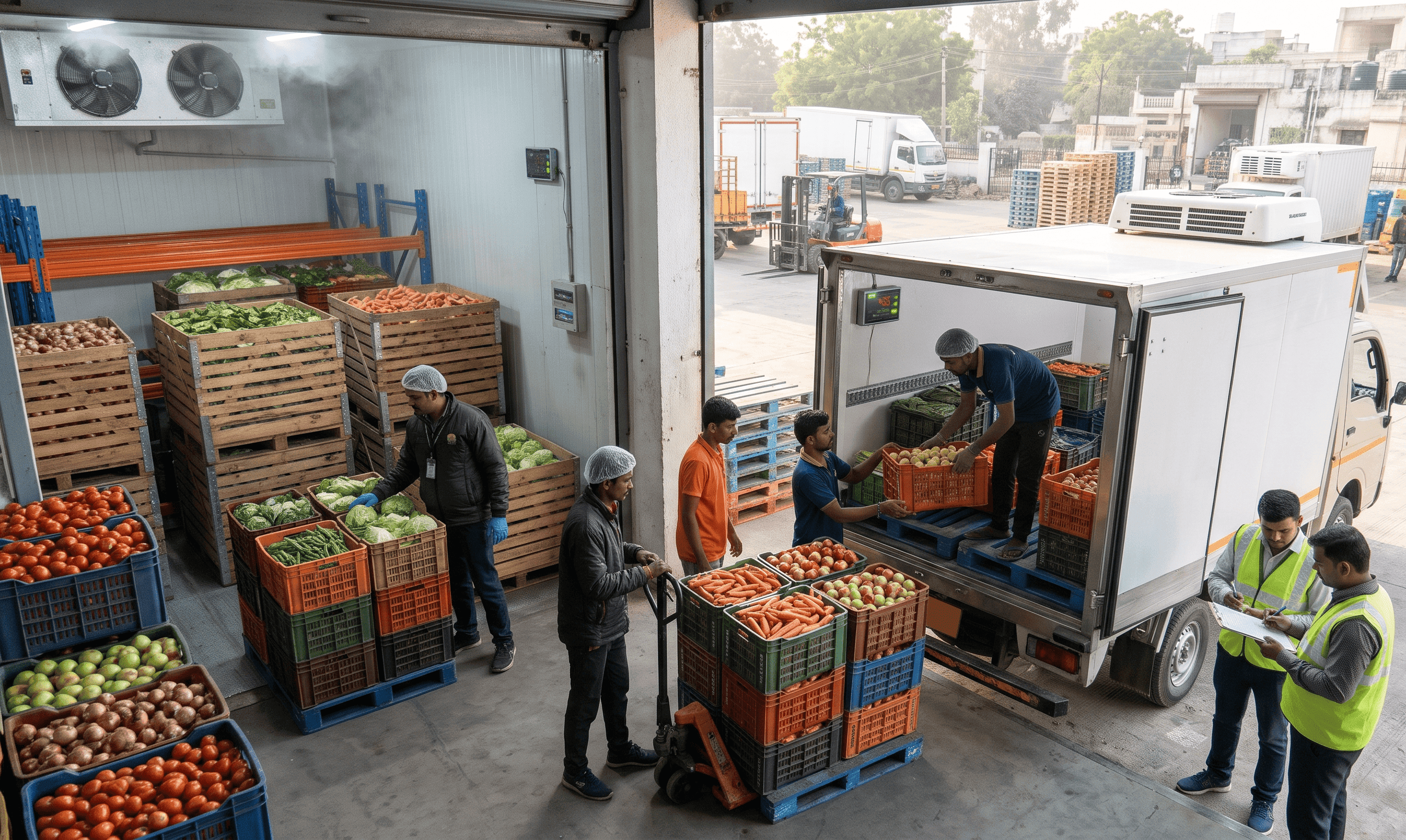
The storage and transportation of fruits and vegetables in India require appropriate temperature control, humidity management, hygienic handling, suitable packaging, and reliable logistics. Cold storage and refrigerated transportation help preserve produce quality, reduce avoidable spoilage, and maintain freshness during distribution. Businesses need a coordinated cold chain tailored to each fruit or vegetable.
The storage and transportation of fruits and vegetables in India depend on maintaining suitable conditions from post-harvest handling to final delivery. Temperature fluctuations, poor packaging, and transportation delays can compromise produce quality. At JustDeliveries, we help food businesses manage distribution through temperature-controlled transportation, cold storage, and technology-enabled logistics. Discover how the right cold-chain practices can improve your fresh-produce supply chain.
Why Is Proper Storage and Transportation of Fruits and Vegetables Important?
Fresh produce continues to undergo biological changes after harvesting. Respiration, moisture loss, ripening, and exposure to unsuitable temperatures can accelerate deterioration. Effective storage and transportation protect quality while helping businesses manage inventory, minimise waste, and deliver products in better condition.
For wholesalers, retailers, food manufacturers, and foodservice operators, good logistics practices can also improve stock availability and reduce losses caused by damaged or spoiled products.
Key benefits include:
- Better freshness: Appropriate temperature and humidity conditions help maintain texture, appearance, and quality.
- Reduced wastage: Careful handling and timely deliveries minimise avoidable damage and deterioration.
- Improved shelf life: Suitable storage conditions slow deterioration when matched to the produce.
- More reliable distribution: Coordinated transportation helps businesses plan deliveries and manage stock.
- Better customer satisfaction: Consistent product quality supports stronger relationships with buyers.
The goal is not simply to keep produce cold. It is to maintain the right conditions for each commodity throughout its journey.
Understanding the Fresh Produce Logistics Cold Chain
A fresh produce logistics cold chain is a coordinated system of storage, handling, transportation, and monitoring designed to maintain appropriate conditions for perishable food.
The main stages include:
- Post-harvest handling: Sort, grade, and remove damaged produce.
- Pre-cooling: Remove field heat where appropriate before storage or transportation.
- Packaging: Use suitable crates or packaging that protect produce and allow adequate airflow.
- Cold storage: Maintain commodity-specific temperature and humidity conditions.
- Transportation: Use suitable vehicles and planned routes to limit unnecessary delays.
- Delivery and inventory management: Check product condition, document deliveries, and rotate stock appropriately.
Temperature continuity matters throughout these stages. Loading warm produce into a refrigerated vehicle does not automatically bring it to the desired internal temperature quickly enough. Appropriate pre-cooling, vehicle preparation, and handling procedures are equally important.
Cold Storage for Fruits and Vegetables in India: Best Practices
Effective cold storage helps manage the effects of heat, moisture loss, and premature ripening. However, different fruits and vegetables have different storage requirements, so businesses should avoid applying a single temperature setting to every product.
Maintain the Right Temperature
Leafy vegetables, root vegetables, tropical fruits, and temperate fruits can require substantially different storage conditions. Some tropical produce, including bananas, is sensitive to chilling at temperatures that may be suitable for other commodities.
Before choosing a storage facility, consider:
- The recommended storage temperature for each commodity.
- The expected storage duration.
- Whether different products can safely share a storage area.
- The need for temperature monitoring and documented checks.
- The effect of temperature changes during loading and unloading.
Control Humidity and Airflow
Relative humidity influences moisture loss, wilting, and product quality. Adequate airflow helps maintain more uniform conditions throughout the storage area, while excessive moisture or condensation can create additional quality problems.
Good practices include keeping ventilation pathways clear, monitoring humidity, maintaining clean storage areas, and following commodity-specific handling guidance.
Prevent Cross-Contamination and Premature Ripening
Some fruits release ethylene, a natural plant hormone that accelerates ripening in sensitive produce. Separating incompatible commodities can help manage unwanted ripening and quality deterioration.
Businesses should also:
- Remove damaged or decaying produce promptly.
- Keep storage areas and reusable crates clean.
- Follow appropriate stock rotation practices.
- Inspect incoming and outgoing inventory.
- Maintain suitable packaging and handling procedures.
Choosing appropriate cold storage for fruits and vegetables in India means considering hygiene, temperature capability, airflow, storage capacity, monitoring, and access to distribution routes.
Best Practices for Transporting Fruits and Vegetables
Transportation is a critical stage because produce can experience heat exposure, vibration, compression, and delays between storage and delivery. Good planning helps minimise these risks.
Use Suitable Temperature-Controlled Vehicles
Refrigerated vehicles help maintain specified temperatures during transit, provided the vehicle is suitable for the commodity and operated correctly. Insulated vehicles may serve different requirements, but insulation alone does not actively cool a load.
Businesses should match vehicle capabilities to the required temperature range, delivery distance, loading conditions, and product sensitivity.
Prepare Produce for Transit
Before dispatch, ensure that produce is appropriately sorted, packaged, and prepared for the journey. Use sturdy crates or suitable packaging to reduce crushing, avoid overloading, and allow adequate airflow where required.
Pre-cooling should be used when appropriate for the commodity and the logistics process. Refrigerated transport is generally intended to maintain suitable conditions rather than compensate for inadequate preparation.
Minimise Delays and Handling Damage
Route planning, delivery scheduling, and coordinated loading and unloading help reduce unnecessary exposure to unsuitable conditions.
Practical measures include:
- Planning routes around delivery windows and operational constraints.
- Minimising unnecessary transfers between vehicles or facilities.
- Monitoring temperature during transit.
- Documenting delivery times and product condition.
- Communicating delays promptly to receiving teams.
Reliable perishable goods transport in India requires more than a refrigerated vehicle. It also depends on trained handling, suitable packaging, operational coordination, and consistent monitoring.
Common Challenges in Fruit and Vegetable Cold-Chain Management
Businesses can face several challenges when moving fresh produce across India’s varied climates and distribution networks.
- Temperature fluctuations: Poor vehicle preparation, frequent door openings, and inadequate monitoring can disrupt storage conditions. Appropriate equipment and documented checks help identify problems.
- Infrastructure limitations: Insufficient storage capacity or unreliable power can affect temperature management. Businesses should assess facility suitability and contingency procedures.
- Packaging and handling issues: Damaged crates, overloading, and excessive handling can cause bruising and compression. Better packaging and loading practices reduce these risks.
- Delivery delays: Traffic, route disruptions, and poorly coordinated schedules can extend transit times. Route planning and delivery visibility support better coordination.
Effective fruit vegetable cold chain management brings these activities together rather than treating storage, transportation, and delivery as separate tasks.
How Technology Improves Fresh Produce Logistics
Technology gives businesses greater visibility into the movement and handling of perishable goods. Digital systems can support temperature monitoring, vehicle tracking, delivery documentation, and operational reporting.
Useful capabilities include:
- Temperature monitoring: Records conditions and helps identify deviations.
- GPS tracking: Provides visibility into vehicle locations and delivery progress.
- Digital delivery records: Help teams document handovers and delivery times.
- Performance monitoring: Supports the review of delays, service levels, and recurring operational issues.
JustDeliveries offers technology-enabled logistics visibility through its HQ App, including vehicle-location tracking, temperature-compliance visibility, and service-level monitoring. These capabilities can help businesses coordinate transportation and respond to operational issues more effectively.
How to Choose Vegetable Cold Storage Solutions in India
Selecting a logistics partner requires evaluating the complete operating requirement, not just the storage rate or vehicle cost.
Consider the following factors:
- Storage capability: Can the facility support the temperatures and conditions your products require?
- Transportation options: Are suitable vehicles available for your routes and delivery frequency?
- Monitoring and visibility: Can your team access relevant temperature and shipment information?
- Operational reliability: Are loading, dispatch, delivery, and exception-handling procedures clearly defined?
- Scalability: Can the arrangement accommodate seasonal demand and changing distribution volumes?
- Service coverage: Does the provider support the locations and delivery schedules your business needs?
JustDeliveries provides dedicated vehicle arrangements, on-demand temperature-controlled transportation, and cold-storage services for food businesses. The appropriate service depends on your product mix, route requirements, storage needs, and delivery frequency.
Conclusion: Build a More Reliable Fresh-Produce Supply Chain
The storage and transportation of fruits and vegetables in India work best when suitable storage conditions, careful handling, temperature-controlled transport, and reliable monitoring operate as one coordinated system. These practices help businesses protect produce quality, manage inventory, and improve distribution efficiency.
At JustDeliveries, we support food businesses with cold-chain transportation, storage, and technology-enabled logistics solutions. Contact JustDeliveries to discuss your fresh-produce transportation and storage requirements and find an approach suited to your business.
Frequently Asked Questions
Q1. Why is proper storage and transportation of fruits and vegetables important?
Proper storage and transportation help maintain freshness, extend shelf life, reduce spoilage, and minimise losses during distribution.
Q2. How does cold storage help preserve fruits and vegetables?
Cold storage maintains suitable temperature and humidity levels, slowing deterioration and helping preserve the quality of fresh produce.
Q3. What is a fresh produce cold chain?
A fresh produce cold chain is a coordinated system of handling, pre-cooling, storage, temperature-controlled transportation, and monitoring that helps maintain produce quality from harvest to delivery.
Q4. Which temperature is best for storing fruits and vegetables?
The ideal storage temperature varies by commodity. Each fruit and vegetable requires suitable conditions based on its sensitivity, ripeness, and expected storage duration.
Q5. How can businesses reduce spoilage during fruit and vegetable transportation?
Businesses can reduce spoilage through suitable packaging, pre-cooling where appropriate, temperature-controlled vehicles, efficient route planning, and careful handling.
Q6. Why are refrigerated vehicles important for transporting fresh produce?
Refrigerated vehicles help maintain the required temperature during transit, protecting perishable goods from excessive heat and temperature fluctuations.
Q7. How does technology improve fruit and vegetable logistics?
Technology supports temperature monitoring, GPS vehicle tracking, delivery documentation, and service-level monitoring, helping businesses improve shipment visibility and coordination.
Q8. How can businesses choose the right cold storage and transportation provider in India?
Businesses should evaluate storage conditions, vehicle availability, temperature monitoring, service coverage, operational reliability, and scalability before selecting a cold-chain logistics provider.