
Blog
What Is Food and Beverage Service? Basics, Types and Operations Guide
6 November 2026By Abhishek Kumar
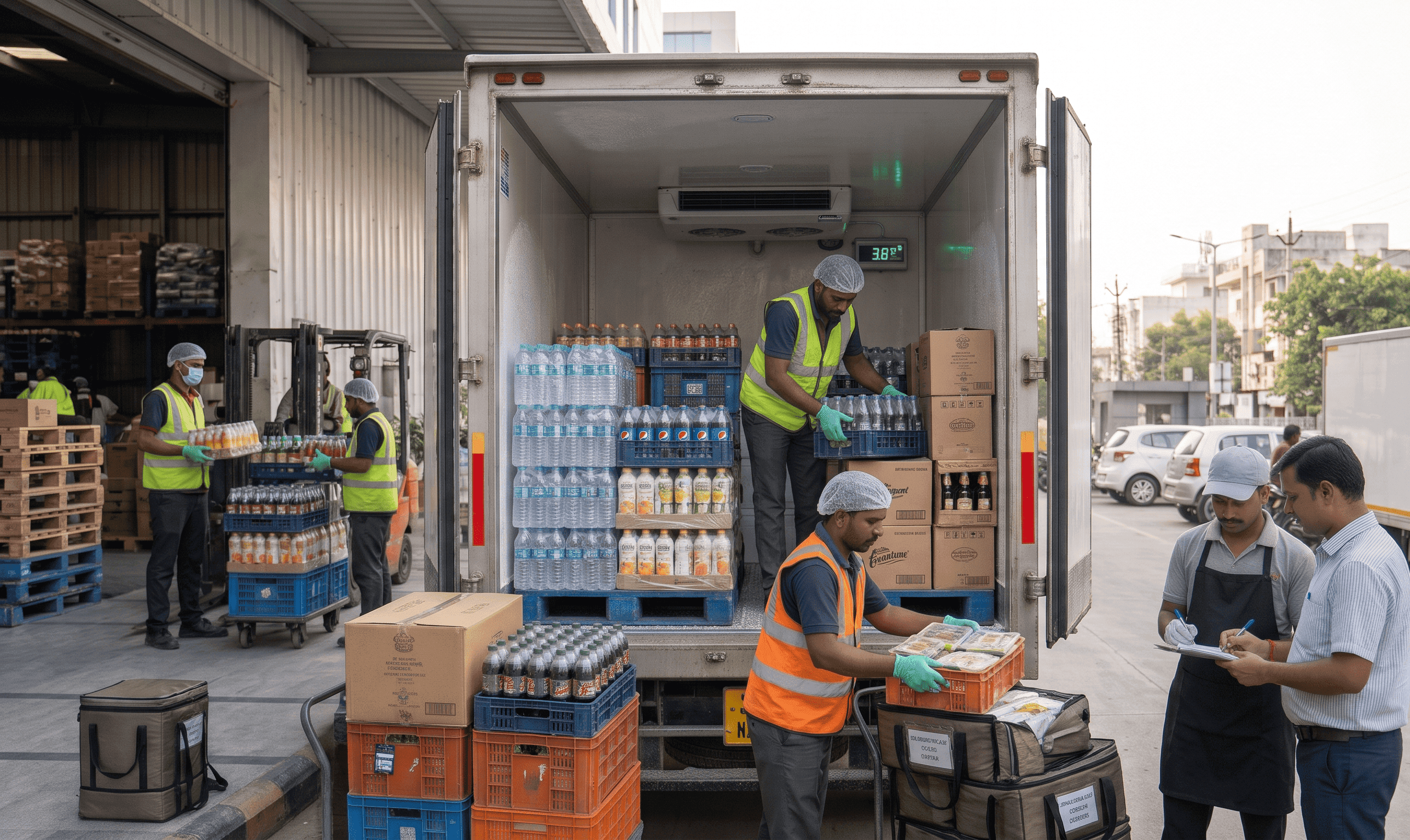
Food and beverage service involves preparing for, coordinating, and delivering food and drinks to customers in restaurants, hotels, cafés, catering businesses, and other food-service establishments. It includes order management, serving, hygiene, billing, customer care, and operational coordination to maintain food quality and deliver a positive dining experience.
Understanding what is food and beverage service basics helps restaurants, hotels, and food businesses deliver consistent customer experiences. From taking orders to maintaining hygiene and coordinating deliveries, every step matters. At JustDeliveries, we understand how reliable logistics supports efficient food operations. Explore the fundamentals below and discover how better coordination can strengthen your food business.
What Is Food and Beverage Service?
Food and beverage service refers to the activities involved in serving prepared meals and drinks to customers in hospitality and food-service environments. It connects food preparation with the customer experience through organised service, accurate orders, timely delivery, and professional communication.
The process extends beyond bringing food to a table. It includes preparing service areas, explaining menus, accommodating dietary requests, maintaining cleanliness, processing payments, and collecting feedback.
A well-managed food and beverage operation focuses on:
- Customer satisfaction: Providing courteous, attentive, and efficient service.
- Food safety: Following appropriate hygiene, storage, and handling practices.
- Service consistency: Maintaining standards across shifts and locations.
- Operational efficiency: Coordinating staff, supplies, kitchen activities, and deliveries.
- Business performance: Managing resources, reducing avoidable waste, and encouraging repeat visits.
These fundamentals apply to independent restaurants, hotel dining rooms, cafés, cloud kitchens, catering companies, and institutional food services.
Food Service Industry Overview: Where Is F&B Service Used?
The food service industry includes businesses that prepare, serve, distribute, or provide meals and beverages to customers. Each setting has different service requirements depending on its menu, customer volume, staffing, and operating model.
Hotels and Restaurants
Hotels and restaurants may offer table service, room service, buffet dining, banquets, and specialised beverage service. Staff coordinate with kitchen teams to ensure orders are accurate and meals reach guests at the appropriate time.
Cafés and Quick-Service Restaurants
Cafés, bakeries, and quick-service restaurants prioritise efficient ordering, preparation, packaging, and collection. Clear workflows help staff manage busy periods without compromising hygiene or order accuracy.
Catering and Institutional Food Services
Catering companies manage food for weddings, conferences, corporate events, and private functions. Hospitals, schools, and workplace cafeterias also require organised food distribution, appropriate portioning, and consistent safety procedures.
Cloud Kitchens and Food Delivery Businesses
Cloud kitchens primarily prepare food for delivery rather than dine-in customers. Their operations depend on order management, suitable packaging, dispatch coordination, and reliable last-mile delivery.
Across these settings, what is food and beverage service basics becomes a practical question about how people, processes, food quality, and customer expectations work together.
F&B Service Types Explained: What Are the Main Types of Food and Beverage Service?
Different establishments choose service methods according to their customers, menu, budget, and available resources. Understanding the main methods helps businesses design appropriate workflows.
1. Table Service
In table service, staff take orders and serve food and beverages directly to seated customers. This method is common in full-service restaurants, hotels, and fine-dining establishments.
2. Buffet Service
Buffet service allows customers to select food from a prepared display. Staff replenish dishes, monitor cleanliness, and maintain appropriate food-holding conditions throughout service.
3. Self-Service and Cafeteria Service
Customers select food or beverages from counters or designated stations. This method is common in workplace cafeterias, educational institutions, food courts, and casual dining settings.
4. Room Service
Room service allows hotel guests to order meals and beverages for delivery to their rooms. Accurate order taking, timely preparation, and careful handling are essential.
5. Banquet and Catering Service
Banquet service supports organised events, including weddings, conferences, and corporate gatherings. Teams coordinate menus, guest numbers, serving schedules, and food distribution.
6. Counter and Quick-Service Methods
Customers order at a counter or through a digital ordering system and collect their meals from a designated point. These methods support high-volume operations where speed and consistency matter.
Commercial and non-commercial food services represent a separate classification. Commercial establishments generally operate to generate profit, while non-commercial services may focus on feeding students, employees, patients, or other groups within an institution.
Types of Food Service Methods in Restaurants: How Do They Differ?
Choosing the right method depends on the customer experience a restaurant wants to create and the resources available to deliver it.
- Full-service dining: Offers greater staff interaction, personalised recommendations, and table-side assistance.
- Quick-service dining: Emphasises streamlined ordering, faster fulfilment, and efficient customer turnover.
- À la carte service: Allows customers to select individual menu items, usually priced separately.
- Set-menu service: Provides a predetermined selection of dishes, often at a fixed price.
- Buffet service: Enables customers to select from multiple prepared dishes, requiring careful replenishment and food-safety monitoring.
When evaluating the types of food service methods restaurant operators can use, consider menu complexity, staffing levels, dining space, customer preferences, order volume, and operating costs.
The best method is the one that matches the business model while maintaining consistent food quality, safety, and service standards.
A Food and Beverage Operations Guide: How Does the Service Process Work?
A reliable food and beverage operations guide starts with a clear sequence of activities. Although individual establishments differ, most follow these fundamental steps.
- Prepare the service area: Clean tables and equipment, arrange supplies, review reservations, and confirm staff readiness.
- Welcome customers: Greet guests, explain the menu, answer questions, and communicate relevant dietary information.
- Take and confirm orders: Record selections accurately and communicate special requests to the kitchen.
- Coordinate preparation: Manage order flow and communicate timing between front-of-house and kitchen teams.
- Serve food and beverages: Verify the order, use appropriate serving procedures, and respond to customer requests.
- Process payments: Prepare accurate bills, accept payments, and resolve discrepancies professionally.
- Clean and review: Sanitise service areas, replenish supplies, monitor waste, and identify opportunities for improvement.
Consistent procedures reduce confusion, support teamwork, and help staff deliver a more dependable customer experience.
Food and Beverage Service Basics India: What Should Businesses Know?
Food and beverage service basics India include professional customer care, hygienic handling, appropriate storage, and compliance with applicable food-safety requirements.
The Food Safety and Standards Authority of India (FSSAI) provides the regulatory framework for food safety in India. Businesses must follow the requirements applicable to their activities, including relevant licensing, handling, hygiene, and storage obligations.
Important considerations include:
- Maintaining clean food preparation and service areas.
- Preventing cross-contamination between raw and ready-to-eat foods.
- Following suitable temperature controls for chilled, frozen, and hot foods.
- Managing inventory to minimise spoilage and avoid unnecessary waste.
- Training employees in hygiene, safe handling, and customer service.
- Coordinating ingredient replenishment and deliveries across outlets.
India’s diverse food-service landscape also requires flexibility. A café, a large restaurant chain, a hospital kitchen, and a regional catering business may need different menus, staffing arrangements, and supply-chain processes.
Reliable coordination between suppliers, storage facilities, transport teams, and receiving locations helps businesses maintain continuity. Temperature-sensitive products require appropriate handling throughout the journey, not just during storage.
How Do Food Safety and Logistics Affect F&B Service Quality?
Food quality depends on more than preparation techniques. Procurement, storage, transport, receiving, and inventory management also influence whether ingredients reach kitchens in suitable condition.
For businesses managing multiple outlets, logistics coordination helps maintain predictable replenishment schedules and reduce operational disruption.
Key practices include:
- Planning deliveries around stock requirements and operating hours.
- Using appropriate vehicles and storage conditions for temperature-sensitive products.
- Monitoring inventory and checking goods when they arrive.
- Coordinating dispatch schedules with kitchen and outlet teams.
- Investigating delays, damaged goods, and temperature deviations promptly.
This is where JustDeliveries can support food and beverage businesses. Its logistics solutions include dedicated transportation, on-demand temperature-controlled vehicles, and cold storage services designed around business requirements.
These services can help businesses coordinate their supply chains more efficiently. Food safety still depends on appropriate handling, monitoring, staff practices, and compliance throughout the process.
What Skills Are Required for Food and Beverage Service?
Successful food and beverage professionals combine practical knowledge with strong interpersonal and organisational skills.
Essential skills include:
- Communication: Explaining menus, confirming orders, and responding to customer concerns.
- Customer service: Remaining attentive, courteous, and professional during busy periods.
- Food safety awareness: Following hygiene procedures and safe food-handling practices.
- Teamwork: Coordinating with kitchen staff, servers, supervisors, and other departments.
- Time management: Prioritising tasks and managing service deadlines.
- Problem-solving: Addressing incorrect orders, delays, complaints, and unexpected changes.
- Digital proficiency: Using point-of-sale systems, digital ordering tools, and inventory software.
As food businesses expand, these skills become increasingly important for maintaining consistent standards across teams and locations.
Strengthen Your Food Business Operations with JustDeliveries
Understanding what is food and beverage service basics is an important step towards running a reliable food business, but consistent service also depends on the systems behind the scenes. Timely replenishment, suitable storage, and dependable transportation help restaurants and food brands coordinate their daily operations.
JustDeliveries supports B2B food and beverage businesses with dedicated transportation, on-demand temperature-controlled vehicles, and cold storage solutions. Whether you manage a restaurant chain, cloud kitchen, café network, or food distribution business, the right logistics support can help streamline your supply chain.
Ready to improve your food logistics? Visit JustDeliveries to explore its services and discuss a solution tailored to your business requirements.
Frequently Asked Questions
Q1. How do beginners learn food and beverage service basics?
Beginners can learn food and beverage service basics by understanding service methods, practising order taking, following hygiene procedures, learning menu knowledge, and observing professional restaurant workflows. Practical training helps build confidence and improve service consistency.
Q2. Can food and beverage service basics help restaurant owners improve operations?
Yes. Understanding food and beverage service basics helps restaurant owners improve staff coordination, order accuracy, inventory planning, hygiene, and customer satisfaction. Consistent procedures can also reduce avoidable waste and operational errors.
Q3. Is food and beverage service different from food production?
Yes. Food production focuses on preparing meals and beverages, while food and beverage service focuses on delivering them to customers. Both functions work together to maintain quality, safety, timing, and customer satisfaction.
Q4. Will food and beverage service basics India differ between restaurants and hotels?
The fundamentals remain similar, but the procedures differ according to the establishment. Hotels may offer room service and banquets, while restaurants may focus on table service, takeaway, or quick-service operations. Applicable Indian food-safety requirements must be followed in both settings.
Q5. What are the four main types of food and beverage service?
Four common types are table service, buffet service, self-service, and room service. Banquet, catering, and counter service are also widely used. The most suitable method depends on the establishment’s operating model and customer requirements.
Q6. What is food and beverage service basics in simple words?
It means organising and delivering food and drinks to customers safely, accurately, and professionally. The process includes taking orders, serving meals, maintaining hygiene, handling payments, and ensuring a satisfactory customer experience.
Q7. Why are food safety and logistics important in food and beverage operations?
Food safety protects customers, while effective logistics helps ingredients and temperature-sensitive products reach their destinations under suitable conditions. Together, appropriate handling, storage, transport, and inventory planning support reliable food-service operations.
Q8. How can food businesses improve their food and beverage operations guide?
Businesses can improve operations by standardising workflows, training employees, monitoring inventory, using digital ordering systems, tracking delivery performance, and reviewing customer feedback. A clear food and beverage operations guide helps teams identify problems and maintain consistent service standards.