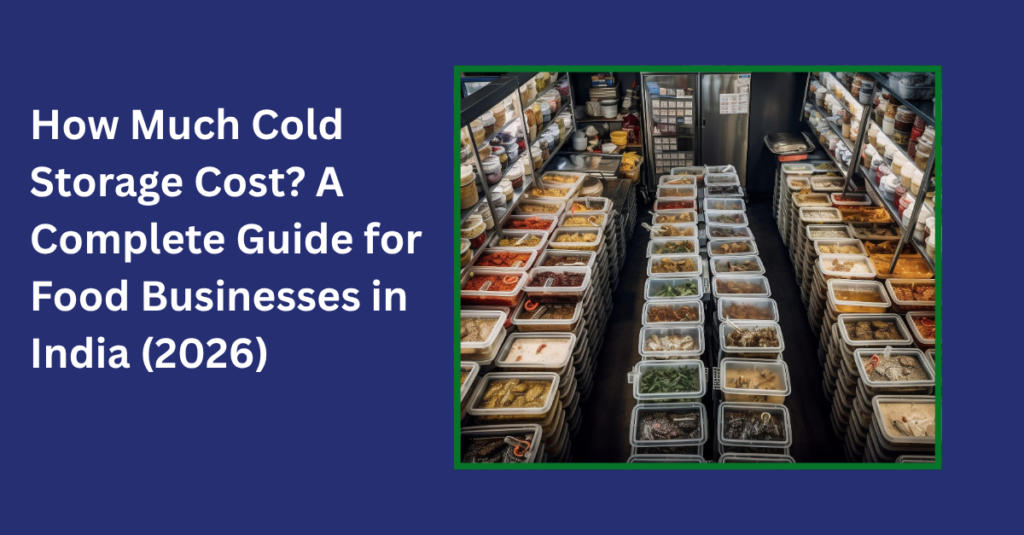
How much cold storage cost in India depends on factors such as storage capacity, temperature range, location, construction quality, refrigeration systems, and operating expenses. While building a cold storage facility requires significant capital investment, many food businesses reduce costs by using third-party cold storage and temperature-controlled logistics services instead.
If you’re wondering how much cold storage cost, the answer depends on your business requirements, storage capacity, and whether you plan to build your own facility or outsource your cold chain operations. For many food and beverage businesses, partnering with an experienced logistics provider like JustDeliveries offers a practical way to access reliable cold storage and temperature-controlled transportation without investing in expensive infrastructure. Businesses in western India can explore dedicated cold chain logistics mumbai services to reduce this infrastructure burden.
Whether you’re handling dairy products, frozen foods, seafood, fresh produce, bakery products, or ready-to-eat meals, understanding cold storage costs helps you make informed operational decisions.
What Is the Average Cold Storage Price in India?
The cold storage price in India typically ranges from ₹40 lakh for a small 100–250 MT facility to ₹8 crore or more for large commercial cold storage warehouses, depending on storage capacity, location, temperature requirements, automation, and refrigeration technology.
As a general estimate:
| Cold Storage Capacity | Estimated Cold Storage Price |
| 100–250 MT | ₹40 lakh–₹1 crore |
| 500 MT | ₹1 crore–₹2.5 crore |
| 1,000 MT | ₹2.5 crore–₹4 crore |
| 2,000 MT and above | ₹4 crore–₹8 crore+ |
These figures are indicative and may vary based on land prices, construction specifications, equipment quality, and regional costs. To better understand the fundamentals before budgeting, it helps to first explore what is cold storage and how these systems work.
Instead of considering only the initial cold storage price, businesses should calculate the complete cold storage project cost, including civil construction, refrigeration systems, insulation, electrical infrastructure, installation, backup power, and future operating expenses.
How Much Does Cold Storage Cost to Build?
When asking how much does cold storage cost, it’s important to understand the different cost components involved in developing a facility.
Land and Civil Construction
The location of the warehouse significantly affects overall project costs. Land prices, accessibility, and infrastructure availability all contribute to the total investment.
Insulation and Refrigeration Systems
Cold storage warehouses rely on insulated panels, refrigeration units, evaporators, condensers, and temperature monitoring systems to maintain product quality. These systems represent one of the largest portions of the overall investment.
Electrical Infrastructure
Cold storage facilities require stable electrical systems capable of supporting refrigeration equipment around the clock. Backup power systems are equally important to prevent temperature fluctuations during power outages.
Material Handling Equipment
Loading docks, pallet systems, forklifts, racking solutions, and inventory management infrastructure are also essential for efficient warehouse operations. Understanding what is cold storage warehouse infrastructure in detail can help businesses plan these investments more accurately.
Each of these elements influences how much cold storage cost, making every project unique.
Factors That Affect Cold Storage Costs
Several operational and technical factors determine the final investment.
Storage Capacity
Larger warehouses require greater refrigeration capacity, additional insulation, and higher operating costs.
Temperature Requirements
Products stored at chilled temperatures have different refrigeration needs compared to frozen goods.
Energy Efficiency
Modern refrigeration equipment with energy-efficient technology can lower electricity consumption over time, reducing operating expenses.
Automation
Temperature monitoring, inventory tracking, warehouse management systems, and automated reporting improve operational efficiency while increasing initial investment.
Regulatory Compliance
Food-grade storage facilities must comply with applicable quality, hygiene, and safety standards, which can influence construction and maintenance costs. Working with a reliable frozen food supplier can also help businesses maintain these standards consistently across their inventory.
Operating Costs You Should Consider
Building a facility is only one part of the equation. Understanding how much cold storage cost also requires evaluating ongoing operational expenses.
Major recurring costs include:
- Electricity consumption
- Equipment maintenance
- Labour
- Refrigeration servicing
- Insurance
- Inventory management
- Warehouse operations
- Temperature monitoring
- Cold-chain transportation
Electricity often represents one of the largest recurring expenses because refrigeration systems operate continuously.
Building Your Own Cold Storage vs Outsourcing
Many growing food businesses compare the cost of building their own facility with outsourcing storage and logistics.
| Build Your Own | Outsource to a Cold Chain Partner |
| High upfront investment | Lower initial investment |
| Requires technical expertise | Managed by specialists |
| Ongoing maintenance | Maintenance handled by provider |
| Fixed infrastructure | Flexible storage capacity |
| Longer setup time | Faster operational readiness |
For businesses focused on growth, outsourcing allows them to scale storage and distribution without managing warehouse infrastructure. In fast-growing markets, dependable cold chain logistics bangalore support makes this kind of scaling easier to manage.
How JustDeliveries Helps Businesses Reduce Cold Storage Costs
For many food brands, the answer to how much cold storage cost isn’t simply about building warehouses—it’s about choosing the most efficient supply chain model.
JustDeliveries provides integrated B2B cold-chain logistics designed specifically for the food and beverage industry. Instead of investing heavily in warehouse infrastructure, businesses can access temperature-controlled storage, refrigerated transportation, inventory visibility, and reliable distribution through a single logistics partner. Businesses in the capital region can rely on dedicated cold chain logistics delhi support to access these services directly.
Its technology-driven HQ App acts as a central dashboard where F&B brands can monitor live vehicle movements, temperature compliance, service-level agreements (SLAs), billing, and AI-driven performance insights in real time. This visibility helps businesses improve operational efficiency while maintaining product quality throughout the supply chain.
As highlighted by Mansi Mahansaria, efficient cold-chain management is not only about storing products at the right temperature but also about ensuring visibility, consistency, and timely deliveries across every stage of the logistics network.
Quick Commerce Is Reshaping Cold-Chain Logistics
The rapid growth of quick commerce has transformed how temperature-sensitive products move across India.
Consumers now expect frozen foods, dairy products, beverages, desserts, and fresh groceries to arrive within minutes. This places greater pressure on logistics providers to maintain product integrity while meeting faster delivery timelines.
JustDeliveries powers cold-chain logistics for leading quick commerce platforms including Swiggy Instamart, Zepto, Blinkit, Amazon, JioMart, and BigBasket. Through dedicated hub-to-hub and dark store deliveries, the company ensures products remain within required temperature ranges while offering real-time shipment tracking throughout the journey. This includes dedicated cold chain logistics hyderabad operations supporting the region’s growing quick commerce sector.
This integrated approach enables food brands to serve modern retail channels without building their own nationwide cold-chain infrastructure.
Ways to Reduce Cold Storage Costs
Businesses can optimise their cold-chain expenses by adopting smarter operational strategies.
Some effective approaches include:
- Choosing shared cold storage facilities
- Improving inventory planning
- Reducing unnecessary storage time
- Investing in energy-efficient refrigeration
- Optimising transportation routes
- Using integrated warehouse and logistics partners
- Monitoring operational performance through real-time technology
These practices can help reduce both capital expenditure and recurring operating costs.
Conclusion
Understanding how much cold storage cost requires looking beyond construction expenses alone. Factors such as infrastructure, refrigeration systems, energy consumption, warehouse operations, transportation, and long-term maintenance all contribute to the total cost of ownership.
For many food businesses, outsourcing cold storage and logistics provides greater flexibility, lower capital investment, and faster scalability. With temperature-controlled warehousing, reliable transportation, advanced technology, and real-time operational visibility, JustDeliveries helps businesses build an efficient cold chain without the complexity of managing their own infrastructure.
As Mansi Mahansaria emphasizes, a well-managed cold chain is ultimately about delivering consistent product quality while supporting sustainable business growth.
Frequently Asked Questions
Q1. How much cold storage cost in India?
The cost depends on storage capacity, location, refrigeration technology, insulation quality, and operational requirements. Larger facilities generally require higher investments.
Q2. How much does cold storage cost to build?
Construction costs include land, civil works, refrigeration systems, insulation panels, electrical infrastructure, warehouse equipment, and automation technology.
Q3. Can small food businesses use shared cold storage?
Yes. Shared cold storage allows businesses to access professional temperature-controlled facilities without making significant capital investments.
Q4. Is building your own cold storage always the best option?
Not necessarily. Many businesses benefit from outsourcing because it reduces infrastructure costs while providing greater operational flexibility.
Q5. Will energy-efficient refrigeration reduce operating costs?
Yes. Modern refrigeration systems typically consume less energy and can help lower long-term electricity expenses while maintaining temperature consistency.
Q6. What factors affect how much cold storage cost?
Storage capacity, temperature requirements, warehouse size, location, insulation, automation, energy consumption, and maintenance all influence the overall cost.
Q7. Why do businesses outsource cold storage?
Businesses outsource to reduce upfront investment, improve scalability, access specialised expertise, and simplify warehouse and transportation management.
Q8. What industries benefit the most from cold storage logistics?
Industries including dairy, frozen foods, seafood, meat, bakery, beverages, fresh produce, cloud kitchens, QSRs, and FMCG brands rely on efficient cold storage and temperature-controlled logistics to maintain product quality.

Mansi Mahansaria
I’m Mansi Mahansaria, CEO and Founder of JustDeliveries, a B2B logistics company specializing in the food and beverage sector. With a background in Chemical Technology (ICT Mumbai), an MBA (FMS Delhi), and experience at IDFC Private Equity and Tata Group, I’ve built a plug-and-play logistics network helping F&B brands scale efficiently. I also share insights on entrepreneurship and logistics at industry and academic events.