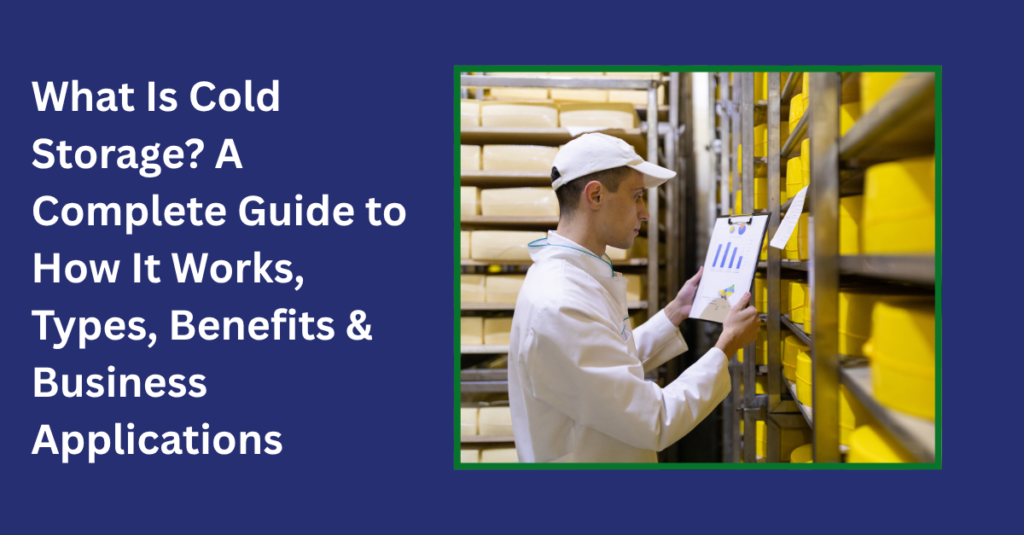
Cold storage is a temperature-controlled facility designed to preserve perishable products such as food, dairy, seafood, frozen goods, and certain pharmaceuticals by maintaining specific temperature ranges. It helps extend shelf life, maintain product quality, reduce spoilage, and supports an efficient cold chain from storage to distribution.
What is cold storage? It is a specialized storage system that maintains controlled temperatures for temperature-sensitive products to preserve their quality and safety. For food businesses, reliable cold storage combined with efficient transportation is essential for maintaining product integrity. At JustDeliveries, we help food and beverage brands move perishables through technology-enabled cold-chain logistics, ensuring products remain fresh from warehouse to destination. Businesses in the capital region can rely on dedicated cold chain logistics delhi support to keep perishables safe throughout the journey.
What Is Cold Storage?
The simplest way to understand what is cold storage is to think of it as a warehouse where temperature is carefully controlled to protect products that can spoil when exposed to heat. Unlike conventional warehouses, cold storage facilities are equipped with refrigeration systems, insulation, humidity controls, and continuous temperature monitoring.
The primary purpose of cold storage is to slow down the natural deterioration of perishable goods. Whether storing fresh produce, frozen foods, dairy products, meat, seafood, or ready-to-eat meals, maintaining the right temperature helps businesses preserve freshness, minimise waste, and comply with food safety standards.
Understanding what is cold storage is especially important for businesses operating in today’s fast-moving food supply chain, where customers expect consistently fresh products and timely deliveries.
How Does Cold Storage Work?
A cold storage facility maintains a stable environment using specialised refrigeration equipment that continuously regulates temperature and humidity.
The system typically includes:
- Compressors that circulate refrigerant
- Condensers that release heat
- Evaporators that cool the storage area
- Expansion valves that regulate refrigerant flow
- Digital sensors for continuous temperature monitoring
Modern facilities also use automated monitoring systems that immediately detect temperature variations, helping businesses prevent spoilage before it occurs. This level of monitoring is especially valuable for a specialised ice cream supply chain india, where even minor temperature shifts can affect product quality.
For food businesses handling thousands of temperature-sensitive products daily, maintaining uninterrupted cooling is critical to protecting inventory and ensuring regulatory compliance.
Types of Cold Storage
Different products require different temperature ranges, making it essential to choose the right type of storage.
Chilled Storage
Typically used for fresh fruits, vegetables, dairy products, beverages, and bakery items that need cooling but not freezing. For produce specifically, dedicated cold storage for vegetables helps maintain freshness and reduce spoilage.
Frozen Storage
Designed for frozen foods, seafood, meat, desserts, and ready-to-cook products requiring sub-zero temperatures.
Deep Freeze Storage
Suitable for products requiring extremely low temperatures for extended preservation.
Walk-in Cold Rooms
Commonly used by restaurants, cloud kitchens, hotels, supermarkets, and food manufacturers for daily inventory management.
Cold Storage Warehouses
Large-scale facilities designed for manufacturers, distributors, importers, exporters, and food brands managing high inventory volumes.
Products That Require Cold Storage
Many industries rely on temperature-controlled storage to maintain product quality throughout the supply chain.
Common products include:
- Fresh fruits and vegetables
- Dairy products
- Frozen foods
- Meat and poultry
- Seafood
- Bakery ingredients
- Ice cream
- Chocolates
- Ready-to-eat meals
- Beverages
Each product category requires carefully maintained temperature ranges to preserve freshness and extend shelf life.
Industries That Depend on Cold Storage
Knowing what is cold storage also means understanding the industries that depend on it every day.
Cold storage plays an important role across:
- Food manufacturing
- Restaurant chains
- Cloud kitchens
- Dairy businesses
- Frozen food brands
- Seafood suppliers
- Meat processors
- Beverage companies
- FMCG brands
- Food distributors
As consumer expectations for fresh, high-quality products continue to grow, dependable cold storage has become a strategic advantage rather than simply an operational requirement. Partnering with a reliable frozen food supplier further strengthens this advantage by ensuring consistent product availability.
Key Benefits of Cold Storage
An effective cold storage system offers far more than temperature control.
- Extends Shelf Life: Controlled temperatures slow microbial growth and product deterioration, allowing businesses to store products for longer without compromising quality.
- Reduces Food Waste: Spoilage is one of the largest operational costs for food businesses. Cold storage significantly reduces unnecessary inventory loss.
- Maintains Product Quality: Freshness, texture, flavour, nutritional value, and appearance are better preserved when products remain within recommended temperature ranges.
- Supports Food Safety: Temperature-controlled storage helps businesses meet hygiene and food safety requirements while reducing the risk of contamination.
- Improves Inventory Management: Businesses can maintain consistent stock levels while responding more efficiently to changing customer demand.
Enables Wider Distribution: Reliable cold storage allows products to travel greater distances without affecting freshness, opening new market opportunities. Nationwide frozen food transportation india services make this kind of extended distribution possible while preserving quality.
Cold Storage vs Cold Chain Logistics
Although often used interchangeably, cold storage and cold chain logistics serve different purposes.
| Cold Storage | Cold Chain Logistics |
| Stores products | Moves products safely |
| Fixed location | End-to-end transportation |
| Temperature-controlled warehouse | Temperature-controlled supply chain |
| Inventory management | Storage, transport, tracking and distribution |
Understanding what is cold storage also means recognising that storage alone is only one part of maintaining product quality. Once products leave the warehouse, temperature-controlled transportation becomes equally important.
This is where integrated cold-chain logistics create greater value by ensuring products remain within safe temperature ranges throughout their journey. Comprehensive cold food storage solutions combined with reliable transport form the backbone of this integrated approach.
Why Integrated Cold Storage and Logistics Matter
The rapid growth of quick commerce has transformed consumer expectations. Customers now expect groceries, frozen foods, dairy products, beverages, and ready-to-eat meals to arrive quickly while maintaining freshness. In fast-growing markets, dependable frozen food transport bangalore services help meet these rising expectations.
To support these expectations, JustDeliveries powers temperature-controlled logistics for major quick commerce platforms including Swiggy Instamart, Zepto, Blinkit, Amazon, JioMart, and BigBasket. Its specialised operations handle hub-to-hub and dark store deliveries with continuous temperature control, real-time vehicle tracking, and operational visibility that helps protect product quality across every stage of the journey.
Technology further strengthens these operations through the JustDeliveries HQ App, a central dashboard built specifically for food and beverage brands. Businesses can monitor live vehicle movement, track temperature compliance, review service-level agreements (SLAs), access billing information, and gain AI-driven performance insights from a single platform in real time. This includes dedicated cold chain logistics hyderabad operations supporting the region’s growing food and beverage sector.
As explained by Mansi Mahansaria, efficient cold-chain operations depend not only on reliable infrastructure but also on technology that gives businesses complete visibility over their temperature-sensitive supply chains.
Choosing the Right Cold Storage Partner
When selecting a cold storage provider, businesses should evaluate more than warehouse space.
Important considerations include:
- Temperature consistency
- Modern refrigeration systems
- Real-time monitoring
- Food safety compliance
- Strategic warehouse locations
- Scalability
- Inventory visibility
- Technology integration
- Refrigerated transportation
- Industry experience
Choosing a partner capable of integrating storage with transportation helps reduce delays, minimise handling risks, and improve overall operational efficiency.
Conclusion
Understanding what is cold storage helps businesses appreciate its role in preserving product quality, reducing food waste, and maintaining supply chain efficiency. However, storage alone cannot guarantee freshness. Temperature control must continue throughout transportation and distribution to ensure products reach customers in the best possible condition.
At JustDeliveries, we provide integrated cold-chain logistics solutions designed exclusively for the food and beverage industry. From temperature-controlled warehousing and refrigerated transportation to real-time monitoring through the HQ App, our solutions help businesses move perishables with confidence. As Mansi Mahansaria highlights, combining technology, operational expertise, and end-to-end visibility enables food businesses to scale while maintaining consistent product quality across every delivery.
Frequently Asked Questions
Q1. What is cold storage?
Cold storage is a temperature-controlled facility that preserves perishable products by maintaining specific temperature ranges, helping businesses extend shelf life and protect product quality.
Q2. How does cold storage help the food industry?
Cold storage keeps food products fresh by reducing spoilage, maintaining food safety standards, preserving nutritional value, and supporting efficient inventory management.
Q3. What products require cold storage?
Fresh produce, dairy, meat, seafood, frozen foods, bakery products, beverages, chocolates, and ready-to-eat meals commonly require cold storage.
Q4. Why is cold storage important for businesses?
It helps reduce product losses, improve operational efficiency, maintain customer satisfaction, and support regulatory compliance for temperature-sensitive products.
Q5. How is cold storage different from cold chain logistics?
Cold storage refers to temperature-controlled warehousing, while cold chain logistics includes storage, refrigerated transportation, distribution, and continuous temperature monitoring throughout the supply chain.
Q6. Can small food businesses benefit from cold storage?
Yes. Restaurants, cloud kitchens, bakeries, cafés, and growing food brands can improve inventory management, reduce waste, and maintain consistent product quality through cold storage solutions.
Q7. Is cold storage only used for frozen products?
No. Cold storage includes chilled, refrigerated, frozen, and deep-freeze environments designed for different categories of temperature-sensitive products.
Q8. Will integrated cold-chain logistics improve product quality?
Yes. Combining cold storage with refrigerated transportation, real-time tracking, and continuous temperature monitoring helps maintain consistent product quality from warehouse to customer.

Mansi Mahansaria
I’m Mansi Mahansaria, CEO and Founder of JustDeliveries, a B2B logistics company specializing in the food and beverage sector. With a background in Chemical Technology (ICT Mumbai), an MBA (FMS Delhi), and experience at IDFC Private Equity and Tata Group, I’ve built a plug-and-play logistics network helping F&B brands scale efficiently. I also share insights on entrepreneurship and logistics at industry and academic events.