The Hidden World of B2B Food Logistics
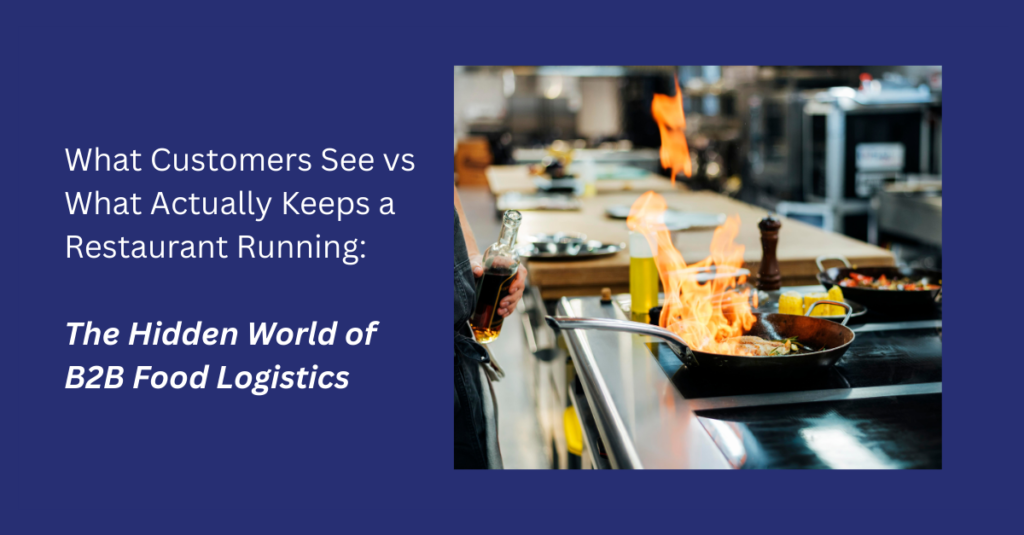
Walk into any successful restaurant and the experience feels effortless. The lighting is warm, the aromas are inviting, the plates look perfect and the service feels smooth. From the customer’s point of view, the restaurant appears to run on creativity, design and culinary talent.
But operators know a different truth. Behind the polished front end is a backstage filled with complexities. The real heartbeat of a restaurant lies in processes customers never see, including the 3PL logistics running behind India’s restaurant industry that manages everything from cold chain delivery to inventory replenishment. This hidden world influences quality, consistency, speed and profitability. It is also the part of the food ecosystem that has been the slowest to modernise.
India’s food delivery revolution has transformed the way consumers eat. Apps like Swiggy and Zomato have made last mile delivery predictable, visible and fast. Customers track orders, receive updates and enjoy high service reliability. Restaurants benefit from this consistency too.
Yet the supply chain that feeds those restaurants has not kept pace.
Behind every beautiful plate is a long journey of ingredients that often looks messy, and the lack of proper frozen food transportation keeping restaurant kitchens stocked means temperature-sensitive items face avoidable risk every day. Taxis deliver vegetables. Fish travels without temperature logs. Drivers ask for directions. Teams guess when stock will arrive. Managers call five different people for one update. Central kitchens wait. Outlet teams worry. And quality quietly suffers.
This gap between the modern consumer experience and the outdated backend is where India’s next big transformation in food operations must happen.
The Illusion of Smooth Restaurant Operations
What customers see is the final two percent of restaurant operations. The real ninety eight percent happens away from the tables, inside kitchens, storage rooms and delivery trucks.
Most people never see:
• Ingredients arriving through taxis or bikes
• Perishables transported without temperature records
• Outlets coordinating delivery windows manually
• Drivers calling for directions at every turn
• Stock arriving early or late without any predictability
• Managers following up across WhatsApp groups
• Prep teams waiting for raw materials
• Central kitchens making last minute substitutions
This invisible chaos affects every part of the restaurant. Prep schedules slip. Quality fluctuates. Wastage increases. Costs surprise the operator. And growth becomes harder because the backend is unreliable. Partnering with an experienced intra city logistics India provider can help streamline operations, improve delivery efficiency, and ensure a more dependable supply chain that supports consistent restaurant growth.
A restaurant is only as strong as its supply chain. And for most brands, this is where the biggest improvements are waiting to be made.
The State of B2B Food Logistics in India Today
India’s F&B ecosystem is one of the fastest growing in the world. According to industry reports, the food services market is projected to cross 6 trillion INR by 2028. QSR chains, cloud kitchens and D2C food brands are expanding aggressively across cities. Yet, the infrastructure supporting them is still fragmented.
A few data points highlight the gap:
• Nearly 70 percent of restaurant procurement in India still happens through unorganised channels
• More than 60 percent of perishable products face some form of temperature deviation during transport
• Over 40 percent of restaurant operations claim that inconsistent supply timing affects daily prep
• Food wastage in India contributes to almost 7 percent of global food loss
• Less than 5 percent of India’s logistics industry is estimated to be tech enabled in the B2B fresh food segment
This mismatch between industry growth and backend readiness affects every operator. When logistics is unorganised, everything becomes slower and more expensive.
Restaurants do not just need movement. They need movement that is trackable, reliable, optimised, and consistent. This is where a trusted third party logistics company India can make a significant difference. By handling transportation, warehousing, and last-mile delivery with precision, logistics partners help restaurants maintain product quality, reduce operational challenges, and ensure timely deliveries. The result is a more efficient supply chain, better customer experiences, and greater scalability for growing food businesses.
Why Organised B2B Logistics Is No Longer Optional
The food industry cannot keep depending on guesswork. For the ecosystem to scale, the backend must be as structured as the frontend.
Organised logistics brings benefits that are impossible to replicate manually:
1. Real Time Visibility
Teams should know exactly where their stock is and when it will arrive. This becomes the backbone of accurate prep planning.
2. Temperature Reliability
Cold chain cannot be based on trust alone, and behind-the-scenes cold chain for Bangalore restaurants requires consistent monitoring across every touchpoint from supplier to kitchen. It needs records, logs, monitoring and disciplined handling.
3. Consistent Routing and Timings
Predictable supply creates predictable operations. Outlets perform better when they do not wait or rush.
4. Reduction in Hidden Costs
No more taxis as emergency backups. No more last minute purchases. No more manual hours lost in coordination.
5. True Scalability
A brand cannot grow with a backend that requires daily firefighting. Organised logistics removes the bottleneck.
This evolution is already happening. The question is how quickly brands adopt it.
What Customers See vs What Actually Runs the Industry
From the outside, restaurants look like culinary experiences. But from the inside, they are supply chain engines.
Every outlet, every dish and every shift depends on:
• Freshness and consistency
• Timely replenishment
• Cold chain integrity
• Standardised processes
• Coordinated central kitchens
• Reliable delivery partners
• Clear data
• Strong communication
When this foundation is weak, even the best food concept struggles. When this foundation is strong, expansion becomes much easier.
This is why the next phase of India’s food evolution must focus on backend logistics transformation.
Building the Next Generation of B2B Food Logistics
The future of food logistics is not defined by bigger trucks or more riders. It is defined by better systems.
The shift has already begun in areas such as:
• Better route planning
• Hub consolidation
• Multi temperature storage
• Digitised tracking
• Automated SOPs
• Trained delivery teams
• Cold chain discipline
• Predictable delivery windows
Restaurants do not just need movement. They need movement that is trackable, reliable, optimised and consistent.
This is where technology becomes the key differentiator.
The Role of the JustDeliveries App in Modernising the Supply Chain
One of the biggest gaps in B2B food logistics has always been transparency. Outlets guess where the truck is. Kitchens call repeatedly for updates. Managers wait for photographs to confirm delivery. None of this scales.
The JustDeliveries App was built to remove these friction points.
It brings:
• Real time delivery tracking
• Temperature insights for relevant movements
• Standardised PODs
• Automated alerts
• Route visibility
• Centralised communication
• Dashboards for outlets and central kitchens
Instead of relying on calls or group messages, teams finally have a single source of truth.
The app aligns the entire network across cities and reduces dependency on manual follow ups. It creates predictability where previously there was uncertainty.
The Industry Is Growing. The Backend Must Grow Faster.
India’s food and beverage ecosystem is entering a new era. More brands. More cities. More consumers. More delivery channels. More expectations.
What it needs now is a backend that matches its ambition.
Organised B2B logistics is no longer a luxury. It is the foundation that allows brands to scale reliably:
• Consistent quality
• Reduced wastage
• Lower operational chaos
• Faster expansion
• Healthier unit economics
• Happier teams
The brands that build disciplined, tech enabled supply chains today will be the ones that dominate tomorrow.
A Restaurant Can Only Scale as Fast as Its Strongest Backend Link
Every great restaurant has two stories. The one customers see and the one that truly keeps it running. The real battle for consistency is fought long before the first dish is served. It is fought in warehouses, kitchens, cold rooms and delivery routes.
As India’s food ecosystem matures, this backend will decide which brands grow steadily and which ones struggle despite great products.
The future belongs to businesses that treat logistics not as an afterthought, but as a core capability.
And that shift is finally happening.

Mansi Mahansaria
I’m Mansi Mahansaria, CEO and Founder of JustDeliveries, a B2B logistics company specializing in the food and beverage sector. With a background in Chemical Technology (ICT Mumbai), an MBA (FMS Delhi), and experience at IDFC Private Equity and Tata Group, I’ve built a plug-and-play logistics network helping F&B brands scale efficiently. I also share insights on entrepreneurship and logistics at industry and academic events.