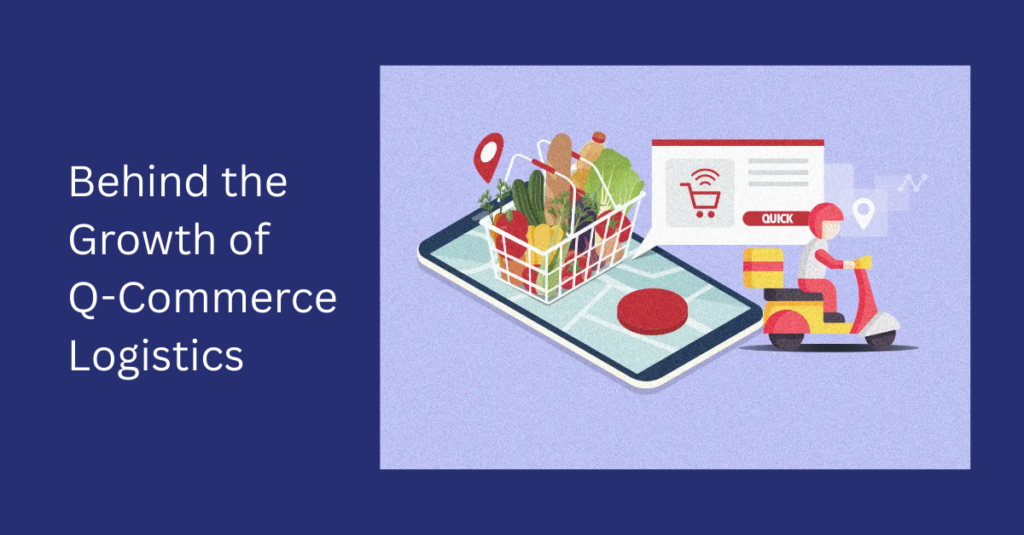
Q commerce delivery is the logistics model that enables products to reach customers within 10 to 30 minutes through hyperlocal dark stores, high-frequency inventory replenishment, and efficient transportation networks. The success of quick commerce delivery depends on reliable quick commerce logistics, cold chain infrastructure, and specialized logistics partners that ensure products remain available, fresh, and ready for rapid fulfillment.
Q commerce delivery has transformed how urban consumers buy groceries, snacks, dairy products, frozen foods, and daily essentials. At JustDeliveries, we see firsthand that successful quick commerce delivery is not just about fast riders or mobile apps it depends on a robust logistics network that keeps dark stores replenished, stocked, and ready to fulfill orders within minutes. If you’re curious about the mechanics behind this, our guide on how quick commerce supply chain works in India breaks down the full process.
What Fuels the Q Commerce Delivery Model?
It is 12:15 a.m. in Bangalore. A student, hungry after a late-night study session, orders a pack of brownies through a quick commerce app. By 12:25 a.m., the order arrives at his doorstep.
While this experience feels effortless, the reality behind q commerce delivery is far more complex. The speed consumers enjoy is powered by sophisticated quick commerce logistics networks operating around the clock to understand the tech side, see how quick commerce apps work in India.
Three critical components make the model work:
1. Dark Stores Near Demand Centers
Dark stores are strategically located micro-fulfillment centers positioned close to consumers. These facilities stock high-demand products, allowing brands and platforms to fulfill orders rapidly. Dark stores have become a foundational component of quick commerce logistics India, enabling delivery windows of 10 to 30 minutes.
2. High-Frequency Intra-City Replenishment
Dark stores cannot operate efficiently without constant inventory movement. Products need to be replenished multiple times a day from central warehouses, production facilities, cloud kitchens, and distribution hubs. This kind of frequent movement is exactly what our intra city logistics India network is built to support.
3. Specialized Logistics Partners
Many brands rely on a dedicated service provider for 10 min delivery for quick commerce to ensure inventory reaches dark stores on time. These logistics providers handle transportation, route planning, cold chain requirements, and operational visibility. If you’re a brand exploring this route, our guide on how to become a logistics partner for quick commerce explains what’s involved.
The Logistics Challenge Behind Every 10-Minute Delivery
Delivering products in minutes sounds simple, but the logistics behind it are highly demanding.
Multiple Replenishment Runs Daily
A dark store may require three to five replenishment cycles every day to maintain inventory levels and prevent stockouts.
Managing Cold and Dry Products Together
A single replenishment route may include:
- Ice cream requiring frozen transportation
- Dairy products needing chilled temperatures
- Eggs requiring careful handling
- Bakery products and snacks needing rapid movement
Maintaining quality while ensuring speed is one of the biggest challenges in quick commerce logistics.
Traffic and Urban Congestion
Cities such as Mumbai, Bangalore, Delhi NCR, and Hyderabad face frequent traffic disruptions. Delays can impact inventory availability and product quality.
Product Wastage Risks
For perishable goods, every minute matters. Delays in transportation can lead to spoilage, shrinkage, and increased operational costs.
The Hidden Role of Dark Store Replenishment in Quick Commerce Delivery
Consumers often focus on the last-mile rider, but dark store replenishment is the real engine behind successful quick commerce delivery.
Dark stores typically stock thousands of SKUs and experience rapid inventory turnover. High-demand items such as milk, bread, snacks, frozen foods, beverages, and ready-to-eat meals can sell out within hours.
Without reliable replenishment, platforms cannot maintain promised delivery times.
Benefits of effective replenishment include:
- Reduced stockouts
- Higher product availability
- Better inventory turnover
- Lower wastage
- Faster order fulfillment
- Improved customer satisfaction
This is where a reliable courier service provider for quick commerce becomes critical to maintaining supply continuity.
How JustDeliveries Powers Quick Commerce Logistics India
As a specialized F&B logistics partner, JustDeliveries supports brands through a combination of transportation, warehousing, and cold chain capabilities. Brands operating quick service formats, including those wondering what is a quick service restaurant and how it fits into quick commerce, also rely on this same infrastructure.
Scheduled Intra-City Logistics
Multiple replenishment runs, powered by reliable intra-city logistics for daily replenishment, ensure dark stores remain stocked throughout the day.
Dedicated Cold Chain Infrastructure
Temperature-controlled vehicles support:
- Frozen foods
- Dairy products
- Ice cream
- Chilled beverages
Dry Food Transportation
Dedicated fleets transport products such as:
- Snacks
- Bakery items
- Eggs
- Ready-to-eat products
Warehousing and Cold Storage
Strategically located warehousing facilities help reduce transit times and improve replenishment efficiency.
Real-Time Visibility
Technology-enabled tracking provides greater visibility across inventory movement and transportation operations.
Demand Surges: The Biggest Test for Quick Commerce Logistics
Demand patterns in quick commerce can change rapidly.
Examples include:
- Increased ice cream orders during summer weekends
- Dairy demand spikes during mornings and evenings
- Higher snack consumption during sporting events
- Late-night growth in ready-to-eat meal orders
To manage these fluctuations, quick commerce logistics India increasingly relies on demand forecasting, route optimization, and flexible fleet deployment. This enables brands to replenish inventory before stockouts occur.
Metro Focus: How Q Commerce Delivery Works Across India
Mumbai
Dark stores in locations such as Bandra, Powai, and Andheri require frequent replenishment for frozen foods, dairy products, and snacks.
Bangalore
Technology hubs such as Whitefield and Electronic City drive significant demand for late-night deliveries and convenience products, backed by reliable cold chain logistics Bangalore capabilities.
Delhi NCR
Dense urban demand across Gurgaon, Noida, and South Delhi requires agile transportation planning.
Hyderabad
Cloud kitchens and food brands depend on consistent movement of chilled and dry inventory throughout the city, often supported by dedicated third party logistics Hyderabad partners.
Case Study: A Snack Brand Improves Quick Commerce Performance
A snack brand supplying multiple quick commerce platforms in Mumbai experienced recurring stockouts and inventory issues.
Challenges included:
- Frequent stock shortages
- Delayed replenishment
- Frozen products arriving in poor condition
After partnering with JustDeliveries:
- Dry snacks were replenished up to three times daily
- Frozen products maintained temperature integrity
- Stockouts reduced by 80%
- Sales increased by 20% within two months
This highlights how effective q commerce delivery depends on reliable logistics execution.
The Future of Quick Commerce Logistics India
Several trends are shaping the future of the industry:
- Micro-Fulfillment Centers: Smaller fulfillment hubs closer to consumers will continue reducing delivery times.
- AI-Powered Demand Forecasting: Advanced forecasting systems are helping brands improve inventory planning and reduce wastage.
- Electric Vehicle Adoption: More logistics operators are integrating EVs into urban transportation networks to improve sustainability.
- Integrated Cold Chain Networks: Growing demand for frozen and chilled products is increasing investment in temperature-controlled logistics infrastructure.
- Real-Time Supply Chain Visibility: Brands increasingly expect live tracking, predictive alerts, and inventory transparency across their supply chains.
Why Brands Need a Q Commerce Delivery Strategy
Quick commerce is no longer limited to major delivery platforms. It has become an important growth channel for food brands, FMCG companies, cloud kitchens, and retailers.
Success depends on:
- Reliable inventory movement
- Dark store replenishment
- Cold chain integrity
- Operational visibility
- Logistics scalability
Without strong logistics support, even the most popular products can become unavailable when customers need them most the same principle applies across a complete guide to B2B last-mile delivery.
Final Thoughts
The future of retail is increasingly defined by speed and convenience. Behind every successful q commerce delivery is a network of dark stores, transportation assets, warehouses, and logistics professionals working together to keep products moving.
For brands operating in the fast-growing quick commerce ecosystem, partnering with an experienced service provider for 10 min delivery for quick commerce helps ensure products reach dark stores efficiently, remain fresh, and stay available when consumers place an order. As quick commerce logistics India continues to evolve, strong logistics execution will remain the foundation of sustainable growth.
Frequently Asked Questions
Q1. What is Q Commerce Delivery?
Q commerce delivery is an ultra-fast fulfillment model that delivers products to customers within 10 to 30 minutes using dark stores, local inventory hubs, and rapid logistics networks.
Q2. How Does Quick Commerce Delivery Work?
Quick commerce delivery works through hyperlocal dark stores that stock products close to customers. Orders are fulfilled immediately and delivered through optimized last-mile networks see a complete guide to quick commerce deliveries for the full breakdown.
Q3. What Is Quick Commerce Logistics?
Quick commerce logistics refers to the transportation, warehousing, inventory management, replenishment, and delivery infrastructure that enables rapid order fulfillment.
Q4. Why Is Dark Store Replenishment Important?
Dark store replenishment ensures products remain in stock and available for immediate delivery, reducing stockouts and improving customer satisfaction.
Q5. Can Food Brands Benefit from Quick Commerce?
Yes. Food and beverage brands can expand reach, improve product availability, and increase sales through quick commerce platforms and efficient logistics partnerships.
Q6. Is Cold Chain Logistics Necessary for Quick Commerce?
Yes. Frozen foods, dairy products, beverages, and other temperature-sensitive products require cold chain logistics to maintain quality and safety.
Q7. Will Quick Commerce Continue Growing in India?
Yes. Increasing urbanization, changing consumer behavior, and growing demand for convenience are expected to drive further growth in quick commerce across India.
Q8. How Do Brands Choose a Courier Service Provider for Quick Commerce?
Brands should evaluate cold chain capabilities, intra-city transportation expertise, warehousing infrastructure, technology visibility, delivery reliability, and scalability before selecting a logistics partner.

Mansi Mahansaria
I’m Mansi Mahansaria, CEO and Founder of JustDeliveries, a B2B logistics company specializing in the food and beverage sector. With a background in Chemical Technology (ICT Mumbai), an MBA (FMS Delhi), and experience at IDFC Private Equity and Tata Group, I’ve built a plug-and-play logistics network helping F&B brands scale efficiently. I also share insights on entrepreneurship and logistics at industry and academic events.