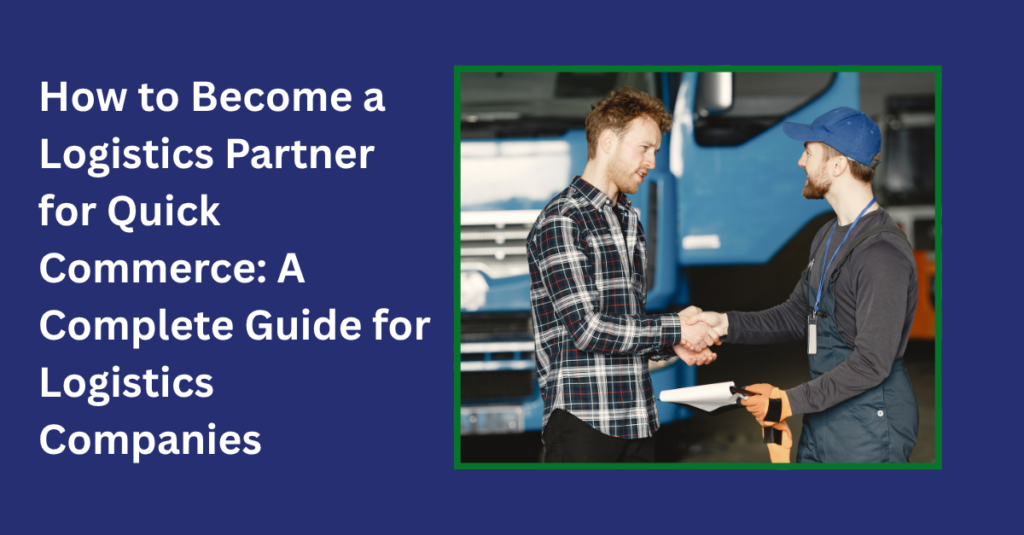
To become a logistics partner for quick commerce, businesses need reliable transportation networks, warehousing capabilities, real-time tracking technology, trained delivery teams, and the ability to meet strict delivery timelines. Success depends on operational efficiency, inventory visibility, and scalable infrastructure that supports fast-moving e-commerce and quick commerce supply chains.
If you’re wondering how to become a logistics partner for quick commerce, the answer lies in building the right mix of infrastructure, technology, and operational expertise. As quick commerce continues to transform retail delivery expectations, logistics companies have a significant opportunity to support brands through faster replenishment, efficient transportation, and reliable supply chain management. Companies like JustDeliveries are already helping brands scale their quick commerce logistics India operations through specialized logistics solutions.
What Is Quick Commerce and Why Is It Growing So Fast?
Quick commerce refers to the delivery of products within minutes rather than days. Driven by changing consumer behavior and demand for convenience, platforms such as Blinkit, Zepto, Swiggy Instamart, BigBasket, and JioMart have expanded rapidly across India.
Unlike traditional e-commerce, quick commerce relies on strategically located dark stores, hyperlocal fulfillment centers, and highly efficient logistics operations. This shift has created a growing demand for logistics providers that can support ultra-fast replenishment and delivery cycles.
Understanding this ecosystem is the first step in learning how to become a logistics partner for quick commerce successfully. Our detailed guide on how quick commerce supply chain works in India breaks down every stage of the process, from dark store placement to last-mile delivery.
What Does a Quick Commerce Logistics Partner Do?
A logistics partner plays a critical role in ensuring products move efficiently from warehouses to dark stores and fulfillment hubs.
Key responsibilities include:
- Inventory transportation
- Dark store replenishment
- Warehouse management
- Last-mile delivery support
- Temperature-controlled logistics
- Real-time shipment tracking
- Route optimization
For food, dairy, frozen products, beverages, and other perishable goods, maintaining product quality throughout transportation is equally important. If you’re operating within the food service space, understanding what is a quick service restaurant can also help you align your logistics capabilities with the specific demands of QSR supply chains.
Key Requirements to Become a Logistics Partner for Quick Commerce
Strong Transportation Network
One of the most important requirements for how to become a logistics partner for quick commerce is establishing a dependable transportation network.
This may include:
- Two-wheelers for last-mile operations
- Mini trucks and vans
- Refrigerated vehicles
- Multi-city transportation capabilities
The ability to scale operations during peak demand periods is a major competitive advantage.
Technology Infrastructure
Modern quick commerce logistics depends heavily on technology.
Logistics providers must offer:
- Real-time vehicle tracking
- Shipment visibility
- Route optimization
- Automated reporting
- Delivery performance monitoring
Brands increasingly expect complete visibility across their supply chain.
Warehousing and Fulfillment Capabilities
Quick commerce relies on rapid inventory movement. Logistics partners should have access to warehousing facilities, distribution centers, and fulfillment infrastructure that can support high-frequency replenishment cycles. Working with a third party logistics company India can help providers access scalable warehousing and distribution without the capital burden of building owned infrastructure.
Skilled Workforce
Delivery personnel, warehouse staff, fleet managers, and operations teams must be trained to meet strict service-level agreements and maintain operational consistency.
Step-by-Step Process: How to Become a Logistics Partner for Quick Commerce
Step 1: Build Scalable Logistics Infrastructure
Before approaching quick commerce platforms, establish a strong operational foundation. This includes transportation assets, warehouse capabilities, technology systems, and manpower.
Step 2: Develop Hyperlocal Delivery Expertise
Quick commerce requires precise planning and execution. Logistics providers must understand urban delivery routes, customer density, and fulfillment requirements.
Step 3: Invest in Technology
Technology is a non-negotiable requirement when considering how to become a logistics partner for quick commerce. Real-time tracking, analytics, inventory visibility, and automated workflows improve efficiency and customer satisfaction.
Step 4: Create Service-Level Compliance Systems
Quick commerce platforms measure logistics partners based on delivery timelines, order accuracy, and operational performance.
Establish systems that monitor:
- On-time deliveries
- Fleet utilization
- Temperature compliance
- Customer satisfaction metrics
Step 5: Build Relationships with Brands and Platforms
The final step in how to become a logistics partner for quick commerce is actively building partnerships with brands, marketplaces, and quick commerce platforms seeking logistics support.
Common Challenges Faced by Quick Commerce Logistics Partners
- Managing Tight Delivery Timelines: Consumers expect rapid deliveries, which places immense pressure on logistics operations.
- Handling Urban Congestion: Traffic congestion and route disruptions can impact delivery performance and require dynamic planning.
- Maintaining Inventory Availability: Frequent replenishment cycles demand accurate inventory forecasting and efficient transportation.
- Scaling During Demand Peaks: Festivals, weekends, and promotional events often generate significant spikes in order volumes.
- Managing Cold Chain Operations: For food and beverage brands, temperature consistency is essential throughout the transportation process.
How Technology Helps Logistics Partners Succeed
Technology has become one of the defining factors in determining how to become a logistics partner for quick commerce and remain competitive.
Key solutions include:
Real-Time Tracking
Brands need complete visibility into shipment movement and delivery progress.
AI-Powered Analytics
Advanced analytics help optimize routes, forecast demand, and improve fleet utilization.
Control Tower Operations
Centralized monitoring allows logistics providers to identify and address issues before they impact deliveries.
For example, JustDeliveries offers its proprietary HQ App, a centralized dashboard that enables food and beverage brands to track live vehicles, monitor temperature compliance, review SLAs, manage billing, and access AI-driven performance insights in real time.
This level of visibility supports operational excellence and improves decision-making across the supply chain.
Why Food and Beverage Brands Need Specialized Logistics Partners
Food and beverage products require specialized handling due to their shelf life and temperature sensitivity.
Logistics partners serving this sector must provide:
- Cold chain transportation
- Temperature monitoring
- Refrigerated warehousing
- Fast replenishment capabilities
- Product traceability
This is particularly important for brands selling through quick commerce channels where inventory turnover is extremely high. Brands operating in western India can explore our cold chain logistics Mumbai services, while those in the south can rely on our cold chain logistics Bangalore network for end-to-end temperature-controlled coverage.
Understanding these industry-specific requirements is crucial for businesses exploring how to become a logistics partner for quick commerce.
Quick Commerce Logistics Trends Shaping 2026
- Expansion of Dark Stores: The number of dark stores continues to grow as quick commerce expands into new markets.
- Growth Beyond Metro Cities: Tier-2 and Tier-3 cities are becoming major growth centers for quick commerce platforms.
- AI-Driven Logistics: Artificial intelligence is helping logistics providers improve forecasting, route planning, and operational efficiency.
- Increased Demand for Cold Chain Infrastructure: As online grocery and food delivery volumes increase, temperature-controlled logistics will become even more critical.
- Sustainable Transportation: Electric vehicles and optimized route planning are helping reduce operational costs and environmental impact.
Why JustDeliveries Is a Trusted Logistics Partner for Quick Commerce Brands
For brands looking to scale their quick commerce operations, choosing the right logistics partner is critical.
JustDeliveries specializes in food and beverage logistics and provides comprehensive support across the supply chain.
Key capabilities include:
- Cold-chain transportation
- Dark store replenishment
- Intra-city distribution
- Warehousing solutions
- Temperature-controlled logistics
- Real-time shipment visibility
The company powers logistics operations for major e-commerce and quick commerce ecosystems, including Swiggy Instamart, Zepto, Blinkit, Amazon, JioMart, and BigBasket.
By handling hub-to-hub transportation and dark store deliveries with temperature control and real-time tracking, JustDeliveries helps brands maintain product quality while meeting demanding delivery expectations. Brands in the north can also leverage our third party logistics Delhi services for city-level distribution and warehousing support.
For businesses evaluating how to become a logistics partner for quick commerce, studying successful logistics models like JustDeliveries can provide valuable operational insights.
Conclusion
The quick commerce industry continues to create new opportunities for logistics providers willing to invest in infrastructure, technology, and operational excellence.
Understanding how to become a logistics partner for quick commerce involves more than simply moving products. It requires scalable transportation networks, fulfillment capabilities, data-driven decision-making, and the ability to consistently meet strict service standards.
Companies that build these capabilities today will be well-positioned to support the next phase of growth in India’s fast-evolving quick commerce ecosystem. For food businesses also planning a physical outlet expansion, our logistics checklist for opening new restaurant outlet offers a practical framework for getting supply chain operations right from day one.
Ready to Strengthen Your Quick Commerce Supply Chain?
As consumer expectations continue to evolve, brands need logistics partners that can deliver speed, visibility, and reliability without compromising product quality.
JustDeliveries helps food and beverage brands scale through specialized cold-chain logistics, dark store replenishment, warehousing, and technology-enabled transportation solutions. With real-time tracking, temperature-controlled operations, and a powerful HQ App that provides complete shipment visibility, brands gain greater control over their supply chain performance.
Whether you’re supplying products to Blinkit, Zepto, Swiggy Instamart, Amazon, JioMart, or BigBasket, JustDeliveries provides the infrastructure and expertise needed to support sustainable growth in the quick commerce landscape.
Contact JustDeliveries today to build a smarter, faster, and more resilient logistics network.
Frequently Asked Questions
Q1. How do I become a logistics partner for quick commerce?
You need transportation infrastructure, technology systems, warehousing capabilities, trained personnel, and the ability to meet delivery performance standards set by brands and platforms.
Q2. How much investment is required to start quick commerce logistics operations?
The investment depends on fleet size, warehouse requirements, technology adoption, and geographical coverage. Costs vary significantly based on business scale.
Q3. Can small logistics companies work with quick commerce platforms?
Yes. Smaller logistics companies can partner with brands or support specific regions, provided they meet operational and service requirements.
Q4. Can cold chain logistics improve quick commerce performance?
Yes. Cold chain logistics ensures product quality, reduces spoilage, and helps maintain customer satisfaction for temperature-sensitive goods.
Q5. Is technology important for quick commerce logistics?
Yes. Real-time tracking, route optimization, inventory visibility, and performance analytics are essential for efficient quick commerce operations.
Q6. Is warehousing necessary for quick commerce partnerships?
In most cases, yes. Warehousing and fulfillment capabilities help support inventory management and dark store replenishment.
Q7. Will quick commerce continue growing in India?
Industry trends indicate continued growth driven by consumer demand, urbanization, and increasing adoption across multiple product categories.
Q8. Why do quick commerce platforms rely on logistics partners?
Logistics partners provide the transportation, warehousing, technology, and operational expertise needed to ensure fast and reliable order fulfillment at scale.

Mansi Mahansaria
I’m Mansi Mahansaria, CEO and Founder of JustDeliveries, a B2B logistics company specializing in the food and beverage sector. With a background in Chemical Technology (ICT Mumbai), an MBA (FMS Delhi), and experience at IDFC Private Equity and Tata Group, I’ve built a plug-and-play logistics network helping F&B brands scale efficiently. I also share insights on entrepreneurship and logistics at industry and academic events.