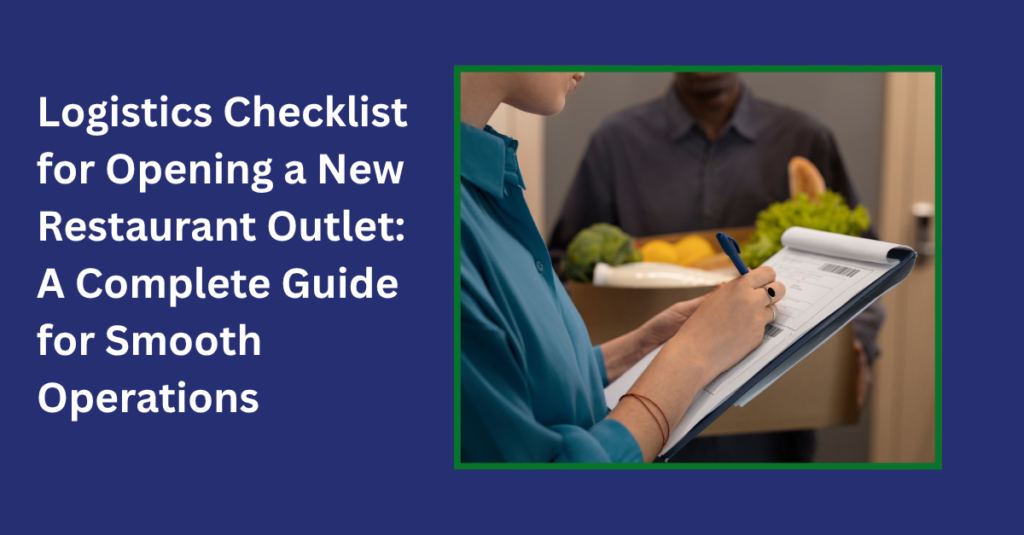
A successful restaurant launch depends on more than location and menu planning. A well-structured logistics checklist for opening new restaurant outlet should cover supplier onboarding, inventory planning, warehousing, cold chain management, transportation, technology integration, and replenishment processes. Strong logistics systems help maintain food quality, reduce wastage, and ensure operational efficiency from day one.
A comprehensive logistics checklist for opening new restaurant outlet is essential for ensuring a smooth launch and sustainable operations. While restaurant owners often focus on branding, interiors, and menu development, logistics is what keeps the business running efficiently behind the scenes. At JustDeliveries, we work closely with food businesses to build reliable supply chains that support growth, consistency, and customer satisfaction.
A comprehensive logistics checklist for opening new restaurant outlet is essential for ensuring a smooth launch and sustainable operations. While restaurant owners often focus on branding, interiors, and menu development, logistics is what keeps the business running efficiently behind the scenes. At JustDeliveries, we work closely with food businesses to build reliable supply chains that support growth, consistency, and customer satisfaction. If you’re evaluating logistics support ahead of your launch, our guide on how to choose a logistics partner for food brand India walks you through the key criteria to consider.
Why Logistics Planning Is Critical Before Opening a Restaurant
Many restaurant launches face operational challenges not because of poor food quality but because of supply chain inefficiencies. Delayed deliveries, inventory shortages, inconsistent sourcing, and temperature control failures can impact customer experience and profitability.
A well-planned logistics checklist for opening new restaurant outlet helps restaurant owners anticipate operational requirements before opening day. It ensures that ingredients, packaging materials, equipment, and supplies are available when needed without overstocking or wastage.
Effective logistics planning also creates a strong foundation for future expansion, whether you’re opening a standalone restaurant, cloud kitchen, café, or multi-outlet food chain. Understanding the 4 types of service in food and beverage can also help you align your supply chain structure with the specific demands of your service model.
Phase 1: Define Your Supply Chain Requirements
Before selecting suppliers or logistics partners, identify your operational needs.
Consider:
- Daily ingredient requirements
- Frozen and chilled inventory volumes
- Dry goods storage requirements
- Packaging consumption forecasts
- Outlet replenishment frequency
- Peak demand periods
Restaurants serving fresh produce, dairy, meat, seafood, or frozen products require additional cold chain infrastructure to maintain product quality and food safety standards.
A detailed logistics checklist for opening new restaurant outlet should begin with mapping every item that enters your kitchen.
Phase 2: Build a Reliable Supplier Network
The success of your restaurant depends heavily on supplier reliability.
Evaluate suppliers based on:
- Product quality consistency
- Delivery reliability
- Compliance certifications
- Pricing stability
- Scalability
- Emergency support capabilities
Avoid depending on a single vendor for critical ingredients. Establish backup suppliers for high-demand products to reduce operational risks.
Supplier agreements should clearly define delivery schedules, quality expectations, service levels, and escalation processes.
Phase 3: Plan Warehousing and Storage Infrastructure
Storage planning directly impacts inventory efficiency and food quality.
Restaurants should assess:
- Dry Storage: Suitable for grains, spices, packaging materials, beverages, and pantry essentials.
- Chilled Storage: Required for dairy products, fresh vegetables, sauces, and prepared ingredients.
- Frozen Storage: Essential for frozen foods, desserts, seafood, meat products, and ready-to-cook items.
Many growing food businesses choose third party logistics Hyderabad solutions to avoid significant investments in storage infrastructure while still maintaining reliable and scalable warehousing capabilities.
An effective logistics checklist for opening new restaurant outlet should include detailed storage capacity calculations to prevent shortages and overstocking.
Phase 4: Establish a Cold Chain Strategy
Cold chain logistics is one of the most important aspects of restaurant operations.
Temperature-sensitive products must be transported and stored within specified temperature ranges to maintain freshness and safety.
Products requiring cold chain management include:
- Dairy products
- Meat and poultry
- Seafood
- Frozen foods
- Desserts
- Ready-to-cook products
- Beverages
Even a brief temperature deviation can compromise product quality.
This is where specialized logistics partners become valuable. JustDeliveries provides temperature-controlled transportation and monitoring systems designed specifically for food and beverage businesses. Restaurants expanding into northern India can explore our cold chain logistics Delhi services, while those operating in the south can rely on our cold chain logistics Hyderabad network for end-to-end temperature-controlled coverage.
A robust logistics checklist for opening new restaurant outlet should always include cold chain risk assessment and temperature compliance protocols.
Phase 5: Create an Inventory Management System
Inventory is one of the largest operational expenses for restaurants.
Without proper inventory management, businesses often face:
- Excess food wastage
- Stockouts
- Increased procurement costs
- Reduced profitability
Implement best practices such as:
- FIFO (First In, First Out): Older inventory is used before newer stock.
- FEFO (First Expired, First Out): Products nearing expiry are prioritized.
- Demand Forecasting: Use sales projections to estimate inventory requirements accurately.
Technology-driven inventory management allows restaurant operators to maintain better control over stock levels and purchasing decisions. For practical strategies on reducing losses at the source, read our guide on how to control food wastage in restaurants.
Phase 6: Design Central Kitchen-to-Outlet Replenishment Processes
Consistent replenishment ensures uninterrupted operations across all restaurant locations.
For businesses operating a central kitchen model, establish clear processes for moving inventory, prepared ingredients, and semi-finished products from the central kitchen to individual outlets.
Develop clear processes for:
- Daily outlet replenishment
- Scheduled transfers from the central kitchen to outlets
- Weekly restocking
- Emergency deliveries
- Seasonal inventory planning
Restaurant brands operating multiple outlets should implement centralized replenishment systems to maintain consistency in food quality, portioning, and inventory management across locations.
This stage is a crucial part of any logistics checklist for opening a new restaurant outlet because efficient movement of goods from the central kitchen to outlets directly affects operational efficiency and customer experience. Reliable intra city logistics India infrastructure plays a key role here, ensuring timely and consistent transfers between production hubs and outlet locations.
Phase 7: Implement Technology for Supply Chain Visibility
Modern restaurant logistics requires complete visibility.
Technology platforms help operators monitor:
- Vehicle movement
- Delivery schedules
- Inventory status
- Supplier performance
- Temperature compliance
- Service level agreements
JustDeliveries supports food businesses through its HQ App, a centralized dashboard designed specifically for F&B brands.
The HQ App enables businesses to:
- Track live vehicles in real time
- Monitor temperature compliance
- View SLA performance
- Access centralized billing information
- Analyze AI-driven logistics insights
- Improve operational decision-making
Having a single platform for logistics visibility helps restaurant operators maintain control over complex supply chain operations.
Phase 8: Prepare Transportation and Delivery Infrastructure
Transportation planning should begin well before launch.
Evaluate:
Delivery Frequency
Determine how often supplies need to be replenished.
Route Planning
Optimize routes to reduce delivery delays and costs.
Vehicle Requirements
Select appropriate vehicles based on product categories:
- Refrigerated vehicles
- Temperature-controlled vehicles
- Dry logistics vehicles
Reliable transportation ensures inventory reaches outlets safely and on time.
A complete logistics checklist for opening new restaurant outlet should include contingency plans for transportation disruptions. For restaurant brands that also operate direct-to-consumer or on-demand fulfilment models, understanding quick commerce logistics India can help you design a last-mile strategy that keeps pace with customer expectations.
Phase 9: Conduct Pre-Launch Supply Chain Testing
Before opening day, perform operational trials.
Test:
- Vendor delivery timelines
- Inventory receipt procedures
- Storage systems
- Temperature monitoring
- Staff readiness
- Emergency response plans
Mock runs help identify bottlenecks before customers arrive.
The goal is to ensure every supply chain process functions smoothly under real operating conditions.
Phase 10: Final Logistics Checklist Before Opening Day
Complete the following checks:
✔ Supplier contacts verified
✔ Inventory stocked and organized
✔ Temperature monitoring systems tested
✔ Delivery schedules confirmed
✔ Warehousing arrangements finalized
✔ Emergency backup vendors identified
✔ Staff trained on receiving procedures
✔ Technology systems functioning properly
✔ Food safety protocols documented
✔ Replenishment schedules approved
This final review ensures your logistics checklist for opening new restaurant outlet is fully executed before launch.
Supporting Expansion Beyond Restaurant Outlets
As food businesses grow, many adopt a central kitchen-to-outlet model to maintain consistency, improve production efficiency, and streamline inventory management.
JustDeliveries supports logistics across the entire food supply chain, including:
- Supplier-to-central kitchen transportation
- Central kitchen-to-outlet replenishment
- Hub-to-hub transportation
- Dark store replenishment
- Temperature-controlled deliveries
- Real-time shipment tracking
- Cold chain compliance monitoring
This experience allows restaurant brands to efficiently move products from their central kitchens to multiple outlets, while maintaining food quality, operational consistency, and supply chain visibility.
Common Logistics Mistakes to Avoid
Many restaurant owners underestimate logistics requirements during the planning stage.
Avoid these common mistakes:
- Relying on a single supplier
- Ignoring cold chain requirements
- Overstocking inventory
- Underestimating storage needs
- Delaying logistics planning
- Using manual inventory systems
- Lacking delivery visibility
Addressing these risks early can significantly improve operational performance.
Conclusion
A successful restaurant launch requires much more than excellent food and attractive interiors. A comprehensive logistics checklist for opening new restaurant outlet helps businesses build efficient supply chains, maintain food quality, reduce wastage, and support long-term growth.
From supplier selection and warehousing to inventory planning and cold chain management, every logistics decision contributes to operational success. Businesses that prioritize logistics from the start are better positioned to scale efficiently and consistently meet customer expectations.
Scale Your Restaurant Operations with JustDeliveries
As restaurants expand, managing logistics internally can become increasingly complex. JustDeliveries helps restaurants, cloud kitchens, QSRs, and food brands streamline supply chain operations through specialized food-grade logistics solutions.
With temperature-controlled transportation, warehousing support, outlet replenishment services, real-time visibility through the HQ App, and extensive experience supporting leading quick-commerce and e-commerce networks, JustDeliveries enables food businesses to focus on growth while maintaining complete confidence in their logistics operations.
Whether you’re opening your first outlet or expanding across multiple locations, partnering with the right logistics provider can help you build a more efficient, scalable, and resilient supply chain.
Frequently Asked Questions
Q1. How do I create a logistics checklist for opening a new restaurant outlet?
Start by identifying supplier requirements, storage needs, transportation plans, inventory levels, technology systems, and replenishment processes. A structured logistics plan helps ensure operational readiness before launch.
Q2. Can restaurant logistics impact profitability?
Yes. Efficient logistics reduces food wastage, prevents stockouts, lowers transportation costs, and improves inventory control, all of which contribute to better profitability.
Q3. What should be included in a logistics checklist for opening new restaurant outlet?
It should include supplier onboarding, warehousing, cold chain management, inventory planning, transportation, technology integration, replenishment scheduling, and contingency planning.
Q4. Why is cold chain logistics important for restaurants?
Cold chain logistics maintains safe temperatures for perishable products, preserving freshness, quality, and food safety while reducing spoilage.
Q5. Is it better to outsource restaurant logistics?
For many growing restaurant brands, outsourcing logistics provides access to specialized expertise, technology, warehousing infrastructure, and scalable transportation solutions without major capital investment.
Q6. How far in advance should logistics planning begin before opening a restaurant?
Ideally, logistics planning should begin 90 to 120 days before launch to allow sufficient time for supplier onboarding, inventory forecasting, warehousing setup, and process testing.
Q7. Will technology improve restaurant supply chain management?
Yes. Technology provides real-time visibility into inventory, deliveries, temperature compliance, supplier performance, and operational metrics, helping businesses make faster and better decisions.
Q8. Can a restaurant scale successfully without a logistics strategy?
Scaling becomes significantly more challenging without a structured logistics strategy. As outlet numbers grow, inventory control, supplier coordination, and replenishment complexity increase, making logistics planning essential.

Mansi Mahansaria
I’m Mansi Mahansaria, CEO and Founder of JustDeliveries, a B2B logistics company specializing in the food and beverage sector. With a background in Chemical Technology (ICT Mumbai), an MBA (FMS Delhi), and experience at IDFC Private Equity and Tata Group, I’ve built a plug-and-play logistics network helping F&B brands scale efficiently. I also share insights on entrepreneurship and logistics at industry and academic events.