A quick service restaurant (QSR) is a food service establishment designed to serve customers quickly through streamlined operations, limited menus, and efficient ordering systems. These restaurants focus on speed, affordability, convenience, takeaway, drive-thru, and delivery services while maintaining consistent food quality and customer experience.
If you’ve ever wondered what is a quick service restaurant, the answer is simple: it is a restaurant model built around speed, convenience, and operational efficiency, and an overview of the QSR industry shows just how far that model has evolved in India. As food delivery and digital ordering continue to grow, businesses such as JustDeliveries help QSR brands maintain reliable temperature controlled logistics, inventory movement, and seamless supply chain operations across multiple locations.
What Is a Quick Service Restaurant?
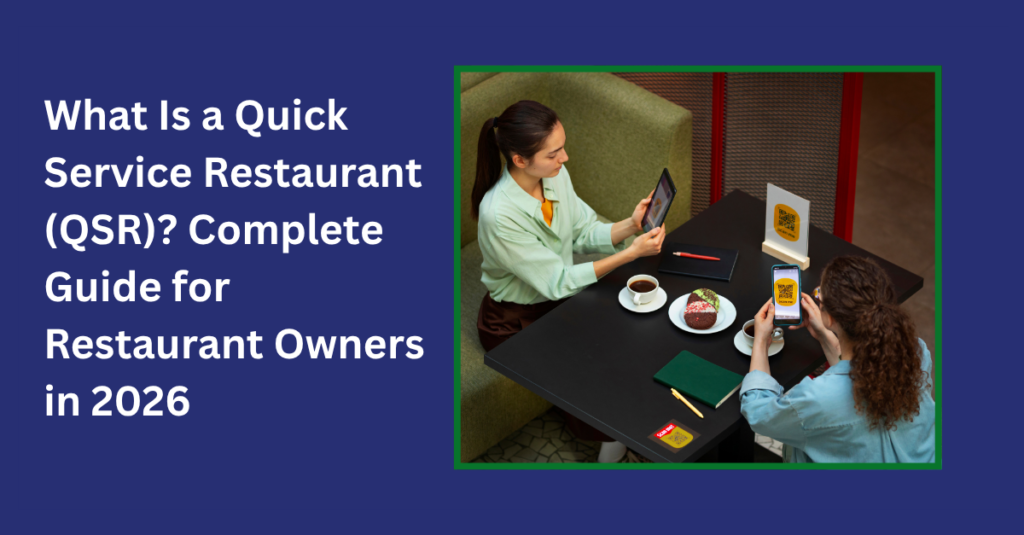
A quick service restaurant is a food establishment that prepares and serves meals rapidly with minimal table service, and a quick refresher on what QSR (quick service restaurant) means is a useful starting point for anyone new to the format. Customers typically order at a counter, self-service kiosk, mobile app, drive-thru, or online platform and receive their food within minutes.
The concept revolves around offering standardized menu items, fast preparation times, affordable pricing, and convenient ordering options. Today, the quick service restaurant industry includes traditional fast-food chains, coffee shops, bakery chains, cloud kitchens, and delivery-first food brands.
Unlike full-service restaurants that focus heavily on dine-in experiences, a quick service restaurant prioritizes efficiency, consistency, and customer convenience.
Key Characteristics of a Quick Service Restaurant
Fast Order Processing
Speed is the foundation of every successful QSR. Orders are designed to move through preparation and fulfillment quickly, allowing restaurants to serve a high volume of customers throughout the day.
Limited and Standardized Menus
Most QSRs offer carefully curated menus that simplify operations and ensure consistency across locations.
Affordable Pricing
Efficient operations help keep costs lower, allowing brands to offer competitive pricing while maintaining profitability.
High Customer Turnover
Because meals are prepared quickly, restaurants can serve more customers within a shorter period.
Multiple Ordering Channels
Modern QSRs support:
- Counter ordering
- Drive-thru service
- Mobile apps
- QR-code ordering
- Online delivery platforms
- Self-service kiosks
Technology-Driven Operations
Technology plays a major role in helping restaurants manage orders, inventory, customer engagement, and deliveries.
How Does a Quick Service Restaurant Business Model Work?
The success of a quick service restaurant depends on operational efficiency.
- Order Placement: Customers place orders through physical counters, kiosks, mobile apps, websites, or third-party delivery platforms.
- Food Preparation: Ingredients are prepared using standardized recipes and workflows that reduce waiting times.
- Inventory Management: Restaurants track inventory carefully to ensure ingredients remain available without excessive waste.
- Delivery Fulfillment: Many QSR brands now generate a significant percentage of revenue through delivery channels.
- Customer Service: Although service interactions are shorter than in traditional restaurants, customer experience remains a key success factor.
Types of Quick Service Restaurants
- Fast Food Chains: Burger, fried chicken, and sandwich brands fall into this category.
- Coffee and Beverage Chains: Coffee shops and beverage-focused outlets operate under similar quick-service principles.
- Pizza Delivery Brands: Many pizza businesses combine takeaway, delivery, and dine-in operations.
- Bakery and Snack Chains: Bakeries offering ready-to-eat products are often classified as QSRs.
- Cloud Kitchens: Cloud kitchens operate without dine-in facilities and focus entirely on delivery orders.
Examples of Popular Quick Service Restaurants
Globally recognized QSR brands include:
- McDonald’s
- Subway
- KFC
- Domino’s Pizza
- Starbucks
In India, the sector has expanded significantly through local chains, regional food brands, and cloud kitchen operators serving both urban and emerging markets.
Quick Service Restaurant vs Fast Casual Restaurant
| Feature | Quick Service Restaurant | Fast Casual Restaurant |
| Service Speed | Very Fast | Moderate |
| Pricing | Budget-Friendly | Mid-Range |
| Dining Experience | Limited | Enhanced |
| Menu Complexity | Simple | More Diverse |
| Customer Stay Time | Short | Longer |
| Operational Focus | Speed and Volume | Quality and Experience |
While both models prioritize convenience, a quick service restaurant is typically more focused on speed, standardization, and scalability.
Benefits of Operating a Quick Service Restaurant
- Lower Operating Costs: Standardized systems reduce labor and operational expenses.
- Faster Revenue Generation: High customer turnover enables greater daily sales volume.
- Scalability: QSR models are easier to replicate across multiple locations.
- Delivery-Friendly Operations: Most modern QSRs are built to support delivery demand.
- Franchise Opportunities: The standardized nature of operations makes expansion easier through franchising.
Challenges Faced by Quick Service Restaurants
Despite their advantages, QSRs face several operational challenges, many of which trace back to what food and beverage service really means in a fast-paced, high-volume setting.
- Maintaining Consistent Food Quality: Customers expect the same experience every time they order.
- Managing Inventory Efficiently: Poor inventory control can increase food waste and operating costs.
- Temperature-Sensitive Products: Many ingredients require strict temperature management.
- Delivery Delays: Late deliveries can affect customer satisfaction and food quality.
- Supply Chain Disruptions: Ingredient shortages can significantly impact restaurant operations.
Understanding how perishable goods are transported is essential for QSR brands looking to address these challenges and protect product quality throughout the supply chain.
Why Supply Chain Management Is Critical for QSR Success
An efficient supply chain ensures that every location receives the right products at the right time, and applying proven food logistics best practices for freshness is central to making that happen consistently.
Effective supply chain management helps:
- Maintain product consistency
- Improve food safety
- Reduce spoilage
- Control costs
- Support multi-location operations
- Improve customer satisfaction
For growing QSR brands, supply chain performance often becomes a major competitive advantage. Brands scaling across cities can benefit from reliable intra city logistics across India to ensure consistent and timely stock movement between hubs and restaurant locations, and many turn to dedicated supply chain strategies built for QSRs to plan that growth properly.
The Role of Cold Chain Logistics in Quick Service Restaurants
Cold chain logistics is essential for transporting and storing temperature-sensitive food products.
Importance of Cold Storage
Cold storage facilities preserve freshness and extend product shelf life.
Temperature-Controlled Transportation
Refrigerated vehicles help maintain product quality throughout transportation. QSR brands operating in Mumbai can strengthen their supply chain with dedicated cold chain logistics in Mumbai to ensure every delivery meets strict temperature and freshness standards.
Multi-City Expansion Support
As brands grow into new regions, reliable cold-chain infrastructure becomes increasingly important. Brands expanding into Bangalore can leverage specialized cold chain logistics in Bangalore to maintain consistent service quality as they scale into new markets.
Reduced Food Waste
Consistent temperature management helps reduce spoilage and product loss.
Technology Trends Transforming Quick Service Restaurants in 2026
- Self-Service Kiosks: Self-ordering systems improve speed and reduce queue times.
- Mobile Ordering Apps: Customers increasingly prefer ordering directly through branded applications.
- AI-Powered Forecasting: Artificial intelligence helps restaurants predict demand and optimize inventory.
- Digital Payments: Cashless transactions improve convenience and operational efficiency.
- Delivery Integration: Restaurants increasingly integrate with multiple delivery platforms through centralized systems.
- Smart Supply Chain Monitoring: Real-time tracking tools provide visibility into inventory movement and logistics performance.
QSR brands looking to stay ahead can explore dedicated quick commerce logistics in India to align their supply chain with the speed and precision that modern delivery platforms demand.
How to Start a Quick Service Restaurant
- Choose a Clear Concept: Focus on a cuisine or menu category with strong demand.
- Build a Standardized Menu: Keep operations efficient through menu simplicity.
- Invest in Technology: Modern restaurant technology improves customer experience and operational performance.
- Develop Reliable Supplier Relationships: Consistent ingredient availability is crucial.
- Build a Strong Logistics Network: Reliable logistics partners support growth and operational stability.
Brands building their logistics infrastructure can also explore third party logistics warehousing solutions to manage storage, fulfillment, and distribution without the overhead of owning dedicated facilities.
The Future of the Quick Service Restaurant Industry
The future of the quick service restaurant sector will be driven by convenience, automation, and delivery.
Key trends include:
- AI-powered operations
- Delivery-first business models
- Cloud kitchen growth
- Smart inventory management
- Sustainability initiatives
- Expansion into emerging cities
- Real-time supply chain visibility
Brands that combine technology with operational excellence will continue to lead the market. QSR operators expanding into southern markets can also partner with a trusted third party logistics provider in Hyderabad to build a reliable distribution network as they grow into new cities.
How JustDeliveries Supports Growing QSR Brands
As QSR brands grow, efficient cold-chain logistics becomes essential for maintaining food quality and operational consistency. JustDeliveries supports food and beverage businesses with refrigerated transportation, cold storage, warehousing, and temperature-controlled distribution across multiple cities.
To improve visibility and control, the HQ App enables brands to track live vehicles, temperature compliance, SLAs, billing, and performance insights in real time. JustDeliveries also supports quick commerce and e-commerce supply chains, serving platforms like Swiggy Instamart, Zepto, Blinkit, Amazon, JioMart, and BigBasket through reliable hub-to-hub and dark store deliveries.
Conclusion
Understanding what is a quick service restaurant is essential for anyone planning to enter the modern food service industry. A successful quick service restaurant combines speed, consistency, technology, and operational efficiency to meet evolving customer expectations.
However, great food alone is not enough. Reliable inventory management, temperature-controlled transportation, and a strong supply chain are equally important for long-term growth. As delivery demand continues to rise, logistics partners like JustDeliveries offering quick commerce logistics solutions alongside traditional distribution — help food businesses maintain quality, reduce wastage, and scale confidently across markets.
Frequently Asked Questions
Q1. What is a quick service restaurant?
A quick service restaurant is a food establishment that serves meals quickly through streamlined operations, limited menus, and efficient ordering systems such as counters, kiosks, drive-thrus, and delivery platforms.
Q2. How does a quick service restaurant work?
A quick service restaurant operates through standardized menus, rapid food preparation, inventory management systems, and multiple ordering channels that allow customers to receive food quickly.
Q3. How important is logistics for QSR businesses?
Logistics is critical because it ensures ingredients are delivered safely, inventory remains available, and food quality is maintained across locations.
Q4. Why are quick service restaurants so popular?
Consumers value convenience, affordability, fast service, and multiple ordering options, making QSRs an attractive dining choice.
Q5. Can cloud kitchens be considered quick service restaurants?
Yes. Cloud kitchens share many characteristics with QSRs, including fast preparation, delivery-focused operations, and streamlined menus.
Q6. Can a QSR operate without cold-chain logistics?
Only if it does not handle temperature-sensitive products. Most growing food businesses require cold-chain infrastructure to maintain food safety and quality.
Q7. Is a quick service restaurant the same as a fast-food restaurant?
Fast-food restaurants are a type of QSR, but the category also includes coffee chains, bakeries, cloud kitchens, and other rapid-service food concepts.
Q8. Will technology continue to shape the future of QSRs?
Yes. AI, mobile ordering, automation, smart inventory systems, and real-time supply chain visibility will continue transforming QSR operations in the coming years.

Mansi Mahansaria
I’m Mansi Mahansaria, CEO and Founder of JustDeliveries, a B2B logistics company specializing in the food and beverage sector. With a background in Chemical Technology (ICT Mumbai), an MBA (FMS Delhi), and experience at IDFC Private Equity and Tata Group, I’ve built a plug-and-play logistics network helping F&B brands scale efficiently. I also share insights on entrepreneurship and logistics at industry and academic events.