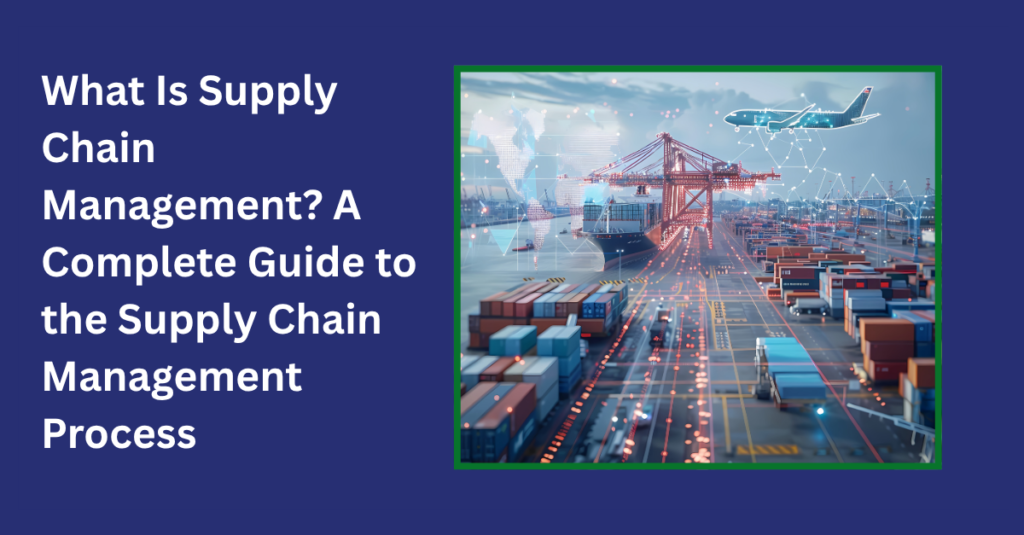
Supply chain management is the coordination of sourcing, production, inventory, warehousing, transportation, and delivery activities that move products from suppliers to customers. An effective supply chain management process helps businesses reduce costs, improve efficiency, maintain product quality, and ensure products reach customers on time.
What is supply chain management? It is the process of managing the flow of goods, information, and resources from suppliers to end customers. At JustDeliveries, we understand that efficient supply chains are essential for business success, especially in industries where timely deliveries and product quality are critical. A strong supply chain helps businesses operate smoothly, reduce costs, and improve customer satisfaction. Businesses looking to understand the broader context can explore our guide on what is logistics and supply chain management to see how these two functions connect and support each other.
What Is Supply Chain Management?
Supply chain management (SCM) is the strategic coordination of all activities involved in sourcing raw materials, manufacturing products, storing inventory, transporting goods, and delivering orders to customers.
The purpose of what is supply chain management is to create a seamless flow of products throughout the supply chain while maximizing efficiency and minimizing operational costs.
In today’s competitive business environment, companies can no longer focus solely on production or sales. Success depends on how effectively every stage of the supply chain works together. Whether it is a retail company, manufacturer, food brand, or e-commerce business, supply chain performance directly impacts profitability and customer experience.
A well-managed supply chain ensures products are available when customers need them while reducing waste, delays, and unnecessary expenses.
Why Supply Chain Management Matters
Supply chains influence nearly every aspect of a business. Companies with efficient supply chains often gain a significant competitive advantage.
Key benefits include:
- Improved operational efficiency
- Better customer satisfaction
- Lower inventory and transportation costs
- Faster order fulfillment
- Enhanced visibility across operations
- Greater flexibility during market changes
Understanding what is supply chain management is important because it helps businesses identify opportunities to improve productivity and profitability.
Understanding the Supply Chain Management Process
The supply chain management process consists of several interconnected stages that work together to move products efficiently from suppliers to customers.
1. Planning
Planning is the foundation of every successful supply chain. Businesses analyze demand forecasts, inventory requirements, market trends, and production capacity.
Planning activities include:
- Demand forecasting
- Inventory planning
- Resource allocation
- Capacity management
- Risk assessment
Accurate planning reduces operational disruptions and improves overall efficiency.
2. Sourcing
The sourcing stage focuses on selecting suppliers and obtaining the materials required for production.
Key sourcing activities include:
- Supplier evaluation
- Vendor selection
- Procurement management
- Contract negotiations
- Quality control assessments
Reliable suppliers help businesses maintain consistency and avoid production delays.
3. Manufacturing
Manufacturing involves converting raw materials into finished products.
During this stage, businesses focus on:
- Production scheduling
- Quality assurance
- Process optimization
- Cost management
- Resource utilization
Efficient manufacturing operations contribute significantly to supply chain success.
4. Warehousing and Inventory Management
Once products are manufactured, they need to be stored safely until they are shipped to customers.
Warehousing activities include:
- Inventory tracking
- Storage optimization
- Stock replenishment
- Order preparation
- Inventory audits
Effective inventory management helps businesses maintain optimal stock levels without overinvesting in inventory. Businesses evaluating whether to manage this in-house or through a partner can benefit from reading our supply chain management outsourcing guide before making a decision.
5. Transportation and Distribution
Transportation connects businesses with customers by moving products through various logistics networks.
Key functions include:
- Route planning
- Freight management
- Shipment tracking
- Delivery scheduling
- Carrier coordination
Transportation efficiency directly affects customer satisfaction and operational costs. Brands distributing across Mumbai can strengthen this stage with dedicated cold chain logistics in Mumbai to ensure temperature-sensitive products arrive in perfect condition every time.
6. Returns and Reverse Logistics
The final stage of the supply chain management process involves managing product returns, repairs, recycling, and disposal.
A strong reverse logistics strategy helps businesses:
- Reduce losses
- Improve customer trust
- Support sustainability initiatives
- Recover product value
Key Components of Supply Chain Management
Several critical components work together to create a successful supply chain.
Procurement Management
Procurement focuses on acquiring materials and services needed to support production and business operations.
Inventory Management
Inventory management ensures businesses maintain the right amount of stock to meet demand without creating excess inventory.
Warehouse Management
Warehouse operations help organize, store, and distribute products efficiently.
Transportation Management
Transportation systems coordinate the movement of goods while balancing speed, reliability, and cost.
Demand Planning
Demand planning helps businesses anticipate customer requirements and prepare accordingly.
Supplier Relationship Management
Building strong supplier relationships improves collaboration, reliability, and long-term supply chain performance.
Customer Fulfillment
Customer fulfillment ensures products are delivered accurately and on time, creating a positive customer experience.
Types of Supply Chains
Different businesses use different supply chain models depending on their products and market requirements.
Traditional Supply Chain
A linear model where products move from suppliers to manufacturers, distributors, retailers, and customers.
Lean Supply Chain
Designed to eliminate waste and maximize efficiency while reducing operational costs.
Agile Supply Chain
Focuses on flexibility and responsiveness to rapidly changing customer demands.
Continuous Flow Supply Chain
Ideal for businesses with stable demand and standardized production processes.
Digital Supply Chain
Uses advanced technologies, automation, and real-time data to improve visibility and decision-making.
Benefits of Effective Supply Chain Management
- Understanding what is supply chain management becomes easier when examining the measurable benefits it provides.
- Reduced Operational Costs: Efficient supply chains reduce expenses related to transportation, warehousing, procurement, and inventory management.
- Better Inventory Control: Businesses gain greater visibility into stock levels, helping prevent shortages and overstocking.
- Faster Deliveries: Streamlined logistics processes improve delivery speed and reliability.
- Improved Customer Satisfaction: Customers receive products on time and in excellent condition.
- Enhanced Supply Chain Visibility: Real-time monitoring allows businesses to identify and resolve issues quickly.
- Increased Business Scalability: Strong supply chain systems support growth and expansion into new markets.
Common Supply Chain Management Challenges
Even the most efficient supply chains face challenges.
- Demand Fluctuations: Unexpected changes in customer demand can create inventory imbalances.
- Supplier Disruptions: Supplier delays can affect production schedules and product availability.
- Transportation Delays: Traffic congestion, weather conditions, and infrastructure issues can impact deliveries.
- Rising Logistics Costs: Fuel prices, labor shortages, and operational expenses continue to challenge businesses worldwide.
- Inventory Inaccuracies: Poor inventory management can result in stockouts or excess inventory.
- Limited Visibility: Without real-time data, businesses may struggle to identify and address supply chain issues quickly.
Understanding what is supply chain management includes recognizing these challenges and implementing strategies to overcome them. Brands operating in Bangalore can address many of these challenges by partnering with specialists in cold chain logistics in Bangalore who provide real-time visibility and temperature-controlled distribution across the city.
How Technology Is Transforming Supply Chain Management
Technology has become one of the most important drivers of supply chain innovation.
- Artificial Intelligence and Predictive Analytics: AI helps businesses forecast demand, optimize inventory, and improve planning accuracy.
- Internet of Things (IoT): Connected devices provide real-time information about inventory, shipments, and equipment.
- Real-Time Tracking Systems: Businesses can monitor shipments and deliveries throughout the supply chain.
- Warehouse Automation: Automated systems improve efficiency, accuracy, and productivity within warehouses.
- Cloud-Based Supply Chain Platforms: Cloud technology enables collaboration across suppliers, manufacturers, logistics providers, and customers.
- Data Analytics: Advanced analytics help organizations identify trends, improve forecasting, and make informed decisions.
- Digital Supply Chain Control Towers: Modern logistics platforms provide end-to-end operational visibility. For example, the JustDeliveries HQ App serves as a centralized dashboard for F&B brands, enabling them to track live vehicle movements, monitor temperature compliance, manage service-level agreements (SLAs), oversee billing, and access AI-driven performance insights in real time. Such platforms help businesses maintain cold chain integrity, improve operational efficiency, and make faster, data-backed decisions.
As technology evolves, businesses gain greater visibility and control over their operations, further enhancing what is supply chain management in modern commerce. Understanding what is the difference between logistics and supply chain management helps businesses decide where to apply technology investments most effectively across their operations.
Supply Chain Management in the Food and Beverage Industry
The food and beverage industry faces unique supply chain challenges due to product perishability and strict quality requirements.
Why Cold Chain Logistics Matters
Many food products require specific temperature conditions throughout transportation and storage.
Without proper cold chain management, businesses risk:
- Product spoilage
- Quality degradation
- Compliance issues
- Financial losses
Managing Perishable Goods
Perishable products require efficient inventory management, temperature-controlled transportation, and rapid distribution. Businesses in Delhi can rely on established cold chain logistics in Delhi to ensure perishable goods move through the supply chain without any compromise in quality or safety.
Reducing Food Waste
Well-designed supply chains help reduce waste by improving inventory visibility and delivery efficiency.
Maintaining Product Quality
Every stage of the supply chain must protect product integrity and freshness.
This is where specialized logistics providers play a crucial role in ensuring food products reach consumers safely and efficiently.
Best Practices for Optimizing the Supply Chain Management Process
Businesses can improve supply chain performance by following proven best practices.
- Improve Demand Forecasting: Use historical data and market insights to predict customer demand accurately.
- Strengthen Supplier Relationships: Collaborative supplier partnerships improve reliability and reduce risks.
- Increase Visibility: Implement tracking systems that provide real-time operational insights.
- Invest in Technology: Automation and analytics improve efficiency and decision-making.
- Monitor Key Performance Indicators (KPIs): Track metrics such as inventory turnover, delivery performance, and order accuracy.
- Build Supply Chain Resilience: Develop contingency plans to manage disruptions effectively.
These practices help businesses maximize the effectiveness of the supply chain management process while improving customer satisfaction and profitability. Businesses in Hyderabad looking to strengthen their supply chain can explore cold chain logistics in Hyderabad for reliable temperature-controlled distribution that supports consistent operational performance.
Future Trends in Supply Chain Management
The future of supply chains will be shaped by innovation, sustainability, and digital transformation.
Emerging trends include:
- AI-driven forecasting
- Autonomous logistics systems
- Smart warehousing
- Sustainable transportation
- End-to-end visibility
- Advanced robotics
- Predictive analytics
Organizations that embrace these technologies will be better positioned to compete in an increasingly complex marketplace. One of the fastest-growing areas reshaping supply chain expectations in India is quick commerce businesses can read about how quick commerce supply chain works in India to understand how speed-first delivery models are setting new benchmarks for the entire industry.
As businesses continue to evolve, understanding what is supply chain management will remain essential for achieving long-term growth and operational excellence.
Conclusion
Supply chain management is far more than moving products from one location to another. It involves planning, sourcing, manufacturing, warehousing, transportation, and customer fulfillment working together to create a seamless flow of goods and information.
By understanding what is supply chain management, businesses can improve efficiency, reduce costs, strengthen customer relationships, and build more resilient operations. As technology continues to transform the industry, companies that invest in smarter supply chain strategies will be better equipped to meet changing customer expectations and market demands.
Optimize Your Supply Chain with JustDeliveries
For food, beverage, dairy, frozen food, and FMCG businesses, managing a reliable supply chain can be complex. Temperature control, inventory visibility, timely deliveries, and product quality all require specialized expertise.
JustDeliveries provides end-to-end cold chain logistics solutions, including temperature-controlled transportation, warehousing, inventory management, and real-time shipment tracking. With deep experience in food and beverage logistics, JustDeliveries helps businesses reduce wastage, improve efficiency, maintain product quality, and scale their operations with confidence.
If you’re looking to build a smarter and more reliable supply chain, JustDeliveries can help you streamline every stage of your logistics journey.
Frequently Asked Questions
Q1. What is supply chain management in simple terms?
Supply chain management is the process of managing the movement of goods, information, and resources from suppliers to customers efficiently and cost-effectively.
Q2. Why is supply chain management important for businesses?
It helps reduce costs, improve efficiency, enhance customer satisfaction, and ensure products are delivered on time.
Q3. How does the supply chain management process work?
The process includes planning, sourcing, manufacturing, warehousing, transportation, delivery, and returns management.
Q4. How can businesses improve supply chain efficiency?
Businesses can improve efficiency by using technology, improving forecasting accuracy, strengthening supplier relationships, and increasing supply chain visibility.
Q5. Can small businesses benefit from supply chain management?
Yes. Effective supply chain management helps small businesses control costs, improve inventory management, and provide better customer service.
Q6. Is logistics the same as supply chain management?
No. Logistics is one part of supply chain management and focuses mainly on transportation and storage, while supply chain management covers the entire flow of goods and information.
Q7. Will technology continue to change supply chain management?
Yes. Technologies such as AI, automation, IoT, and real-time tracking are transforming supply chains by improving visibility, efficiency, and decision-making.
Q8. What are the biggest challenges in supply chain management today?
Common challenges include demand fluctuations, supplier disruptions, rising logistics costs, transportation delays, and limited visibility across operations.

Mansi Mahansaria
I’m Mansi Mahansaria, CEO and Founder of JustDeliveries, a B2B logistics company specializing in the food and beverage sector. With a background in Chemical Technology (ICT Mumbai), an MBA (FMS Delhi), and experience at IDFC Private Equity and Tata Group, I’ve built a plug-and-play logistics network helping F&B brands scale efficiently. I also share insights on entrepreneurship and logistics at industry and academic events.