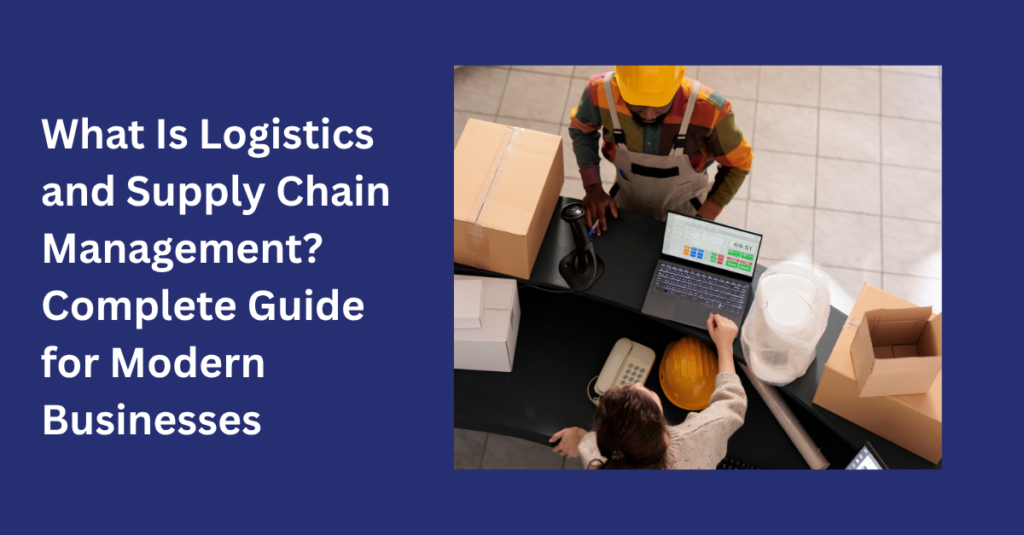
Logistics and supply chain management involve planning, storing, transporting, and delivering goods efficiently from suppliers to customers. While logistics focuses on movement and storage, supply chain management oversees the entire flow of products, information, and operations. Together, they help businesses reduce costs, improve delivery speed, and maintain customer satisfaction.
What is logistics and supply chain management? It refers to the systems and processes businesses use to move products from manufacturers to end customers efficiently. From warehousing and transportation to inventory control and delivery planning, modern logistics powers nearly every industry. Companies like JustDeliveries are helping businesses simplify supply chains through reliable cold chain and distribution solutions across India.
What Is Logistics?
Logistics is the process of planning, managing, and transporting goods from one point to another. It ensures products reach the right place, at the right time, and in the right condition.
Businesses rely on logistics to manage:
- Transportation
- Warehousing
- Inventory
- Packaging
- Order fulfillment
- Distribution
Whether it is food delivery, retail shipments, pharmaceutical transport, or eCommerce operations, logistics plays a direct role in operational efficiency and customer experience.
In industries like food and beverage, logistics becomes even more critical because products often require temperature-controlled storage and transportation. A delay or temperature fluctuation can affect product quality and lead to financial losses.
What Is Supply Chain Management in Logistics?
Many people confuse logistics with supply chain management, but the two are connected in different ways.
Supply chain management (SCM) is the broader process of managing the entire journey of a product — from raw material sourcing to final delivery.
Logistics is one part of supply chain management.
A supply chain typically includes:
- Procurement of raw materials
- Manufacturing
- Warehousing
- Inventory management
- Transportation
- Distribution
- Delivery to customers
So, when discussing what is supply chain management in logistics, it means understanding how transportation, storage, and distribution work together within the larger supply chain ecosystem.
Efficient supply chain management helps businesses:
- Reduce operational costs
- Improve delivery timelines
- Minimize wastage
- Maintain inventory accuracy
- Enhance customer satisfaction
Difference Between Logistics and Supply Chain Management
Although closely related, logistics and supply chain management have different scopes.
| Logistics | Supply Chain Management |
| Focuses on transportation and storage | Focuses on end-to-end coordination |
| Operational function | Strategic and operational function |
| Handles movement of goods | Manages suppliers, manufacturers, distributors, and retailers |
| Concerned with delivery efficiency | Concerned with overall business efficiency |
Understanding the difference is important for businesses looking to optimize operations and scale effectively.
Key Components of Logistics and Supply Chain Management
Transportation Management
Transportation is one of the most visible parts of logistics. Businesses use road, rail, air, and sea networks to move goods efficiently.
Modern transportation management involves:
- Route optimization
- Real-time tracking
- Fleet management
- Fuel efficiency planning
- Delivery scheduling
Reliable transportation reduces delays and ensures better customer experiences.
Warehousing and Storage
Warehousing helps businesses store products safely before distribution. Efficient warehouses improve inventory management and speed up order fulfillment.
Modern warehouses often use:
- Barcode scanning
- RFID systems
- Automated storage systems
- Temperature-controlled environments
Cold storage facilities are especially important in the food and pharmaceutical sectors. For a detailed explanation of how this specialized system works, read our guide on what is cold chain logistics and why it has become critical for modern food and beverage supply chains.
Inventory Management
Inventory management ensures businesses maintain the right amount of stock without overstocking or shortages.
Poor inventory management can lead to:
- Delayed deliveries
- Product wastage
- Increased operational costs
- Lost sales opportunities
Businesses increasingly use software-driven inventory systems for real-time stock visibility.
Demand Forecasting
Demand forecasting helps businesses predict customer demand based on historical data, trends, and seasonal patterns.
Accurate forecasting improves:
- Production planning
- Inventory allocation
- Delivery scheduling
- Cost management
This is particularly useful for food businesses dealing with perishable inventory.
Technology and Automation
Technology has transformed modern logistics operations.
Businesses now use:
- AI-powered analytics
- IoT-enabled tracking systems
- Automated warehouses
- GPS monitoring
- Predictive maintenance tools
These technologies improve visibility, reduce human error, and enhance operational efficiency.
Why Logistics and Supply Chain Management Matter for Businesses
Efficient logistics systems directly impact profitability and customer satisfaction.
- Faster Deliveries: Customers today expect quick and accurate deliveries. Strong logistics systems help businesses meet these expectations consistently. The growth of quick commerce logistics India is setting new benchmarks for delivery speed, pushing businesses to invest in faster, more agile distribution networks across urban markets.
- Reduced Operational Costs: Optimized transportation routes, inventory planning, and warehouse management help reduce unnecessary expenses.
- Better Customer Satisfaction: Timely deliveries and product availability improve customer trust and loyalty.
- Reduced Wastage: In sectors like food and beverage, efficient cold chain logistics helps maintain product freshness and reduce spoilage.
- Scalability: Businesses with organized logistics systems can expand more efficiently into new cities and markets. 3pl logistics companies in india are enabling this kind of scalable expansion by offering shared infrastructure, technology-enabled tracking, and multi-city distribution networks on demand.
This is one reason why specialized logistics providers are becoming essential for growing brands. Understanding third party logistics meaning helps businesses evaluate whether outsourcing their distribution and warehousing operations is the right step for improving efficiency and scalability.
Common Challenges in Logistics and Supply Chain Management
Even well-managed supply chains face operational challenges.
- Delayed Deliveries: Traffic congestion, weather conditions, and transportation disruptions can impact delivery schedules.
- Lack of Visibility: Without real-time tracking systems, businesses struggle to monitor shipments and inventory accurately.
- Inventory Mismanagement: Overstocking and understocking can create financial losses and customer dissatisfaction.
- Rising Transportation Costs: Fuel price fluctuations and operational expenses continue to affect logistics budgets.
- Temperature-Sensitive Shipments: Food, dairy, pharmaceuticals, and frozen products require strict temperature control throughout transit.
Maintaining cold chain integrity remains one of the biggest challenges in logistics today.
The Role of Technology in Modern Supply Chains
Technology is reshaping how businesses manage logistics operations.
AI and Predictive Analytics
AI helps businesses analyze historical trends and forecast future demand more accurately.
Real-Time Tracking
Live tracking systems improve shipment visibility and help businesses respond quickly to delays.
IoT in Cold Chain Logistics
IoT sensors monitor:
- Temperature
- Humidity
- Vehicle conditions
- Product movement
This ensures product safety throughout transportation.
Warehouse Automation
Automated systems improve:
- Picking accuracy
- Storage efficiency
- Inventory tracking
- Operational speed
Data-Driven Decision Making
Modern logistics companies rely heavily on data analytics to optimize routes, reduce costs, and improve delivery performance.
Logistics and Supply Chain Management in the Food & Beverage Industry
The food and beverage sector depends heavily on reliable logistics systems.
Perishable products require:
- Temperature-controlled transportation
- Hygienic warehousing
- Faster distribution
- Continuous monitoring
This is where specialized logistics partners become important.
JustDeliveries has emerged as a trusted logistics provider for food businesses by offering cold chain transportation, warehousing, and distribution solutions tailored to the F&B industry. For food brands seeking outsourced distribution, partnering with a specialized third party logistics company India allows businesses to scale without the capital burden of building their own fleet and infrastructure.
According to logistics industry observations shared by supply chain experts like Mansi Mahansaria, maintaining consistency in cold chain operations is critical for preserving food quality and customer trust.
From frozen desserts and dairy products to cloud kitchen supplies, efficient logistics systems directly affect business performance. In South India’s growing food market, cold chain logistics Hyderabad solutions are helping brands maintain product freshness and delivery consistency across the city.
Future Trends in Logistics and Supply Chain Management
The logistics industry continues to evolve rapidly.
- Sustainable Logistics: Businesses are increasingly adopting eco-friendly transportation and packaging practices.
- AI-Powered Supply Chains: Artificial intelligence is improving demand forecasting, route optimization, and operational planning.
- Hyperlocal Deliveries: Fast urban delivery networks are becoming essential for food, grocery, and retail businesses.
- Blockchain and Traceability: Blockchain technology improves transparency and traceability across supply chains.
- Expansion of Cold Chain Infrastructure: India’s growing demand for frozen foods, pharmaceuticals, and quick commerce is driving investments in cold chain logistics. In North India specifically, cold chain logistics Delhi operations are scaling rapidly to support the region’s booming quick commerce and food delivery ecosystem.
Industry leaders, including logistics professionals such as Mansi Mahansaria, continue emphasizing the importance of technology-enabled cold chain systems to support scalable business growth.
Conclusion
Understanding what is logistics and supply chain management is essential for businesses aiming to improve operational efficiency and customer satisfaction. Logistics focuses on moving and storing products efficiently, while supply chain management oversees the complete journey from sourcing to final delivery.
As industries become more technology-driven and customer expectations continue rising, businesses need reliable logistics systems more than ever before.
For food and beverage brands especially, specialized cold chain logistics can make a major difference in product quality, operational efficiency, and long-term growth.
Why Businesses Choose JustDeliveries
Managing food logistics requires precision, consistency, and temperature-controlled expertise.
JustDeliveries helps restaurants, cloud kitchens, FMCG brands, and food businesses streamline operations with:
- Cold chain transportation
- Temperature-controlled warehousing
- Real-time shipment monitoring
- Efficient intra-city and intercity distribution
- Reliable supply chain support for perishable goods
With a growing logistics network and technology-enabled operations, JustDeliveries supports businesses in delivering fresher products safely and efficiently across India.
Frequently Asked Questions
Q1. What is logistics and supply chain management?
Logistics and supply chain management involve managing the movement, storage, sourcing, and delivery of goods from suppliers to customers efficiently.
Q2. What is supply chain management in logistics?
Supply chain management in logistics refers to coordinating sourcing, inventory, warehousing, transportation, and delivery processes to ensure smooth product flow.
Q3. How does logistics help businesses?
Logistics improves delivery speed, reduces operational costs, enhances inventory management, and increases customer satisfaction.
Q4. Why is supply chain management important?
Supply chain management helps businesses maintain operational efficiency, reduce wastage, improve visibility, and meet customer demand effectively.
Q5. Can logistics operate without supply chain management?
Logistics can function independently for transportation and storage tasks, but supply chain management provides the strategic coordination needed for complete operational efficiency.
Q6. Is logistics part of supply chain management?
Yes, logistics is a key component of supply chain management and focuses mainly on transportation, storage, and distribution activities.
Q7. Will technology replace traditional logistics systems?
Technology will not replace logistics but will improve efficiency through automation, AI, tracking systems, and predictive analytics.
Q8. How do cold chain logistics systems work?
Cold chain logistics systems use temperature-controlled vehicles, warehouses, and monitoring systems to safely transport perishable products like food and pharmaceuticals.

Mansi Mahansaria
I’m Mansi Mahansaria, CEO and Founder of JustDeliveries, a B2B logistics company specializing in the food and beverage sector. With a background in Chemical Technology (ICT Mumbai), an MBA (FMS Delhi), and experience at IDFC Private Equity and Tata Group, I’ve built a plug-and-play logistics network helping F&B brands scale efficiently. I also share insights on entrepreneurship and logistics at industry and academic events.