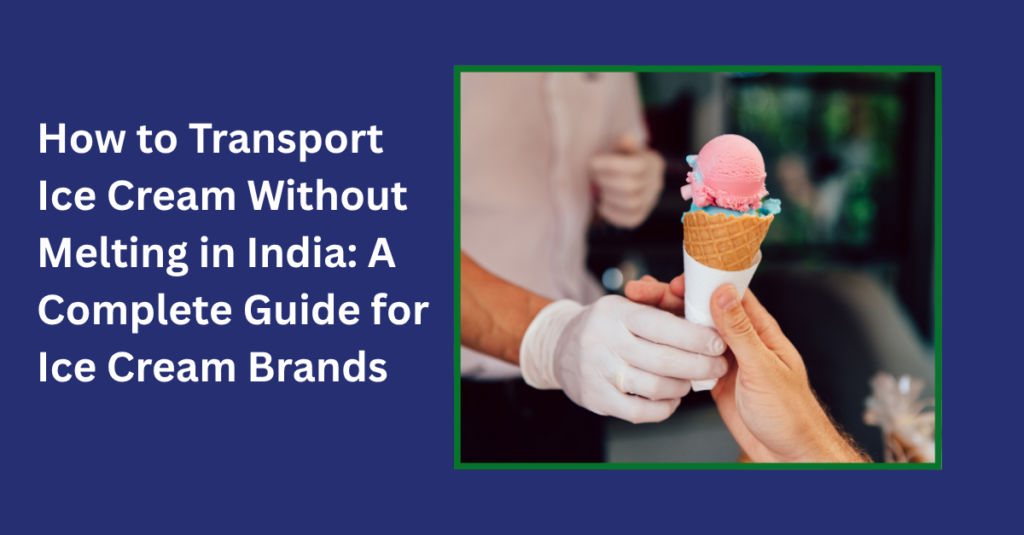
To transport ice cream without melting in India, businesses must maintain a continuous cold chain at temperatures of -18°C or below. This requires refrigerated vehicles, temperature-controlled storage, insulated handling processes, real-time monitoring, and efficient delivery planning to prevent temperature fluctuations and preserve product quality.
If you’re wondering how to transport ice cream without melting India, the answer lies in maintaining an uninterrupted cold chain from production to delivery. With India’s high temperatures and complex distribution networks, proper cold storage and refrigerated transportation are essential. At JustDeliveries, we understand the challenges frozen food businesses face and the systems required to keep ice cream perfectly frozen throughout transit. Businesses looking for a broader understanding of frozen product movement can also explore our guide on how to transport frozen food for best practices that apply across all frozen categories.
Why Ice Cream Melts During Transportation
Ice cream is one of the most temperature-sensitive food products in the market. Even a brief rise in temperature can affect its texture, taste, and overall quality, which is exactly why how cold chain logistics powers India’s frozen dessert boom is such an important story for the industry right now.
Several factors contribute to melting during transportation:
Temperature Fluctuations
Ice cream must remain consistently frozen. Frequent exposure to warmer temperatures can cause partial melting, resulting in ice crystal formation when refrozen.
Improper Packaging
Without adequate insulation, products can lose cold temperature quickly during loading, unloading, or transit delays.
Delivery Delays
Traffic congestion, route inefficiencies, and multiple delivery stops increase the risk of temperature deviations.
Lack of Cold Chain Infrastructure
Many businesses underestimate the importance of integrated cold storage and transportation systems, leading to avoidable product losses.
Understanding these risks is the first step in learning how to transport ice cream without melting India successfully.
What Temperature Should Ice Cream Be Transported At?
The recommended transportation temperature for ice cream is -18°C or lower.
Maintaining this temperature helps:
- Preserve texture and creaminess
- Prevent ice crystal formation
- Extend product shelf life
- Maintain food safety standards
- Reduce product spoilage
For businesses seeking reliable solutions for how to transport ice cream without melting India, temperature consistency is more important than simply achieving a low temperature at dispatch.
Best Ways to Transport Ice Cream Without Melting in India
Use Refrigerated Vehicles
Refrigerated or reefer vehicles are specifically designed to maintain frozen temperatures throughout transportation.
These vehicles offer:
- Controlled temperature settings
- Uniform cooling distribution
- Protection against external heat
- Safe transportation for frozen products
For brands exploring how to transport ice cream without melting India, refrigerated transportation is the most reliable option. Brands distributing across multiple regions can rely on established frozen food transportation across India to ensure every shipment stays frozen from origin to destination.
Utilize Insulated Handling Processes
Insulated containers and thermal protection measures reduce temperature exposure during loading and unloading operations.
Implement Real-Time Temperature Monitoring
Modern cold chain operations use sensors and monitoring systems to track temperature throughout the journey.
This allows logistics teams to identify and address temperature deviations before product quality is compromised.
Optimize Delivery Routes
Efficient route planning reduces transit time and minimizes unnecessary exposure to external conditions. Businesses operating in Delhi can strengthen route efficiency by working with specialists in frozen food transport in Delhi who understand the city’s distribution landscape and last-mile challenges.
The Role of Cold Chain Logistics in Ice Cream Transportation
Cold chain logistics refers to the end-to-end management of temperature-sensitive products through controlled storage, transportation, and distribution systems.
A successful cold chain includes:
- Temperature-controlled warehousing
- Refrigerated transportation
- Inventory visibility
- Temperature monitoring systems
- Timely delivery execution
Businesses looking for dependable answers to how to transport ice cream without melting India must invest in a complete cold chain ecosystem rather than focusing solely on transportation. Operators in the capital region can build this ecosystem with the support of reliable cold chain logistics in Delhi that covers warehousing, transportation, and last-mile delivery under one roof, while brands based in the west can rely on equally dependable cold chain logistics in Mumbai.
Challenges of Transporting Ice Cream Across India
India presents unique challenges for frozen food transportation.
Extreme Weather Conditions
Summer temperatures frequently exceed 40°C in many regions, increasing the risk of product degradation.
Long-Distance Distribution
Ice cream brands often distribute products across multiple cities and states, requiring dependable cold chain infrastructure. Brands expanding into southern markets can leverage dedicated frozen food transport in Bangalore to maintain cold chain continuity as they grow into new regions, a pattern that closely tracks the growth of artisanal ice cream brands in India into new cities over the past few years.
Multiple Delivery Points
Retail stores, supermarkets, distributors, and quick-commerce hubs create complex delivery networks.
Last-Mile Delivery Risks
The final stage of delivery is often the most vulnerable to temperature fluctuations.
Successfully managing these challenges is critical for businesses focused on how to transport ice cream without melting India.
How Ice Cream Manufacturers Can Reduce Melt Losses
Reducing spoilage begins with proper planning and logistics management.
- Forecast Demand Accurately: Demand forecasting helps avoid overstocking and minimizes inventory holding periods.
- Improve Inventory Visibility: Real-time inventory tracking ensures products move efficiently through the supply chain.
- Partner With Specialized Logistics Providers: Working with experienced cold chain logistics partners significantly improves transportation reliability.
- Monitor Every Shipment: Continuous visibility allows businesses to identify and resolve issues before they impact product quality.
These practices play a major role in solving how to transport ice cream without melting India at scale. Businesses in Hyderabad can also benefit from partnering with experts in cold chain logistics in Hyderabad to build a reliable regional distribution network that minimizes melt losses across every delivery point.
Essential Features to Look for in an Ice Cream Logistics Partner
Not all logistics providers are equipped to handle frozen products.
When selecting a logistics partner, consider:
- Refrigerated Fleet Availability: A dedicated fleet ensures temperature-controlled transportation throughout the journey.
- Cold Storage Infrastructure: Warehousing capabilities support inventory management and regional distribution.
- Real-Time Visibility: Access to shipment data improves operational control.
- Food Industry Expertise: Experience in frozen food logistics helps reduce risks and improve service reliability.
- Multi-City Distribution Network: A wider network enables efficient expansion into new markets.
Understanding cold storage cost in India is also an important step when evaluating logistics partners, as storage infrastructure costs vary significantly across regions and facility types.
Why Cold Storage Matters as Much as Transportation
Transportation is only one part of the frozen supply chain.
Cold storage facilities help businesses:
- Maintain product quality
- Manage inventory efficiently
- Handle seasonal demand fluctuations
- Support regional distribution strategies
Without temperature-controlled warehousing, even the best transportation systems may struggle to maintain product integrity.
The Future of Ice Cream Transportation in India
The frozen food industry continues to evolve rapidly.
Emerging trends include:
- Smart Temperature Monitoring: Advanced sensors provide continuous temperature visibility throughout the supply chain.
- AI-Driven Route Optimization: Artificial intelligence helps improve delivery efficiency and reduce transit times.
- Integrated Cold Chain Networks: Businesses increasingly seek end-to-end logistics solutions instead of fragmented services.
- Growth of Quick Commerce: The rise of rapid delivery platforms has increased demand for reliable cold chain infrastructure.
As the industry grows, understanding the full food and beverage service sequence from production through to final delivery helps businesses identify where cold chain investments will have the greatest impact on product quality and customer satisfaction.
How JustDeliveries Supports Ice Cream Brands Across India
For brands seeking dependable solutions for how to transport ice cream without melting India, JustDeliveries provides specialized cold-chain logistics designed for food and beverage businesses.
Our temperature-controlled transportation and warehousing solutions help maintain product quality throughout the supply chain while supporting business growth.
One of the key advantages is the HQ App, a centralized dashboard that gives F&B brands complete operational visibility. Through a single platform, businesses can monitor live vehicle locations, temperature compliance, service-level agreements (SLAs), billing information, and AI-driven performance insights in real time.
JustDeliveries also supports leading e-commerce and quick-commerce ecosystems. We power cold-chain logistics for platforms such as Swiggy Instamart, Zepto, Blinkit, Amazon, JioMart, and BigBasket by managing hub-to-hub and dark store deliveries with temperature control and real-time tracking.
Whether you are distributing ice cream to retailers, distributors, supermarkets, or quick-commerce hubs, JustDeliveries provides the infrastructure needed to scale efficiently while maintaining cold chain integrity.
Conclusion
Understanding how to transport ice cream without melting India requires more than simply using refrigerated vehicles. Success depends on a fully integrated cold chain that combines temperature-controlled storage, real-time monitoring, route optimization, and reliable transportation.
As India’s frozen food industry continues to grow, businesses that invest in robust cold chain logistics — and in disciplined ice cream supply chain management specifically — will be better positioned to protect product quality, reduce losses, and meet customer expectations consistently.
Frequently Asked Questions
Q1. How do ice cream companies transport products without melting?
Ice cream companies use refrigerated vehicles, cold storage facilities, insulated handling procedures, and continuous temperature monitoring to maintain temperatures below -18°C throughout the supply chain.
Q2. How long can ice cream stay frozen during transportation?
The duration depends on transportation conditions, packaging, and temperature control systems. Properly managed cold chain logistics can keep ice cream frozen for extended periods without quality loss.
Q3. Can ice cream be transported in a normal delivery vehicle?
No. Standard delivery vehicles cannot maintain the required frozen temperatures, increasing the risk of melting and product spoilage.
Q4. Can temperature fluctuations affect ice cream quality even if it refreezes?
Yes. Temperature fluctuations can create larger ice crystals, affecting texture, consistency, and overall product quality even after refreezing.
Q5. Is cold storage necessary before transportation?
Yes. Cold storage facilities ensure products remain at the correct temperature before dispatch and support efficient inventory management.
Q6. What temperature should ice cream be transported at?
Ice cream should generally be transported at -18°C or lower to maintain product quality and food safety standards.
Q7. Why is cold chain logistics important for ice cream transportation?
Cold chain logistics ensures uninterrupted temperature control from production to delivery, reducing spoilage, maintaining quality, and protecting brand reputation.
Q8. Will refrigerated transportation reduce product losses?
Yes. Proper refrigerated transportation significantly reduces melt losses, product damage, customer complaints, and inventory wastage.

Mansi Mahansaria
I’m Mansi Mahansaria, CEO and Founder of JustDeliveries, a B2B logistics company specializing in the food and beverage sector. With a background in Chemical Technology (ICT Mumbai), an MBA (FMS Delhi), and experience at IDFC Private Equity and Tata Group, I’ve built a plug-and-play logistics network helping F&B brands scale efficiently. I also share insights on entrepreneurship and logistics at industry and academic events.