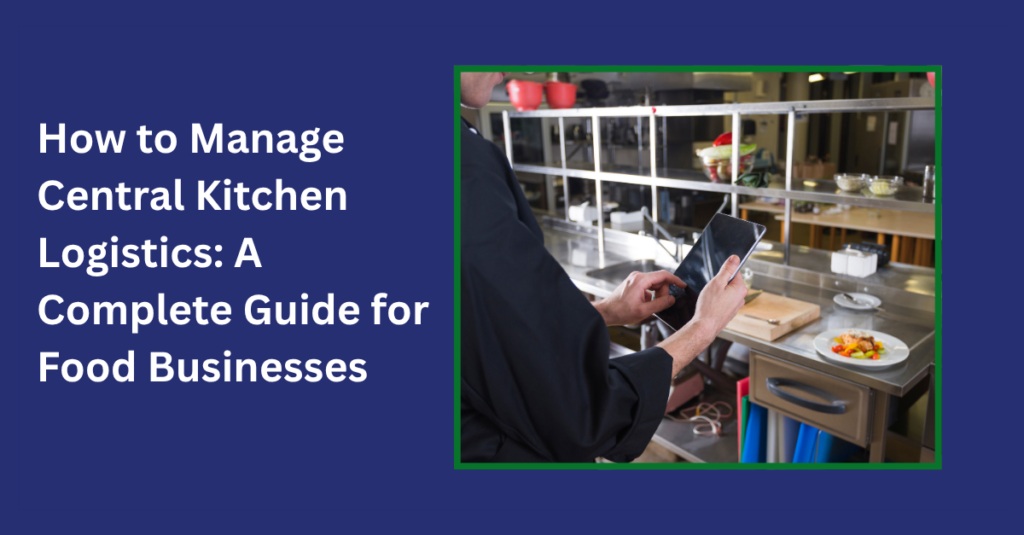
Central kitchen logistics involves managing inventory, procurement, storage, production, transportation, and distribution across multiple food outlets. To manage it effectively, businesses need real-time inventory visibility, cold chain logistics, route optimization, technology-driven tracking, and standardized operating procedures that ensure food quality, safety, and cost efficiency.
If you’re wondering how to manage central kitchen logistics, the answer lies in creating a streamlined system that connects inventory, production, warehousing, and distribution. As food businesses scale across locations, efficient logistics becomes critical to maintaining quality, reducing costs, and ensuring timely deliveries. Companies like JustDeliveries help food brands simplify these complex logistics operations with specialized cold-chain solutions. Understanding the full scope of what is food and beverage service helps businesses identify every stage where logistics plays a role in protecting product quality and customer experience.
What Is Central Kitchen Logistics?
Central kitchen logistics refers to the movement and management of ingredients, prepared food, inventory, and supplies between a central production facility and multiple outlets, cloud kitchens, restaurants, or retail locations.
A central kitchen acts as the operational hub where food is prepared, processed, packaged, and dispatched to various locations. Logistics ensures that every outlet receives the right products at the right time while maintaining food safety standards.
For growing food brands, understanding how to manage central kitchen logistics is essential for maintaining consistency across all customer touchpoints.
Why Central Kitchen Logistics Matters
The success of a central kitchen depends on much more than food preparation. Logistics directly impacts:
- Food quality and freshness
- Inventory costs
- Operational efficiency
- Customer satisfaction
- Outlet performance
- Regulatory compliance
Without a well-structured logistics system, businesses often face delayed deliveries, inventory shortages, food wastage, and rising operational expenses.
Common Challenges in Central Kitchen Logistics
Inventory Visibility Across Locations
Managing stock across multiple outlets can be challenging. Lack of real-time inventory visibility often leads to overstocking, understocking, and unnecessary waste.
Maintaining Food Quality During Transportation
Perishable food products require precise temperature control throughout transit. Even small temperature fluctuations can compromise product quality and safety.
Delivery Delays
Traffic congestion, poor route planning, and vehicle inefficiencies can disrupt supply schedules and impact outlet operations.
High Operational Costs
Running an in-house fleet, managing drivers, and maintaining storage facilities can significantly increase logistics expenses. Businesses looking to reduce these costs can explore working with a third party logistics company in India that specializes in food distribution and offers scalable solutions without the overhead of in-house operations.
Food Safety Compliance
Food businesses must ensure compliance with food safety regulations throughout procurement, storage, transportation, and delivery.
These challenges highlight why learning how to manage central kitchen logistics has become a priority for restaurant chains, cloud kitchens, and food brands.
10 Proven Strategies to Manage Central Kitchen Logistics Efficiently
1. Implement Centralized Inventory Management
A centralized inventory system provides visibility across all locations and helps forecast demand accurately.
Benefits include:
- Reduced food wastage
- Better stock planning
- Improved procurement decisions
- Lower inventory holding costs
2. Standardize Procurement Processes
Centralized procurement helps ensure consistency in ingredient quality and pricing.
Businesses should:
- Develop approved vendor networks
- Monitor supplier performance
- Maintain procurement standards
- Consolidate purchasing volumes
3. Optimize Production Planning
Production schedules should align with outlet demand patterns.
Effective planning helps:
- Reduce excess inventory
- Improve labor utilization
- Increase production efficiency
- Maintain product freshness
4. Establish a Reliable Cold Chain
One of the most important aspects of how to manage central kitchen logistics is maintaining an uninterrupted cold chain.
This includes:
- Temperature-controlled storage
- Chilled transportation
- Frozen transportation
- Continuous temperature monitoring
A strong cold chain protects product integrity from production to delivery. Brands operating across Delhi can strengthen this foundation with dedicated third party logistics in Delhi that offers integrated cold chain and distribution services across the region.
5. Use Real-Time Tracking Systems
Modern logistics technology provides visibility into shipments, delivery timelines, and vehicle performance.
Real-time tracking helps managers:
- Monitor deliveries
- Resolve issues quickly
- Improve accountability
- Enhance customer service
6. Optimize Delivery Routes
Efficient route planning reduces transportation costs and improves delivery performance.
Route optimization can help:
- Reduce fuel consumption
- Increase vehicle utilization
- Improve on-time deliveries
- Minimize transit times
Brands managing deliveries across multiple cities can benefit from reliable intra city logistics across India to ensure stock moves efficiently between central kitchens and outlet locations without delays.
7. Adopt Frequent Replenishment Models
Rather than sending large quantities less frequently, many successful food brands now use smaller, more frequent deliveries.
Benefits include:
- Fresher inventory
- Lower storage requirements
- Reduced spoilage
- Better demand responsiveness
8. Develop Standard Operating Procedures
Clear SOPs ensure consistency throughout logistics operations.
Areas to standardize include:
- Packaging
- Loading and unloading
- Temperature checks
- Dispatch procedures
- Delivery documentation
A well-structured food and beverage service sequence also helps central kitchen teams align production and dispatch timing with outlet service schedules to minimize waiting and maintain food freshness.
9. Utilize Warehousing Strategically
Well-managed storage facilities provide flexibility and help absorb demand fluctuations.
Businesses should maintain:
- Dry storage
- Chilled storage
- Frozen storage
- Safety stock levels
10. Monitor Logistics KPIs
Businesses that understand how to manage central kitchen logistics effectively track key performance indicators regularly.
Important metrics include:
- On-time delivery rate
- Inventory turnover
- Order accuracy
- Food wastage percentage
- Temperature compliance
- Transportation costs
Tracking food wastage as a KPI is particularly important — businesses can read our detailed guide on how to control food wastage in restaurants to understand the operational strategies that reduce losses across central kitchen and outlet operations.
The Importance of Cold Chain Logistics
Food quality depends heavily on temperature management.
A robust cold chain protects:
- Dairy products
- Frozen foods
- Fresh produce
- Ready-to-eat meals
- Meat and seafood products
When temperature control breaks down, businesses face spoilage, customer complaints, and compliance risks.
This is why cold chain management remains a critical component of how to manage central kitchen logistics successfully. Brands scaling operations in Mumbai can rely on a trusted third party logistics provider in Mumbai to manage cold chain transportation and last-mile delivery across the city’s complex distribution network.
How Technology Simplifies Central Kitchen Logistics
Technology has transformed food supply chains by providing greater visibility and operational control.
Modern solutions include:
- Inventory management platforms
- Route optimization software
- Warehouse management systems
- Temperature monitoring sensors
- Analytics dashboards
These tools help businesses make faster and more informed decisions.
The Role of JustDeliveries in Central Kitchen Logistics
For food businesses looking to scale efficiently, outsourcing logistics to a specialized partner can offer significant advantages.
JustDeliveries focuses exclusively on food and beverage logistics, helping cloud kitchens, restaurant chains, QSRs, food manufacturers, and retail brands streamline their supply chains.
Their services include:
- Temperature-controlled transportation
- Cold storage solutions
- Inventory management support
- Multi-city logistics operations
- Real-time shipment tracking
A major advantage is the HQ App, a centralized dashboard designed specifically for F&B brands. The platform allows businesses to track live vehicle movements, monitor temperature compliance, manage service-level agreements (SLAs), review billing information, and access AI-driven performance insights in real time.
This level of visibility makes it easier for brands to understand how to manage central kitchen logistics while maintaining operational control. Businesses in Hyderabad looking for a reliable logistics partner can explore third party logistics in Hyderabad for integrated warehousing, cold chain, and distribution solutions tailored to the food industry.
Supporting Quick Commerce and E-Commerce Food Logistics
Today’s food brands increasingly serve customers through quick commerce and e-commerce channels.
JustDeliveries supports cold-chain logistics operations for major platforms including Swiggy Instamart, Zepto, Blinkit, Amazon, JioMart, and BigBasket.
Their logistics network handles:
- Hub-to-hub transportation
- Dark store replenishment
- Temperature-controlled deliveries
- Real-time shipment visibility
This infrastructure helps food businesses maintain product quality while meeting the fast delivery expectations of modern consumers. Central kitchen brands entering the quick commerce space can learn more about quick commerce logistics in India to understand the speed, temperature, and operational precision required to serve these platforms consistently.
Future Trends in Central Kitchen Logistics
As the food industry evolves, logistics operations are becoming more data-driven.
Key trends include:
- AI-powered route optimization
- Predictive inventory forecasting
- Smart cold chain monitoring
- Automated warehouse operations
- Real-time supply chain analytics
Businesses that embrace these technologies will be better positioned to scale efficiently and serve customers consistently.
Conclusion
Understanding how to manage central kitchen logistics is no longer optional for growing food businesses. Success depends on balancing inventory management, production planning, cold chain compliance, transportation efficiency, and technology integration.
By implementing structured processes and leveraging specialized logistics partners, food brands can improve operational efficiency, reduce costs, maintain product quality, and support long-term growth. Whether you operate a restaurant chain, cloud kitchen, QSR brand, or food manufacturing business, investing in logistics excellence creates a stronger foundation for expansion.
Ready to Simplify Your Central Kitchen Logistics?
Managing food logistics across multiple outlets requires expertise, infrastructure, and real-time visibility. JustDeliveries helps cloud kitchens, QSRs, restaurants, food manufacturers, and retail food brands streamline their operations through temperature-controlled transportation, cold storage solutions, inventory support, and technology-driven logistics management.
With the HQ App providing live tracking, JustDeliveries delivers the reliability and scalability that modern food businesses need.
Connect with JustDeliveries today and build a smarter, more efficient logistics network for your growing food business.
Frequently Asked Questions
Q1. How do you manage central kitchen logistics effectively?
Central kitchen logistics can be managed effectively through centralized inventory systems, route optimization, cold chain management, real-time tracking, and standardized operating procedures.
Q2. How often should central kitchens replenish inventory?
Most food businesses benefit from frequent replenishment models, where inventory is delivered daily or several times per week based on demand forecasts and product shelf life.
Q3. Can technology improve central kitchen logistics?
Yes. Technology improves visibility, inventory accuracy, route planning, temperature monitoring, and overall supply chain efficiency.
Q4. Can outsourcing logistics reduce operational costs?
Outsourcing can help reduce fleet ownership costs, labor expenses, infrastructure investments, and administrative overhead while improving service quality.
Q5. Is cold chain logistics necessary for central kitchens?
Yes. Cold chain logistics is essential for preserving the quality, freshness, and safety of temperature-sensitive food products during storage and transportation.
Q6. Will better logistics improve food quality?
Yes. Efficient logistics reduces delays, maintains temperature compliance, minimizes spoilage, and ensures products reach outlets in optimal condition.
Q7. What are the biggest challenges in central kitchen logistics?
The most common challenges include inventory visibility, temperature control, transportation delays, rising logistics costs, and maintaining food safety compliance.
Q8. Why is central kitchen logistics important for food businesses?
Central kitchen logistics ensures consistent product quality, operational efficiency, inventory control, cost management, and seamless distribution across multiple outlets.

Mansi Mahansaria
I’m Mansi Mahansaria, CEO and Founder of JustDeliveries, a B2B logistics company specializing in the food and beverage sector. With a background in Chemical Technology (ICT Mumbai), an MBA (FMS Delhi), and experience at IDFC Private Equity and Tata Group, I’ve built a plug-and-play logistics network helping F&B brands scale efficiently. I also share insights on entrepreneurship and logistics at industry and academic events.