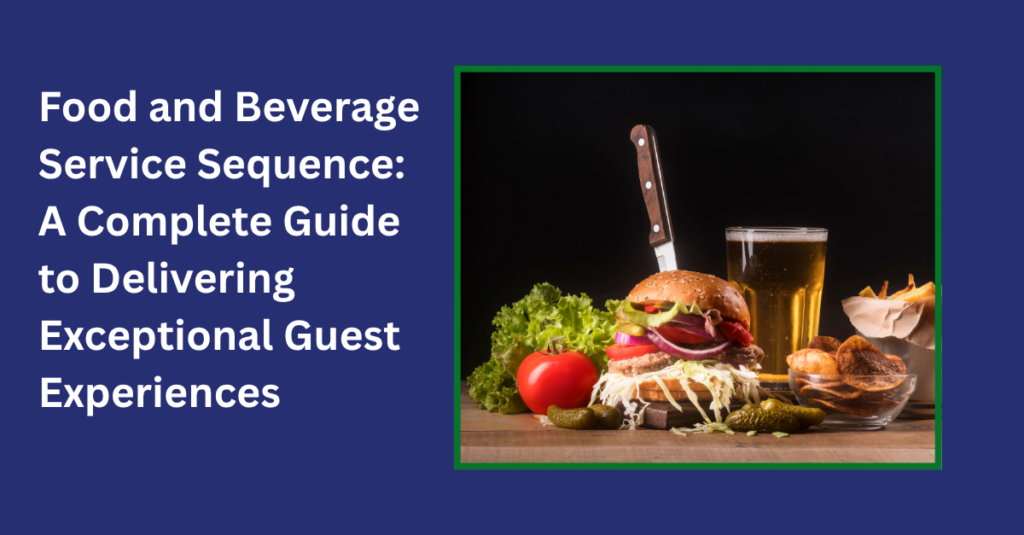
A food and beverage service sequence is the step-by-step process followed by hospitality establishments to serve guests efficiently, from preparation and greeting to order taking, food service, billing, and farewell. Following a standardized sequence helps improve customer satisfaction, operational efficiency, service consistency, and overall dining experiences.
A food and beverage service sequence is the structured order of activities performed to ensure guests receive professional and consistent service throughout their dining experience. Whether in restaurants, hotels, cafés, cloud kitchens, or catering businesses, a well-planned service sequence plays a vital role in guest satisfaction. At JustDeliveries, we understand that exceptional food and beverage service begins not only in the dining area but throughout the entire food supply chain.
What Is a Food and Beverage Service Sequence?
The food and beverage service sequence refers to the systematic flow of service activities that hospitality staff follow when serving guests. It begins before guests arrive and continues until they leave the establishment, a flow that looks different depending on what QSR (quick service restaurant) means for that specific brand.
A well-defined food and beverage service sequence helps ensure consistency, reduces service errors, improves communication among staff, and creates memorable dining experiences.
In today’s highly competitive hospitality industry, delivering outstanding customer service is often what separates successful businesses from the rest.
Why Is the Food and Beverage Service Sequence Important?
Guests expect more than just good food. They expect prompt attention, personalized service, and a smooth dining experience, delivered differently across the 4 types of service in food and beverage.
A standardized food and beverage service sequence helps businesses:
- Maintain service consistency
- Improve guest satisfaction
- Increase operational efficiency
- Reduce mistakes and delays
- Improve staff coordination
- Encourage repeat visits
- Enhance brand reputation
When every team member understands their responsibilities, service becomes seamless and professional.
Step-by-Step Food and Beverage Service Sequence
1. Restaurant Preparation Before Guest Arrival
Excellent service begins before customers enter the establishment.
Preparation activities include:
- Cleaning dining areas
- Setting tables correctly
- Checking cutlery and glassware
- Preparing POS systems
- Conducting staff briefings
- Reviewing daily specials
Proper preparation lays the foundation for a successful food and beverage service sequence.
2. Greeting and Welcoming Guests
The first interaction shapes the guest’s perception.
Staff should:
- Smile and maintain eye contact
- Offer a warm greeting
- Confirm reservations if applicable
- Welcome guests professionally
A positive first impression helps guests feel valued and comfortable.
3. Escorting and Seating Guests
After greeting guests, staff should escort them to suitable tables.
Factors to consider include:
- Group size
- Accessibility requirements
- Seating preferences
- Special occasions
Once seated, menus should be presented promptly.
4. Presenting Menus and Explaining Specials
Menu presentation is an important part of the food and beverage service sequence.
Staff should:
- Introduce menu highlights
- Explain daily specials
- Recommend signature dishes
- Answer guest questions confidently
Knowledgeable recommendations can significantly improve the guest experience.
5. Taking Food and Beverage Orders
Order-taking requires accuracy and attention to detail.
Staff should:
- Listen carefully
- Confirm special dietary requests
- Clarify modifications
- Suggest complementary items
Upselling should always focus on enhancing the guest experience rather than simply increasing sales.
6. Communicating Orders to the Kitchen and Bar
Accurate communication is essential.
Orders should be transmitted quickly through POS systems or kitchen display systems to avoid delays and mistakes.
Effective communication keeps the entire food and beverage service sequence running smoothly.
7. Serving Beverages
Beverages are typically served before food.
Best practices include:
- Serving drinks promptly
- Presenting beverages professionally
- Verifying orders before serving
- Maintaining appropriate serving temperatures
Attention to detail reflects professionalism.
8. Serving Food
Food presentation directly impacts guest satisfaction.
Service staff should:
- Verify order accuracy
- Serve guests in the correct order
- Ensure proper presentation
- Check that food quality meets standards
This stage is one of the most critical points in the food and beverage service sequence. Businesses that rely on fresh daily stock can benefit from understanding how to transport frozen food safely to ensure every dish meets quality expectations from kitchen to table.
9. Checking Guest Satisfaction
After serving food, staff should check on guests without being intrusive.
Questions such as:
“Is everything to your liking?”
can help identify issues early and improve guest satisfaction.
Prompt service recovery can often turn a negative experience into a positive one.
10. Clearing Used Tableware
Clearing tables efficiently contributes to a comfortable dining environment.
Staff should:
- Remove empty plates promptly
- Clear unnecessary items
- Maintain cleanliness throughout the meal
Good table maintenance enhances the overall experience.
11. Offering Desserts and Additional Items
Dessert recommendations create opportunities to increase guest satisfaction while boosting revenue.
Popular suggestions may include:
- Desserts
- Specialty coffees
- Tea selections
- After-dinner beverages
Timing is important when making recommendations.
12. Presenting the Bill
Billing should be efficient and accurate.
Staff should:
- Verify bill accuracy
- Present it professionally
- Be available for questions
Transparency and accuracy help build customer trust.
13. Processing Payment
Whether guests choose cash, card, or digital payment methods, transactions should be smooth and hassle-free.
A quick checkout process contributes positively to the overall dining experience.
14. Farewell and Guest Departure
The final interaction often leaves the strongest impression.
Staff should:
- Thank guests sincerely
- Invite them to return
- Offer a warm farewell
A positive conclusion encourages repeat business and customer loyalty.
Common Mistakes in Food and Beverage Service
Even experienced teams can make mistakes that affect guest satisfaction.
Common issues include:
- Delayed greetings
- Incorrect orders
- Poor communication between departments
- Slow service
- Billing errors
- Lack of attentiveness
Continuous training and standard operating procedures help minimize these challenges.
Best Practices for Improving Service Standards
Businesses can strengthen their food and beverage service sequence by focusing on:
- Staff Training: Regular training ensures employees understand service expectations and hospitality standards.
- Technology Integration: Modern POS systems, inventory tools, and operational dashboards improve efficiency and accuracy.
- Customer Feedback: Guest reviews provide valuable insights for continuous improvement.
- Performance Monitoring: Tracking service quality helps identify opportunities for operational excellence.
The Role of Logistics in Food and Beverage Service Excellence
Many hospitality businesses focus primarily on front-of-house service. However, guest satisfaction starts much earlier. Food quality depends heavily on transportation, storage, inventory management, and temperature control, several of which are detailed in our guide to food logistics best practices for freshness.
If ingredients arrive late or in poor condition, even the best food and beverage service sequence cannot deliver the desired guest experience.
Reliable logistics ensure:
- Product freshness
- Inventory availability
- Food safety compliance
- Reduced wastage
- Consistent customer experiences
Businesses operating in the capital region can strengthen their supply chain through dedicated cold chain logistics in Delhi to ensure ingredients arrive fresh and on time every day.
How JustDeliveries Supports Food & Beverage Businesses
Modern hospitality businesses require more than transportation. They need specialized logistics partners who understand food operations.
JustDeliveries provides end-to-end cold-chain logistics solutions designed specifically for food and beverage brands.
Their services include:
- Refrigerated transportation
- Frozen and chilled deliveries
- Cold storage solutions
- Food-grade warehousing
- Real-time shipment tracking
- Supply chain visibility
One of the standout innovations is the HQ App, a centralized dashboard that allows F&B brands to monitor live vehicle movement, temperature compliance, service-level agreements (SLAs), billing data, and AI-powered performance insights in real time. For brands evaluating infrastructure investments, understanding cold storage cost in India is an important step before committing to a long-term logistics setup.
This level of visibility helps businesses maintain consistency throughout their food supply chain.
JustDeliveries also supports leading quick-commerce and e-commerce platforms such as Swiggy Instamart, Zepto, Blinkit, Amazon, JioMart, and BigBasket with reliable temperature-controlled deliveries, powered by dedicated quick commerce logistics solutions. Brands operating out of Bangalore can leverage specialized frozen food transport in Bangaloer to meet the speed and temperature demands of these fast-moving platforms. By ensuring product freshness and supply chain efficiency, JustDeliveries helps restaurants, cloud kitchens, bakeries, QSRs, and food brands maintain consistently high service standards.
Conclusion
A well-structured food and beverage service sequence is essential for delivering consistent guest experiences and maintaining professional service standards. From preparation and greeting to food service and farewell, every step contributes to customer satisfaction.
However, exceptional service extends beyond the dining room. Behind every successful hospitality operation is a dependable supply chain that ensures ingredients arrive fresh, safely stored, and ready to serve. Brands expanding across southern markets can rely on established frozen food transport in Delhi and pan-India frozen food transportation across India to maintain consistent quality at every location. By combining operational excellence with reliable cold-chain logistics, businesses can consistently meet customer expectations and strengthen long-term growth. For operations in Hyderabad, partnering with experts in cold chain logistics in Hyderabad ensures the last mile is as dependable as the first.
Partner with JustDeliveries for Reliable Food Logistics
Great guest experiences begin long before a meal reaches the table. If your restaurant, cloud kitchen, bakery, QSR, dairy brand, or food business depends on freshness, consistency, and on-time deliveries, JustDeliveries can help optimize your operations with specialized cold-chain logistics, temperature-controlled transportation, warehousing, and real-time visibility solutions. Build a stronger, more efficient food supply chain with a logistics partner that understands the unique demands of the food and beverage industry.
Frequently Asked Questions
Q1. How does a food and beverage service sequence improve guest satisfaction?
A structured food and beverage service sequence ensures timely service, fewer errors, better communication, and a consistent dining experience, all of which contribute to higher guest satisfaction.
Q2. How many steps are typically included in a food and beverage service sequence?
Most hospitality establishments follow a sequence of 12 to 14 steps, covering everything from preparation and guest greeting to billing and farewell.
Q3. Can a restaurant operate effectively without a standard service sequence?
While it is possible, the absence of a standardized process often leads to inconsistent service, communication gaps, and lower customer satisfaction.
Q4. Can technology improve food and beverage service operations?
Yes. Technologies such as POS systems, inventory management software, and logistics dashboards help improve efficiency, accuracy, and operational visibility.
Q5. Is the food and beverage service sequence the same for all restaurants?
The core principles remain similar, but the exact process may vary depending on the type of establishment, service style, and customer expectations.
Q6. Will improving service sequence increase restaurant revenue?
In many cases, yes. Better service often leads to higher customer retention, positive reviews, increased spending, and repeat visits.
Q7. What is the most important step in a food and beverage service sequence?
Every step is important, but greeting guests, taking accurate orders, and ensuring food quality often have the greatest impact on customer satisfaction.
Q8. Why is cold-chain logistics important for food service businesses?
Cold-chain logistics helps maintain food quality, freshness, and safety throughout transportation and storage, ensuring guests receive products in optimal condition.

Mansi Mahansaria
I’m Mansi Mahansaria, CEO and Founder of JustDeliveries, a B2B logistics company specializing in the food and beverage sector. With a background in Chemical Technology (ICT Mumbai), an MBA (FMS Delhi), and experience at IDFC Private Equity and Tata Group, I’ve built a plug-and-play logistics network helping F&B brands scale efficiently. I also share insights on entrepreneurship and logistics at industry and academic events.