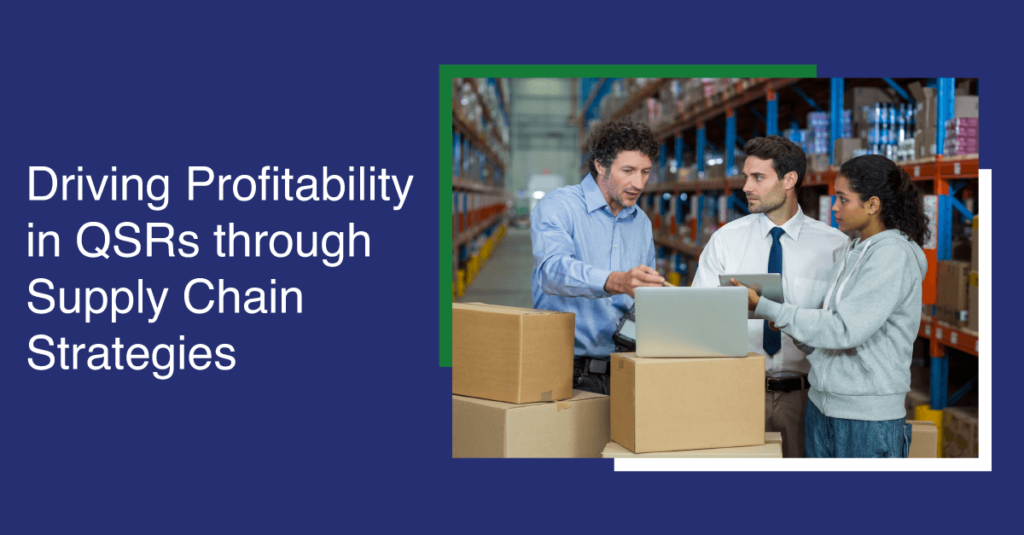
In the highly competitive QSR industry — as an overview of the QSR industry makes clear — a supply chain is the backbone for smooth operations. Since customers expect fast service with consistent quality, maintaining efficiency in managing the flow of ingredients, products, and resources efficiently is the key to profitability.
QSRs that invest in optimising their supply chains cut down their operations costs, ensure on-time delivery, and improve overall service quality. Focusing on strategic QSR supply chain management helps brands meet customer expectations and have a competitive edge in the market.
In this blog, we will talk about how the supply chain can contribute to profitability in QSRs, building on the basics of what QSR (quick service restaurant) means covered elsewhere on our blog. Let’s get started!
Looking for B2B Last-Mile Delivery Services?
Partner with Us for Seamless B2B Last-Mile Delivery from Warehouse to Retailer
A] Benefits of Maintaining a Supply Chain as a QSR Brand
1. Speed and Efficiency
In the QSR industry, having a robust supply chain is important for speed and efficiency, precisely because what a quick service restaurant (QSR) is is defined by that very speed. QSR thrives on quick service, and procurement or distribution delays can affect daily operations.
With an optimised supply chain including cold chain logistics for QSR brands in Bangalore and other major metros businesses get fresh ingredients faster, with timely deliveries and real-time updates about products.
2. Cost Management
Supply chain strategies also contribute to cost management in QSRs. By streamlining procurement, QSRs can reduce the cost of raw materials by negotiating better deals with suppliers and ordering in bulk. An efficient 3PL supply chain can also reduce operational expenses by optimisng transportation routes and minimising fuel and labour costs. JustDeliveries helps reduce your operation costs by using a shared van model. By reducing inefficiencies and controlling expenses throughout the supply chain, QSR brands can be profitable while offering competitive pricing to their customers.
3. Inventory Management
By having a quick-service restaurant supply chain, you can have a better balance between overstocking and understocking. This is particularly critical for QSRs handling frozen menu ingredients, where frozen food transportation for QSR supply chains plays a direct role in maintaining shelf life and food safety standards, and following established food logistics best practices for freshness helps reinforce these standards further. Inventory management systems can also connect to QSR supply chains for real-time product information, informing you about safety, delivery, and overstock concerns.
4. Consistency and Quality Control
Having a robust supply chain ensures consistency and quality control across all outlets. For QSRs, maintaining the same quality of food and service through all outlets is important for their brand reputation, which ties directly back to what food and beverage service really means in a fast-service environment. Standardising supplier partnerships and implementing quality control strategies help maintain uniformity in taste, freshness and overall food quality. Regular audits, quality checks, and supplier performance reviews help enhance this consistency. This way, businesses can offer the same high-quality experience, driving repeat business and improving brand reputation.
5. Scalability
The supply chain should be scalable for growing QSR brands. When one brand grows and increases outlets, the supply chain scales up to meet demand without giving away efficiency or quality. Flexibility in the supply chain allows scalability through adjustments in the source, production, and distribution processes. This can be achieved by diversifying the supplier base, utilising regional distribution centres, and applying technology to manage the growing complexity of the 3PL supply chain. Ultimately, scalable supply chain strategies enable QSRs to be seen in new markets and expand their operations to meet growing customer demands while maintaining profitability.
6. Optimised Distribution
An optimised distribution strategy translates to ingredients arriving on time and at a lower price. Reliable intra-city delivery for QSR chain replenishment ensures that central kitchens and commissaries can consistently stock all outlets without delays. Technology such as GPS tracking can further reduce delivery times and transportation costs, while central kitchens or commissaries can streamline preparation before forwarding to food service chains.
7. Integrate Technology
Technology is important in modernising supply chains and driving profitability in the QSR industry. QSRs can identify opportunities to streamline every aspect of the supply chain using advanced technologies like AI, machine learning, and analytics. For instance, predictive analytics will help give more realistic estimates of demand and reduce overstocking or understocking of inventory. AI-driven logistics management systems enable delivery routing to ensure less cost and time for merchandise delivery. Cloud-based platforms provide real-time tracking and data sharing between suppliers, distributors, and restaurants. Using technology within the 3PL supply chain empowers QSRs to be agile, cut costs, and make informed decisions to help your business be profitable.
Need Expert Supply Chain Solutions?
Connect with us for professional supply chain services to ensure seamless operations.
Conclusion
A well-optimised QSR supply chain helps businesses be profitable. We discussed how quality assurance, inventory management, scalability, and cost management can help brand meet their consumer demand. With the constant change in the QSR industry, businesses focusing on efficient supply chains — including reliable quick commerce logistics solutions will survive this highly competitive market and guarantee their long-term success. JustDeliveries helps you improve your supply chain. We offer warehousing, inventory management, and tracking of your products all in one click. Contact us to learn how we can help you!

Mansi Mahansaria
I’m Mansi Mahansaria, CEO and Founder of JustDeliveries, a B2B logistics company specializing in the food and beverage sector. With a background in Chemical Technology (ICT Mumbai), an MBA (FMS Delhi), and experience at IDFC Private Equity and Tata Group, I’ve built a plug-and-play logistics network helping F&B brands scale efficiently. I also share insights on entrepreneurship and logistics at industry and academic events.