
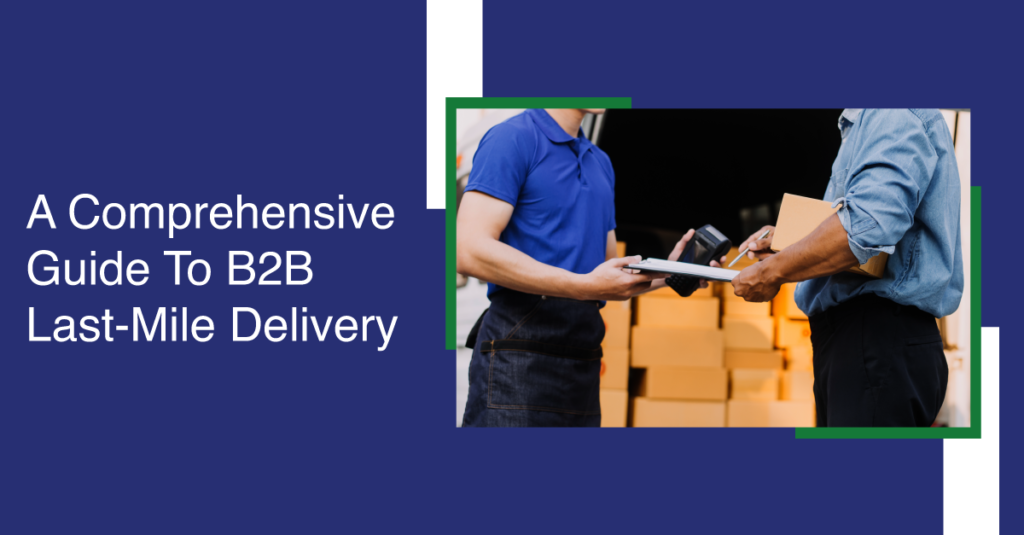
B2B last mile delivery is the process of transporting goods from a warehouse or transit hub to the final business destination. Effective last mile delivery logistics improves delivery speed, transparency, customer satisfaction, and profitability, which is at the core of how delivery logistics partners cut last-mile costs for growing businesses. Businesses can optimise operations through route planning, real-time tracking, delivery customisation, and B2B delivery automation technologies. Partnering with an experienced third party logistics company india can help businesses implement these optimisation strategies without building an entire delivery infrastructure in-house.
B2B last mile delivery is the final stage of the supply chain where products move from a warehouse or distribution centre to a business customer. At Just Deliveries, we understand that efficient last mile delivery services are critical for maintaining product quality, meeting delivery timelines, and ensuring customer satisfaction in today’s competitive business environment. Our third party logistics hyderabad operations, for instance, are built specifically to support businesses that need dependable last-mile coverage in high-density urban markets.
What Is B2B Last Mile Delivery?
B2B last mile delivery refers to the transportation of goods from the final transit point to the receiving business or end user. It is one of the most important stages of the supply chain because it directly impacts delivery performance, customer experience, and operational efficiency.
At the core of successful last mile delivery B2B operations is the ability to move products quickly, safely, and accurately between warehouses, retailers, restaurants, distributors, and other business locations. As customer expectations continue to rise, businesses must invest in reliable last mile delivery services to remain competitive and improve customer retention.
Many businesses rely on both inter-city transportation and intra-city distribution networks. While inventory may be transported between cities in bulk, B2B last mile delivery ensures products reach their final destination efficiently and on time. Reliable intra city logistics india networks help ensure this final-mile movement remains smooth even during high bulk transfers between cities.
Why B2B Last Mile Delivery Matters
The final delivery stage often determines the overall success of a supply chain operation. Delays, poor visibility, and inefficient processes can negatively impact customer satisfaction and increase operating costs.
A well-planned last mile delivery business model helps businesses:
- Improve customer satisfaction
- Increase delivery accuracy
- Reduce transportation costs
- Enhance supply chain visibility
- Improve customer retention
- Strengthen operational efficiency
For businesses dealing with perishable goods, food products, and temperature-sensitive inventory, efficient last mile delivery logistics becomes even more critical. This is especially true for the ice cream supply chain india, where last-mile delays can quickly affect product quality.
Common Challenges in Last Mile Delivery Logistics
1. Lack of Route Optimisation
Poor route planning can significantly affect delivery timelines and increase transportation expenses. Traffic congestion, urban complexity, and inefficient scheduling often make the final stage of delivery the most expensive part of the supply chain.
Without route optimisation, businesses face higher fuel costs, delayed deliveries, and reduced operational efficiency.
2. Use of Outdated Delivery Technology
Many businesses continue to rely on outdated systems that limit visibility and hinder delivery performance. These technologies often create delays in vehicle tracking, route planning, and communication.
Modern last mile delivery services require advanced technology that supports real-time tracking, route optimisation, and operational transparency.
3. Limited Delivery Options
One of the biggest challenges facing last mile delivery B2B operations is the lack of flexible delivery options. Unlike many B2C delivery models that offer scheduled deliveries and customised delivery windows, traditional B2B logistics often provides limited flexibility.
As customer expectations evolve, businesses increasingly demand customised delivery solutions that fit their operational requirements.
4. High Delivery Costs
Last-mile transportation can account for a significant portion of overall logistics costs. Specialised vehicles, traffic congestion, route inefficiencies, and operational complexity all contribute to rising delivery expenses.
High delivery costs can reduce profitability and create challenges for growing businesses seeking scalable logistics solutions. This is a common concern reflected in a typical logistics checklist for opening new restaurant outlet, where delivery cost planning is often a major budgeting factor.
5. Limited Delivery Tracking Visibility
Modern businesses expect complete visibility throughout the delivery process. However, many traditional logistics operations still offer limited tracking capabilities.
Without real-time shipment updates, businesses may struggle with inventory planning, supply chain coordination, and customer communication.
Top 5 Ways to Optimise B2B Last Mile Delivery
1. Implement Real-Time Tracking Systems
Real-time tracking is one of the most effective ways to improve B2B last mile delivery performance.
Advanced tracking solutions provide fleet managers with accurate shipment visibility and allow them to monitor product movement throughout the delivery journey. This improves transparency, enables proactive decision-making, and enhances overall supply chain management.
2. Use GPS-Based Route Optimisation
GPS-enabled route planning tools help identify the fastest and most efficient delivery routes.
These systems analyse traffic conditions and road constraints in real time, allowing delivery teams to avoid delays and improve operational efficiency. Automated route planning also reduces manual workload and helps businesses save time and transportation costs.
3. Offer Delivery Customisation
Providing delivery flexibility can significantly improve customer satisfaction.
By allowing customers to choose delivery schedules and preferred delivery windows, businesses can better accommodate operational requirements while improving convenience and service quality.
Delivery customisation has become an important component of a successful last mile delivery business model.
4. Introduce Delivery Confirmation Systems
Delivery confirmation systems improve transparency between businesses and customers.
These solutions provide proof of delivery, real-time updates, and accurate delivery records, helping reduce disputes while enhancing customer trust. Digital confirmation systems also eliminate unnecessary paperwork and streamline operations.
5. Adopt B2B Delivery Automation
B2B delivery automation is becoming increasingly important for businesses seeking greater efficiency and scalability. This shift mirrors trends seen in quick commerce logistics india, where automation and speed have become essential to meeting customer expectations.
Automation technologies help optimise routes, manage inventory, allocate resources, and track deliveries with minimal manual intervention. By reducing human error and improving operational accuracy, B2B delivery automation can significantly enhance last mile delivery logistics.
For businesses handling perishable products, automation combined with cold chain logistics can improve delivery performance and maintain product quality throughout transit. For a sense of the precision this requires, consider how to transport ice cream without melting india, a benchmark for temperature-sensitive automation systems.
The Future of Last Mile Delivery Services
As customer expectations continue to evolve, businesses must adopt smarter logistics strategies to remain competitive. Real-time visibility, delivery flexibility, route optimisation, and automation will continue to shape the future of last mile delivery services.
Companies that embrace technology-driven logistics solutions will be better positioned to improve customer satisfaction, reduce operational costs, and build more resilient supply chains. Looking at how quick commerce supply chain works in india offers a useful preview of where last mile delivery as a whole is heading.
Conclusion
B2B last mile delivery plays a vital role in modern supply chains. From improving customer satisfaction to reducing operational costs, efficient delivery operations directly impact business success.
Businesses that invest in route optimisation, tracking technology, delivery customisation, and B2B delivery automation can improve delivery performance while creating a more scalable and efficient logistics network.
At Just Deliveries, we provide tailored logistics solutions for food service businesses and companies handling perishable products, including dependable intra-city logistics for daily replenishment. Through advanced delivery management systems, transparent shipment visibility, and reliable transportation networks, we help businesses optimise their last mile delivery logistics and maintain consistent delivery performance.
Frequently Asked Questions
Q1. How does B2B last mile delivery work?
B2B last mile delivery involves transporting goods from a warehouse, transit hub, or distribution centre to the final business destination, such as retailers, restaurants, or commercial facilities.
Q2. How can businesses improve last mile delivery logistics?
Businesses can improve last mile delivery logistics by implementing route optimisation, real-time tracking, delivery confirmation systems, and B2B delivery automation technologies.
Q3. Can B2B delivery automation reduce delivery costs?
Yes. B2B delivery automation helps optimise routes, improve resource allocation, reduce manual errors, and increase operational efficiency, which can lower delivery costs.
Q4. Is B2B last mile delivery different from B2C delivery?
Yes. B2B deliveries typically involve larger order volumes, recurring deliveries, scheduled delivery windows, and specialised handling requirements compared to B2C deliveries.
Q5. Is route optimisation important for last mile delivery services?
Yes. Route optimisation helps reduce travel time, improve delivery speed, minimise fuel costs, and increase overall operational efficiency.
Q6. What is the biggest challenge in B2B last mile delivery?
Common challenges include high delivery costs, traffic congestion, outdated technology, limited tracking visibility, and inefficient route planning.
Q7. Why is last mile delivery considered the most critical stage of logistics?
The final delivery stage directly impacts customer satisfaction, delivery accuracy, operational efficiency, and overall supply chain performance.
Q8. Will real-time tracking improve customer satisfaction?
Yes. Real-time tracking provides greater visibility and transparency, allowing businesses to monitor deliveries and communicate accurate shipment updates to customers.

Mansi Mahansaria
I’m Mansi Mahansaria, CEO and Founder of JustDeliveries, a B2B logistics company specializing in the food and beverage sector. With a background in Chemical Technology (ICT Mumbai), an MBA (FMS Delhi), and experience at IDFC Private Equity and Tata Group, I’ve built a plug-and-play logistics network helping F&B brands scale efficiently. I also share insights on entrepreneurship and logistics at industry and academic events.


Pingback: Delivery Logistics Partners Reduce Last-Mile Delivery Costs
“Thank you for this insightful guide on B2B last-mile delivery! The detailed breakdown of challenges and solutions is incredibly helpful for businesses looking to optimize their logistics. It’s great to see such practical advice for improving delivery efficiency. Keep up the great work!”
Pingback: How to Optimise Last-Mile Logistics by Addressing Vehicle Idling
Pingback: Why Is Last-Mile Delivery Tracking Key To E-Commerce Success?
Amazing blog!Thank you for providing this blog.
https://montagefulfillment.com/ecommerce-fulfillment/
Thanks for sharing such detailed insights. Businesses often underestimate how much an optimized fulfillment system can reduce costs and improve customer retention. The practical points mentioned here are useful for companies looking to streamline their operations.