
Blog
Dry vs Refrigerated Vehicle Food Delivery in India: Which Is Right for Your Business?
27 October 2026By Abhishek Kumar
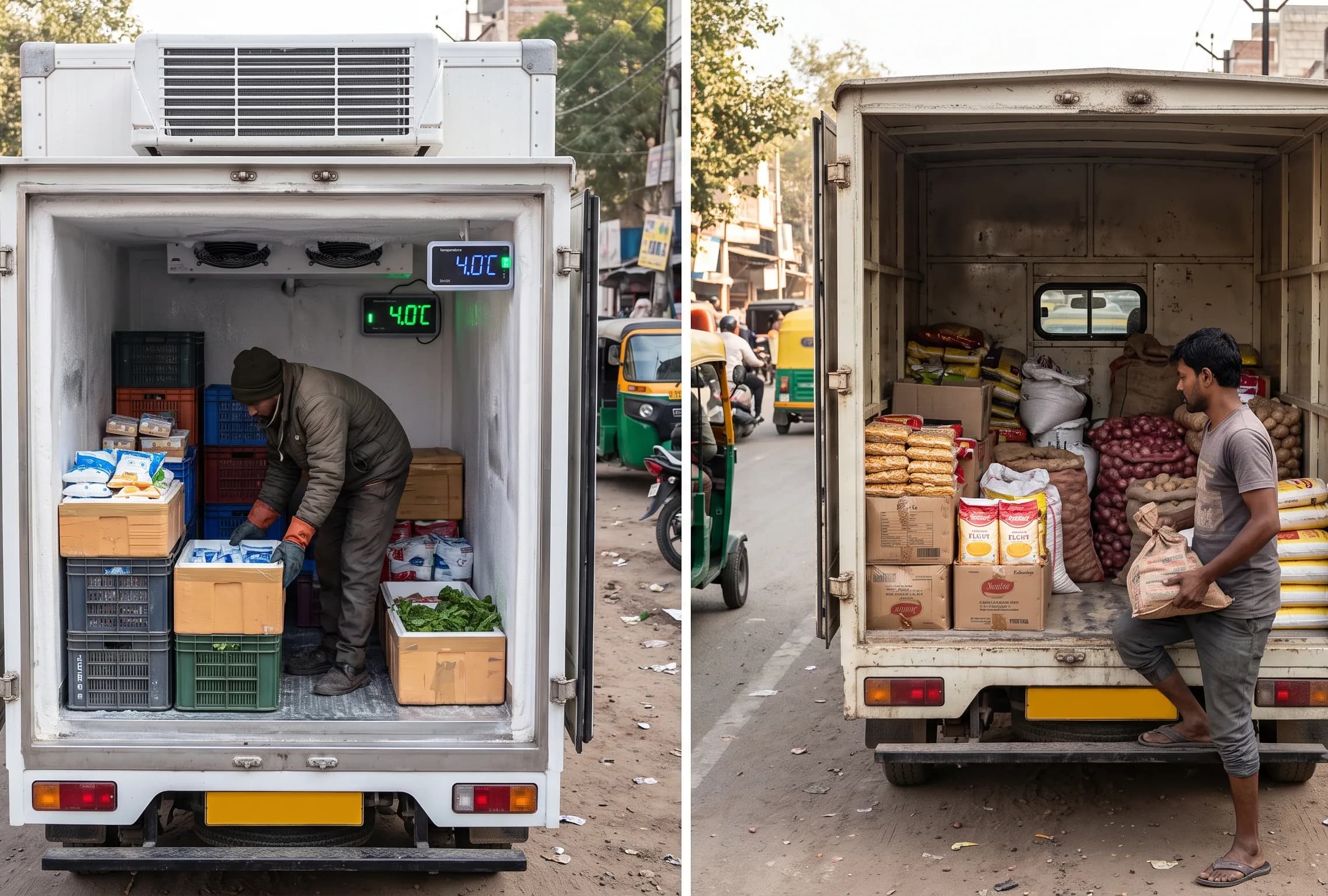
Dry vs refrigerated vehicle food delivery in India depends on the food’s storage requirements. Dry vehicles suit shelf-stable products that do not need active cooling, while refrigerated vehicles maintain specified chilled or frozen conditions. F&B brands should consider product type, transit time, ambient temperature, delivery routes, and food-safety requirements before choosing. For a wider view of moving frozen products, you can read about frozen food transportation india.
Choosing between dry and refrigerated vehicles for food delivery in India starts with one question: does your product need temperature control throughout transit? Dry vehicles work for suitable ambient-stable foods, while refrigerated vehicles protect temperature-sensitive cargo. At JustDeliveries, we help F&B businesses explore logistics solutions suited to their products, routes, and delivery schedules. The right choice can make a meaningful difference to your supply chain. For deliveries in southern India, you can see how cold chain logistics bangalore is handled.
Dry Vehicle vs Refrigerated Vehicle: What Is the Difference?
The main difference is temperature control. A dry vehicle carries goods under ambient conditions, while a refrigerated vehicle, commonly called a reefer, uses an active refrigeration system to maintain a specified cargo temperature.
For an F&B business, the choice depends on the product’s storage requirements, journey conditions and delivery schedule.
- Dry vehicles: Suitable for shelf-stable packaged foods, dry ingredients and other products that do not require active cooling.
- Refrigerated vehicles: Suitable for products requiring chilled or frozen conditions, such as dairy, ice cream, frozen foods and certain desserts.
- Insulated vehicles: Slow heat transfer but do not necessarily provide active cooling or maintain a specified temperature throughout a journey.
When evaluating dry vs refrigerated vehicle food delivery India options, businesses should assess the actual temperature requirements of their products rather than assume that every food shipment needs refrigeration.
When Should You Use a Refrigerated Vehicle in India?
A refrigerated vehicle is necessary when a product must remain within a defined temperature range during transportation. The correct range depends on the product, its packaging, applicable food-safety requirements and the manufacturer’s handling instructions. For northern routes, you can see how cold chain logistics delhi is handled.
1. Dairy Products and Chilled Beverages
Milk, cream, certain cheeses and other chilled dairy products may require continuous temperature control. A refrigerated vehicle helps maintain the required conditions during transit, including India’s hot-weather journeys.
2. Ice Cream and Frozen Foods
Frozen products need suitable frozen transport conditions. Temperature fluctuations during loading, transit and unloading can compromise product quality, so businesses should consider pre-cooling, monitoring and efficient handling. For more on this, see how to transport ice cream without melting india in practice.
3. Meat, Poultry and Seafood
These products can be particularly sensitive to temperature abuse and contamination. Suitable refrigerated transport, hygienic cargo compartments and appropriate segregation help protect product quality. If you are also sourcing stock, you can look at a frozen food supplier to plan supply and delivery together.
4. Cakes, Desserts and Temperature-Sensitive Bakery Products
Not every bakery product needs refrigeration. However, cream-filled cakes, chilled desserts and other temperature-sensitive products may require controlled transport conditions.
The same principle applies to the dry vs refrigerated vehicle food delivery India decision: choose the vehicle according to the product’s actual requirements, not simply its category.
When Is a Dry Vehicle Suitable for Food Delivery in India?
A dry vehicle can be an effective option when products remain safe and stable under the expected ambient transport conditions.
Typical examples include:
- Packaged biscuits, chips and shelf-stable snacks.
- Sealed flour, grains, pulses and suitable dry ingredients.
- Shelf-stable packaged food and beverages.
- Other non-refrigerated goods that can tolerate the anticipated temperature and humidity.
Businesses must still protect cargo against moisture, pests, contamination, damaged packaging and excessive heat where relevant. A dry vehicle is not automatically suitable for every ambient product, especially when the cargo has specific storage instructions.
Dry Van vs Reefer India: What Should F&B Brands Compare?
Before choosing a vehicle, assess these five factors.
- Product requirements: Does the cargo require ambient, chilled or frozen conditions?
- Transit duration: How long will the product remain in the vehicle, including loading and unloading?
- Route conditions: Will traffic, summer temperatures, multiple stops or waiting periods affect the cargo?
- Delivery volume: How much cargo moves per trip, and how frequently must it be replenished?
- Operational visibility: Can the business monitor vehicle movement, delivery status and temperature compliance where required?
The dry van vs reefer India comparison should also consider total operating costs. Refrigerated vehicles involve refrigeration equipment, maintenance and energy requirements. However, selecting a cheaper vehicle that cannot maintain the required cargo conditions can expose a business to avoidable product losses.
What Vehicle Is Best for Perishable Food Delivery in India?
There is no single vehicle that suits every food business. The best option depends on the product’s temperature requirements, quantity, route and delivery frequency. For frozen shipments in western India, frozen food transport mumbai is worth a look.
For example:
- A packaged snack distributor may use a dry vehicle for suitable shelf-stable stock.
- An ice cream brand needs transport capable of maintaining the required frozen conditions.
- A QSR chain distributing chilled and frozen ingredients may need planned, temperature-controlled deliveries to multiple outlets.
- A quick-commerce operator may need frequent replenishment between distribution hubs and dark stores.
For brands assessing dry vs refrigerated vehicle food delivery India requirements, the decision should begin with a product-level assessment. Where a shipment contains products with different temperature needs, use a suitable multi-compartment vehicle or separate loads when operationally appropriate.
How Quick Commerce Is Changing Food Logistics in India
Quick commerce has increased pressure on food supply chains to replenish inventory quickly without compromising product quality. Dark stores and distribution hubs need dependable inbound deliveries, accurate inventory coordination and visibility into shipment progress.
JustDeliveries supports temperature-controlled logistics for quick-commerce and e-commerce platforms, including Swiggy Instamart, Zepto, Blinkit, Amazon, JioMart and BigBasket. Its operations include hub-to-hub transportation and dark-store deliveries, supported by real-time vehicle tracking and temperature monitoring.
For F&B brands, this type of logistics support matters because a fast delivery is not enough if products arrive outside their required temperature range. For frozen shipments in the capital region, frozen food transport delhi is another city to explore.
How the JustDeliveries HQ App Supports Better Decisions
Choosing a suitable vehicle is only one part of managing food logistics. Businesses also need visibility into delivery performance and temperature compliance.
The JustDeliveries HQ App provides a central dashboard where F&B brands can monitor:
- Live vehicle movement: Track shipments and understand delivery progress.
- Temperature compliance: Monitor temperature data for relevant shipments.
- Service-level agreements (SLAs): Review delivery performance against agreed service levels.
- Billing information: Access logistics billing details.
- AI-driven performance insights: Use operational data to identify trends and support decisions.
This visibility helps teams respond to delays, investigate temperature deviations, and make informed decisions about their distribution operations.
As Mansi Mahansaria, founder of JustDeliveries, highlights through the company’s focus on specialised food logistics, reliable distribution requires more than moving products between two locations. It requires coordinated handling, suitable infrastructure, and operational visibility.
How to Choose the Right Food Logistics Partner
Before finalising your transport arrangement, ask these questions:
- Can the provider accommodate your product’s specified temperature range?
- Are vehicles and cargo compartments appropriate for the food being transported?
- Is temperature monitoring available for shipments that require it?
- Can the provider manage your delivery frequency, routes and outlet requirements?
- Does the service offer clear delivery records, billing and performance visibility?
- Can it support changing volumes as your business expands?
The right logistics partner should understand the operational requirements of food distribution, not simply provide a vehicle. This is particularly important for businesses handling frozen products, chilled ingredients, or frequent deliveries across multiple outlets. For brands working with ice cream, this overview of the ice cream supply chain india is a useful reference.
For companies comparing dry vs refrigerated vehicle food delivery India options, an experienced F&B logistics provider can help assess the operational requirements before the business commits to a transport model.
Choose the Right Food Transportation Solution with JustDeliveries
Selecting between dry and refrigerated vehicles is not simply a matter of comparing transport rates. It is about matching your products with the right conditions, planning reliable routes and maintaining visibility throughout the delivery process.
JustDeliveries supports F&B businesses with specialised logistics services, temperature-controlled transportation, cold storage and technology-enabled operations. Whether you distribute shelf-stable packaged food, supply frozen products to QSR outlets or replenish inventory across quick-commerce hubs, the right logistics arrangement starts with understanding your business requirements.
Planning your next food distribution operation? Share your product categories, delivery locations, shipment volumes, and temperature requirements with the JustDeliveries team to explore a suitable solution.
Frequently Asked Questions
Q1. How do I choose between a dry and refrigerated vehicle for food delivery in India?
Check the product’s required storage temperature, transit duration, packaging and route conditions. Choose a dry vehicle for suitable ambient-stable goods and a reefer when active temperature control is necessary.
Q2. Can a dry vehicle transport perishable food?
Yes, for certain products whose validated storage requirements permit ambient transport. However, products that require chilled or frozen conditions need an appropriate temperature-controlled solution.
Q3. Is a refrigerated vehicle always better than a dry van for F&B brands?
No. Refrigerated vehicles are essential for products requiring temperature control, but they can add unnecessary costs for suitable shelf-stable cargo. The right choice depends on the product and journey.
Q4. Will a refrigerated vehicle prevent food spoilage completely?
No. It helps maintain specified temperatures but cannot guarantee that food will not spoil. Product quality also depends on handling, hygiene, packaging, initial condition and uninterrupted temperature control.
Q5. What vehicle is best for perishable food delivery in India?
A refrigerated vehicle is generally appropriate when the product requires chilled or frozen transport. For the dry vs refrigerated vehicle food delivery India decision, always check the product’s specific storage requirements first.
Q6. Why is temperature monitoring important during food transportation?
Monitoring helps identify temperature deviations during transit so teams can investigate and respond. It supports product-quality management and provides greater visibility into cold-chain performance.
Q7. How does JustDeliveries help F&B brands manage refrigerated deliveries?
JustDeliveries offers temperature-controlled logistics, cold storage and technology-enabled shipment visibility. Its HQ App supports monitoring of live vehicles, temperature compliance, SLAs, billing and AI-driven performance insights.
Q8. Can quick-commerce businesses benefit from specialised cold-chain logistics?
Yes. Hub-to-hub transport, dark-store replenishment, temperature monitoring and coordinated delivery schedules help quick-commerce supply chains manage temperature-sensitive inventory while meeting operational timelines.