
Blog
How to Transport Ice Cream Without Melting in India
20 October 2026By Abhishek Kumar
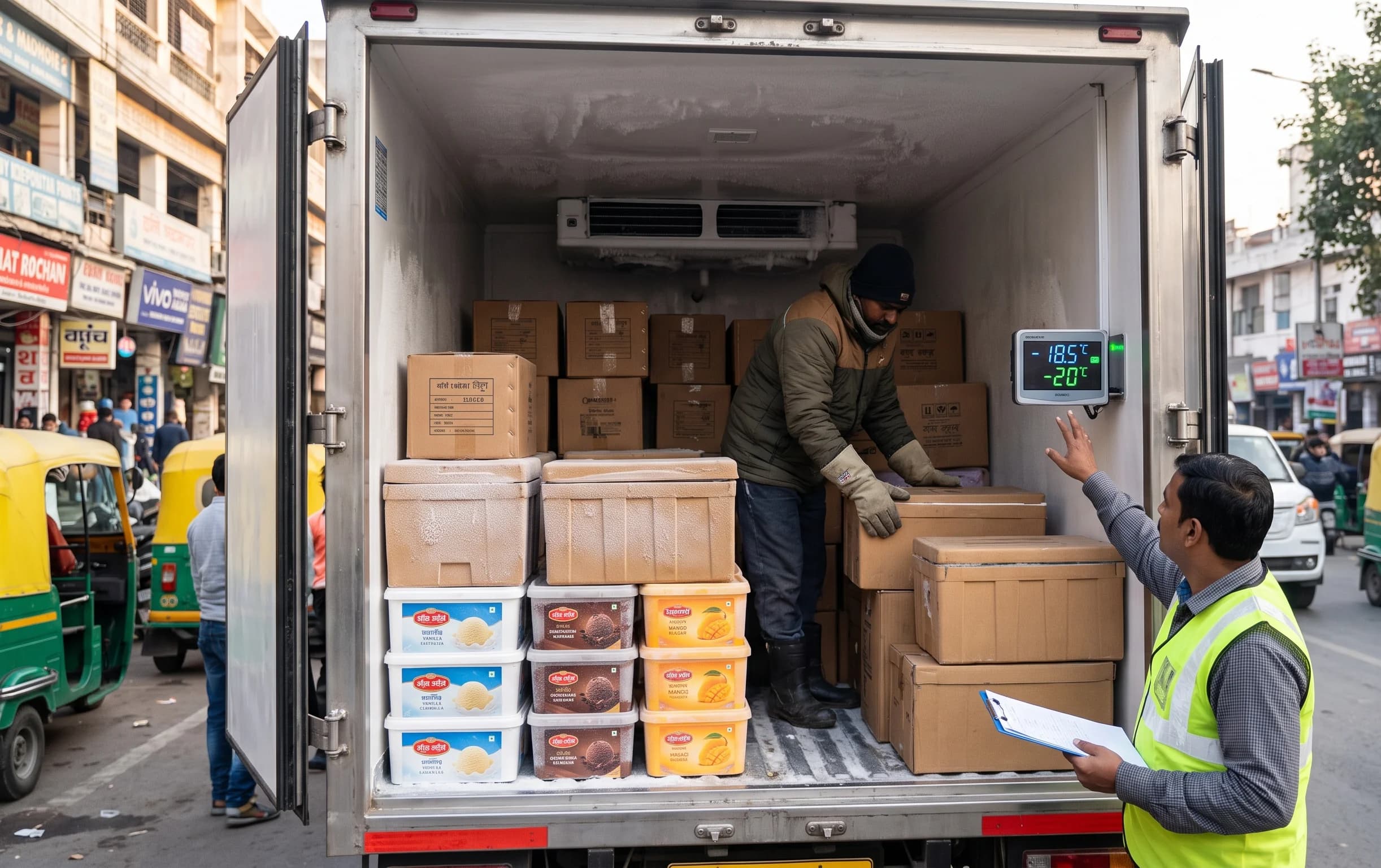
To transport ice cream without melting in India, maintain the required frozen temperature from storage to final delivery. Use pre-cooled refrigerated vehicles, suitable insulated packaging, efficient routes, and continuous temperature monitoring. Coordinated loading, reliable cold storage, and prompt corrective action help protect ice cream’s texture, quality, and food safety.
Ice cream distribution in India demands consistent temperature control, especially during summer and last-mile deliveries. Businesses need more than a refrigerated truck; they need a reliable process across storage, transport, and handovers. JustDeliveries helps food and beverage brands coordinate temperature-controlled logistics. Understanding the right controls can help your business reduce melting, avoid waste, and deliver better-quality products.
Why Does Ice Cream Melt During Transportation?
Ice cream is sensitive to temperature fluctuations. When it warms and partially thaws, its texture can deteriorate, ice crystals may develop, and refreezing may not restore its original quality. For a step-by-step view, read how to transport ice cream without melting india.
Common causes include:
- Refrigeration failures: Poorly maintained cooling systems or incorrect settings.
- Loading delays: Extended exposure to warmer air outside frozen storage.
- Traffic congestion: Longer journeys that complicate delivery schedules.
- Frequent door openings: Warm air entering the refrigerated compartment.
- Poor packaging: Insufficient insulation during transfers and handling.
- Inadequate monitoring: Temperature changes going unnoticed until delivery.
Understanding these risks is the first step towards building a dependable frozen distribution process. For frozen products in particular, see frozen food transportation india.
What Temperature Should Ice Cream Be Transported At?
Maintaining the specified frozen temperature throughout the journey is essential for ice cream quality. A common operational target for frozen storage is −18°C or below, although the applicable requirement depends on the product specification and relevant regulations.
A single temperature reading at dispatch does not prove that the product remained frozen throughout transportation. Businesses should check product and vehicle conditions, maintain temperature records, and investigate deviations promptly.
How to maintain the correct temperature
- Verify the required temperature before dispatch.
- Pre-cool the vehicle and confirm that the refrigeration system is operating correctly.
- Use calibrated temperature sensors or data loggers.
- Minimise loading and unloading time.
- Transfer products promptly into suitable frozen storage at their destination.
These checks form the foundation of an effective ice cream cold chain in India.
How to Transport Ice Cream Without Melting India: 5 Essential Steps
1. Use a refrigerated vehicle for ice cream delivery in India
A suitable refrigerated vehicle maintains controlled conditions during transit. Choose a vehicle with sufficient refrigeration capacity for the shipment volume, journey duration, and expected ambient conditions.
Before dispatch, check the cooling unit, compartment cleanliness, door seals, and temperature readings. Avoid overloading, which can obstruct airflow and create uneven cooling.
2. Pre-cool vehicles and storage areas
Pre-cooling prepares the transport environment before the shipment arrives. Ice cream should already be maintained at its specified frozen temperature before loading; transportation equipment should not be relied upon to freeze products that have warmed.
Coordinate warehouse staff, dispatch teams, and drivers to minimise waiting time.
3. Use appropriate insulated packaging
Packaging provides an additional layer of protection during loading, unloading, and short transfers. Use suitable insulated containers and packaging materials designed for frozen products.
Also ensure that:
- Products are packed securely.
- Packaging remains intact throughout handling.
- Loading procedures minimise exposure to warm air.
- Products move directly into appropriate frozen storage after delivery.
Packaging supports refrigeration but cannot replace it during extended commercial transportation.
4. Plan routes and delivery schedules efficiently
Traffic congestion, multiple stops, and poorly coordinated handovers can extend transit times. Route planning should account for road conditions, delivery windows, vehicle capacity, and contingencies.
For businesses supplying multiple outlets, coordinated deliveries help reduce unnecessary stops and improve operational consistency.
5. Monitor temperature throughout transit
Temperature monitoring food transport in India is more effective when readings are recorded throughout the journey rather than only at dispatch and delivery.
Digital sensors, data loggers, and vehicle tracking can help teams identify deviations and investigate their causes. Businesses should define alert thresholds, assign responsibility for responding, and document corrective actions.
Frozen Food Transport India: Protecting Quality Across the Supply Chain
Ice cream distribution involves more than moving products from a factory to a retailer. Every stage must preserve the required frozen conditions. For a fuller picture, read about the ice cream supply chain india.
From frozen storage to the distribution hub
Maintain suitable storage conditions, rotate inventory appropriately, and prepare shipments before dispatch. Clear records help teams trace products and investigate quality concerns. For dairy-based products, see cold storage for milk india.
From hub to hub
Intercity transportation requires suitable refrigerated vehicles, realistic transit schedules, and coordinated receiving arrangements. Temperature records help identify potential problems during transfers. For hubs in the south, see cold chain logistics hyderabad.
From distribution hubs to dark stores
Quick commerce has increased the need for frequent replenishment and shorter delivery windows. Ice cream brands must coordinate frozen inventory, vehicle availability, and receiving schedules without compromising temperature requirements. For dark stores in Bangalore, see frozen food transport bangalore.
How JustDeliveries supports this process
JustDeliveries provides food and beverage logistics services that include temperature-controlled transportation, cold storage, and distribution support. Its service model supports businesses managing multiple locations and different delivery requirements.
For quick-commerce operations, JustDeliveries supports cold-chain logistics associated with Swiggy Instamart, Zepto, Blinkit, Amazon, JioMart, and BigBasket, including hub-to-hub and dark-store deliveries. Real-time tracking and temperature-control processes support greater visibility across these movements.
How Ice Cream Brands Maintain Temperature in Transit India
A consistent process is more reliable than depending on individual drivers to manage every situation. For a wider view of the controls involved, read about temperature controlled logistics.
Before dispatch
- Verify product and vehicle temperatures.
- Check refrigeration equipment and monitoring devices.
- Confirm the delivery route and receiving arrangements.
- Record shipment details and dispatch checks.
During transportation
- Monitor vehicle location and temperature data.
- Keep doors closed except during necessary handling.
- Escalate delays, equipment faults, and temperature deviations.
- Maintain records for operational review.
At delivery
- Unload promptly into suitable frozen storage.
- Check and document the condition of the shipment.
- Investigate any temperature deviation.
- Follow established food-safety procedures before releasing potentially affected products.
As Mansi Mahansaria, author at JustDeliveries, the emphasis is on making temperature control part of the complete logistics process, rather than treating it as an isolated transport requirement.
Choosing a Cold Chain Partner for an Ice Cream Brand in India
A suitable logistics partner should understand the requirements of frozen products and the realities of commercial distribution. For storage at the production stage, see dairy processing cold storage.
Evaluate providers on these factors:
- Frozen transport capability: Suitable vehicles and refrigeration systems.
- Cold storage access: Appropriate frozen warehousing and handling.
- Temperature visibility: Recorded readings, tracking, and incident reporting.
- Operational reliability: Planned routes, delivery schedules, and contingency arrangements.
- Scalability: Capacity to support additional outlets, cities, and shipment volumes.
- Cost transparency: Clear pricing and visibility into avoidable wastage and replacement costs.
JustDeliveries combines transportation, storage, distribution, and technology-enabled visibility to support food and beverage logistics operations.
Its HQ App provides a central dashboard for F&B brands to track live vehicles, temperature compliance, service-level agreements (SLAs), billing, and AI-driven performance insights in real time. This gives operations teams a consolidated view of delivery performance and helps them investigate exceptions.
As Mansi Mahansaria of JustDeliveries, the focus is on helping food businesses coordinate logistics more effectively through operational visibility and temperature-controlled distribution support.
Keep Your Ice Cream Frozen with JustDeliveries
Maintaining ice cream quality requires reliable refrigeration, disciplined handling, and visibility at every stage of distribution. With the right logistics processes, businesses can reduce avoidable exposure, improve delivery coordination, and protect product quality as their networks grow.
Ready to strengthen your ice cream cold chain? Partner with JustDeliveries to explore temperature-controlled transportation, frozen storage, and distribution solutions tailored to your business.
Contact JustDeliveries to discuss your cold-chain logistics requirements.
Frequently Asked Questions
Q1. How do you transport ice cream without melting?
Use a suitable refrigerated vehicle, maintain the specified frozen temperature, pre-cool equipment, minimise loading delays, and monitor conditions throughout transit.
Q2. Can ice cream be transported in a normal delivery van?
A standard uncooled van is unsuitable for maintaining frozen conditions during typical commercial deliveries. Use appropriate refrigerated transport for the journey.
Q3. Is −18°C the correct temperature for transporting ice cream?
−18°C or below is a common frozen-storage target. Confirm the applicable temperature requirements for the product and relevant regulations.
Q4. Will insulated packaging prevent ice cream from melting?
Insulated packaging slows heat transfer, but it cannot replace suitable refrigeration during extended commercial transportation.
Q5. What causes ice crystals to form in transported ice cream?
Temperature fluctuations and partial thawing can contribute to ice crystal formation and changes in texture.
Q6. Why is cold storage important before ice cream delivery?
Cold storage maintains the required frozen condition before dispatch and after arrival, reducing exposure during distribution.
Q7. How do quick-commerce brands maintain ice cream quality?
They coordinate frozen storage, suitable transport, replenishment schedules, temperature monitoring, and efficient handovers between hubs and dark stores.
Q8. What should an ice cream brand look for in a cold-chain logistics partner?
Look for suitable frozen vehicles, reliable storage, temperature monitoring, shipment visibility, documented procedures, and the ability to scale distribution.