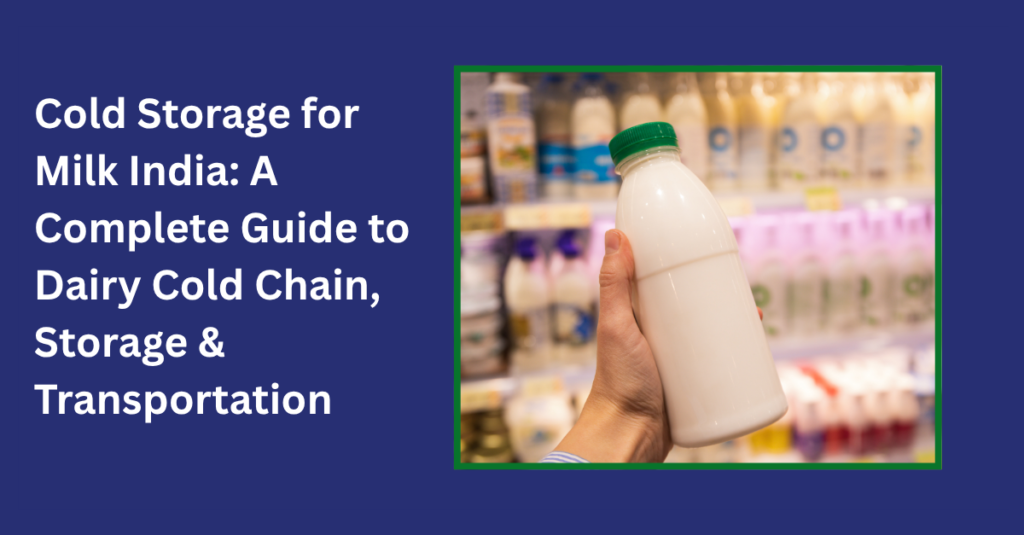
Cold storage for milk India is essential for preserving milk quality, preventing bacterial growth, and extending shelf life from farm to consumer. An efficient dairy cold chain combines rapid chilling, temperature-controlled storage, refrigerated transportation, and real-time monitoring to maintain food safety, reduce wastage, and ensure consistent product quality across every stage of distribution.
Milk is highly perishable, making cold storage for milk India a critical part of the dairy supply chain. From village collection centres to retail shelves, maintaining the right temperature protects freshness, supports food safety, and reduces losses. Businesses looking to strengthen their dairy logistics can benefit from integrated cold chain expertise from JustDeliveries. The same principles that protect milk quality also apply broadly to cold food storage across other perishable categories. Read on to understand what makes an effective milk cold chain and why it matters more than ever.
Why Cold Storage is Critical for India’s Dairy Industry
India is the world’s largest producer of milk, but production alone does not guarantee quality. Milk begins to deteriorate quickly if it is not chilled soon after milking. Even brief exposure to higher temperatures encourages bacterial growth, affecting taste, nutritional value, and safety.
This is why cold storage for milk India is no longer optional—it is the backbone of an efficient dairy ecosystem. Whether serving local markets or nationwide retail networks, dairy businesses depend on consistent refrigeration to preserve product integrity throughout its journey. In metro markets, dedicated cold chain logistics Mumbai networks reflect how this consistency is maintained across high-volume dairy distribution.
An effective cold chain helps:
- Reduce spoilage and wastage
- Maintain food safety standards
- Extend product shelf life
- Improve operational efficiency
- Protect brand reputation
Understanding the Dairy Cold Chain in India
The dairy cold chain is a coordinated system designed to keep milk within safe temperature ranges from collection to consumption. Every stage plays a vital role in maintaining freshness.
Farm Collection and Rapid Chilling
Fresh milk should ideally be chilled within a few hours after milking. Bulk Milk Coolers (BMCs) installed at village collection centres rapidly lower the temperature, slowing bacterial growth before transportation.
Processing Facilities
Milk is transported to processing plants where it undergoes pasteurisation and packaging under controlled conditions. Cold rooms maintain appropriate temperatures before dispatch.
Refrigerated Transportation
Temperature-controlled vehicles transport dairy products between processing plants, warehouses, distributors, and retailers while maintaining uninterrupted cooling.
Retail Storage
Cold display units and refrigerated storage rooms ensure products remain fresh until they reach consumers.
This interconnected dairy chilling infrastructure forms the foundation of a reliable dairy supply chain.
Recommended Temperature Ranges for Dairy Products
Maintaining the correct storage temperature is essential for quality preservation.
| Dairy Product | Recommended Temperature |
| Raw Milk | 2–4°C |
| Pasteurised Milk | 2–4°C |
| Curd | 2–6°C |
| Butter | 0–4°C |
| Cheese | 2–8°C |
| Ice Cream | -18°C |
Consistent monitoring ensures products remain within these ranges throughout storage and transportation. Products like ice cream demand especially tight control, which is why a well-managed ice cream supply chain India relies on continuous sub-zero monitoring from processing through final delivery.
Best Practices for Milk Preservation Logistics
Strong milk preservation logistics ensure that cooling continues without interruption across every transfer point.
Minimise Handling Time
Loading and unloading should be completed efficiently to prevent unnecessary temperature fluctuations.
Optimise Delivery Routes
Planned routes reduce travel time and improve delivery consistency while lowering fuel consumption.
Maintain Vehicle Hygiene
Regular cleaning and sanitation help prevent contamination during transport.
Continuous Temperature Monitoring
Real-time monitoring provides visibility throughout transit and supports compliance with food safety standards.
Maintaining these practices strengthens cold storage for milk India by protecting product quality until final delivery.
Common Challenges Facing India’s Dairy Cold Chain
Despite significant progress, several challenges continue to affect dairy logistics.
- Inconsistent rural infrastructure
- Power supply interruptions
- Long-distance transportation requirements
- Rising energy costs
- Seasonal demand fluctuations
- Equipment maintenance
- Temperature deviations during handling
Addressing these challenges requires investments in technology, trained personnel, and integrated logistics networks.
How Technology is Transforming Dairy Cold Chains
Technology is making dairy operations smarter, more transparent, and more efficient.
IoT Temperature Monitoring
Connected sensors continuously track storage temperatures and instantly notify teams if corrective action is needed.
GPS Fleet Tracking
Fleet visibility enables businesses to monitor vehicle movement, improve scheduling, and minimise delivery delays.
Warehouse Management Systems
Modern warehouse systems improve inventory accuracy, stock rotation, and order fulfilment.
Predictive Maintenance
Connected refrigeration equipment can identify maintenance needs before failures occur, reducing downtime and product loss.
These innovations are helping businesses modernise cold storage for milk India while improving efficiency and regulatory compliance.
Quick Commerce is Reshaping Dairy Distribution
Consumer expectations have shifted dramatically with the rise of quick commerce. Fresh dairy products are now expected to reach customers within minutes, creating new challenges for cold-chain logistics.
JustDeliveries supports this fast-moving ecosystem by powering temperature-controlled logistics for Swiggy Instamart, Zepto, Blinkit, Amazon, JioMart, and BigBasket. From hub-to-hub movement to dark store deliveries, every shipment is managed with real-time tracking and strict temperature control to preserve freshness across the supply chain. In high-demand regions, cold chain logistics Bangalore operations demonstrate how this network scales to meet rapid delivery expectations.
As delivery windows become shorter, integrated cold-chain operations become even more important for maintaining dairy quality.
Why Integrated Cold Storage and Logistics Matter
Storage alone cannot guarantee product quality. Refrigerated transportation, inventory management, and operational visibility are equally important.
JustDeliveries combines warehousing and transportation into a connected cold-chain ecosystem designed specifically for food and beverage businesses.
Its HQ App provides a central dashboard where F&B brands can monitor live vehicle locations, temperature compliance, service-level agreements (SLAs), billing, and AI-driven performance insights in real time. This visibility helps businesses make faster operational decisions while maintaining cold-chain integrity.
As explained by Mansi Mahansaria, integrated logistics create stronger control over the complete dairy journey rather than managing storage and transportation separately.
Whether supporting regional dairy producers or national food brands, connected logistics improve visibility, minimise spoilage, and enable scalable operations. This same connected approach supports growing networks such as cold chain logistics Delhi operations, where scale and consistency go hand in hand.
Choosing the Right Cold Storage Partner
When evaluating providers for cold storage for milk India, consider the following:
- Temperature-controlled infrastructure
- Refrigerated transportation capabilities
- Real-time monitoring technology
- Nationwide distribution support
- Food safety compliance
- Scalable warehousing capacity
- Operational transparency
- Technology-enabled reporting
Selecting an experienced logistics partner helps improve consistency across the entire dairy supply chain. This is just as important for every frozen food supplier depending on the same infrastructure to protect product quality from storage through delivery.
Conclusion
As India’s dairy industry continues to expand, maintaining an uninterrupted cold chain has become essential for protecting product quality, reducing waste, and meeting growing consumer expectations. From rapid chilling at collection centres to temperature-controlled transportation and smart monitoring systems, every stage contributes to successful cold storage for milk India.
For businesses seeking dependable dairy logistics, JustDeliveries offers integrated cold storage, refrigerated transportation, real-time visibility, and technology-driven operations designed specifically for the food and beverage industry. As Mansi Mahansaria highlights, combining infrastructure with intelligent logistics creates stronger, more resilient dairy supply chains capable of supporting both traditional distribution and the growing demands of quick commerce.
Frequently Asked Questions
Q1. What is the ideal temperature for storing milk?
Milk should generally be stored between 2°C and 4°C to maintain freshness, reduce bacterial growth, and preserve quality throughout storage and transportation.
Q2. Why is cold storage important for milk in India?
Cold storage helps preserve milk quality, extends shelf life, reduces spoilage, supports food safety compliance, and ensures products remain fresh from farm to consumer.
Q3. How do milk cold storage solutions work?
Milk cold storage solutions combine rapid chilling, insulated cold rooms, refrigeration systems, temperature monitoring, and refrigerated transportation to maintain safe storage conditions.
Q4. Can refrigerated transport improve milk quality?
Yes. Refrigerated vehicles maintain stable temperatures during transit, preventing spoilage and ensuring dairy products arrive safely without breaking the cold chain.
Q5. How does dairy chilling infrastructure support farmers and processors?
It rapidly cools freshly collected milk, allowing processors to maintain quality standards while reducing losses during transportation and storage.
Q6. Is real-time temperature monitoring necessary for dairy logistics?
Yes. Continuous monitoring helps identify temperature deviations quickly, supports compliance, improves traceability, and reduces the risk of product spoilage.
Q7. Will integrated cold-chain logistics reduce milk wastage?
Integrated warehousing, refrigerated transportation, inventory visibility, and temperature monitoring significantly reduce spoilage and improve overall supply chain efficiency.
Q8. How does JustDeliveries support modern dairy distribution?
JustDeliveries provides integrated cold storage, refrigerated transportation, real-time fleet tracking, AI-powered operational insights through its HQ App, and specialised cold-chain logistics for food and beverage businesses, including quick-commerce deliveries.

Mansi Mahansaria
I’m Mansi Mahansaria, CEO and Founder of JustDeliveries, a B2B logistics company specializing in the food and beverage sector. With a background in Chemical Technology (ICT Mumbai), an MBA (FMS Delhi), and experience at IDFC Private Equity and Tata Group, I’ve built a plug-and-play logistics network helping F&B brands scale efficiently. I also share insights on entrepreneurship and logistics at industry and academic events.