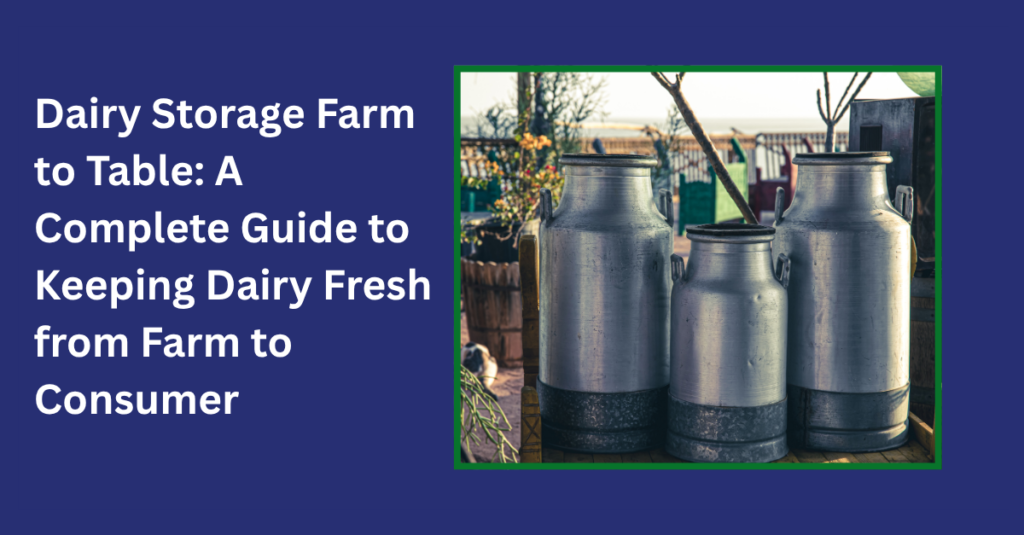
Dairy storage farm to table refers to maintaining the right temperature, hygiene, and handling practices from milk collection to final delivery. An uninterrupted cold chain preserves freshness, prevents spoilage, ensures food safety, and extends shelf life. Modern logistics, refrigerated transport, and real-time monitoring make this possible while reducing waste and maintaining product quality.
Fresh, safe dairy products depend on dairy storage farm to table practices that protect milk at every stage of the supply chain. From immediate chilling on the farm to temperature-controlled delivery, every step matters. In this guide, you’ll learn how modern cold-chain logistics work and why businesses rely on trusted partners like JustDeliveries to keep dairy products fresh until they reach consumers. These principles apply broadly across cold food storage practices for other perishable categories as well. Let’s explore the journey behind every litre of milk.
What Does Dairy Storage Farm to Table Mean?
The phrase dairy storage farm to table describes the complete journey of dairy products while maintaining proper storage conditions from the moment milk is collected until it reaches retailers, restaurants, cloud kitchens, or consumers.
Unlike conventional transportation, modern dairy logistics focuses on preserving freshness through continuous refrigeration, hygienic handling, and efficient distribution. Every transfer point, from farms and processing plants to warehouses and delivery vehicles, must maintain strict temperature control to protect product quality. This same discipline underpins reliable cold storage for milk India operations across the country.
For dairy businesses, this isn’t just about transportation. It’s about ensuring customers receive products that meet food safety standards while retaining their taste, texture, and nutritional value.
Why Proper Dairy Storage Matters More Than Ever
Growing consumer demand for fresh dairy, expanding quick commerce, and stricter food safety regulations have made cold-chain management more important than ever.
Maintaining Freshness and Taste
Milk begins changing soon after collection. Immediate cooling slows bacterial growth and helps preserve its natural flavour, texture, and nutritional profile.
Ensuring Food Safety
Dairy products are highly temperature-sensitive. Consistent refrigeration helps reduce microbial growth and supports compliance with food safety standards throughout transportation and storage.
Extending Shelf Life
Proper refrigeration minimizes spoilage and allows businesses to manage inventory more efficiently while reducing unnecessary product losses. Products with especially tight tolerances, such as those in a well-run ice cream supply chain India, depend on this same discipline to prevent even brief temperature lapses from compromising quality.
Reducing Food Waste
Food waste affects both profitability and sustainability. Reliable cold-chain logistics help dairy brands reduce wastage, improve operational efficiency, and maximize product value.
The Complete Dairy Storage Farm to Table Journey
Understanding the dairy storage farm to table process highlights why every stage plays a critical role in protecting product quality.
1. Healthy Dairy Farming
Quality begins with healthy animals, hygienic milking environments, balanced nutrition, and proper farm management practices.
2. Hygienic Milk Collection
Milk is collected using sanitized equipment and undergoes initial quality testing before entering the storage system.
3. Immediate Chilling
Rapid cooling after collection is essential to slow bacterial growth and preserve freshness before transportation.
4. Bulk Cold Storage
Milk is stored in refrigerated tanks that continuously monitor temperature until it moves for processing.
5. Dairy Processing
Pasteurization, homogenization, packaging, and quality assurance ensure products are safe and ready for distribution.
6. Cold Storage Warehousing
Processed dairy products are stored in temperature-controlled warehouses before dispatch. Proper inventory management helps maintain freshness.
7. Refrigerated Transportation
Specialized refrigerated vehicles transport dairy products while maintaining consistent temperatures throughout the journey.
8. Retail Distribution
Products are delivered to supermarkets, restaurants, hotels, cafés, cloud kitchens, and quick commerce fulfillment centres.
9. Consumer Purchase
When every stage operates efficiently, consumers receive fresh, high-quality dairy products with optimal shelf life.
Common Challenges in Dairy Storage and Distribution
Even well-managed supply chains face challenges that can affect product quality.
- Temperature fluctuations during loading and unloading
- Transportation delays caused by traffic or poor route planning
- Limited cold storage capacity during seasonal demand
- Manual inventory processes leading to operational inefficiencies
- Equipment failures resulting in product spoilage
- Rising fuel and logistics costs
Addressing these issues requires robust infrastructure, trained personnel, and technology-enabled monitoring.
Modern Dairy Storage Solutions Transforming the Industry
Today’s modern dairy storage solutions combine technology with operational expertise to improve visibility and efficiency.
Many dairy companies now use IoT-enabled temperature sensors, GPS-based fleet tracking, automated warehouse management systems, and predictive route optimization. These technologies allow logistics teams to detect issues before they become costly problems.
JustDeliveries further enhances operational visibility through its HQ App, a centralized dashboard that enables food and beverage brands to monitor live vehicle locations, temperature compliance, service-level agreements (SLAs), billing, and AI-driven performance insights, all in real time. This helps businesses make informed decisions while maintaining product integrity across the supply chain. In major metro markets, established cold chain logistics Mumbai operations reflect how this visibility scales across high-volume dairy networks.
Understanding Dairy Cold Chain Infrastructure
Reliable dairy cold chain infrastructure is built on multiple interconnected components that work together to preserve freshness.
These include:
- Farm-level bulk milk coolers
- Chilling centres
- Refrigerated processing facilities
- Temperature-controlled warehouses
- Reefer vehicles
- Distribution hubs
- Retail refrigeration systems
- Continuous temperature monitoring technology
Every link must function seamlessly because even a short interruption can compromise dairy quality.
Farm to Table Dairy Logistics in the Age of Quick Commerce
Consumer expectations have changed dramatically. Grocery deliveries that once took days are now expected within minutes, creating new challenges for dairy logistics.
Efficient farm to table dairy logistics now extends beyond traditional retail distribution. Quick commerce platforms require precise inventory planning, rapid replenishment, and uninterrupted refrigeration to ensure dairy products remain fresh despite accelerated delivery timelines.
JustDeliveries supports this evolving ecosystem by powering cold-chain logistics for Swiggy Instamart, Zepto, Blinkit, Amazon, JioMart, and BigBasket. The company manages hub-to-hub transportation and dark store deliveries using refrigerated vehicles, real-time tracking, and continuous temperature control, helping maintain product quality even in high-speed delivery networks. In high-density regions, dedicated cold chain logistics Delhi operations demonstrate how this network supports rapid replenishment cycles.
Why Dairy Businesses Need an Experienced Cold-Chain Partner
Modern dairy logistics demands much more than transportation.
An experienced logistics partner provides:
- Reliable refrigerated transportation
- Real-time shipment visibility
- Regulatory compliance support
- Reduced spoilage
- Better inventory movement
- Scalable logistics operations
- Faster replenishment cycles
These capabilities enable dairy businesses to focus on production and customer satisfaction while leaving logistics management to specialists.
Industry insights shared by Mansi Mahansaria, representing JustDeliveries, consistently highlight that dependable cold-chain operations directly influence food safety, customer trust, and long-term business growth. This holds true for every frozen food supplier relying on the same infrastructure to protect product integrity from storage through final delivery.
Conclusion
As dairy supply chains become more complex, maintaining dairy storage farm to table practices is no longer optional, it is essential. Every stage, from milk collection and chilling to warehousing and last-mile distribution, contributes to preserving freshness, reducing waste, and ensuring food safety.
With technology-enabled logistics, advanced monitoring systems, and strong dairy cold chain infrastructure, businesses can confidently meet growing market demand while protecting product quality.
Whether supplying supermarkets, restaurants, cloud kitchens, or quick commerce platforms, partnering with an experienced logistics provider makes all the difference. Growing networks such as cold chain logistics Bangalore operations show how this resilience scales with rising demand. As emphasized by Mansi Mahansaria, resilient cold-chain systems are fundamental to delivering fresh dairy products consistently and efficiently.
Keep Your Dairy Fresh with JustDeliveries
Every dairy shipment deserves uninterrupted temperature control, complete visibility, and dependable execution. JustDeliveries specializes in B2B food and beverage logistics with refrigerated transportation, cold storage, warehousing, and technology-driven supply chain management. From processing plants to distribution centres, retail stores, and quick commerce networks, JustDeliveries helps dairy brands reduce spoilage, improve operational efficiency, and deliver consistently fresh products. If you’re looking to strengthen your dairy logistics network, connect with JustDeliveries and build a smarter cold chain from farm to table.
Frequently Asked Questions
Q1. What is dairy storage farm to table?
Dairy storage farm to table refers to maintaining proper refrigeration, hygiene, and handling practices from milk collection through processing, storage, transportation, and final delivery to preserve freshness and food safety.
Q2. Why is the dairy cold chain important?
A continuous cold chain helps maintain product quality, reduces spoilage, supports food safety compliance, and extends the shelf life of dairy products.
Q3. How do modern dairy storage solutions improve efficiency?
Modern dairy storage solutions use technologies such as temperature sensors, GPS tracking, automated warehouses, and real-time monitoring to improve visibility, reduce losses, and optimize logistics.
Q4. Can refrigerated transport prevent dairy spoilage completely?
While no system can eliminate every risk, properly maintained refrigerated transport significantly reduces spoilage by keeping dairy products within recommended temperature ranges throughout transit.
Q5. Is dairy cold chain infrastructure necessary for all dairy products?
Yes. Milk, cheese, butter, yogurt, cream, and many other dairy products require reliable dairy cold chain infrastructure to maintain safety and quality.
Q6. Will quick commerce change dairy logistics?
Yes. Faster delivery expectations have increased the need for real-time monitoring, rapid replenishment, temperature-controlled transportation, and efficient hub-to-hub distribution.
Q7. How does JustDeliveries support dairy businesses?
JustDeliveries offers refrigerated transportation, cold storage, warehousing, live shipment tracking, AI-powered operational insights through its HQ App, and scalable logistics solutions tailored for food and beverage businesses.
Q8. Why should dairy brands invest in farm-to-table logistics?
Investing in efficient farm-to-table logistics helps reduce product losses, improve customer satisfaction, strengthen regulatory compliance, and build a more resilient and scalable dairy supply chain.

Mansi Mahansaria
I’m Mansi Mahansaria, CEO and Founder of JustDeliveries, a B2B logistics company specializing in the food and beverage sector. With a background in Chemical Technology (ICT Mumbai), an MBA (FMS Delhi), and experience at IDFC Private Equity and Tata Group, I’ve built a plug-and-play logistics network helping F&B brands scale efficiently. I also share insights on entrepreneurship and logistics at industry and academic events.