
Blog
Full Truck Load Intercity Food Delivery in India: A Guide for F&B Brands
27 October 2026By Abhishek Kumar
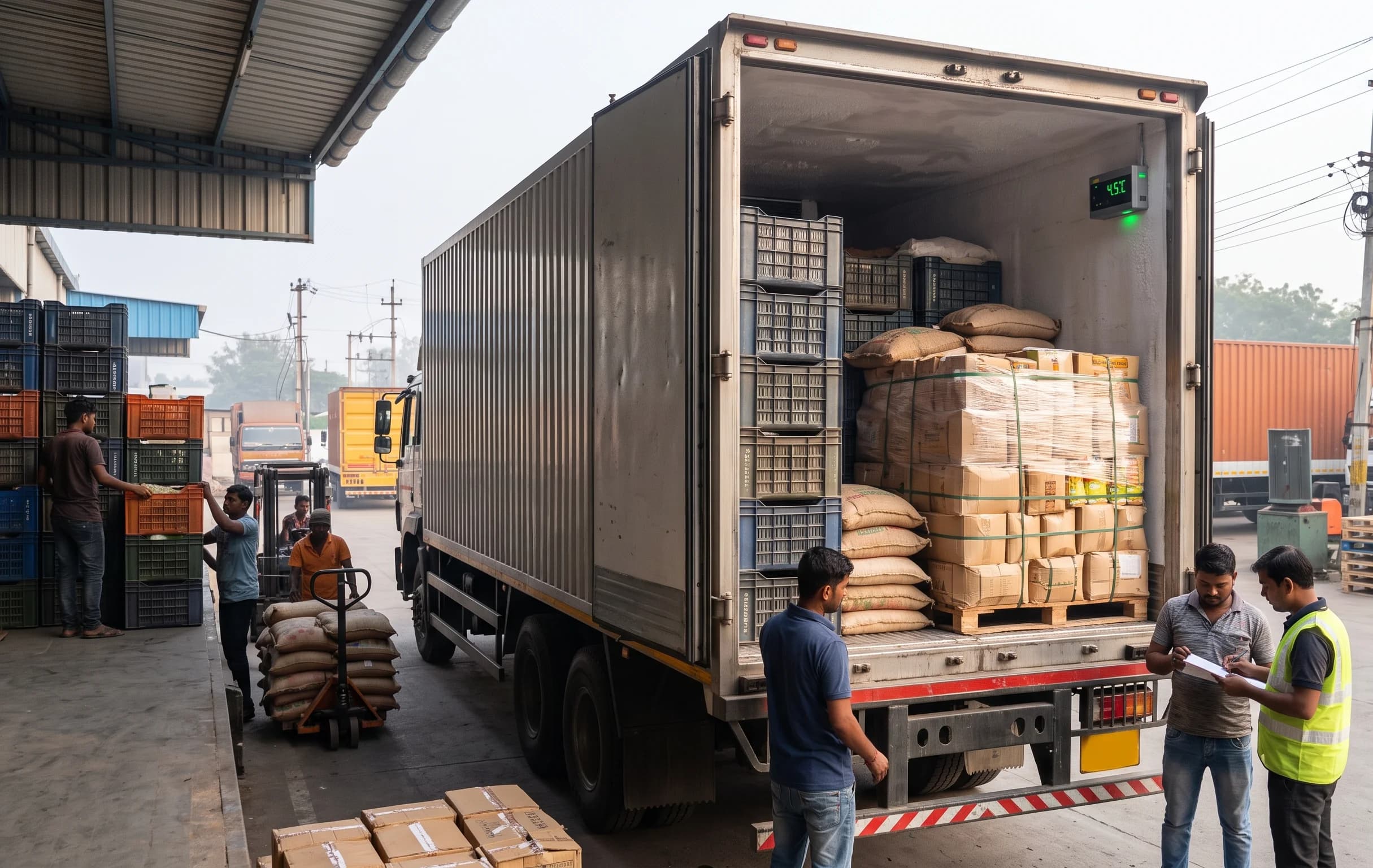
Full truck load intercity food delivery in India enables food and beverage (F&B) brands to transport bulk shipments between cities using dedicated vehicles. For temperature-sensitive products, suitable refrigerated transportation, route planning, temperature monitoring, and shipment visibility help maintain required handling conditions throughout transit.
Full truck load intercity food delivery in India helps food businesses move bulk products between manufacturing facilities, warehouses, distribution hubs, and retail destinations. JustDeliveries supports F&B brands with dedicated inter-city transportation, temperature-controlled logistics, and real-time shipment visibility. As food businesses expand across cities, choosing the right cold-chain partner becomes essential for protecting product quality and coordinating deliveries.
What Is Full Truck Load Intercity Food Delivery in India?
Full truck load (FTL) transportation dedicates a truck to a particular shipment rather than combining unrelated customers’ cargo. For food businesses, this approach can simplify shipment coordination, loading schedules, and delivery planning.
With full truck load intercity food delivery in India, brands can transport larger quantities of frozen, chilled, or ambient food between cities according to their operational requirements.
FTL transportation can be particularly useful for businesses supplying multiple outlets, replenishing distribution centres, or moving products from central kitchens and manufacturing facilities to regional hubs.
Its suitability depends on shipment volume, vehicle capacity, route requirements, product characteristics, and delivery schedules.
FTL vs PTL for Food Transportation
Full truck load and part truck load (PTL) serve different shipping needs.
- FTL: Suitable for shipments that justify dedicated truck capacity and require coordinated loading and delivery.
- PTL: Suitable when a shipment occupies only part of a vehicle and shared transportation is commercially appropriate.
- Decision factor: Businesses should compare total shipment costs, transit requirements, handling needs, and delivery commitments before selecting either option.
For temperature-sensitive products, the transportation arrangement must also support the product’s specified temperature conditions.
Why F&B Brands Need Dedicated Inter-City Food Logistics
Moving food between cities involves more than arranging a vehicle. Businesses must coordinate product handling, shipment schedules, destination readiness, and temperature requirements.
Effective ftl intercity food logistics india solutions can help businesses manage these operational demands while supporting distribution across multiple locations.
Maintaining Product Quality During Transit
Frozen desserts, dairy products, chilled ingredients, and other temperature-sensitive foods can deteriorate when exposed to unsuitable conditions. Maintaining the required temperature throughout transportation is therefore essential.
Businesses should establish appropriate handling procedures, minimise unnecessary exposure during loading and unloading, and ensure that transportation equipment matches the cargo requirements. For a wider view of this topic, read food logistics best practices.
Supporting Multi-City Expansion
As food brands enter new markets, they need dependable connections between production facilities, warehouses, distribution centres, and outlets. Dedicated transportation can make shipment planning easier when businesses move substantial volumes along established routes.
Improving Shipment Visibility
Real-time vehicle tracking helps logistics teams understand shipment progress and respond to delays. Temperature records, where available, provide additional information about whether required conditions have been maintained.
Together, these capabilities help businesses make better-informed operational decisions.
How Brands Move Bulk Food Between Cities in India
Understanding how brands move bulk food intercity india requires looking at the complete transportation process, from shipment preparation to final handover.
1. Assess Shipment Volume and Product Requirements
Start by identifying the quantity, packaging, product type, pickup location, destination, and required delivery window. These details help determine suitable vehicle capacity and handling arrangements.
2. Select the Appropriate Truck
An intercity refrigerated truck in India must match the product’s temperature requirements and shipment conditions. Frozen, chilled, and ambient goods do not necessarily require the same transportation setup.
Businesses should confirm vehicle suitability before dispatch.
3. Plan the Route and Delivery Schedule
Route planning considers distance, estimated transit time, traffic conditions, loading schedules, and receiving capacity at the destination. Coordinating these details can reduce avoidable delays and improve delivery planning.
4. Monitor the Shipment
GPS tracking provides visibility into vehicle movement. Temperature monitoring, when available, helps teams identify deviations that may require investigation or corrective action.
5. Complete the Delivery Handover
The receiving team should verify the shipment, check relevant records, and document delivery according to the agreed process.
A well-coordinated workflow helps connect transportation with the wider food supply chain.
Choosing an Intercity Refrigerated Truck in India
Selecting an intercity refrigerated truck india service requires evaluating more than vehicle availability. Businesses should consider the following factors before booking.
- Temperature suitability: Confirm that the vehicle can maintain the required conditions for the specific product.
- Cargo capacity: Check whether the truck accommodates the shipment volume and packaging.
- Loading practices: Ensure the loading process supports appropriate handling and airflow where required.
- Tracking capabilities: Ask whether live GPS visibility and temperature monitoring are available.
- Delivery coordination: Confirm the expected schedule, escalation process, and proof-of-delivery arrangements.
An intercity reefer truck for an F&B brand in India can support temperature-sensitive distribution when its equipment and operating procedures match the cargo requirements.
The right choice depends on the products being transported, route conditions, shipment frequency, and service commitments.
Understanding Full Truck Load Cold Chain Logistics in India
Full truck load cold chain india operations combine dedicated transportation with appropriate temperature management and coordinated handling.
The objective is to maintain the required product conditions from dispatch through delivery, rather than relying on refrigeration alone.
Frozen, Chilled and Ambient Food Movement
Different food categories have different storage and transportation requirements. Frozen products need conditions appropriate to their frozen state, chilled products require suitable refrigerated handling, and certain shelf-stable products can travel under ambient conditions. To learn more about the frozen category, see frozen food transportation india.
Businesses should define product-specific requirements before transportation begins.
Temperature Monitoring and Operational Records
Temperature monitoring helps teams assess conditions during transit. Depending on the system and service arrangement, shipment records can help identify deviations and support investigations.
Coordinating Storage and Transportation
Cold-chain performance depends on coordination between storage facilities, loading teams, transport vehicles, and receiving locations. A breakdown at any handover point can compromise the overall process. Working with a third party logistics company india can help manage these handovers.
Explore JustDeliveries’ cold-chain solutions to understand how transportation, monitoring, and supply-chain coordination fit together.
How Quick Commerce Is Changing Inter-City Food Logistics
Quick commerce has increased the importance of frequent replenishment, predictable movement, and visibility across distribution networks. Food brands supplying online grocery platforms must coordinate inventory movement between fulfilment hubs, distribution centres, and dark stores. Learn more about our quick commerce logistics india support.
JustDeliveries supports temperature-controlled logistics for Swiggy Instamart, Zepto, Blinkit, Amazon, JioMart, and BigBasket, including hub-to-hub transportation and dark-store deliveries. Real-time tracking and temperature monitoring help teams maintain visibility while coordinating these movements.
For businesses evaluating full truck load intercity food delivery india, the growth of quick commerce highlights the importance of connecting bulk transportation with downstream distribution requirements.
How the JustDeliveries HQ App Supports Visibility
The JustDeliveries HQ App provides F&B brands with a central dashboard for monitoring key logistics activities in real time, including:
- Live vehicle locations and shipment movement.
- Temperature compliance.
- Service-level agreements (SLAs).
- Billing information.
- AI-driven performance insights.
This consolidated view helps operations teams review delivery progress, assess service performance, and make informed decisions. The value lies in connecting transport activity with the information businesses need to manage their supply chains.
Why Choose JustDeliveries for Inter-City Food Transportation?
JustDeliveries focuses on B2B logistics for the food and beverage industry, supporting businesses that need coordinated transportation and cold-chain operations.
Its inter-city logistics service includes dedicated full-truckload movement without co-loading, temperature-controlled transportation for frozen, chilled, and ambient food, live tracking, and multi-city logistics support. You can read more about our intra city logistics india services.
These capabilities are relevant to manufacturers, restaurant groups, food distributors, and growing F&B brands that need to move products between production facilities and destination markets. If you are looking to source products, see our frozen food supplier page.
Mansi Mahansaria, Founder and CEO of JustDeliveries, established the business around addressing inefficiencies in food logistics and reducing food wastage. This focus connects operational execution with the need for safer, more dependable movement of perishable goods.
Businesses should confirm route availability, vehicle requirements, monitoring arrangements, and service commitments before finalising a transportation plan.
For brands planning full truck load intercity food delivery india, the right logistics partner should offer more than transportation capacity. It should provide an operating model that fits the shipment, the product, and the wider distribution network. This guide on how to choose a logistics partner for food brand india can help you evaluate your options.
Move Your Food Shipments Between Cities With JustDeliveries
Expanding into new markets requires coordinated transportation, appropriate temperature control, and clear shipment visibility. JustDeliveries helps F&B businesses manage inter-city food movement through dedicated vehicles, cold-chain capabilities, and technology-enabled logistics operations.
Whether you are replenishing distribution hubs, supplying restaurant networks, or scaling into new cities, your transportation setup should match your products and business requirements.
Ready to plan your next shipment? Share your pickup and delivery locations, cargo type, shipment volume, and temperature requirements with JustDeliveries.
Get a Customised Quotation or Speak to the JustDeliveries Team.
Frequently Asked Questions
Q1. How does full truck load intercity food delivery work?
A logistics provider allocates a truck to a shipment, plans the route, coordinates loading, transports the goods under the required conditions, and completes delivery at the destination.
Q2. Can refrigerated trucks transport frozen and chilled food together?
It depends on the products, temperature requirements, vehicle configuration, and handling arrangements. Businesses should confirm compatibility before loading different food categories together.
Q3. Is FTL better than PTL for food businesses?
FTL can suit larger shipments requiring dedicated truck capacity, while PTL may suit smaller consignments. The better option depends on shipment volume, cost, handling needs, and delivery schedules.
Q4. Will temperature monitoring prevent food spoilage?
No. Monitoring helps identify temperature deviations, but it cannot prevent every cause of spoilage. Appropriate equipment, handling, packaging, and corrective action are also necessary.
Q5. What is an intercity reefer truck for an F&B brand in India?
It is a refrigerated vehicle used to transport food between cities under suitable temperature conditions. Its configuration should match the specific cargo and operating requirements.
Q6. Why is cold-chain logistics important for quick commerce?
Quick commerce depends on frequent replenishment and fast movement between hubs and dark stores. Effective cold-chain logistics helps maintain required product conditions throughout transportation.
Q7. How does the JustDeliveries HQ App help food brands?
The HQ App centralises live vehicle tracking, temperature compliance, SLA monitoring, billing, and AI-driven performance insights, helping F&B teams oversee logistics operations.
Q8. Can JustDeliveries support bulk food shipments between cities?
Yes. JustDeliveries offers inter-city full-truckload transportation and temperature-controlled logistics for F&B businesses. Contact the team to confirm route availability and specific shipment requirements.