
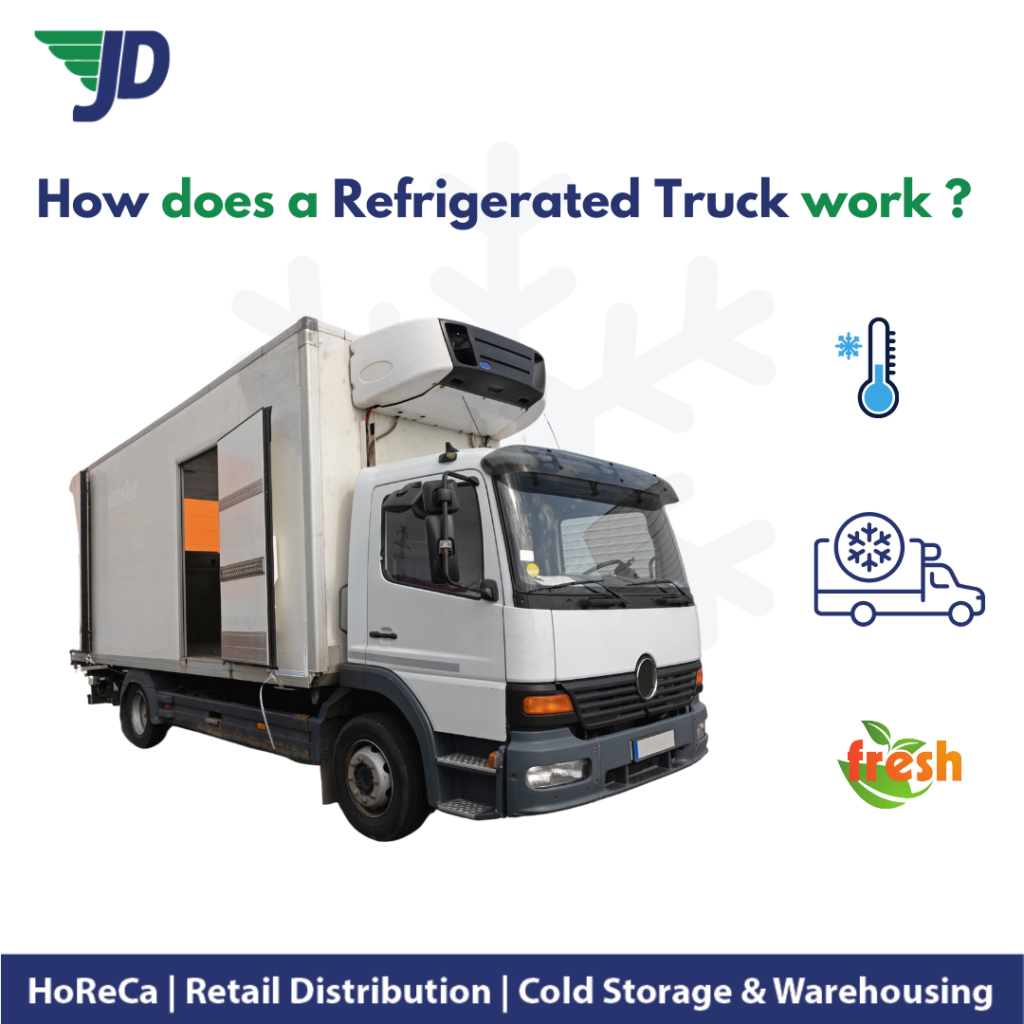
A refrigerated truck works by using a refrigeration unit, compressor, condenser, evaporator, and insulated cargo compartment to maintain a controlled temperature during transportation. These trucks are essential for transporting perishable products such as fresh produce, dairy, frozen foods, and pharmaceuticals while preserving product quality and safety throughout the cold chain.
How does a refrigerated truck work? A refrigerated truck uses a specialized cooling system and insulated cargo area to remove heat and maintain a consistent temperature throughout transit. At JustDeliveries, refrigerated transportation is a critical part of ensuring temperature-sensitive products reach their destination safely, efficiently, and in optimal condition. If you’re planning a shipment, our guide on how to transport frozen food covers the essential best practices.
What Is a Refrigerated Truck?
Refrigerated trucks, often referred to as reefers, are the backbone of temperature-controlled logistics. They are designed to transport perishable and temperature-sensitive products such as fresh produce, dairy products, frozen foods, pharmaceuticals, beverages, and other goods that require strict temperature control, one piece of the core components of cold chain logistics as a whole.
As demand for refrigerated truck logistics India continues to grow, these vehicles play a vital role in supporting food supply chains, pharmaceutical distribution, and cold storage networks across the country, the kind of network built by the top cold storage suppliers in India.
How Does a Refrigerated Truck Work?
Understanding how does a refrigerated truck work starts with understanding its refrigeration system. The refrigeration unit is responsible for maintaining the cargo area at the required temperature throughout the journey, the same fleet infrastructure that underpins our broader third-party logistics services in India.
These systems can run on diesel, electricity, or propane, but they all operate using the same basic refrigeration cycle.
The Cooling System: Keeping It Cool
At the heart of every refrigerated transport truck is a refrigeration unit designed to remove heat from the cargo area and maintain a consistent temperature.
1. Compressor: The Engine of the Cooling System
The compressor acts as the engine of the refrigeration system. It compresses a special refrigerant gas, increasing its pressure and preparing it for the cooling process.
This compressed refrigerant is circulated through the cooling system to continuously remove heat from the cargo compartment.
2. Condenser: Releasing Heat
Located at the back of the truck, the condenser receives the compressed refrigerant gas.
As the refrigerant passes through condenser coils exposed to outside air, heat is released, causing the gas to cool and convert into a liquid.
3. Evaporator: Cooling the Cargo Area
Inside the cargo compartment, the liquid refrigerant flows through evaporator coils.
As warm air passes over these coils, the refrigerant absorbs heat from the cargo area and evaporates back into a gas. This process cools the interior and helps maintain the required temperature for safe transportation.
The refrigeration cycle then repeats continuously throughout the journey.
Insulation: Keeping the Cold Air In
An efficient refrigeration unit alone is not enough. Refrigerated trucks are lined with specialized insulation materials that help trap cold air inside while preventing external heat from entering.
This insulation acts like a protective barrier, helping:
- Maintain stable temperatures
- Reduce energy consumption
- Improve cooling efficiency
- Protect product quality during long-distance transportation
Proper insulation is particularly important for reefer truck food transport, where even minor temperature fluctuations can affect product freshness and safety. This is especially critical for the ice cream supply chain India, where even brief temperature lapses can compromise the product.
The Temperature Monitoring and Control System
Modern refrigerated trucks are equipped with advanced temperature monitoring systems that provide real-time visibility into cargo conditions, a shift that points clearly toward the future of cold chain logistics.
These systems help:
- Track trailer temperatures accurately
- Monitor temperature fluctuations
- Detect cooling system malfunctions
- Alert drivers and operations teams
- Maintain regulatory compliance
Some refrigerated trucks also feature self-regulating systems that automatically adjust cooling performance to maintain the desired temperature inside the refrigerated container.
For businesses operating temperature controlled truck F&B supply chains, these monitoring systems are essential for maintaining food quality and reducing spoilage risks. This level of reliability is also central to how quick commerce logistics India brands maintain product freshness during rapid deliveries.
The Most Critical Freon™ Refrigerants
Several refrigerants play an important role in refrigerated transportation and cold chain logistics.
Common refrigerants used in reefer truck transportation include:
- Freon™ 134a (R-134a)
- Freon™ 404A (R-404A)
- Freon™ 507 (R-507)
These refrigerants help refrigeration units operate efficiently and maintain the temperature conditions required for transporting sensitive products.
Why Refrigerated Transportation Matters
Refrigerated trucks are essential for transporting:
- Fresh fruits and vegetables
- Dairy products
- Frozen foods
- Meat and seafood
- Pharmaceuticals
- Bakery products
- Beverages
Without refrigerated transportation, many products would spoil before reaching consumers. Businesses moving frozen goods often rely on specialized frozen food transportation India providers to manage this safely.
As refrigerated truck logistics India expands across major cities and industrial corridors, cold chain infrastructure continues to support the safe movement of temperature-sensitive goods from warehouses to retailers and end customers. In tech hubs like Bangalore, this is often handled by dedicated frozen food transport Bangalore services.
The Growing Indian Refrigerated Trucks Market
The refrigerated transportation market in India has experienced substantial growth in recent years, growth reflected in the expanding footprint of the top cold chain logistics companies in India.
Expanding cold chain networks now support temperature-sensitive transportation across major commercial hubs, including Bangalore, Mumbai, Delhi, and other metropolitan regions. These networks enable seamless movement of products through refrigerated transportation systems and reefer truck food transport operations. In Hyderabad, this growth is supported by dedicated cold chain logistics Hyderabad infrastructure.
According to IMARC Group, the India refrigerated trucks market reached INR 5.4 billion in 2022 and was projected to grow significantly through 2028. This growth highlights the increasing importance of refrigerated transportation in supporting India’s food, pharmaceutical, and retail supply chains. Businesses expanding storage capacity in this space often also evaluate cold storage manufacturers in india alongside their transport needs.
Conclusion
Understanding how does a refrigerated truck work is essential for businesses that depend on cold chain logistics. Through a combination of refrigeration technology, insulation, temperature monitoring systems, and specialized refrigerants, refrigerated trucks ensure that perishable and temperature-sensitive products remain safe and fresh throughout transportation, the same standard we maintain through our cold chain logistics in Mumbai service.
At JustDeliveries, our extensive network of temperature-controlled vehicles and experienced drivers helps businesses maintain product quality across every stage of the supply chain.
Frequently Asked Questions
Q1. How Does a Refrigerated Truck Stay Cold During Transit?
A refrigerated truck stays cold by continuously circulating refrigerant through a cooling system while insulated walls prevent outside heat from entering the cargo compartment.
Q2. How Does Reefer Truck Food Transport Maintain Product Freshness?
Reefer truck food transport maintains controlled temperatures throughout transit, helping preserve freshness, quality, and food safety.
Q3. Can Refrigerated Trucks Transport Frozen and Chilled Goods Together?
Yes. Some refrigerated trucks have multi-temperature compartments that allow frozen and chilled products to be transported simultaneously.
Q4. Can Temperature Monitoring Systems Prevent Product Spoilage?
Yes. Real-time monitoring systems can detect temperature fluctuations early and alert operators before products are compromised.
Q5. Is a Refrigerated Truck the Same as a Reefer Truck?
Yes. A reefer truck is another term for a refrigerated truck used for temperature-controlled transportation.
Q6. What Industries Use Refrigerated Transportation the Most?
Food and beverage, pharmaceutical, retail, dairy, seafood, and agriculture industries are among the largest users of refrigerated transportation services.
Q7. Why Is Insulation Important in Refrigerated Trucks?
Insulation helps maintain a stable internal temperature by preventing heat transfer, improving cooling efficiency, and protecting cargo quality.
Q8. Will Demand for Refrigerated Truck Logistics India Continue to Grow?
Yes. Rising demand for fresh food delivery, pharmaceuticals, organized retail, and cold chain infrastructure is expected to continue driving growth in refrigerated truck logistics India.

Mansi Mahansaria
I’m Mansi Mahansaria, CEO and Founder of JustDeliveries, a B2B logistics company specializing in the food and beverage sector. With a background in Chemical Technology (ICT Mumbai), an MBA (FMS Delhi), and experience at IDFC Private Equity and Tata Group, I’ve built a plug-and-play logistics network helping F&B brands scale efficiently. I also share insights on entrepreneurship and logistics at industry and academic events.




Pingback: Why Is Last-Mile Delivery Tracking Key To E-Commerce Success?
This article offers a clear and beginner-friendly explanation of how refrigerated trucks operate and why they are essential for maintaining the cold chain. The detailed discussion of insulation, refrigeration units, temperature control, and proper handling of perishable goods helps readers understand how fresh food, dairy products, pharmaceuticals, and other temperature-sensitive items are transported safely. An excellent resource for anyone looking to learn the fundamentals of refrigerated logistics and cold chain transportation.