
Blog
Live Temperature Monitoring for Delivery Vehicles in India: A Complete Guide to Food Safety
27 October 2026By Abhishek Kumar
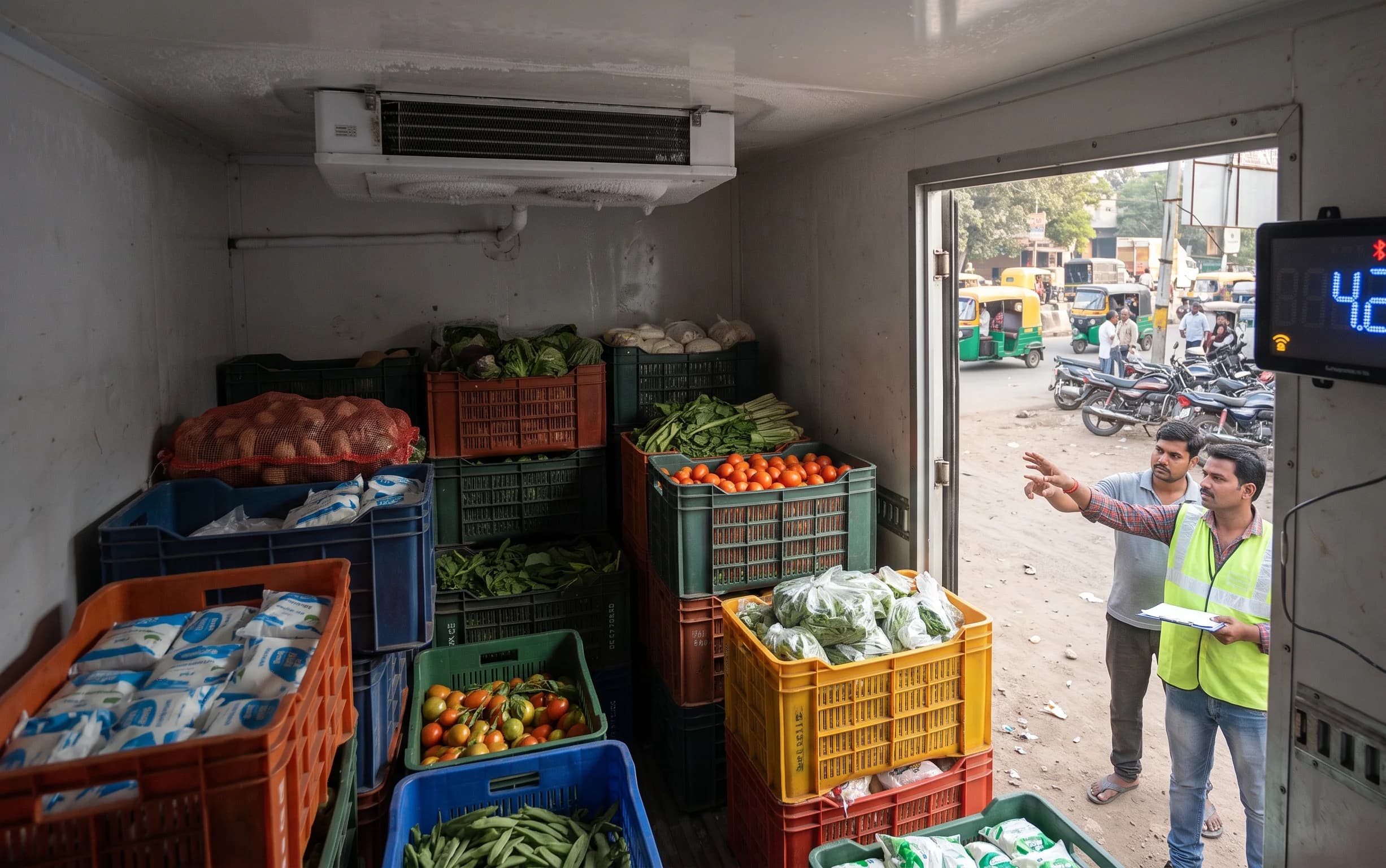
Live temperature monitoring for delivery vehicles in India uses connected sensors and monitoring platforms to track cargo temperatures during transportation. When integrated with GPS tracking, they help logistics teams identify temperature deviations, locate affected shipments, respond to alerts, and maintain records that support food quality, traceability, and cold-chain management.
For food businesses, live temperature monitoring delivery vehicle India systems provide visibility into cargo conditions throughout transit. Unlike GPS tracking alone, they help operations teams understand whether perishable products remain within their specified temperature ranges. JustDeliveries combines temperature-controlled logistics with technology-enabled tracking to support food and beverage distribution. Discover how smarter monitoring can strengthen your cold chain.
What Is Live Temperature Monitoring for Delivery Vehicles in India?
Live temperature monitoring measures the conditions inside a delivery vehicle and makes readings available to authorised teams through a connected system. Sensors collect temperature data at configured intervals, while monitoring software displays readings and can generate alerts when temperatures cross predefined limits.
A live temperature monitoring delivery vehicle India solution can combine three essential components:
- Temperature sensors: Measure conditions at designated points inside the vehicle.
- GPS tracking: Shows the vehicle’s location, route, and movement.
- Monitoring dashboard: Displays available temperature readings, shipment information, and alerts.
This combination helps businesses investigate temperature deviations in context. However, monitoring equipment does not replace refrigeration, correct loading practices, or appropriate food-handling procedures.
Why Is Temperature Monitoring Important for Food Delivery in India?
Food quality can deteriorate when products experience unsuitable temperatures during transportation. Traffic delays, frequent unloading, refrigeration faults, and poor handling can increase the risk of temperature deviations.
A live temperature monitoring delivery vehicle India system helps businesses identify potential issues earlier instead of relying exclusively on manual checks or delivery-time inspections. A trusted third party logistics company india can help put such systems into practice.
Its main benefits include:
- Better product protection: Helps teams identify conditions that may affect perishable goods.
- Faster intervention: Alerts allow operations teams to investigate problems during transit.
- Improved traceability: Historical readings help teams review shipment conditions.
- Greater accountability: Temperature records support discussions about delivery exceptions and handling.
- Better operational decisions: Location and temperature data help teams investigate recurring problems.
The Food Safety and Standards Authority of India (FSSAI) provides guidance on hygienic food transportation and appropriate temperature control. Requirements depend on the food category and applicable regulations. Businesses should follow the relevant product-specific requirements rather than assume one temperature suits every shipment.
How Does IoT Temperature Tracking Work in Food Vehicles in India?
IoT temperature tracking connects sensors, communication devices, and software to provide information about cargo conditions during transportation.
A typical system works through the following steps:
- Measure: Sensors record temperatures at designated locations.
- Transmit: Connected devices send readings to a monitoring platform when communication is available.
- Display: The dashboard presents temperature data alongside vehicle and shipment information.
- Alert: Configured thresholds trigger notifications when readings move outside the specified range.
- Respond: Operations teams investigate the cause and initiate corrective action.
A live temperature monitoring delivery vehicle India setup should also account for sensor placement, calibration, communication interruptions, and alert escalation. These details matter because an inaccurate reading or missed notification can undermine operational visibility.
Real-Time Temperature Monitoring in Reefer Vehicles
Refrigerated vehicles, commonly called reefer vehicles, use refrigeration equipment to maintain suitable conditions for chilled or frozen products. Temperature monitoring adds visibility into the conditions experienced during transit.
A real-time temp monitoring reefer India solution can help teams:
- Review temperature readings during a journey.
- Identify deviations from product-specific limits.
- Investigate delays alongside vehicle location.
- Maintain records for post-delivery reviews.
- Coordinate corrective action when equipment or handling problems arise.
For example, if a refrigerated vehicle reports an unexpected temperature increase, the operations team can check the reading, review the vehicle’s location, contact the responsible personnel, and assess the shipment according to established food-safety procedures.
The objective is not simply to collect data. It is to turn that data into timely, informed decisions. For food brands working in the city, see our cold chain logistics bangalore service.
How Does Temperature Monitoring Protect Food in Transit in India?
Different food categories have different transportation requirements. A live temperature monitoring delivery vehicle India system helps teams assess whether monitored conditions remain suitable for the products being transported.
Chilled Food, Dairy, and Fresh Products
Dairy products, chilled ingredients, and other perishable foods can require controlled temperatures throughout distribution. Monitoring helps identify deviations during loading, transit, and delivery handovers.
Frozen Food and Ice Cream
Frozen products require suitable frozen storage and transportation conditions. Temperature monitoring helps teams identify unexpected changes and investigate refrigeration or handling issues before accepting or distributing affected stock. To learn more about this category, see frozen food transportation india.
Bakery Products and Ready-to-Eat Food
Not every bakery or ready-to-eat product requires refrigerated transportation. Requirements depend on ingredients, preparation, packaging, and storage instructions. Monitoring should therefore match the product’s actual needs. For products that do need chilled handling, read about cold food storage.
FSSAI guidance on food transportation emphasises appropriate temperature control and monitoring for relevant food categories. Businesses should consult the official FSSAI guidance documents when developing their food-safety procedures.
What Is a Cold Chain Temperature Alert System?
A cold chain temperature alert system notifies authorised personnel when monitored temperatures cross configured thresholds or other specified conditions occur.
An effective alert process includes:
- Defined limits: Establish suitable thresholds for each product or shipment.
- Clear notifications: Direct alerts to the people responsible for responding.
- Investigation: Check readings, vehicle location, refrigeration performance, and shipment status.
- Corrective action: Follow established procedures to address the issue.
- Documentation: Record the deviation, response, and outcome.
A live temperature monitoring delivery vehicle India system is most useful when alerts are supported by clear responsibilities and an escalation process. An alert alone cannot resolve a refrigeration failure or establish whether affected food remains safe.
What Should Businesses Look for in Temperature Monitoring for a Cold Van?
When evaluating temperature monitoring cold van India solutions, businesses should assess both the technology and the logistics provider’s operating procedures.
Look for these capabilities:
- Reliable sensors: Appropriate accuracy, placement, and calibration.
- Live vehicle visibility: Access to location and temperature information.
- Configurable alerts: Thresholds and notifications suited to the shipment.
- Historical records: Accessible temperature logs for reviews and reporting.
- Connectivity planning: Procedures for communication gaps and device failures.
- Operational support: Clear responsibility for investigating and resolving exceptions.
- Scalability: Support for changing delivery volumes, routes, and distribution requirements.
A live temperature monitoring delivery vehicle India service should also fit the business’s delivery frequency, product requirements, and distribution network. The right solution combines suitable vehicles, sound handling practices, monitoring technology, and responsive operations. If you operate in the south, explore our cold chain logistics hyderabad service.
How JustDeliveries Supports Technology-Enabled Cold-Chain Logistics
JustDeliveries specialises in food and beverage logistics, including temperature-controlled transportation and technology-enabled supply-chain visibility.
Its HQ App provides a central dashboard for food and beverage brands to monitor:
- Live vehicle locations.
- Temperature compliance.
- Service-level agreements (SLAs).
- Billing information.
- AI-driven performance insights.
This centralised visibility helps operations teams review delivery performance, identify exceptions, and make better-informed decisions using available operational data.
According to JustDeliveries’ published service information, its cold-chain operations also support quick-commerce and e-commerce platforms, including Swiggy Instamart, Zepto, Blinkit, Amazon, JioMart, and BigBasket. These operations include hub-to-hub transportation and dark store deliveries, with real-time vehicle tracking and temperature control.
Quick commerce has increased the importance of coordinated replenishment, shorter delivery windows, and reliable product handling. For food brands supplying dark stores, visibility across the movement of chilled and frozen products can help teams coordinate deliveries while maintaining required conditions. If you are looking to source products, see our frozen food supplier page.
Mansi Mahansaria, the named author of this article, highlights an important operational principle: temperature visibility is most valuable when it supports timely decisions, documented processes, and accountable execution across the cold chain.
Learn more about JustDeliveries’ cold-chain logistics solutions.
Strengthen Your Cold Chain with JustDeliveries
Food distribution requires more than moving products from one location to another. It requires suitable transportation conditions, clear operational processes, and visibility into delivery performance.
JustDeliveries helps food and beverage businesses manage temperature-controlled transportation with live tracking and centralised operational visibility. Whether you supply restaurants, retail outlets, or quick-commerce dark stores, the right logistics setup can help you coordinate deliveries and respond to exceptions more effectively.
Mansi Mahansaria emphasises that reliable cold-chain operations depend on combining suitable infrastructure, monitoring, and accountable execution.
Planning to improve your food distribution network? Explore JustDeliveries’ cold-chain logistics services and discuss a solution tailored to your products, routes, delivery frequency, and temperature requirements.
Frequently Asked Questions
Q1. How does live temperature monitoring work in a delivery vehicle?
Sensors measure cargo-area temperatures and send readings to a connected monitoring platform. Depending on the system, teams can review readings, location information, and alerts during transit.
Q2. Can GPS tracking monitor temperature inside a refrigerated vehicle?
GPS tracking alone cannot measure temperature. Temperature sensors are required, although GPS and temperature data can be integrated into one monitoring platform.
Q3. Is live temperature monitoring necessary for every food delivery?
Not every food product requires refrigerated transportation. However, appropriate temperature control and monitoring are important for food categories that require specific conditions to maintain safety and quality.
Q4. Will temperature monitoring prevent food spoilage?
It can help teams identify deviations and respond sooner, potentially reducing avoidable losses. It cannot guarantee spoilage prevention or establish food safety without appropriate handling and assessment.
Q5. What is a cold chain temperature alert system?
It is a monitoring system that sends notifications when measured temperatures cross configured thresholds, helping responsible teams investigate and take corrective action.
Q6. Why is IoT temperature tracking useful for food vehicles in India?
It helps businesses access temperature information during transit, investigate delivery exceptions, improve traceability, and coordinate responses across distribution networks.
Q7. How can businesses choose temperature monitoring for a cold van in India?
Evaluate sensor accuracy, calibration, GPS integration, alert configuration, connectivity, historical reporting, vehicle suitability, and the provider’s response procedures.
Q8. What does JustDeliveries offer for temperature-controlled deliveries?
JustDeliveries provides food and beverage logistics services that include temperature-controlled transportation, live vehicle tracking, and technology-enabled operational visibility through its HQ App. Businesses can discuss their distribution requirements directly with the team.