
Blog
Logistics Services for QSR Chains in India: A Complete Guide
27 October 2026By Abhishek Kumar
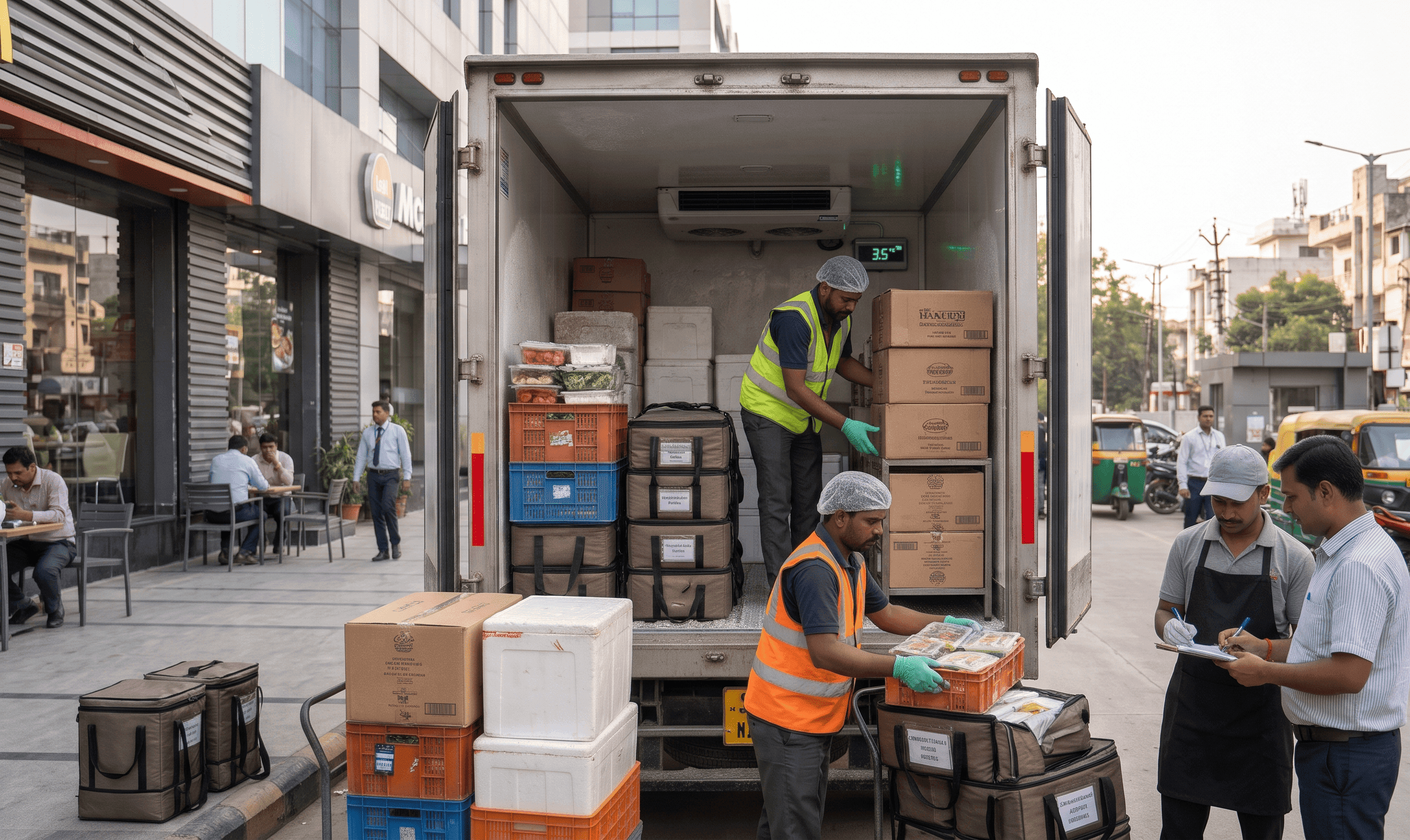
Logistics services for QSR chains in India help quick service restaurants transport fresh, chilled, frozen, and ambient ingredients between suppliers, warehouses, central kitchens, and outlets. These services include temperature-controlled transportation, inventory management, scheduled distribution, and multi-city logistics, helping restaurant brands maintain food quality, manage stock availability, and support expansion.
Logistics services for QSR chains in India play a vital role in maintaining food quality, meeting outlet demand, and coordinating deliveries across multiple locations. As restaurant brands expand, reliable distribution becomes essential to daily operations. JustDeliveries supports food businesses with B2B transportation, cold storage, and distribution solutions. Explore how the right logistics strategy can help your restaurant network operate more efficiently.
Why Logistics Matters for QSR Chains in India
Quick service restaurants depend on consistent ingredient availability and predictable delivery schedules. A delay in replenishment can disrupt kitchen operations, while poor temperature control can compromise perishable ingredients.
Effective logistics helps QSR brands manage three important priorities:
- Food quality: Appropriate handling and temperature control protect product quality during transportation and storage.
- Inventory availability: Planned replenishment helps outlets maintain sufficient ingredients without excessive stockholding.
- Operational efficiency: Coordinated deliveries reduce unnecessary transportation and help kitchens plan their daily activities.
For growing brands, logistics also provides the infrastructure needed to serve more outlets without allowing distribution complexity to undermine service consistency.
Common Supply Chain Challenges Faced by QSR Brands
Managing a quick service restaurant supply chain in India involves coordinating suppliers, storage facilities, transportation teams, and individual outlets. Several challenges can affect this process.
Maintaining Temperature Control
Fresh produce, dairy, meat, frozen foods, and other perishable ingredients may require different storage and transportation conditions. Inadequate temperature management can shorten shelf life and increase wastage.
Delivering to Multiple Outlets
Restaurant chains often operate across different neighbourhoods and cities, each with specific delivery windows and replenishment requirements. Poor route planning or missed delivery slots can affect several outlets simultaneously.
Managing Inventory and Demand Fluctuations
Sales can vary by location, day of the week, season, and promotional activity. Without suitable demand planning, restaurants may experience stockouts in one location and excess inventory in another.
Controlling Logistics Costs
Maintaining an in-house fleet involves vehicle procurement, maintenance, staffing, fuel, and operational coordination. These responsibilities can become increasingly complex as a restaurant network expands.
Essential Logistics Services for QSR Chains in India
A suitable logistics model should address the movement, storage, and distribution of food products while accommodating the operating requirements of restaurant outlets.
1. Cold Chain Logistics for QSR
Cold chain logistics for QSR operations helps maintain suitable conditions for temperature-sensitive ingredients throughout transportation and storage.
Important capabilities include:
- Refrigerated transportation for chilled products.
- Frozen transportation for products requiring frozen conditions.
- Temperature monitoring and appropriate handling procedures.
- Coordination between cold storage facilities, central kitchens, and restaurant outlets.
- Delivery documentation and shipment visibility.
Temperature requirements should reflect the specific food product and applicable food safety standards. Maintaining suitable conditions throughout the journey helps reduce avoidable quality risks.
2. Intra-City Distribution and Outlet Replenishment
Intra-city distribution connects suppliers, warehouses, central kitchens, and restaurant outlets within the same city.
Scheduled deliveries help restaurant managers plan ingredient availability and kitchen operations. Dedicated vehicles can support recurring routes, while flexible transportation can accommodate additional demand when required.
3. Inter-City Food Distribution
As restaurant brands enter new markets, they need reliable transportation between production facilities, distribution centres, storage hubs, and destination cities.
Inter-city distribution helps businesses coordinate stock movement across a wider network. Effective planning considers transit times, product shelf life, storage requirements, and delivery schedules.
4. Cold Storage and Inventory Management
Storage is an important part of food distribution, particularly for businesses handling chilled and frozen products.
Suitable storage and inventory processes help QSR brands organise stock, monitor availability, coordinate dispatches, and manage product rotation. Inventory visibility also helps businesses identify replenishment requirements before shortages disrupt outlet operations.
5. On-Demand Temperature-Controlled Transportation
Restaurant demand does not always follow a predictable pattern. Urgent replenishment, unexpected orders, and seasonal peaks may require additional transport capacity.
On-demand vehicle booking can provide flexibility without requiring businesses to maintain a large fleet exclusively for occasional requirements.
How to Choose the Best QSR Logistics Provider in India
Choosing the best QSR logistics provider India requires evaluating operational capability, food handling practices, technology, and scalability rather than comparing prices alone.
Consider these factors before selecting a logistics partner:
- Food logistics experience: Look for experience handling food products and recurring restaurant distribution requirements.
- Temperature management: Check whether transportation and storage capabilities match your products’ requirements.
- Delivery reliability: Assess scheduled delivery performance, order accuracy, and procedures for handling delays.
- Technology and visibility: Look for shipment tracking, proof of delivery, booking tools, and relevant reporting.
- Flexible capacity: Evaluate whether the provider can accommodate changing volumes and expansion into additional cities.
- Transparent pricing: Understand transportation charges, storage fees, service commitments, and any additional costs.
The right partner should understand your operating model and provide services that match your actual distribution needs.
How to Improve Your QSR Supply Chain Efficiency
A well-planned logistics strategy can help restaurant chains improve consistency and control avoidable costs.
Forecast Demand and Plan Replenishment
Use historical sales, outlet requirements, promotions, and seasonal patterns to estimate ingredient demand. Align replenishment schedules with product shelf life and available storage capacity.
Optimise Delivery Routes
Coordinate delivery windows and nearby outlets where operationally appropriate. Better route planning can improve vehicle utilisation while helping maintain delivery commitments.
Monitor Supply Chain Performance
Track relevant performance indicators, including:
- On-time delivery rate.
- Order fill rate and order accuracy.
- Stockout frequency.
- Food spoilage and wastage.
- Delivery cost per outlet.
- Temperature compliance.
These measures help identify recurring issues and support better operational decisions.
Choose a Scalable Logistics Model
Some restaurant chains benefit from dedicated vehicles for regular deliveries, while others need flexible transport capacity for variable demand. A combination of transportation and storage services may suit businesses operating across multiple locations.
Restaurant Chain Delivery Solutions in India: In-House vs Outsourced Logistics
Building an in-house fleet gives restaurant brands direct control over vehicles, staffing, and schedules. However, it also requires ongoing investment in maintenance, recruitment, infrastructure, and operational management.
Outsourcing can provide access to transportation, storage, tracking, and distribution support without requiring the restaurant to develop every capability internally.
For growing brands, logistics services for QSR chains in India can offer a practical way to manage recurring deliveries and changing distribution requirements. The decision should depend on delivery frequency, product handling needs, geographic coverage, total operating costs, and the level of control required.
How JustDeliveries Supports Food Logistics for Fast Food Brands
JustDeliveries provides B2B logistics solutions designed to help food businesses coordinate transportation, storage, and distribution.
Its service offerings address different operational requirements:
- JD Regular: Dedicated drivers and vehicles for recurring logistics requirements, supported by account management and operational coordination.
- JD Instant: App-based booking for dedicated temperature-controlled vehicles, with tracking and proof of delivery.
- JD Storage: Cold storage and inventory management support to help businesses coordinate stock and distribution.
These services can support food logistics for fast food brands that need dependable transportation, appropriate storage, and greater flexibility as their operations grow.
For businesses evaluating logistics services for QSR chains in India, the key is to match the service model to actual delivery volumes, product requirements, and outlet distribution patterns.
Build a More Reliable QSR Supply Chain With JustDeliveries
Expanding a restaurant network requires more than opening new outlets. It demands dependable transportation, coordinated replenishment, suitable food storage, and the flexibility to respond to changing demand.
JustDeliveries helps food and beverage businesses manage these requirements through dedicated transportation, on-demand temperature-controlled vehicles, and cold storage solutions.
Looking for logistics services for QSR chains in India? Contact JustDeliveries to discuss your delivery schedules, distribution network, storage requirements, and operational goals. Request a customised quotation and explore a B2B logistics solution suited to your restaurant chain’s needs.
Frequently Asked Questions
Q1. How do logistics services help QSR chains?
Logistics services coordinate food transportation, storage, inventory, and outlet replenishment. They help restaurants maintain ingredient availability, manage product handling, and support consistent operations across multiple locations.
Q2. Can a third-party logistics provider support multi-city restaurant expansion?
Yes. A third-party logistics provider can coordinate transportation and storage between suppliers, distribution hubs, and outlets in different cities, depending on its network and service capabilities.
Q3. Is cold chain logistics necessary for every QSR ingredient?
No. Cold chain requirements depend on the product. Chilled and frozen ingredients require appropriate temperature control, while certain shelf-stable products can be transported under suitable ambient conditions.
Q4. Will outsourcing logistics reduce restaurant operating costs?
It can, depending on delivery volumes, fleet utilisation, service rates, and existing infrastructure costs. Businesses should compare total operating costs and service performance before making a decision.
Q5. What should brands look for in the best QSR logistics provider India?
Brands should evaluate food handling experience, temperature management, delivery reliability, tracking capabilities, geographic coverage, flexible capacity, and transparent pricing.
Q6. Why is inventory management important for quick service restaurants?
Effective inventory management helps prevent stockouts, control excess stock, reduce avoidable food wastage, and ensure that outlets have the ingredients needed for daily operations.
Q7. How can restaurant chains improve delivery efficiency?
Restaurant chains can improve efficiency through demand forecasting, scheduled replenishment, route optimisation, shipment tracking, and regular monitoring of delivery performance.
Q8. Can logistics services for QSR chains in India support different food categories?
Yes. Depending on the provider’s capabilities, logistics services can support fresh, chilled, frozen, and ambient food products. Each category must be handled and stored according to its specific requirements.