
Blog
Temperature Breach in Food Delivery India: Causes, Risks and Prevention
19 October 2026By Abhishek Kumar
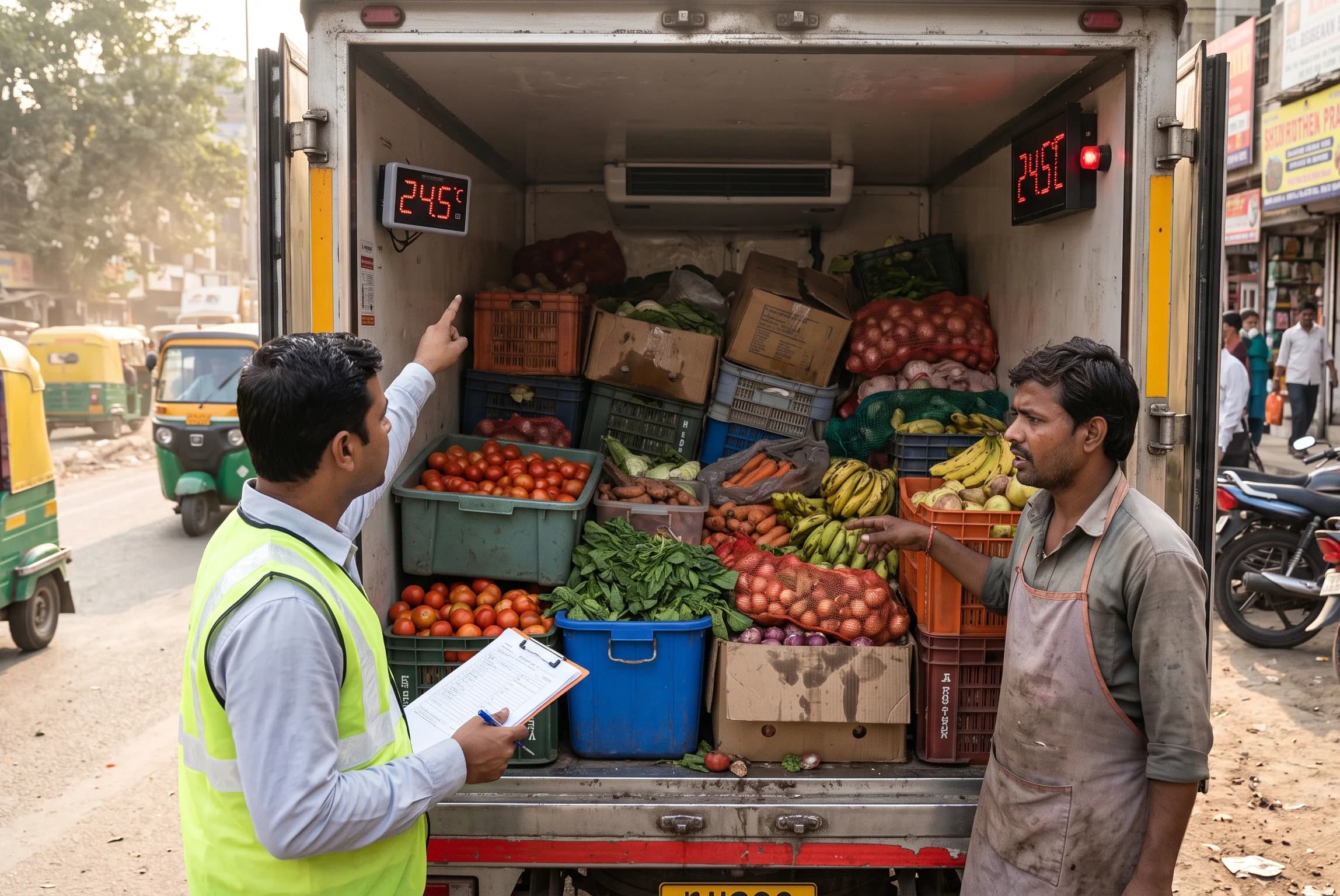
A temperature breach in food delivery India occurs when perishable food moves outside its specified temperature range during storage, handling, or transit. Refrigeration failures, loading delays, poor packaging, and inadequate monitoring can increase spoilage and food-safety risks. Product-specific temperature limits, real-time monitoring, and reliable cold-chain logistics help prevent these failures.
Food businesses in India need consistent temperature control to protect perishable products from warehouse to final delivery. A temperature breach in food delivery India can lead to spoiled inventory, rejected shipments, and customer complaints. JustDeliveries helps food and beverage businesses manage temperature-controlled transportation, storage, and distribution. Understanding where breaches occur is the first step towards preventing them.
What Causes a Temperature Breach in Food Delivery India?
A temperature excursion in food logistics India can happen at any stage, from warehouse dispatch to the final delivery point. Even a short lapse can affect sensitive products when the exposure exceeds their safe handling limits. For a closer look at the equipment involved, read about how does a refrigerated truck work.
Common causes include:
- Refrigeration failure: Faulty cooling units, incorrect settings, or insufficient pre-cooling.
- Loading delays: Food remains outside controlled storage while waiting for dispatch.
- Poor packaging: Inadequate insulation allows products to warm up or thaw.
- Traffic and route delays: Longer journeys increase the risk of equipment problems and extended exposure.
- Improper handling: Frequent door openings and blocked airflow affect cooling efficiency.
- Limited monitoring: Manual checks may miss temperature fluctuations between checkpoints.
These risks become harder to manage when multiple warehouses, transport vehicles, and dark stores handle the same shipment. For a wider view of the controls involved, read about temperature controlled logistics.
How Temperature Breaches Affect Food Quality and Business Operations
A temperature breach in food delivery India can affect more than the appearance of a product. Depending on the food and exposure conditions, it may shorten shelf life, increase microbial growth, and compromise food safety.
Businesses may also experience:
- Spoiled or rejected inventory.
- Increased returns, replacements, and wastage.
- Disrupted delivery schedules.
- Higher operating costs.
- Reduced customer confidence and retailer trust.
Refrigeration alone cannot guarantee food safety. Clean handling, appropriate packaging, stock rotation, and documented temperature controls must work together. For frozen products in particular, see frozen food transportation india.
How to Prevent Temperature Breach During Delivery India
Preventing temperature excursions requires consistent controls at every stage of transportation.
1. Maintain product-specific temperature ranges
Different products require different storage and transport conditions. Chilled dairy, frozen foods, meat, seafood, and prepared meals should follow their applicable product specifications and food-safety requirements.
Avoid using one temperature setting for every shipment. For frozen shipments in the capital region, see frozen food transport delhi.
2. Pre-cool vehicles before loading
Check that refrigerated vehicles have reached the required operating conditions before loading. Verify product temperatures, minimise loading delays, and keep vehicle doors closed whenever possible.
3. Improve packaging and handling
Use suitable food-grade packaging and insulation. Arrange products to maintain airflow, prevent cross-contamination, and avoid overloading refrigerated compartments.
4. Plan routes and handovers carefully
Efficient routing, realistic delivery windows, coordinated warehouse transfers, and prompt unloading help reduce unnecessary exposure.
These measures are particularly important for businesses operating multiple hubs and dark stores across busy Indian cities. For frozen shipments in Mumbai, see frozen food transport mumbai.
5. Establish a corrective-action process
If a temperature breach occurs, record the deviation, identify affected products, assess the duration and severity of exposure, and follow an appropriate food-safety procedure before releasing the shipment.
As Mansi Mahansaria, author at JustDeliveries, emphasises in the context of logistics planning, consistent processes and operational visibility are essential to managing temperature-sensitive deliveries effectively.
Cold Chain Temperature Control India: Best Practices
Effective cold chain temperature control India requires an uninterrupted process across storage, loading, transportation, and delivery.
Food businesses should prioritise:
- Equipment maintenance: Inspect refrigeration units and verify sensor accuracy regularly.
- Staff training: Train drivers and warehouse teams in loading, handling, hygiene, and escalation procedures.
- Temperature records: Maintain shipment-level records that help identify deviations and recurring problems.
- Stock rotation: Use first-expiry-first-out practices where appropriate to reduce avoidable waste.
- Regulatory compliance: Follow applicable FSSAI requirements for food storage, transportation, and handling.
The Food Safety and Standards Authority of India provides regulatory guidance covering food storage, transportation, and temperature control. Businesses should consult the applicable current requirements for their product categories. For frozen shipments in Bangalore, see frozen food transport bangalore.
Temperature Monitoring Food Transport India: Why Real-Time Visibility Matters
Temperature monitoring food transport India helps businesses identify problems before they become larger operational issues.
Digital sensors, data loggers, and vehicle tracking systems can provide information about shipment conditions during transit. When these tools work alongside clear escalation procedures, operations teams can respond more quickly to delays and temperature deviations. If you are also sourcing product, see this frozen food supplier page.
Useful performance indicators include:
- Percentage of deliveries maintained within the required temperature range.
- Number and duration of temperature excursions.
- Time taken to respond to alerts.
- Spoilage and shipment rejection rates.
- On-time delivery performance.
How JustDeliveries supports cold-chain logistics
Quick commerce has increased the need for fast, dependable movement of temperature-sensitive products between fulfilment hubs and dark stores. Meeting tight delivery windows requires coordination between refrigeration, inventory handling, routing, and shipment visibility.
JustDeliveries supports cold-chain logistics for food and beverage businesses, including operations associated with Swiggy Instamart, Zepto, Blinkit, Amazon, JioMart, and BigBasket. Its logistics model covers hub-to-hub and dark-store deliveries, with temperature control and real-time tracking.
Its HQ App provides a central dashboard for food and beverage brands to monitor live vehicle locations, temperature compliance, service-level agreements (SLAs), billing, and AI-driven performance insights in real time. This visibility helps businesses identify operational issues, review performance, and coordinate corrective action.
For companies managing multiple locations, temperature breach food delivery India prevention becomes easier to operationalise when transport data, delivery commitments, and temperature records can be reviewed together.
How to Choose the Right Temperature-Controlled Logistics Partner
Before choosing a logistics provider, evaluate whether it can support your products, routes, and operating volumes.
Consider these factors:
- Availability of chilled, frozen, and ambient transport options.
- Access to suitable cold storage and warehousing.
- Temperature monitoring and shipment-level reporting.
- Vehicle maintenance and contingency arrangements.
- Route coverage, delivery reliability, and SLA management.
- Transparent pricing and the ability to scale with demand.
A suitable logistics partner should explain its processes clearly and provide the operational visibility needed to manage temperature-sensitive products responsibly.
Protect Your Cold Chain with JustDeliveries
A temperature breach in food delivery India can create avoidable waste, operational disruption, and food-safety concerns. The right combination of temperature monitoring, disciplined handling, reliable transportation, and coordinated distribution helps businesses manage these risks.
As Mansi Mahansaria of JustDeliveries, the focus is on helping food and beverage businesses build more reliable logistics operations through temperature-controlled transportation, distribution support, and technology-enabled visibility.
Ready to strengthen your cold chain? Partner with JustDeliveries to explore logistics solutions tailored to your products, delivery routes, and business requirements.
Contact JustDeliveries to discuss your cold-chain logistics requirements.
Frequently Asked Questions
Q1. How can businesses prevent a temperature breach during food delivery in India?
Use product-specific temperature limits, pre-cooled vehicles, suitable packaging, efficient routes, temperature monitoring, and documented corrective-action procedures.
Q2. How does temperature monitoring help prevent food spoilage during delivery in India?
Sensors and data loggers identify temperature deviations, helping teams investigate problems and respond before additional products are affected.
Q3. Can refrigerated vehicles eliminate temperature breaches?
No. Refrigerated vehicles reduce temperature-related risks but cannot eliminate equipment failure, loading delays, poor packaging, or improper handling.
Q4. Is temperature control mandatory for food transportation in India?
Applicable food-safety requirements include temperature and handling controls for relevant food categories. Businesses should follow current FSSAI regulations and product-specific requirements.
Q5. Will a temperature breach always make food unsafe?
Not necessarily. The risk depends on the food, the temperature reached, the exposure duration, and the applicable safety criteria. A documented assessment should determine the appropriate action.
Q6. What should businesses do after a temperature breach in food delivery India?
Record the incident, isolate potentially affected stock, assess exposure conditions, and follow established food-safety procedures before deciding whether the shipment can be released.
Q7. What is the role of cold-chain logistics in quick commerce?
Cold-chain logistics helps maintain appropriate conditions for temperature-sensitive products as they move between warehouses, fulfilment hubs, dark stores, and delivery destinations.
Q8. Why should food businesses work with a specialised cold-chain logistics provider?
A specialised provider can help coordinate temperature-controlled transport, storage, shipment visibility, and delivery processes, reducing operational complexity for food businesses.