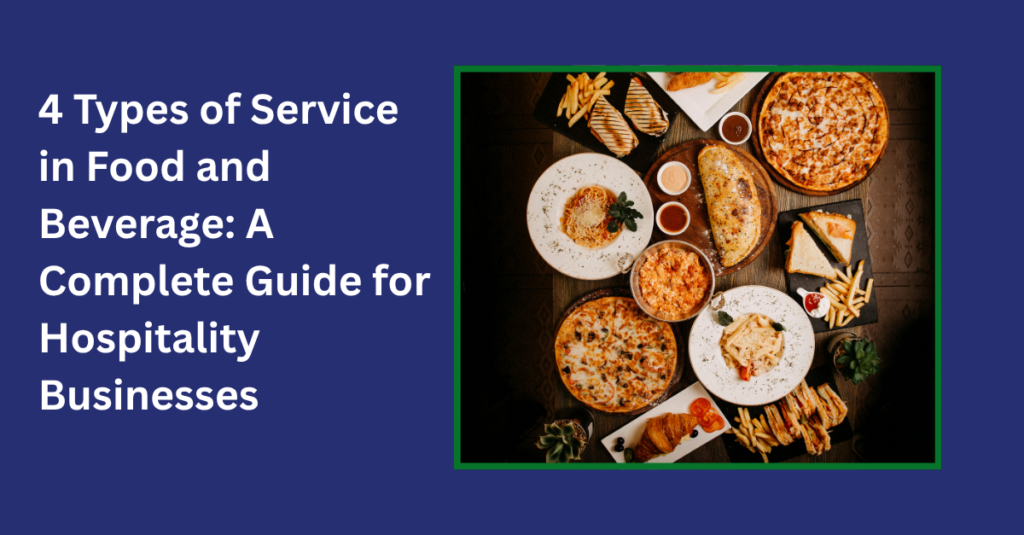
The 4 types of service in food and beverage are Table Service, Assisted Service, Self-Service, and Single Point Service. Each service style is designed to meet different customer expectations, business models, and operational needs. Understanding these service methods helps restaurants, hotels, cafés, and food businesses deliver better guest experiences while improving efficiency and profitability.
The 4 types of service in food and beverage are Table Service, Assisted Service, Self-Service, and Single Point Service. These service methods form the foundation of the hospitality industry and influence customer satisfaction, operational efficiency, and business success. At JustDeliveries, we understand that great food service depends not only on customer interactions but also on reliable logistics and supply chain management.
What is Food and Beverage Service?
Food and beverage service refers to the process of preparing, presenting, and serving food and drinks to customers in restaurants, hotels, cafés, catering businesses, and other hospitality establishments. The quality of service often determines how customers perceive a business and whether they choose to return.
Effective service goes beyond delivering food to a table. It includes hospitality, professionalism, speed, hygiene, communication, and consistency. As customer expectations continue to evolve, businesses must understand the various types of food and beverage services available and select the most suitable approach.
Understanding the 4 Types of Service in Food and Beverage
The hospitality industry broadly classifies service methods into four major categories. Each style serves a different purpose and caters to specific customer preferences.
1. Table Service
Table Service is one of the most traditional and widely recognized forms among the 4 types of service in food and beverage. In this model, guests remain seated while trained service staff take orders, serve food, and provide assistance throughout the dining experience.
Popular Types of Table Service
- American Service: Food is plated in the kitchen and served directly to guests. This is the most common service style in restaurants worldwide.
- French Service: Food is prepared or finished at the guest’s table, creating an elegant and luxurious dining experience.
- Russian Service: Large platters are presented to guests, and servers portion food individually before serving.
- English Service: Food is presented in serving dishes, and portions are served at the table in a family-style format.
Benefits of Table Service
- Personalized customer experience
- Higher guest satisfaction
- Enhanced dining atmosphere
- Better opportunities for upselling
Challenges
- Requires more staff
- Higher operational costs
- Slower service during peak hours
2. Assisted Service
Assisted Service combines customer participation with staff assistance. It is one of the most efficient 4 types of service in food and beverage for serving large groups.
- Buffet Service: Guests select food from a buffet station while staff assist with setup, replenishment, and service support.
- Carvery Service: Food is carved and portioned by staff before being served to customers.
For businesses running large-scale events, maintaining temperature controlled logistics is essential to keeping food fresh and safe throughout service.
Benefits of Assisted Service
- Faster service for large crowds
- Greater food variety
- Improved operational efficiency
- Ideal for banquets and events
Challenges
- Potential food wastage
- Requires careful monitoring
- May reduce personalized interaction
3. Self-Service
Self-Service allows customers to select, collect, and often pay for their food with minimal staff involvement.
Examples include:
- Cafeterias
- Food courts
- Counter service outlets
- Self-ordering kiosks
As technology advances, Self-Service has become one of the fastest-growing types of food and beverage services. The smooth operation of these outlets depends on understanding how perishable goods are transported to ensure consistent stock availability at every service point.
Benefits of Self-Service
- Reduced labor costs
- Faster customer turnover
- Greater operational efficiency
- Improved convenience
Challenges
- Limited customer interaction
- Less personalized service
- Dependence on technology
4. Single Point Service
Single Point Service enables customers to order, pay, and receive food from one location or service point.
Common examples include:
- Fast-food restaurants
- Drive-through outlets
- Takeaway counters
- Food trucks
- Home delivery services
Brands operating in Mumbai can rely on dedicated frozen food transport in Mumbai to support high-volume single-point operations with consistent cold chain coverage. Today, Single Point Service is one of the most important 4 types of service in food and beverage due to the growth of online ordering and food delivery platforms.
Benefits of Single Point Service
- Quick service
- Lower operating costs
- High scalability
- Customer convenience
Challenges
- Limited dining experience
- Heavy reliance on logistics
- Increased demand for operational accuracy
Comparison of the 4 Types of Service in Food and Beverage
| Service Type | Customer Interaction | Service Speed | Cost | Best For |
| Table Service | High | Moderate | High | Restaurants, Hotels |
| Assisted Service | Moderate | Fast | Moderate | Events, Banquets |
| Self-Service | Low | Fast | Low | Cafeterias, Food Courts |
| Single Point Service | Moderate | Very Fast | Low to Moderate | QSRs, Delivery Brands |
Each of these 4 types of service in food and beverage offers unique advantages depending on the business model, customer expectations, and operational requirements.
Traditional vs Modern Food and Beverage Service
The hospitality industry has evolved significantly over the last decade. Traditional dining experiences continue to thrive, but technology-driven solutions are reshaping customer expectations.
Modern trends include:
- QR code menus
- Mobile ordering
- Contactless payments
- Cloud kitchens
- Delivery-first restaurant models
- AI-powered customer service tools
Businesses operating across northern markets can leverage reliable frozen food transport in Delhi to power these modern delivery-first models efficiently. As businesses adopt these innovations, understanding the 4 types of service in food and beverage becomes increasingly important for staying competitive.
How to Choose the Right Service Style
Choosing among the various types of food and beverage services depends on several factors:
- Customer Demographics: Understand what your target audience values most—speed, convenience, personalization, or experience.
- Budget: Different service models require varying levels of staffing and infrastructure investment.
- Business Type: Fine-dining restaurants often prefer Table Service, while quick-service restaurants rely on Single Point Service.
- Scalability: Businesses planning expansion should consider service models that support growth and operational consistency.
Companies managing frozen or dessert-led menus can benefit from a well-structured ice cream supply chain in India to maintain product quality at every service point.
Why Logistics Matter in Food and Beverage Service
While customer-facing service receives the most attention, successful hospitality operations rely heavily on efficient logistics.
Restaurants, cafés, cloud kitchens, and food brands need consistent access to fresh ingredients, temperature-controlled transportation, and reliable inventory movement. Delays or supply chain disruptions can directly impact service quality regardless of which of the 4 types of service in food and beverage is being used. Businesses in the south operating large kitchens or QSR chains can tap into specialized frozen food transport in Bangalore to keep their supply chain running without interruption.
Maintaining food quality, freshness, and safety has become a competitive necessity in today’s market. Operators across India can future-proof their operations with end-to-end frozen food transportation across India that ensures every ingredient arrives at the right temperature, at the right time.
How JustDeliveries Supports Modern Food Businesses
JustDeliveries helps food and beverage brands maintain quality with specialized cold-chain logistics, temperature-controlled transportation, warehousing, and supply chain solutions.
Its HQ App provides real-time visibility into live vehicle tracking, temperature compliance, SLA monitoring, billing, and AI-powered performance insights from a single dashboard.
JustDeliveries also supports leading quick-commerce and e-commerce platforms, including Swiggy Instamart, Zepto, Blinkit, Amazon, JioMart, and BigBasket, with reliable hub-to-hub and dark store deliveries. Since partnering with JustDeliveries in May 2024, Swiggy Instamart has continued expanding its fleet, highlighting the company’s dependable, on-time delivery performance.
For businesses across all food service models, efficient logistics plays a vital role in maintaining product quality and customer satisfaction.
Conclusion
The 4 types of service in food and beverage: Table Service, Assisted Service, Self-Service, and Single Point Service, each serve a unique role in the hospitality industry. Selecting the right approach depends on customer expectations, business objectives, and operational capabilities.
However, excellent service extends beyond customer interactions. Reliable supply chains, temperature-controlled transportation, and efficient inventory movement are equally important in delivering a consistent guest experience.
Whether you run a restaurant, cloud kitchen, café, catering business, or food brand, partnering with a specialized logistics provider can strengthen your operations. JustDeliveries helps food businesses maintain freshness, improve efficiency, and scale confidently through advanced cold-chain logistics, real-time tracking, and technology-driven supply chain solutions.
Frequently Asked Questions
Q1. What are the 4 types of service in food and beverage?
The 4 types of service in food and beverage are Table Service, Assisted Service, Self-Service, and Single Point Service. Each method is designed to meet specific operational and customer experience requirements.
Q2. What are the different types of food and beverage services?
The main types of food and beverage services include table service styles, buffet service, cafeteria service, takeaway service, drive-through service, and delivery-based service models.
Q3. How does Table Service improve customer experience?
Table Service provides personalized attention, professional interaction, and a more comfortable dining experience, often leading to higher customer satisfaction.
Q4. How do restaurants choose the right service style?
Restaurants evaluate customer preferences, budget, staffing requirements, service speed, and business goals before selecting a service model.
Q5. Can a restaurant use more than one service type?
Yes. Many businesses combine multiple types of food and beverage services, such as Table Service with takeaway or delivery options, to serve a wider customer base.
Q6. Why is Single Point Service becoming more popular?
Single Point Service supports faster ordering, lower operational costs, and greater convenience, making it ideal for modern consumers.
Q7. Is logistics important for food and beverage businesses?
Yes. Efficient logistics ensures fresh ingredients, temperature compliance, timely deliveries, and consistent service quality across operations.
Q8. Will cold-chain logistics help improve food quality?
Yes. Cold-chain logistics maintains proper temperature conditions during storage and transportation, helping preserve freshness, safety, and product quality.

Mansi Mahansaria
I’m Mansi Mahansaria, CEO and Founder of JustDeliveries, a B2B logistics company specializing in the food and beverage sector. With a background in Chemical Technology (ICT Mumbai), an MBA (FMS Delhi), and experience at IDFC Private Equity and Tata Group, I’ve built a plug-and-play logistics network helping F&B brands scale efficiently. I also share insights on entrepreneurship and logistics at industry and academic events.