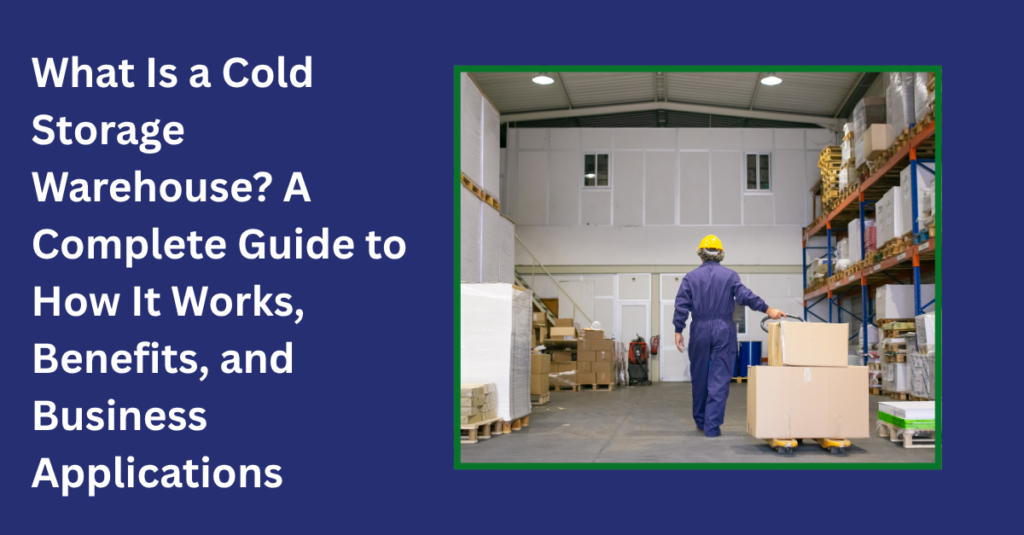
A cold storage warehouse is a temperature-controlled facility designed to store perishable products such as dairy, frozen foods, meat, seafood, fresh produce, and pharmaceuticals under specific temperature conditions. It helps preserve product quality, extends shelf life, reduces spoilage, and forms a critical part of an efficient cold chain supply network.
What is cold storage warehouse? A cold storage warehouse is a specialised facility that stores temperature-sensitive products in controlled environments to maintain their quality and safety. As India’s food supply chains become more complex, reliable cold storage is essential for businesses. JustDeliveries supports food and beverage brands with integrated cold storage and temperature-controlled logistics, helping businesses move products safely and efficiently across the supply chain. For businesses in western India, dedicated cold chain logistics mumbai services help keep this supply chain running smoothly.
What Is a Cold Storage Warehouse?
A cold storage warehouse is a specialised storage facility designed to maintain products at predetermined temperatures throughout their storage period. Unlike conventional warehouses, these facilities use advanced refrigeration systems, insulation, temperature monitoring, and inventory management technologies to preserve product integrity.
Understanding what is cold storage warehouse is important for businesses dealing with perishable goods. Maintaining the right temperature helps retain freshness, minimise spoilage, comply with food safety requirements, and ensure products reach customers in excellent condition.
Cold storage warehouses are an essential part of the cold chain, connecting manufacturers, distributors, retailers, restaurants, and quick commerce fulfilment centres through uninterrupted temperature-controlled logistics. In fast-growing markets, dependable cold chain logistics bangalore support helps maintain this connectivity across the supply chain.
Why Are Cold Storage Warehouses Important?
Businesses handling perishable products depend on cold storage to maintain quality from production to delivery.
Preserve Product Quality
Temperature-controlled environments help maintain the taste, texture, nutritional value, and freshness of products throughout storage.
Extend Shelf Life
Keeping products within recommended temperature ranges significantly slows deterioration, allowing businesses to reduce waste and manage inventory more efficiently.
Improve Food Safety
Cold storage helps minimise bacterial growth and supports compliance with food safety and quality standards.
Reduce Product Losses
Proper storage conditions reduce spoilage, damaged inventory, and unnecessary operational costs.
Support Modern Food Distribution
Growing demand from restaurants, supermarkets, cloud kitchens, and quick commerce platforms has made cold storage an essential logistics infrastructure. To better understand the fundamentals, it helps to first explore what is cold storage and how it supports modern food distribution.
How Does a Cold Storage Warehouse Work?
Understanding what is cold storage warehouse also means understanding how it operates.
Receiving and Inspection
Products are inspected upon arrival to verify quality, packaging, and temperature before being accepted into storage.
Temperature-Controlled Storage
Products are allocated to storage zones based on their required temperature ranges.
Inventory Management
Warehouse Management Systems (WMS) enable efficient stock rotation, batch tracking, and inventory visibility.
Continuous Temperature Monitoring
Sensors continuously monitor storage conditions, allowing immediate corrective action if temperatures fluctuate.
Order Processing and Dispatch
Orders are picked, packed, and transferred into refrigerated vehicles while maintaining temperature integrity throughout dispatch.
Different Temperature Zones Inside a Cold Storage Warehouse
| Storage Type | Typical Temperature | Common Products |
| Ambient | 15°C–25°C | Dry packaged foods |
| Chilled | 0°C–5°C | Dairy, beverages, fruits, vegetables |
| Frozen | -18°C | Frozen foods, meat, seafood |
| Deep Frozen | Below -25°C | Ice cream, specialised frozen products |
Each zone is designed to maintain ideal storage conditions for different product categories.
Types of Cold Storage Warehouses
Depending on operational requirements, businesses may choose different storage models.
Private Cold Storage
Owned and operated by individual companies for exclusive use.
Public Cold Storage
Shared facilities that offer flexible storage for multiple businesses.
Distribution Cold Storage
Facilities designed to support rapid movement of products between suppliers, retailers, and distribution centres.
Automated Cold Storage
Modern warehouses equipped with automation, advanced inventory systems, and digital monitoring technologies.
Multi-Client Warehousing
Shared facilities that help businesses optimise costs while benefiting from professional warehouse management.
Which Products Require Cold Storage?
Cold storage warehouses support numerous industries, including:
- Dairy products
- Frozen foods
- Meat and poultry
- Seafood
- Fruits and vegetables
- Bakery products
- Desserts
- Ready-to-cook meals
- Ready-to-eat foods
- Pharmaceuticals and healthcare products
For all these categories, understanding what is cold storage warehouse is essential because storage conditions directly affect product quality and shelf life. This is especially relevant for fresh produce, where dedicated cold storage for vegetables helps preserve quality and reduce spoilage.
Industries That Depend on Cold Storage
Several industries rely on temperature-controlled warehousing every day.
- Food manufacturers
- Restaurant chains
- Cloud kitchens
- QSR brands
- Dairy companies
- Beverage manufacturers
- Frozen food brands
- Ice cream companies
- FMCG businesses
- Pharmaceutical companies
The rapid expansion of India’s organised food industry has further increased the demand for dependable cold storage infrastructure. Comprehensive cold food storage solutions play a central role in supporting this growth.
Features of a Modern Cold Storage Warehouse
Today’s facilities use technology to improve efficiency and visibility across operations.
Key features include:
- High-performance insulated infrastructure
- Energy-efficient refrigeration systems
- Real-time temperature monitoring
- Warehouse Management Systems (WMS)
- Barcode and pallet tracking
- Inventory traceability
- Backup power systems
- Hygiene-focused storage environments
Businesses increasingly expect digital visibility alongside storage services.
For example, JustDeliveries’ HQ App provides a central dashboard where food and beverage brands can monitor live vehicle movement, temperature compliance, service-level agreements (SLAs), billing, and AI-driven performance insights in real time. This level of operational visibility enables businesses to make faster decisions while maintaining complete cold-chain transparency.
Benefits of Using a Cold Storage Warehouse
Choosing the right cold storage partner offers several advantages.
- Better product freshness
- Lower spoilage rates
- Improved inventory control
- Faster order fulfilment
- Regulatory compliance
- Scalable storage capacity
- Reduced operational losses
- Reliable distribution planning
Businesses searching what is cold storage warehouse often discover that the greatest value lies not only in storage but also in integrated logistics that maintain temperature throughout the supply chain. Businesses in the capital region can rely on dedicated cold chain logistics delhi support to complete this integration.
Cold Storage Warehouse vs. Cold Chain Logistics
A cold storage warehouse is one component of a broader cold chain.
While warehousing focuses on storing products under controlled temperatures, cold chain logistics includes refrigerated transportation, inventory movement, distribution planning, and last-mile or hub-to-hub delivery while maintaining temperature integrity.
This distinction is increasingly important as India’s quick commerce ecosystem expands.
Platforms such as Swiggy Instamart, Zepto, Blinkit, Amazon, JioMart, and BigBasket require dependable cold-chain operations to replenish inventory quickly. JustDeliveries supports this ecosystem by managing temperature-controlled hub-to-hub and dark store deliveries, backed by real-time vehicle tracking and continuous temperature monitoring to help businesses maintain product quality throughout transit. This includes dedicated cold chain logistics hyderabad operations supporting the region’s growing quick commerce sector.
Choosing the Right Cold Storage Warehouse
When evaluating providers, businesses should consider:
- Temperature capabilities
- Warehouse capacity
- Food safety practices
- Inventory visibility
- Digital tracking systems
- Geographic coverage
- Refrigerated transportation
- Operational scalability
- Industry expertise
- Real-time reporting
Selecting an experienced logistics partner ensures products remain protected throughout storage and distribution.
As highlighted by Mansi Mahansaria, effective cold-chain operations depend on combining warehousing, transportation, technology, and operational visibility rather than viewing storage as a standalone service.
Conclusion
Understanding what is cold storage warehouse helps businesses make informed decisions about protecting product quality, reducing waste, and improving supply chain efficiency. Modern cold storage facilities now combine advanced infrastructure, technology, inventory management, and transportation to create seamless cold-chain operations.
Whether you’re managing restaurant supplies, frozen foods, dairy products, cloud kitchens, or quick commerce inventory, partnering with an experienced logistics provider can simplify operations and support business growth. JustDeliveries offers integrated cold storage, warehousing, and temperature-controlled transportation solutions tailored for the food and beverage industry. As Mansi Mahansaria explains, combining operational expertise with real-time visibility enables businesses to build more resilient and efficient cold chains.
Frequently Asked Questions
Q1. What is a cold storage warehouse?
A cold storage warehouse is a specialised facility that stores temperature-sensitive products under controlled conditions to preserve quality, freshness, and safety.
Q2. How does a cold storage warehouse work?
It receives products, stores them in designated temperature zones, continuously monitors conditions, manages inventory, and dispatches goods through temperature-controlled logistics.
Q3. Can cold storage warehouses store different products together?
Yes, provided they are stored in separate temperature-controlled zones suitable for each product category and follow appropriate food safety practices.
Q4. Is a cold storage warehouse different from a regular warehouse?
Yes. A cold storage warehouse uses refrigeration systems, insulation, and continuous monitoring to maintain specific temperatures, unlike conventional warehouses.
Q5. Will cold storage reduce food spoilage?
Yes. Maintaining recommended storage temperatures helps extend shelf life, preserve freshness, and significantly reduce spoilage and waste.
Q6. Why is temperature monitoring important in cold storage?
Continuous monitoring ensures products remain within safe temperature ranges, reducing quality risks and supporting compliance with food safety standards.
Q7. How do quick commerce companies maintain cold-chain quality?
They rely on temperature-controlled warehousing, refrigerated transportation, real-time tracking, and efficient hub-to-hub distribution to keep products within required temperature ranges.
Q8. What industries benefit most from cold storage warehouses?
Food manufacturers, restaurant chains, cloud kitchens, dairy businesses, frozen food companies, seafood suppliers, beverage brands, pharmaceutical companies, and quick commerce operators all benefit from reliable cold storage infrastructure.

Mansi Mahansaria
I’m Mansi Mahansaria, CEO and Founder of JustDeliveries, a B2B logistics company specializing in the food and beverage sector. With a background in Chemical Technology (ICT Mumbai), an MBA (FMS Delhi), and experience at IDFC Private Equity and Tata Group, I’ve built a plug-and-play logistics network helping F&B brands scale efficiently. I also share insights on entrepreneurship and logistics at industry and academic events.