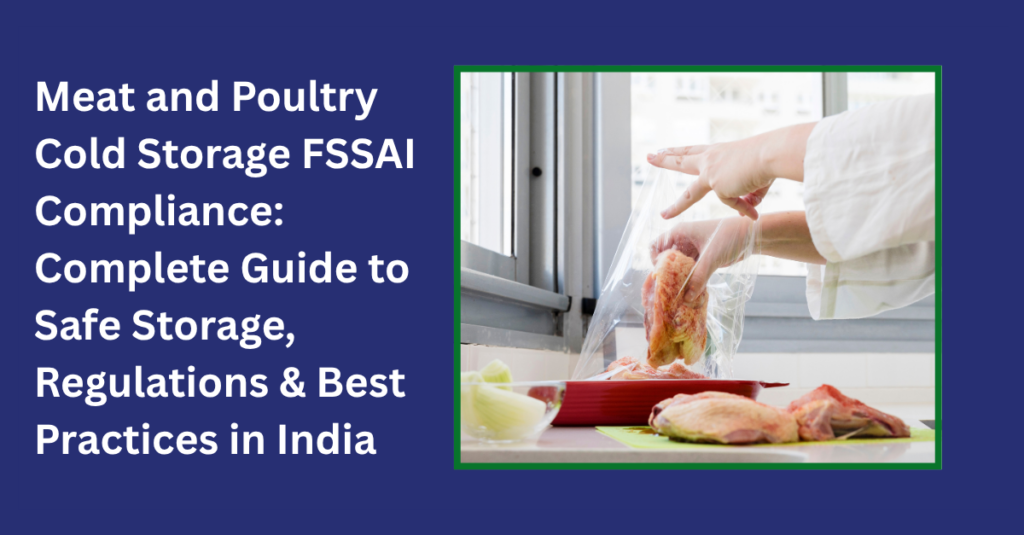
Meat and poultry cold storage FSSAI compliance means storing, handling, and transporting meat products according to FSSAI food safety standards. Businesses must maintain approved temperatures, follow hygiene protocols, prevent cross-contamination, keep accurate records, and ensure uninterrupted cold chain logistics to protect food quality, consumer safety, and regulatory compliance.
Meat and poultry cold storage FSSAI compliance is essential for every food business that stores or transports fresh or frozen meat in India. Following FSSAI guidelines helps prevent spoilage, ensures food safety, and builds customer trust. At JustDeliveries, we help food businesses maintain an uninterrupted cold chain with temperature-controlled logistics, making compliance easier while supporting business growth. Here’s everything you need to know.
What Is Meat and Poultry Cold Storage FSSAI Compliance?
Fresh meat and poultry are among the most temperature-sensitive food products. Even short exposure to unsuitable temperatures can encourage bacterial growth, reduce shelf life, and compromise food safety. Businesses new to this space often start by understanding what is cold storage and how it applies specifically to perishable meat products.
Meat and poultry cold storage FSSAI compliance refers to adhering to the standards laid down by the Food Safety and Standards Authority of India (FSSAI) for storing, handling, and transporting meat products. These regulations cover every stage of the cold chain—from processing facilities and cold storage warehouses to refrigerated transportation and final delivery.
Businesses that typically require compliance include:
- Meat processing units
- Poultry processors
- Frozen food manufacturers
- Cold storage operators
- Restaurants and QSR chains
- Cloud kitchens
- Food distributors
- Third-party logistics providers
Maintaining compliance protects both consumers and businesses by ensuring products remain safe throughout their journey.
Why FSSAI Compliance Matters for Meat Storage
Food safety regulations are designed to reduce contamination risks and preserve product quality. Failure to comply can result in food spoilage, financial losses, legal penalties, and damaged brand reputation.
Implementing meat and poultry cold storage FSSAI compliance helps businesses:
- Maintain product freshness
- Extend shelf life
- Reduce food wastage
- Improve customer confidence
- Prepare for audits and inspections
- Support retail and export requirements
Compliance is no longer just a regulatory obligation—it has become a competitive advantage for food businesses.
Key Requirements for FSSAI Compliance for Meat Storage
Meeting FSSAI compliance for meat storage involves more than simply operating a refrigerated warehouse. Businesses should establish comprehensive food safety procedures covering infrastructure, people, and documentation.
Some essential requirements include:
Valid FSSAI Licence
Businesses must obtain the appropriate FSSAI registration or licence based on turnover and operational scale.
Temperature-Controlled Storage
Fresh and frozen products should be stored within recommended temperature ranges using calibrated refrigeration systems. Reliable frozen food transportation India networks play an equally important role in preserving these temperature ranges once products leave storage.
Hygiene and Sanitation
Cold rooms, storage racks, equipment, and loading areas should be cleaned and sanitised regularly to minimise contamination.
Pest Management
Regular inspections and preventive pest control measures help maintain food-safe storage environments.
Employee Hygiene
Staff should receive food safety training and follow proper hygiene practices, including protective clothing and safe handling procedures.
Documentation
Temperature logs, cleaning schedules, maintenance records, and product traceability documents should be updated consistently for inspections.
Poultry Cold Storage Best Practices
Following poultry cold storage best practices helps businesses maintain product quality from processing to delivery. These principles closely mirror seafood cold storage and blast freezing practices, where rapid temperature control immediately after processing is equally critical.
Some proven practices include:
- Rapid chilling immediately after processing
- Continuous temperature monitoring
- FIFO (First In, First Out) inventory management
- FEFO (First Expired, First Out) where applicable
- Separate storage for raw and processed products
- Minimising door opening times
- Using food-grade packaging
- Routine equipment calibration
Regular staff training is equally important, as human handling directly impacts food safety outcomes.
Meat Storage Regulations in India
India has established clear meat storage regulations India businesses must follow under FSSAI guidelines.
These regulations focus on:
- Safe storage temperatures
- Hygienic infrastructure
- Product traceability
- Batch identification
- Proper packaging
- Cleaning and sanitation
- Transportation under controlled temperatures
- Recall readiness
Businesses are also expected to maintain complete records that demonstrate compliance during inspections and audits.
Technology Is Transforming Cold Chain Compliance
Modern cold storage operations increasingly rely on digital tools to improve accuracy and reduce manual errors.
Real-time monitoring systems can instantly detect temperature deviations, helping operators take corrective action before products are compromised.
Similarly, GPS-enabled fleet tracking improves delivery visibility while digital documentation simplifies regulatory reporting.
For growing food brands, technology provides better operational control while strengthening food safety standards.
Why Cold Chain Logistics Is as Important as Cold Storage
Compliance doesn’t end inside the warehouse.
Maintaining meat and poultry cold storage FSSAI compliance requires uninterrupted temperature control during transportation as well.
Every loading point, distribution centre, and retail destination must preserve the required temperature range.
This is where specialised cold chain logistics become essential.
JustDeliveries supports food businesses with temperature-controlled transportation, helping maintain product integrity from warehouse dispatch to final destination. Our operations serve restaurants, food manufacturers, distributors, cloud kitchens, and organised retail networks while ensuring reliable cold-chain movement. In fast-growing markets, dedicated cold chain logistics Bangalore operations reflect how this network adapts to regional demand.
As quick commerce continues transforming food distribution across India, JustDeliveries powers temperature-controlled logistics for Swiggy Instamart, Zepto, Blinkit, Amazon, JioMart, and BigBasket, managing hub-to-hub and dark store deliveries with real-time vehicle tracking and continuous temperature monitoring to help businesses maintain compliance even under rapid delivery timelines. In high-demand regions, cold chain logistics Delhi operations illustrate how this level of service scales to meet rapid replenishment needs.
Smarter Operations with the JustDeliveries HQ App
Operational visibility plays a significant role in maintaining compliance across large distribution networks.
The JustDeliveries HQ App acts as a central dashboard for food and beverage brands, enabling teams to monitor live vehicle movement, temperature compliance, service level agreements (SLAs), billing, and AI-driven performance insights in real time.
Instead of relying on manual follow-ups, businesses gain complete visibility across their cold chain operations, allowing quicker decisions and better compliance management. This same visibility supports growing networks such as cold chain logistics Hyderabad operations, where real-time tracking helps maintain consistent compliance across distribution points.
As highlighted by Mansi Mahansaria, author at JustDeliveries, combining technology with operational discipline helps businesses build resilient and compliant cold chains capable of supporting long-term growth.
A Practical Compliance Checklist
Before every shipment, ensure you have:
- Valid FSSAI licence
- Temperature monitoring system
- Calibrated refrigeration equipment
- Daily sanitation schedule
- Pest control records
- Batch tracking system
- Product traceability documentation
- Staff hygiene training
- Transport validation
- Emergency response plan
Regular internal audits help identify potential gaps before regulatory inspections.
Conclusion
Maintaining meat and poultry cold storage FSSAI compliance requires consistent attention to storage conditions, documentation, hygiene, transportation, and staff training. Businesses that invest in reliable cold chain infrastructure not only meet regulatory expectations but also reduce wastage, protect product quality, and strengthen customer confidence.
Whether you’re supplying restaurants, retailers, cloud kitchens, or quick commerce platforms, an uninterrupted cold chain is essential for long-term success. This is true for every link in the chain, including each frozen food supplier relying on consistent temperature control to protect product quality. As Mansi Mahansaria explains, compliance becomes significantly easier when supported by technology, trained teams, and dependable logistics partners.
Keep Your Cold Chain Compliant with JustDeliveries
If your business depends on transporting temperature-sensitive meat and poultry products, JustDeliveries offers end-to-end cold chain logistics designed specifically for the food and beverage industry. From temperature-controlled transportation and real-time monitoring to AI-powered operational visibility through the HQ App, we help businesses maintain meat and poultry cold storage FSSAI compliance while serving modern distribution channels, including quick commerce, organised retail, and large-scale food service operations. Partner with JustDeliveries to build a smarter, safer, and more reliable cold chain.
Frequently Asked Questions
Q1. How does meat and poultry cold storage FSSAI compliance improve food safety?
It helps prevent bacterial growth, maintains proper storage temperatures, reduces contamination risks, and ensures meat products remain safe throughout storage and transportation.
Q2. How often should cold storage temperatures be monitored?
Temperature should be monitored continuously using automated systems wherever possible, with regular record-keeping to demonstrate compliance during audits.
Q3. Can fresh meat and frozen poultry be stored together?
They should only be stored together if proper segregation, packaging, and designated storage zones prevent cross-contamination and maintain required temperature conditions.
Q4. Can technology help maintain FSSAI compliance for meat storage?
Yes. Digital temperature monitoring, GPS tracking, automated alerts, and compliance dashboards improve accuracy, traceability, and operational visibility.
Q5. Is FSSAI compliance mandatory for meat storage businesses?
Yes. Businesses involved in processing, storing, transporting, or selling meat and poultry products must comply with applicable FSSAI regulations and licensing requirements.
Q6. Will poor temperature control affect product quality?
Yes. Temperature fluctuations can shorten shelf life, increase spoilage, encourage microbial growth, and compromise food safety.
Q7. What documents should businesses maintain for compliance?
Businesses should keep temperature logs, cleaning records, maintenance schedules, pest control reports, batch tracking information, and product traceability documentation.
Q8. Why is an uninterrupted cold chain important for meat transportation?
An uninterrupted cold chain preserves product quality, ensures regulatory compliance, reduces food wastage, and helps businesses deliver safe products to customers without temperature abuse.

Mansi Mahansaria
I’m Mansi Mahansaria, CEO and Founder of JustDeliveries, a B2B logistics company specializing in the food and beverage sector. With a background in Chemical Technology (ICT Mumbai), an MBA (FMS Delhi), and experience at IDFC Private Equity and Tata Group, I’ve built a plug-and-play logistics network helping F&B brands scale efficiently. I also share insights on entrepreneurship and logistics at industry and academic events.