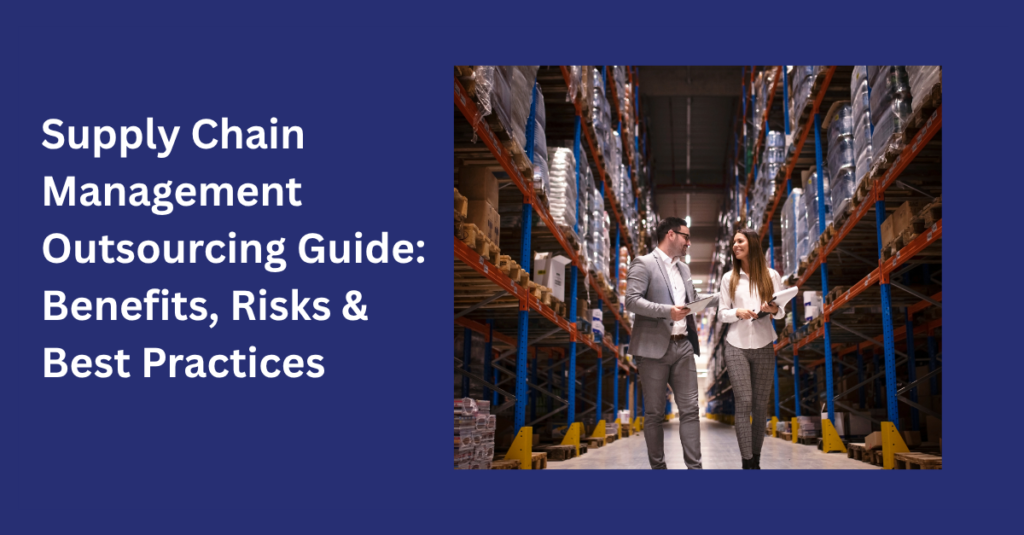
Supply chain management outsourcing helps businesses improve logistics efficiency, reduce operational costs, scale faster, and access specialized expertise without investing heavily in infrastructure. From warehousing and transportation to cold chain and last-mile delivery, outsourcing enables companies to focus on growth while experienced logistics partners manage complex supply chain operations efficiently.
Supply chain management outsourcing allows businesses to delegate logistics, warehousing, transportation, and fulfillment operations to specialized providers like JustDeliveries. As customer expectations, delivery timelines, and operational costs continue to rise, outsourcing in supply chain management has become a strategic way to improve efficiency, scalability, and service quality without building everything in-house.
What Is Supply Chain Outsourcing?
Supply chain outsourcing refers to the practice of hiring external logistics and operational partners to manage specific parts — or the entire process — of a company’s supply chain.
Instead of handling warehousing, inventory movement, transportation, procurement, and fulfillment internally, businesses work with supply chain outsourcing providers that already have the infrastructure, technology, and operational expertise required to manage these functions efficiently. To better understand how these functions interconnect, it helps to first understand what is logistics and supply chain management and how each component contributes to overall operational performance.
Today, supply chain and outsourcing strategies are widely used across industries such as FMCG, ecommerce, pharmaceuticals, retail, and food distribution.
Common Functions Businesses Outsource
Companies may outsource:
- Transportation and freight management
- Warehousing and storage
- Inventory management
- Last-mile delivery
- Cold chain logistics
- Procurement support
- Order fulfillment
- Reverse logistics and returns management
For businesses dealing with perishables, temperature-sensitive products, or multi-city distribution, outsourcing often becomes operationally necessary rather than optional.
Why Businesses Are Choosing Outsourcing in Supply Chain Management
Modern supply chains are more complex than ever before. Businesses are expected to deliver faster, maintain inventory accuracy, reduce costs, and operate across multiple regions simultaneously.
Managing all of this internally can become expensive and inefficient.
Rising Operational Costs
Warehousing rent, fleet maintenance, fuel prices, labor costs, and technology investments continue to increase. Building an in-house logistics network requires significant capital expenditure and ongoing operational management.
Supply chain outsourcing helps companies convert fixed costs into flexible operational expenses while improving efficiency.
Need for Scalability
Businesses often experience fluctuating demand during festive seasons, sales campaigns, or market expansion phases.
An outsourced supply chain partner can quickly scale operations without forcing businesses to invest in additional warehouses, vehicles, or manpower.
This flexibility is especially valuable for ecommerce and FMCG brands operating across multiple cities.
Access to Technology & Infrastructure
Experienced supply chain outsourcing providers already operate with advanced systems such as:
- Real-time tracking
- Warehouse management systems
- Route optimization tools
- Inventory visibility platforms
- Automated reporting dashboards
Instead of building these systems from scratch, businesses can immediately benefit from established logistics technology.
Faster Deliveries & Better Customer Experience
Consumers now expect same-day or next-day deliveries in many categories.
Efficient logistics operations directly influence customer satisfaction, repeat purchases, and brand reputation. Outsourcing enables businesses to optimize delivery timelines while maintaining operational consistency.
According to logistics industry observations shared by supply chain experts including Mansi Mahansaria at JustDeliveries, companies that streamline their logistics networks often improve delivery performance and inventory visibility simultaneously.
Key Benefits of Supply Chain Outsourcing
1. Reduced Operational Costs
One of the biggest advantages of outsourcing in supply chain management is cost optimization.
Businesses can reduce:
- Warehouse infrastructure costs
- Fleet ownership expenses
- Labor overhead
- Technology investments
- Inventory holding inefficiencies
Because logistics providers serve multiple clients, they benefit from economies of scale that individual businesses may not achieve independently.
2. Better Focus on Core Business Functions
Managing logistics internally can divert attention away from product development, customer acquisition, and strategic growth.
Outsourcing allows businesses to focus on:
- Sales and marketing
- Product innovation
- Customer experience
- Market expansion
- Brand building
while logistics experts manage operational execution.
3. Access to Specialized Expertise
Supply chains involve complex coordination between suppliers, warehouses, transport networks, and customers.
Established outsourcing providers bring operational expertise in:
- Route planning
- Cold chain management
- Inventory optimization
- Demand forecasting
- Regulatory compliance
- Risk management
This experience becomes particularly valuable during disruptions or peak demand periods.
4. Improved Risk Management
Supply chains are vulnerable to:
- Transportation delays
- Demand fluctuations
- Fuel price increases
- Inventory shortages
- Weather disruptions
- Infrastructure challenges
Experienced logistics partners typically have contingency plans, diversified transportation networks, and operational redundancies that help reduce disruptions.
5. Enhanced Visibility & Data Tracking
Modern logistics providers offer advanced monitoring tools that provide:
- Real-time shipment tracking
- Inventory visibility
- Order status updates
- Performance analytics
- Delivery reporting
This improves decision-making and operational transparency.
6. Faster Market Expansion
Businesses entering new cities or regions can use outsourced logistics networks instead of building infrastructure from scratch.
This significantly reduces expansion timelines and investment risks.
Challenges & Risks of Supply Chain Outsourcing
Although outsourcing offers several advantages, businesses should also understand the potential risks involved.
Loss of Operational Control
When operations are managed externally, businesses may feel less direct control over daily logistics activities.
This is why choosing the right partner and maintaining clear communication channels is essential.
Vendor Dependency Risks
Relying heavily on one logistics provider can create operational dependency.
If the provider faces disruptions, service quality issues, or financial instability, the business may experience downstream impacts.
Data Security & Compliance Concerns
Supply chains often involve sensitive operational and customer data.
Businesses must ensure their outsourcing partners follow proper compliance standards, cybersecurity measures, and data protection practices.
Hidden Costs
Some outsourcing contracts may contain additional charges related to:
- Storage extensions
- Fuel surcharges
- Returns handling
- Emergency transportation
- Packaging requirements
Transparent pricing and clearly defined service agreements help prevent unexpected expenses.
Communication Gaps
Operational delays often occur when businesses and logistics providers lack proper coordination.
Strong reporting systems and dedicated account management significantly improve collaboration.
How to Choose the Right Supply Chain Outsourcing Provider
Not all logistics providers offer the same operational capabilities. Choosing the right partner requires careful evaluation.
Assess Industry Experience
Look for providers with proven expertise in your industry.
For example:
- FMCG businesses require fast inventory movement
- Pharmaceutical companies require strict cold chain compliance
- Ecommerce brands require flexible fulfillment operations
Industry-specific experience improves execution quality.
Evaluate Technology Capabilities
Modern supply chain outsourcing providers should offer:
- Real-time tracking
- Inventory dashboards
- Automated reporting
- Data analytics
- Order management integration
Technology improves both operational visibility and customer experience.
Review Infrastructure Strength
A reliable logistics provider should have:
- Well-connected warehouses
- Transportation fleets
- Cold storage facilities
- Regional distribution capabilities
- Scalable fulfillment systems
Infrastructure quality directly impacts operational efficiency.
Check Geographic Reach
Businesses planning regional or national expansion should evaluate whether the provider can support distribution across target markets.
Understand Service-Level Agreements (SLAs)
Clear SLAs help define:
- Delivery timelines
- Inventory accuracy
- Damage thresholds
- Escalation procedures
- Performance metrics
This improves accountability and operational transparency.
Review Client Reputation
Customer reviews, industry partnerships, and operational case studies often reveal the provider’s reliability and long-term performance.
As highlighted by Mansi Mahansaria through operational insights at JustDeliveries, businesses should prioritize logistics partners that combine infrastructure strength with execution consistency and transparent communication.
Industries That Benefit Most from Supply Chain Outsourcing
Food & Beverage
Food distribution requires:
- Temperature control
- Fast delivery cycles
- Inventory freshness management
- Reliable cold chain systems
Categories like the ice cream supply chain in India illustrate just how critical specialized outsourcing is where maintaining precise freezing temperatures from warehouse to last-mile delivery can directly determine product quality and customer satisfaction.
FMCG
Fast-moving consumer goods companies depend on:
- High inventory turnover
- Multi-location distribution
- Retail replenishment
- Last-mile efficiency
Specialized logistics partners help optimize these complex operations.
Ecommerce & Retail
Ecommerce businesses need:
- Fast order fulfillment
- Flexible warehousing
- Reverse logistics management
- Peak-season scalability
Outsourced supply chain operations improve delivery speed and customer satisfaction.
Pharmaceuticals
Pharmaceutical logistics require strict compliance and temperature-sensitive handling.
Cold chain expertise becomes critical for operational reliability.
Manufacturing
Manufacturers often outsource transportation, procurement coordination, and warehouse management to improve production efficiency and reduce operational bottlenecks.
Emerging Trends in Supply Chain and Outsourcing
The future of supply chain management outsourcing is becoming increasingly technology-driven.
AI & Predictive Logistics
Artificial intelligence is helping logistics companies:
- Forecast demand
- Optimize routes
- Reduce fuel consumption
- Improve inventory planning
Real-Time Tracking Systems
Businesses increasingly expect complete shipment visibility across every stage of the supply chain.
IoT-enabled systems now provide live operational monitoring.
Sustainable Logistics
Companies are investing in:
- Route optimization
- Fuel-efficient transportation
- Green warehousing
- Reduced packaging waste
Sustainability is becoming an important supply chain priority.
Hyperlocal Distribution Models
Faster delivery expectations are encouraging businesses to establish localized fulfillment networks for improved last-mile efficiency. Providers offering cold chain logistics in Delhi are a strong example of how hyperlocal infrastructure is being built to serve dense urban markets with temperature-sensitive products more reliably.
Warehouse Automation
Automation technologies such as barcode scanning, robotics, and smart inventory systems are improving warehouse productivity and accuracy.
Best Practices for Successful Supply Chain Outsourcing
Businesses that outsource successfully usually follow structured operational strategies.
Define Clear KPIs
Measure metrics such as:
- Delivery accuracy
- Order fulfillment speed
- Inventory accuracy
- Transportation efficiency
- Customer satisfaction
Build Long-Term Partnerships
Strong logistics partnerships improve operational alignment and service consistency over time.
Maintain Operational Visibility
Businesses should regularly monitor performance reports and maintain active communication with logistics teams.
Integrate Technology Systems
Integrated systems improve coordination between:
- Inventory management
- Order processing
- Delivery tracking
- Reporting functions
Create Risk Mitigation Plans
Prepare contingency plans for:
- Transportation disruptions
- Seasonal demand spikes
- Supplier delays
- Inventory shortages
Proactive planning improves resilience.
Why Businesses Trust JustDeliveries for Supply Chain Outsourcing
As supply chains become increasingly complex, businesses need logistics partners that combine operational expertise, technology, and scalable infrastructure.
JustDeliveries supports businesses with:
- B2B logistics solutions
- Last-mile delivery services
- Cold chain logistics
- Multi-city distribution
- Warehouse management
- Scalable fulfillment operations
With growing expertise in food, FMCG, and temperature-controlled logistics, JustDeliveries helps businesses improve operational efficiency while maintaining service reliability across perishable and ambient product categories.
Their infrastructure-driven approach enables brands to simplify logistics complexity and focus on sustainable growth.
Conclusion
Supply chain management outsourcing is no longer simply about reducing operational costs. It has become a strategic business decision that improves scalability, operational resilience, delivery efficiency, and customer experience.
As markets become more competitive and customer expectations continue evolving, businesses that partner with experienced logistics providers gain the flexibility and operational strength required to grow sustainably.
Whether managing warehousing, transportation, fulfillment, or cold chain logistics, choosing the right outsourcing partner can significantly influence long-term business performance. Many businesses find it useful to understand what is the difference between logistics and supply chain management before selecting a partner, as this clarity helps define the exact scope of services they need to outsource.
Ready to Simplify Your Supply Chain Operations?
If your business is looking to improve logistics efficiency, reduce operational complexity, and scale distribution seamlessly, JustDeliveries offers technology-enabled supply chain solutions tailored for modern businesses.
From warehousing and cold chain logistics to last-mile delivery and fulfillment operations, working with a trusted third-party logistics company in India like JustDeliveries helps brands build smarter, faster, and more reliable supply chains.
Frequently Asked Questions
Q1. What is supply chain outsourcing?
Supply chain outsourcing is the process of hiring external providers to manage logistics functions such as transportation, warehousing, fulfillment, inventory management, and distribution operations.
Q2. Why do companies use outsourcing in supply chain management?
Companies outsource supply chain operations to reduce costs, improve scalability, access logistics expertise, enhance delivery performance, and focus more on core business activities.
Q3. How do supply chain outsourcing providers improve efficiency?
They use established infrastructure, advanced logistics technology, optimized transportation networks, and operational expertise to streamline inventory movement and fulfillment processes.
Q4. Can small businesses benefit from supply chain outsourcing?
Yes. Small businesses often benefit significantly because outsourcing reduces the need for large infrastructure investments while providing access to professional logistics networks and scalable operations.
Q5. Is supply chain outsourcing cost-effective?
In many cases, yes. Businesses can reduce fixed operational expenses, improve delivery efficiency, minimize inventory inefficiencies, and avoid large capital investments in warehousing or transportation.
Q6. Will outsourcing reduce operational control?
Outsourcing may reduce direct day-to-day oversight, but clear communication systems, service-level agreements, and real-time reporting tools help businesses maintain operational visibility and accountability.
Q7. How do businesses choose the right supply chain outsourcing provider?
Businesses should evaluate providers based on industry expertise, technology capabilities, infrastructure strength, geographic coverage, service quality, and operational transparency.
Q8. What industries benefit the most from supply chain and outsourcing strategies?
Industries such as FMCG, food & beverage, ecommerce, pharmaceuticals, retail, and manufacturing benefit greatly because they require efficient inventory movement, fast deliveries, and scalable logistics operations.

Mansi Mahansaria
I’m Mansi Mahansaria, CEO and Founder of JustDeliveries, a B2B logistics company specializing in the food and beverage sector. With a background in Chemical Technology (ICT Mumbai), an MBA (FMS Delhi), and experience at IDFC Private Equity and Tata Group, I’ve built a plug-and-play logistics network helping F&B brands scale efficiently. I also share insights on entrepreneurship and logistics at industry and academic events.