Cold storage manufacturers in India help businesses store and transport temperature-sensitive products safely through refrigerated warehousing, cold rooms, and integrated cold chain logistics. Modern solutions now include IoT monitoring, energy-efficient refrigeration, real-time tracking, and scalable infrastructure that reduce spoilage, improve shelf life, and streamline food and pharmaceutical supply chains.
Cold storage manufacturers in India play a critical role in helping food, pharma, dairy, and FMCG businesses maintain product quality during storage and transportation. As consumer demand for fresh and frozen products grows, companies like JustDeliveries are helping businesses build more reliable, technology-driven cold chain operations across multiple cities.
Why Cold Storage Infrastructure is Critical in India
India’s supply chain ecosystem has changed dramatically over the last decade. The rapid growth of online grocery delivery, quick commerce, cloud kitchens, frozen foods, and pharmaceutical logistics has increased the need for dependable cold chain infrastructure.
Without proper temperature-controlled systems, businesses face massive losses due to spoilage, reduced shelf life, delayed deliveries, and inconsistent product quality.
Cold storage manufacturers in India are now supporting industries such as:
- Food & Beverage
- Dairy
- Frozen Foods
- Seafood & Meat
- Pharmaceuticals
- Agriculture
- QSR and Restaurant Chains
For businesses dealing with perishable inventory, cold storage is no longer optional — it is an operational necessity.
What Do Cold Storage Manufacturers in India Provide?
Modern cold storage solutions extend far beyond refrigerated rooms. Today’s systems combine warehousing, transportation, tracking, automation, and inventory visibility into one connected logistics network.
Modular Cold Rooms
Modular cold rooms allow businesses to scale storage based on operational requirements. These systems are widely used by restaurants, food brands, and pharmaceutical companies because they are flexible, energy-efficient, and easier to expand.
Refrigerated Warehousing
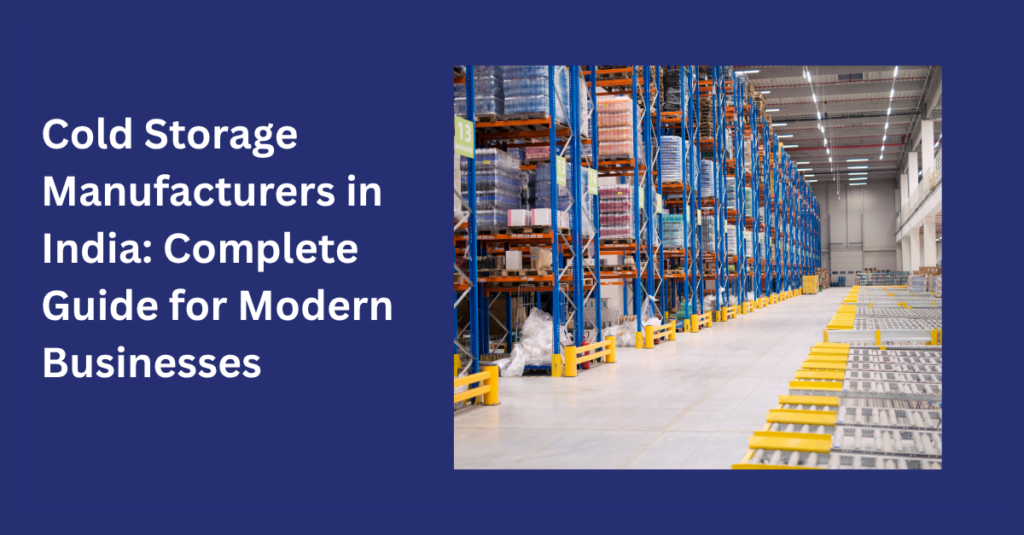
Large-scale refrigerated warehouses support bulk inventory storage with different temperature zones for frozen, chilled, and ambient-sensitive products.
These facilities help businesses:
- Reduce product wastage
- Maintain freshness
- Improve stock planning
- Streamline distribution
Cold Chain Transportation
Reliable refrigerated transportation is equally important. Reefer vehicles maintain consistent temperatures during transit and help businesses avoid quality deterioration.
Advanced cold chain logistics systems now include:
- GPS-enabled tracking
- Real-time temperature monitoring
- Route optimization
- Delivery visibility dashboards
Smart Monitoring & Automation
Many cold storage manufacturers in India are adopting smart technologies such as:
- IoT sensors
- Automated alerts
- AI-based route planning
- Predictive maintenance systems
These technologies help businesses improve operational efficiency while minimizing risks.
Key Factors to Consider Before Choosing a Cold Storage Partner
Choosing the right cold storage provider can directly impact product quality, customer experience, and operational costs.
Temperature Stability
Different products require different temperature ranges. Frozen foods, dairy products, pharmaceuticals, and fresh produce all have unique storage requirements.
A reliable cold storage provider must maintain stable temperatures consistently without fluctuations.
Energy Efficiency
Electricity costs are one of the biggest operational expenses in cold storage management. Understanding cold storage cost in India is essential for businesses planning to invest in or outsource refrigeration infrastructure. Modern refrigeration systems are designed to optimize energy consumption while maintaining cooling efficiency, which can significantly reduce long-term operational costs.
Energy-efficient systems can significantly reduce long-term operational costs.
Scalability
As businesses grow, logistics requirements also expand. A good cold storage partner should offer:
- Multi-city operations
- Flexible warehousing
- Expansion support
- Distribution scalability
Compliance & Certifications
Cold storage facilities should follow industry standards and certifications such as:
- FSSAI compliance
- HACCP standards
- ISO certifications
- Food safety regulations
These certifications ensure product safety and operational reliability.
Technology Capabilities
Modern businesses need complete visibility across their supply chain. Technology-driven cold chain systems help track inventory movement, monitor delivery timelines, and reduce operational delays.
According to logistics insights shared by JustDeliveries, real-time tracking and integrated logistics visibility are becoming essential for businesses handling perishable goods.
Latest Trends Transforming Cold Storage in India
The cold storage industry in India is evolving rapidly due to technological advancements and changing consumer expectations.
- IoT-Enabled Cold Storage: IoT sensors continuously monitor temperature, humidity, and equipment performance. These systems help detect issues early and reduce the risk of spoilage.
- AI-Based Route Optimization: AI-powered route planning helps delivery fleets reduce fuel consumption, shorten delivery timelines, and maintain product freshness.
- Shared Cold Storage Infrastructure: Shared logistics models are becoming increasingly popular among growing food brands and cloud kitchens. Instead of investing heavily in private infrastructure, businesses can use shared third-party logistics networks to optimize costs.
- Sustainable Refrigeration Solutions: Sustainability is now a major focus area for cold storage manufacturers in India. Businesses are increasingly adopting:
- Eco-friendly refrigerants
- Energy-efficient compressors
- Solar-assisted cooling systems
- Smart energy management technologies
These systems reduce environmental impact while improving operational efficiency.
Challenges Businesses Face Without Reliable Cold Storage
Businesses that lack dependable cold chain infrastructure often struggle with multiple operational issues.
Inventory Losses
Temperature fluctuations can damage perishable products within hours, especially in categories like dairy, seafood, frozen desserts, and pharmaceuticals.
Product Quality Issues
Inconsistent cooling affects product texture, taste, freshness, and safety.
For example:
- Ice cream products may melt during transit a challenge that directly affects the ice cream supply chain in India, where maintaining consistent freezing temperatures across last-mile delivery is critical
- Fresh produce can lose shelf life rapidly
- Frozen food packaging may deteriorate
Delivery Delays
Poor logistics coordination often leads to delayed deliveries and customer dissatisfaction.
High Operational Costs
Businesses without optimized cold chain systems often experience:
- Increased wastage
- Higher return rates
- Fuel inefficiencies
- Inventory planning challenges
How Technology is Improving Cold Chain Logistics in India
Technology has transformed the way cold chain logistics operates across India.
- Real-Time Tracking Systems: Businesses can now monitor deliveries in real time and receive instant alerts for temperature deviations.
- Centralized Logistics Visibility: Integrated dashboards allow companies to track inventory, warehouse movement, and transportation from one platform.
- Automated Temperature Alerts: Automated notifications help logistics teams respond quickly to potential risks before inventory gets damaged.
- Data-Driven Inventory Planning: Advanced analytics improve stock forecasting, demand planning, and route management.
As highlighted by industry professionals like Mansi Mahansaria from JustDeliveries, technology-enabled cold chain systems are helping food businesses reduce inefficiencies while improving delivery consistency.
Why Food & Beverage Brands Need Integrated Cold Chain Partners
Modern food and beverage brands require more than basic warehousing. They need end-to-end cold chain support that combines storage, transportation, tracking, and distribution. Many businesses are now turning to reliable cold storage suppliers in India who offer integrated infrastructure rather than standalone facilities.
An integrated cold chain partner helps businesses:
- Expand into new markets faster
- Reduce wastage
- Improve customer satisfaction
- Maintain product consistency
- Streamline operations
For rapidly growing food brands, scalable cold chain infrastructure can become a major competitive advantage.
Future of Cold Storage Manufacturers in India
The future of cold storage in India will be driven by automation, sustainability, and data-driven logistics systems.
- Growth of Organized Cold Chains: Organized cold chain networks are expected to expand significantly across Tier 2 and Tier 3 cities.
- Quick Commerce Expansion: The rise of rapid grocery delivery platforms is increasing demand for localized refrigerated warehousing and faster distribution models.
- AI & Predictive Logistics: Predictive analytics will help businesses anticipate inventory movement, reduce delays, and improve operational planning.
- Smart Warehousing: Automated systems, robotics, and IoT-enabled facilities are expected to become more common across the cold storage sector.
Industry experts, including Mansi Mahansaria, continue to emphasize the importance of technology-led logistics infrastructure for businesses handling temperature-sensitive products at scale.
How JustDeliveries Supports Modern Cold Chain Operations
JustDeliveries helps food and beverage brands manage temperature-sensitive logistics more efficiently through technology-enabled cold chain infrastructure. For businesses trying to understand what is the difference between logistics and supply chain management, JustDeliveries bridges both by combining storage, movement, and end-to-end visibility into a single integrated solution.
Their solutions support businesses with:
- Temperature-controlled transportation
- Refrigerated warehousing
- Multi-city distribution
- Real-time shipment visibility
- Shared logistics infrastructure
- Inventory movement optimization
By combining warehousing and transportation into one integrated system, JustDeliveries helps brands maintain product quality while improving operational efficiency.
Businesses working with scalable cold chain partners are often better equipped to manage growth, maintain freshness standards, and reduce supply chain disruptions.
Conclusion
Cold storage manufacturers in India are becoming increasingly important as businesses rely more heavily on temperature-controlled logistics to maintain product quality and operational efficiency.
From refrigerated warehousing and smart monitoring to AI-driven logistics and sustainable refrigeration, the industry is rapidly evolving to meet modern business demands.
Choosing the right cold chain partner can help businesses reduce wastage, improve delivery reliability, optimize costs, and scale operations more efficiently.
For food and beverage brands looking to strengthen their cold chain operations, integrated logistics providers like JustDeliveries offer a more connected and technology-driven approach to managing perishable supply chains.
Frequently Asked Questions
Q1. How do cold storage manufacturers in India help businesses?
Cold storage manufacturers help businesses safely store and transport temperature-sensitive products through refrigerated warehousing, cold rooms, and cold chain logistics systems that maintain product quality and reduce spoilage.
Q2. How can businesses choose the right cold storage partner?
Businesses should evaluate factors such as temperature control, energy efficiency, scalability, compliance certifications, technology capabilities, maintenance support, and logistics network coverage before choosing a provider.
Q3. Can cold storage reduce food wastage?
Yes. Proper cold storage significantly reduces spoilage by maintaining consistent temperatures during storage and transportation, which improves shelf life and inventory quality.
Q4. Is cold storage important for pharmaceutical products?
Yes. Pharmaceutical products often require strict temperature-controlled environments to maintain effectiveness, safety, and regulatory compliance during storage and distribution.
Q5. Will AI and IoT improve cold chain logistics in India?
AI and IoT technologies are already improving cold chain logistics through predictive maintenance, real-time monitoring, automated alerts, and route optimization, helping businesses improve efficiency and reduce operational risks.
Q6. What industries rely heavily on cold storage infrastructure?
Industries such as food & beverage, dairy, seafood, meat processing, pharmaceuticals, agriculture, and quick commerce depend heavily on cold chain infrastructure.
Q7. Why are energy-efficient cold storage systems becoming popular?
Energy-efficient systems help businesses lower electricity costs, improve sustainability, reduce environmental impact, and maintain long-term operational efficiency.
Q8. What makes integrated cold chain logistics more effective?
Integrated cold chain systems combine warehousing, transportation, inventory tracking, and real-time visibility into one network, helping businesses streamline operations and improve delivery consistency.

Mansi Mahansaria
I’m Mansi Mahansaria, CEO and Founder of JustDeliveries, a B2B logistics company specializing in the food and beverage sector. With a background in Chemical Technology (ICT Mumbai), an MBA (FMS Delhi), and experience at IDFC Private Equity and Tata Group, I’ve built a plug-and-play logistics network helping F&B brands scale efficiently. I also share insights on entrepreneurship and logistics at industry and academic events.