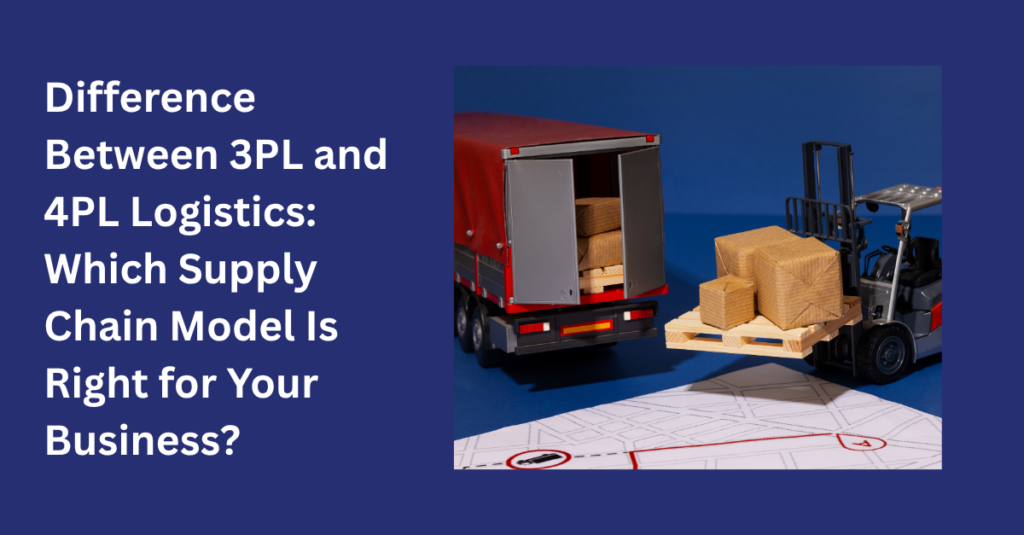
The difference between 3PL and 4PL logistics lies in the level of supply chain involvement. A 3PL provider manages logistics operations like warehousing and transportation, while a 4PL provider oversees the entire supply chain strategically, including vendor coordination, technology integration, and optimization. Businesses choose based on scale, complexity, and operational goals.
Understanding the difference between 3PL and 4PL logistics is essential for businesses looking to improve supply chain efficiency and reduce operational costs. While 3PL providers focus on logistics execution, 4PL providers manage the broader supply chain strategy. At JustDeliveries, businesses can access scalable logistics solutions tailored to modern distribution needs.
What Is 3PL Logistics?
Third-Party Logistics (3PL) refers to outsourcing logistics operations to an external service provider. These providers handle essential supply chain functions such as transportation, warehousing, inventory management, fulfillment, and delivery operations.
Businesses often use 3PL services to reduce infrastructure investments and streamline operations without building an in-house logistics network. Understanding the 3PL logistics meaning is a useful starting point for any business evaluating whether outsourcing logistics is the right strategic move.
Core Services Offered by 3PL Providers
A 3PL provider typically manages:
- Warehousing and storage
- Transportation and freight movement
- Order fulfillment
- Inventory management
- Last-mile delivery
- Reverse logistics
For growing businesses, especially in eCommerce, retail, FMCG, and food distribution, 3PL providers help improve delivery speed and operational efficiency. Businesses looking for a reliable third party logistics provider can benefit from specialized support that reduces overhead while improving distribution consistency across markets.
Benefits of Using 3PL Logistics
- Cost Efficiency: Businesses avoid the high costs associated with warehouse infrastructure, fleet management, and staffing.
- Scalability: 3PL services can scale operations during seasonal spikes or rapid business growth.
- Logistics Expertise: Providers bring operational knowledge, established networks, and process efficiency.
- Faster Deliveries: Strategically located warehouses and optimized transportation improve delivery timelines.
- Better Customer Experience: Accurate fulfillment and timely deliveries directly impact customer satisfaction.
What Is 4PL Logistics?
Fourth-Party Logistics (4PL) goes beyond operational support. A 4PL provider manages the complete supply chain ecosystem, including multiple logistics vendors, technology systems, and strategic planning.
The key difference between 3PL and 4PL logistics is that 4PL providers act as a central supply chain integrator rather than simply handling logistics functions.
How 4PL Providers Operate
A 4PL provider oversees:
- End-to-end supply chain management
- Coordination between multiple 3PL partners
- Supply chain analytics
- Technology integration
- Procurement and planning support
- Operational optimization
Instead of focusing on one logistics activity, 4PL providers manage the overall logistics strategy.
Benefits of Using 4PL Logistics
- Centralized Supply Chain Control: Businesses gain one point of contact for multiple logistics operations.
- Improved Visibility: Advanced technology systems provide real-time supply chain insights.
- Strategic Optimization: 4PL providers focus on reducing inefficiencies and improving long-term performance.
- Better Vendor Coordination: Managing multiple logistics vendors becomes easier and more organized.
- Data-Driven Decision Making: Businesses can use analytics to improve inventory flow, transportation planning, and cost control.
Difference Between 3PL and 4PL Logistics
The difference between 3PL and 4PL logistics becomes clearer when comparing operational responsibilities, control, scalability, and strategic involvement.
- Scope of Services: A 3PL provider handles operational logistics activities such as storage, fulfillment, and transportation. A 4PL provider manages the complete supply chain strategy and oversees multiple service providers.
- Level of Control: With 3PL logistics, businesses still manage portions of the supply chain internally. In 4PL logistics, much of the operational coordination is outsourced to a strategic partner.
- Technology Integration: 3PL providers mainly use warehouse management and transportation systems. 4PL providers integrate advanced analytics, AI-driven forecasting, and supply chain visibility tools.
- Cost Structure: 3PL services are generally more cost-effective for small and medium businesses. 4PL models involve higher investment but offer strategic optimization benefits for large-scale operations.
- Vendor Management: A 3PL provider manages specific logistics functions. A 4PL provider coordinates multiple logistics partners under one centralized framework.
Understanding the difference between 3PL and 4PL logistics helps businesses align logistics investments with long-term growth objectives.
3PL vs 4PL Logistics Comparison Table
| Feature | 3PL Logistics | 4PL Logistics |
| Focus | Logistics execution | End-to-end supply chain management |
| Control | Shared operational control | Strategic oversight |
| Services | Warehousing, fulfillment, transportation | Vendor coordination, optimization, analytics |
| Technology | Operational systems | Integrated supply chain visibility |
| Cost | Lower upfront investment | Higher strategic investment |
| Best For | SMEs and growing brands | Enterprise-level businesses |
| Scalability | Flexible operations | Complex multi-region management |
How to Choose Between 3PL and 4PL Logistics
Choosing the right logistics model depends on your operational complexity, growth stage, and supply chain goals.
- Assess Your Business Size: Smaller businesses usually benefit from 3PL services because they offer flexibility and cost efficiency. Large enterprises often require the broader oversight of 4PL management.
- Evaluate Supply Chain Complexity: If your operations involve multiple suppliers, regions, and transportation partners, a 4PL model may improve coordination and visibility.
- Consider Technology Requirements: Businesses needing advanced reporting, analytics, and forecasting often choose 4PL providers for centralized data management.
- Understand Budget Constraints: One major difference between 3PL and 4PL logistics is investment level. Businesses should evaluate operational ROI before selecting a model.
- Review Internal Logistics Expertise: Companies without an experienced logistics team may benefit from a 4PL provider’s strategic guidance.
Common Logistics Challenges Businesses Face
Many businesses struggle with operational inefficiencies due to fragmented supply chains.
- Delivery Delays: Poor transportation planning and vendor coordination often lead to missed timelines.
- Inventory Inaccuracies: Without proper inventory visibility, businesses risk overstocking or stockouts.
- Lack of Real-Time Visibility: Limited tracking systems make it difficult to monitor shipments and warehouse activity.
- Rising Transportation Costs: Fuel prices, route inefficiencies, and poor demand forecasting increase logistics expenses.
- Vendor Coordination Issues: Managing multiple logistics vendors internally can create communication gaps and operational delays.
The difference between 3PL and 4PL logistics also impacts how effectively businesses solve these operational challenges. Brands that rely on a specialized third party logistics company in India gain access to established infrastructure and operational expertise that directly reduces the risk of these common pain points.
Future Trends in 3PL and 4PL Logistics
The logistics industry is rapidly evolving due to technology and changing customer expectations.
- AI and Automation: AI-powered forecasting and warehouse automation are improving logistics efficiency.
- Real-Time Supply Chain Visibility: Businesses now expect live tracking and predictive updates across the supply chain.
- Sustainable Logistics: Companies are investing in eco-friendly transportation and optimized delivery routes.
- Hyperlocal Fulfillment: Faster delivery expectations are driving decentralized warehouse models. Businesses managing high-frequency local orders are increasingly investing in intra city logistics in India to reduce transit time and support same-day or next-day delivery commitments.
- Data-Driven Operations: Advanced analytics help businesses reduce costs and improve supply chain performance.
According to logistics experts, the future difference between 3PL and 4PL logistics may become more technology-driven as businesses demand integrated digital supply chains.
Why Many Businesses Prefer Hybrid Logistics Models
Modern supply chains are becoming more flexible. Many businesses combine 3PL operational support with selective 4PL oversight to balance efficiency and scalability.
For example:
- A food brand may use a 3PL provider for warehousing and transportation.
- At the same time, they may rely on strategic analytics and planning tools similar to 4PL systems.
This hybrid approach offers flexibility without losing operational visibility. Brands scaling across Indian cities can also combine their 3PL infrastructure with quick commerce logistics in India capabilities to serve consumers who expect near-instant delivery in urban markets.
Expert Perspective
Supply chain strategist Mansi Mahansaria highlights that businesses should evaluate logistics partners based not only on cost but also on scalability, visibility, and long-term operational alignment.
As explained by Mansi Mahansaria, logistics decisions directly impact customer experience, profitability, and market expansion opportunities.
Conclusion
The difference between 3PL and 4PL logistics ultimately comes down to operational execution versus strategic supply chain management. While 3PL providers help businesses manage logistics activities efficiently, 4PL providers oversee the broader supply chain ecosystem.
Choosing the right model depends on your business size, operational complexity, technology needs, and long-term growth strategy. Businesses that understand the difference between 3PL and 4PL logistics can build more resilient and scalable supply chains. For brands currently evaluating outsourcing options, exploring the range of 3PL logistics companies in India is a practical next step toward finding a partner that fits their operational scale and industry requirements.
Simplify Your Supply Chain with JustDeliveries
Efficient logistics can directly influence customer satisfaction, operational costs, and business growth. JustDeliveries helps brands streamline warehousing, fulfillment, cold-chain logistics, and B2B distribution with scalable, technology-enabled solutions.
Whether your business requires reliable 3PL services or broader supply chain support, JustDeliveries offers operational expertise designed for growing businesses across India. For businesses in the capital region, dedicated third party logistics in Delhi brings city-specific fleet coverage and warehousing infrastructure to support consistent and timely distribution.
Why Businesses Choose JustDeliveries
- Scalable warehousing solutions
- Reliable transportation management
- Cold-chain logistics expertise
- Faster B2B distribution
- Real-time operational visibility
- Tech-enabled fulfillment systems
Connect with the experts at JustDeliveries to build a smarter and more efficient supply chain.
Frequently Asked Questions
Q1. What is the main difference between 3PL and 4PL logistics?
The main difference between 3PL and 4PL logistics is that 3PL providers manage logistics operations like transportation and warehousing, while 4PL providers oversee the complete supply chain strategy and vendor coordination.
Q2. How do businesses decide between 3PL and 4PL logistics?
Businesses choose based on supply chain complexity, operational scale, budget, and internal logistics expertise. Smaller businesses often prefer 3PL, while enterprises with complex operations may benefit from 4PL.
Q3. Can a company use both 3PL and 4PL services together?
Yes. Many businesses adopt hybrid logistics models where 3PL providers handle operations while strategic oversight and analytics function similarly to 4PL management.
Q4. Why is 4PL considered more strategic than 3PL?
4PL providers focus on long-term supply chain optimization, technology integration, and vendor management rather than only executing logistics tasks.
Q5. Is 3PL more affordable than 4PL logistics?
Generally, yes. 3PL services usually involve lower operational costs compared to 4PL because they focus on specific logistics functions rather than complete supply chain management.
Q6. Will 4PL logistics improve supply chain visibility?
Yes. Most 4PL providers use advanced technology systems that offer centralized tracking, analytics, forecasting, and real-time operational visibility.
Q7. What industries benefit the most from 3PL and 4PL logistics?
Retail, eCommerce, FMCG, food distribution, healthcare, and manufacturing industries commonly use 3PL and 4PL logistics services to improve operational efficiency.
Q8. How does technology impact the difference between 3PL and 4PL logistics?
Technology plays a major role. While 3PL providers focus on operational systems, 4PL providers integrate advanced analytics, automation, and supply chain visibility tools for strategic optimization.

Mansi Mahansaria
I’m Mansi Mahansaria, CEO and Founder of JustDeliveries, a B2B logistics company specializing in the food and beverage sector. With a background in Chemical Technology (ICT Mumbai), an MBA (FMS Delhi), and experience at IDFC Private Equity and Tata Group, I’ve built a plug-and-play logistics network helping F&B brands scale efficiently. I also share insights on entrepreneurship and logistics at industry and academic events.