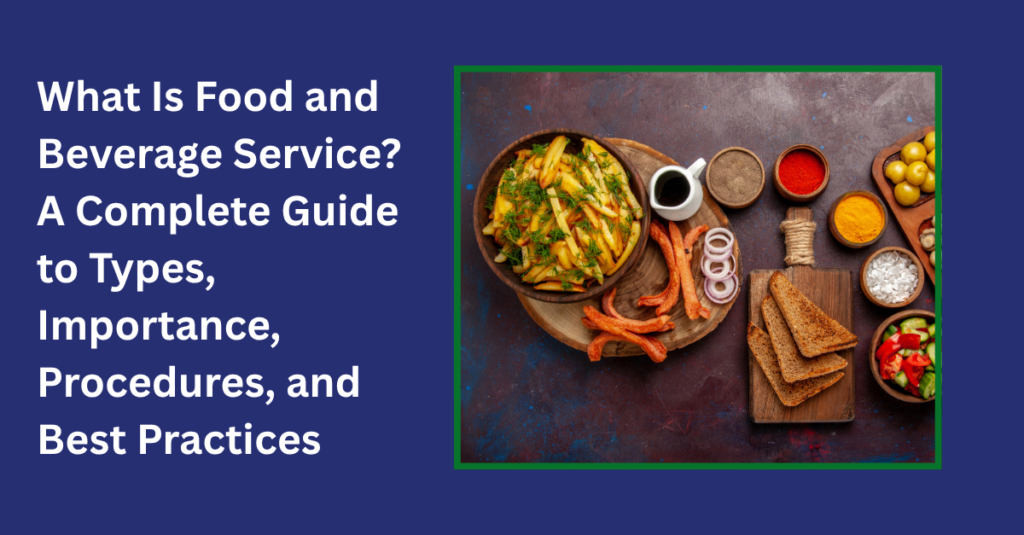
Food and beverage service is the process of preparing, presenting, and serving food and drinks to customers in restaurants, hotels, cafes, catering businesses, and other hospitality establishments. It focuses on delivering excellent customer experiences while maintaining food quality, hygiene standards, operational efficiency, and customer satisfaction.
If you’ve ever wondered what is food and beverage service, the answer is simple: it is the system through which food and beverages are delivered to customers in a professional and organized manner. At JustDeliveries, we understand that exceptional food service depends not only on hospitality teams but also on efficient logistics and supply chain management that keep products fresh and safe throughout the supply chain.
What Is Food and Beverage Service?
Food and beverage service refers to all activities involved in serving food and drinks to customers. These activities include taking orders, preparing food, presenting meals, serving beverages, handling payments, and ensuring customer satisfaction.
The primary goal of food and beverage service is to provide guests with a pleasant dining experience while maintaining high standards of quality, hygiene, and hospitality.
Today, the concept extends beyond restaurants and hotels. It includes cloud kitchens, catering companies, food delivery businesses, cafes, quick-service restaurants, and even large-scale food manufacturing operations.
Why Is Food and Beverage Service Important?
The hospitality industry relies heavily on customer experience. No matter how good the food is, poor service can negatively affect customer satisfaction.
A well-managed food and beverage service operation helps businesses:
- Improve customer satisfaction
- Increase repeat business
- Strengthen brand reputation
- Enhance operational efficiency
- Boost revenue and profitability
- Maintain food safety compliance
- Create memorable dining experiences
In a highly competitive industry, excellent service often becomes the key differentiator between businesses.
Objectives of Food and Beverage Service
The success of any hospitality business depends on achieving specific service goals.
- Deliver Outstanding Customer Experience: Guests expect attentive, friendly, and professional service from the moment they enter an establishment.
- Maintain Consistent Food Quality: Food should be served fresh, at the correct temperature, and with attractive presentation.
- Ensure Food Safety: Following hygiene protocols protects both customers and businesses.
- Improve Operational Efficiency: Efficient service reduces waiting times and improves overall customer satisfaction.
- Support Business Growth: Strong service standards encourage positive reviews, repeat customers, and long-term profitability.
Types of Food and Beverage Service
Different establishments use different service methods depending on their business model and customer expectations.
1. Table Service
Table service involves staff taking orders and serving meals directly to customers at their tables.
Commonly used in:
- Fine dining restaurants
- Hotels
- Casual dining establishments
Benefits
- Personalized service
- Better customer engagement
- Premium dining experience
2. Buffet Service
Buffet service allows guests to serve themselves from a selection of prepared dishes.
Common examples include:
- Hotel breakfast buffets
- Corporate events
- Banquets
- Wedding receptions
It enables faster service, a wide variety of food options, and is suitable for large groups. Understanding how perishable goods are transported is critical for buffet operations that depend on fresh daily stock.
Benefits
- Faster service
- Wide variety of food options
- Suitable for large groups
3. Room Service
Hotels often provide food delivery directly to guest rooms.
Benefits
- Convenience
- Privacy
- Personalized guest experience
4. Self-Service
Customers select and collect their own meals.
Commonly found in:
- Cafeterias
- Food courts
- Fast-casual restaurants
Benefits
- Faster customer turnover
- Reduced staffing requirements
5. Banquet and Catering Service
Banquet service focuses on large-scale food delivery for events and gatherings.
Examples include:
- Weddings
- Conferences
- Corporate events
- Private celebrations
Benefits
- High-volume service
- Flexible menu planning
- Increased revenue opportunities
How Does the Food and Beverage Service Process Work?
A successful food and beverage service operation follows a structured process designed to ensure efficiency and customer satisfaction.
Step 1: Greeting the Guest
Customers are welcomed and guided to their seating area.
Step 2: Menu Presentation
Guests receive menus and information about available options.
Step 3: Order Taking
Staff accurately record food and beverage selections.
Step 4: Food Preparation
The kitchen team prepares meals according to customer requirements.
Step 5: Food and Beverage Delivery
Meals and drinks are served professionally and promptly.
Step 6: Customer Support
Staff address any additional requests throughout the dining experience.
Step 7: Billing and Payment
Customers receive accurate bills and payment options.
Step 8: Feedback Collection
Businesses gather customer feedback to improve future service.
Essential Skills Required for Food and Beverage Service
Professionals working in food and beverage service need a combination of technical and interpersonal skills.
Key skills include:
- Communication skills
- Customer service expertise
- Teamwork
- Problem-solving abilities
- Time management
- Attention to detail
- Food safety knowledge
- Professional etiquette
These skills contribute directly to customer satisfaction and operational excellence.
Food Safety and Hygiene in Food and Beverage Service
Food safety remains one of the most critical aspects of food and beverage service.
Businesses must ensure:
- Proper food storage
- Temperature-controlled transportation
- Personal hygiene standards
- Cross-contamination prevention
- Inventory monitoring
- Compliance with food safety regulations
Failure to maintain food safety standards can affect customer health and damage brand reputation.
The Growing Role of Logistics in Food and Beverage Service
Modern food and beverage service depends heavily on efficient logistics and supply chain management.
Restaurants, hotels, cloud kitchens, bakeries, dairy businesses, and frozen food brands require reliable transportation and storage systems to maintain product quality.
Without proper logistics support, businesses may face:
- Product spoilage
- Delivery delays
- Inventory losses
- Quality inconsistencies
- Customer dissatisfaction
This is why cold-chain logistics has become an essential part of the food industry. Businesses in Bangalore can partner with specialists in frozen food transport in Bangalore to build a resilient and reliable supply chain.
Why Cold-Chain Logistics Matters
Many food products require strict temperature control throughout storage and transportation.
These include:
- Dairy products
- Frozen foods
- Fresh produce
- Seafood
- Meat products
- Desserts
- Bakery items
A strong cold-chain network helps businesses:
- Reduce wastage
- Extend shelf life
- Maintain freshness
- Ensure compliance
- Protect product quality
For businesses managing frozen dessert categories, a reliable ice cream supply chain in India is essential to delivering products at the right temperature every time. For modern food businesses, logistics is no longer a back-end function it directly influences customer satisfaction.
Technology Is Transforming Food and Beverage Service
Technology is reshaping how businesses manage operations and customer experiences.
Today’s leading brands use:
- Real-time delivery tracking
- Automated inventory systems
- Contactless payments
- AI-powered analytics
- Temperature monitoring solutions
- Digital ordering platforms
JustDeliveries supports food and beverage brands with technology-driven logistics solutions designed to improve visibility and operational control.
Through the HQ App, brands gain access to a centralized dashboard where they can monitor live vehicle movement, temperature compliance, SLA performance, billing information, and AI-driven performance insights in real time. This level of transparency helps businesses make faster decisions and maintain consistent service standards across locations. For brands operating across the capital, dedicated frozen food transport in Delhi ensures that technology-backed logistics translate into reliable on-ground delivery performance.
Supporting India’s Fast-Growing Quick Commerce Ecosystem
The rise of quick commerce has significantly changed food distribution requirements.
Businesses now need logistics partners capable of handling rapid deliveries while maintaining strict temperature standards.
JustDeliveries supports cold-chain logistics operations for major e-commerce and quick-commerce platforms, including Swiggy Instamart, Zepto, Blinkit, Amazon, JioMart, and BigBasket. Their services include hub-to-hub transportation and dark-store deliveries with real-time tracking and temperature-controlled operations.
A notable example is Swiggy Instamart, which transitioned to JustDeliveries in May 2024 and continued expanding its fleet requirements due to consistent on-time deliveries and reliable execution. For quick-commerce brands serving Mumbai, frozen food transport in Mumbai plays a critical role in meeting the speed and temperature demands of same-hour delivery models.
This highlights how logistics excellence directly supports the success of modern food and beverage service businesses.
Common Challenges in Food and Beverage Service
Even the most successful hospitality businesses face operational challenges.
Some of the most common include:
- Rising customer expectations
- Staff shortages
- Food wastage
- Inventory management issues
- Regulatory compliance requirements
- Supply chain disruptions
Businesses that invest in training, technology, and reliable logistics partnerships are often better positioned to overcome these challenges.
Conclusion
Understanding what is food and beverage service is essential for anyone involved in hospitality, food manufacturing, catering, restaurants, or cloud kitchens. It is a comprehensive system that combines customer service, food quality, operational efficiency, and safety standards to create exceptional dining experiences.
As the industry evolves, logistics and cold-chain management are becoming increasingly important components of successful food and beverage service operations. Businesses that focus on both customer experience and supply chain excellence are better equipped to meet growing customer expectations and achieve long-term growth. Operators looking to scale nationally can explore end-to-end frozen food transportation across India to ensure every product reaches its destination fresh, safe, and on time.
Power Your Food Business with JustDeliveries
Delivering great food starts long before it reaches the customer. JustDeliveries helps restaurants, cloud kitchens, food manufacturers, dairy brands, frozen food companies, and quick-commerce businesses maintain quality, freshness, and consistency through specialized cold-chain logistics solutions.
With temperature-controlled transportation, warehousing, inventory management, real-time tracking, and the advanced HQ App for complete operational visibility, JustDeliveries enables food businesses to scale confidently while maintaining service excellence. Whether you’re serving a local market or expanding across cities, JustDeliveries provides the logistics infrastructure needed to support sustainable growth.
Frequently Asked Questions
Q1. What is food and beverage service?
Food and beverage service is the process of preparing, presenting, and serving food and drinks to customers while ensuring quality, safety, and customer satisfaction.
Q2. Why is food and beverage service important in hospitality?
It directly affects customer experience, business reputation, customer retention, and overall profitability.
Q3. How does food and beverage service improve customer satisfaction?
By providing prompt service, quality food, professional interactions, and a pleasant dining experience.
Q4. What are the main types of food and beverage service?
The most common types are table service, buffet service, room service, self-service, and banquet or catering service.
Q5. Can technology improve food and beverage service operations?
Yes. Technology helps improve inventory management, order processing, delivery tracking, customer experience, and operational efficiency.
Q6. Is food safety part of food and beverage service?
Yes. Food safety is a critical component that includes proper storage, handling, transportation, and hygiene practices.
Q7. Will cold-chain logistics impact food quality?
Yes. Proper cold-chain logistics help maintain freshness, prevent spoilage, and ensure food safety throughout transportation and storage.
Q8. How can food businesses reduce spoilage and wastage?
Businesses can reduce spoilage through proper inventory management, temperature-controlled storage, efficient transportation, and real-time supply chain monitoring.

Mansi Mahansaria
I’m Mansi Mahansaria, CEO and Founder of JustDeliveries, a B2B logistics company specializing in the food and beverage sector. With a background in Chemical Technology (ICT Mumbai), an MBA (FMS Delhi), and experience at IDFC Private Equity and Tata Group, I’ve built a plug-and-play logistics network helping F&B brands scale efficiently. I also share insights on entrepreneurship and logistics at industry and academic events.