Warehousing helps businesses store inventory efficiently, improve stock visibility, reduce transportation costs, speed up order fulfillment, and maintain product availability. Modern warehouses also support demand forecasting, supply chain resilience, and customer satisfaction, making them a critical component of efficient logistics and business growth.
If you’re wondering what are the benefits of warehousing, the answer is simple: warehousing helps businesses manage inventory, fulfill orders faster, reduce costs, and improve customer satisfaction. For modern supply chains, including specialized logistics providers like JustDeliveries, warehousing plays a vital role in ensuring products move efficiently from suppliers to customers while maintaining quality and availability. Businesses looking to streamline operations can explore our supply chain management outsourcing guide to understand how third-party expertise can strengthen their overall logistics strategy.
What Is Warehousing?
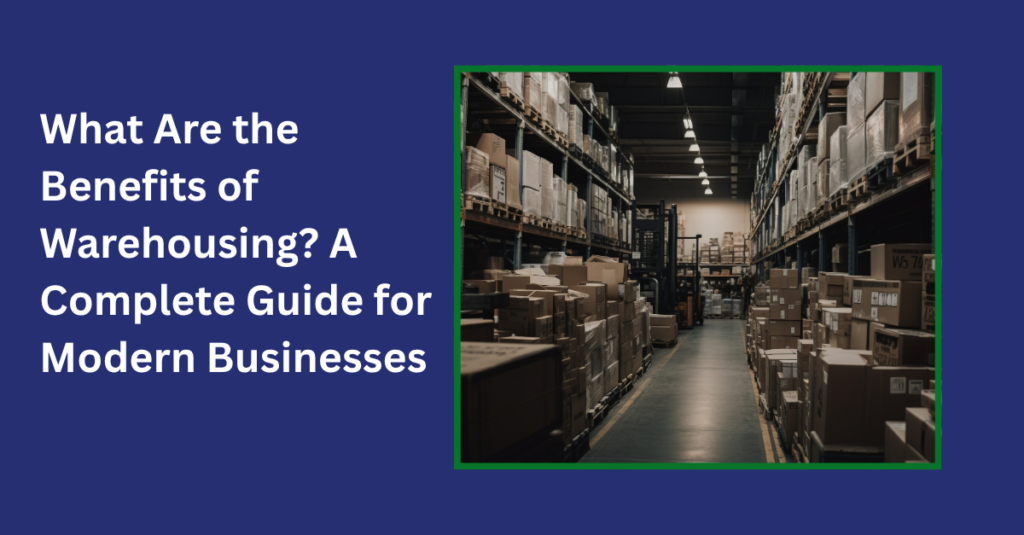
Warehousing refers to the process of storing goods in a dedicated facility before they are distributed to retailers, businesses, or end customers. While traditional warehouses primarily focused on storage, modern warehouses have evolved into technology-driven distribution hubs that support inventory management, order processing, and supply chain optimization.
Warehouses help bridge the gap between production and consumption by ensuring products are available when and where they are needed.
Common types of warehouses include:
- Public warehouses
- Private warehouses
- Distribution centers
- Cold storage facilities
- Smart warehouses equipped with advanced technology
Why Is Warehousing Important for Businesses?
Businesses today operate in highly competitive markets where customers expect fast deliveries and consistent product availability. Warehousing provides the infrastructure necessary to meet these expectations.
Understanding what are the benefits of warehousing becomes especially important when businesses need to manage fluctuating demand, maintain inventory accuracy, and improve overall supply chain performance.
A well-managed warehouse allows companies to:
- Prevent stock shortages
- Improve inventory control
- Support business expansion
- Reduce logistics challenges
- Enhance customer experiences
What Are the Benefits of Warehousing?
1. Improved Inventory Management
One of the biggest answers to what are the benefits of warehousing is improved inventory control.
Warehouses provide businesses with real-time visibility into stock levels, helping them monitor inventory movement and maintain optimal stock levels. This reduces the risk of overstocking and stockouts while improving forecasting accuracy.
Benefits include:
- Better inventory tracking
- Accurate demand forecasting
- Reduced inventory losses
- Improved stock availability
2. Faster Order Fulfillment
Customers expect quick and reliable deliveries. Warehousing enables businesses to position inventory closer to their customers, reducing delivery times and improving fulfillment efficiency.
A strategically located warehouse allows orders to be picked, packed, and shipped faster, resulting in better customer experiences and higher retention rates. Businesses in Delhi can further accelerate this by partnering with a trusted third party logistics company in Delhi to handle last-mile distribution with greater speed and consistency.
3. Reduced Supply Chain Costs
When discussing what are the benefits of warehousing, cost savings cannot be overlooked.
Warehouses help businesses consolidate shipments, optimize transportation routes, and reduce emergency shipping expenses. Bulk storage and efficient inventory management also lower operational costs over time.
Key savings come from:
- Lower transportation expenses
- Reduced handling costs
- Improved resource utilization
- Fewer expedited shipments
4. Better Supply Chain Efficiency
Warehousing improves coordination between suppliers, manufacturers, distributors, and retailers.
By acting as a central hub for inventory management and distribution, warehouses help reduce delays and streamline product movement throughout the supply chain.
This leads to:
- Faster replenishment cycles
- Improved order accuracy
- Better logistics planning
- Increased operational efficiency
5. Improved Demand Management
Market demand can fluctuate due to seasonal trends, promotions, and changing customer preferences.
A warehouse enables businesses to store additional inventory during low-demand periods and release stock when demand increases. This flexibility helps maintain service levels even during peak seasons.
Businesses that understand what are the benefits of warehousing often use warehouses as a buffer against market uncertainties and supply chain disruptions. Understanding how quick commerce supply chain works in India can help businesses align their warehousing strategy with the speed demands of modern retail.
6. Enhanced Product Safety and Quality
Proper storage conditions help protect products from damage, contamination, and spoilage.
This is especially important for food, beverages, pharmaceuticals, and temperature-sensitive goods. Warehouses equipped with climate-controlled environments help maintain product quality and ensure compliance with industry regulations.
Benefits include:
- Reduced spoilage
- Better product preservation
- Regulatory compliance
- Lower product losses
7. Supports Business Growth
As businesses expand, their inventory and distribution requirements become more complex.
Warehousing provides the scalability needed to support growth without requiring significant investments in infrastructure. Businesses can increase storage capacity, enter new markets, and expand product lines more efficiently.
This is another major reason why understanding what are the benefits of warehousing is important for growing organizations. Companies scaling operations in Mumbai can work with a reliable third party logistics company in Mumbai to manage warehousing and distribution as their footprint grows.
8. Increased Customer Satisfaction
Customer satisfaction depends heavily on product availability and timely deliveries.
Warehouses help businesses maintain consistent inventory levels and ensure orders are delivered accurately and on time. This reliability strengthens customer trust and encourages repeat business.
Satisfied customers often lead to:
- Higher retention rates
- Positive reviews
- Improved brand reputation
- Increased sales opportunities
9. Reduced Business Risks
Supply chain disruptions can occur due to transportation delays, supplier issues, or unexpected market conditions.
Warehousing provides a safety buffer by maintaining reserve inventory that can be used when disruptions occur. This helps businesses continue operations without major interruptions. For businesses handling food and perishable products, understanding how perishable goods are transported is essential to reducing risk and maintaining product integrity across the supply chain.
10. Data-Driven Decision Making
Modern warehouses are powered by advanced technology that provides valuable operational insights.
Warehouse management systems allow businesses to track inventory performance, monitor fulfillment metrics, and identify areas for improvement.
These insights help businesses make smarter decisions regarding procurement, inventory planning, and distribution strategies.
The Importance of Cold Storage Warehousing
For food and beverage businesses, cold storage warehousing is essential.
Temperature-controlled storage helps maintain freshness, quality, and safety throughout the supply chain. Products such as dairy items, frozen foods, bakery products, beverages, and fresh produce require specialized storage conditions to prevent spoilage.
Cold storage warehousing offers:
- Better product quality
- Extended shelf life
- Regulatory compliance
- Reduced wastage
- Improved customer satisfaction
Choosing the Right Warehousing Partner
Selecting the right warehousing provider can significantly impact operational performance.
Businesses should look for partners that offer:
- Technology-enabled inventory management
- Real-time visibility
- Temperature-controlled storage
- Scalability
- Integrated transportation services
- Strong compliance standards
A reliable warehousing partner not only stores products but also contributes to overall supply chain efficiency. Businesses in Hyderabad can explore dedicated third party logistics in Hyderabad to find partners who offer integrated warehousing and transportation under one roof.
Why Integrated Warehousing and Logistics Matter
Modern supply chains benefit greatly when warehousing and transportation services work together.
Integrated solutions eliminate communication gaps, improve inventory visibility, and reduce operational complexity. Businesses can manage storage, fulfillment, and distribution through a single provider, resulting in greater efficiency and lower costs.
Understanding what are the benefits of warehousing becomes even more valuable when warehousing is combined with intra city logistics across India to ensure seamless product movement between storage hubs and delivery points.
How JustDeliveries Supports Food and Beverage Supply Chains
JustDeliveries provides specialized warehousing, cold-chain transportation, and distribution solutions for food and beverage businesses.
Through its HQ App, brands can track live vehicles, monitor temperature compliance, manage billing, review SLAs, and access AI-powered performance insights from a single dashboard.
The company also supports leading quick-commerce and e-commerce platforms such as Swiggy Instamart, Zepto, Blinkit, Amazon, JioMart, and BigBasket, handling hub-to-hub and dark-store deliveries with real-time tracking and temperature control.
Its reliable service has helped growing brands streamline operations, improve visibility, and ensure on-time deliveries across their supply chain. Businesses looking for a comprehensive logistics partner across India can learn more about working with a third party logistics company in India that combines warehousing, cold chain, and distribution into a single integrated solution.
Conclusion
So, what are the benefits of warehousing? Warehousing improves inventory management, reduces costs, speeds up fulfillment, protects product quality, and strengthens overall supply chain performance.
As customer expectations continue to rise, businesses need reliable warehousing solutions that provide visibility, flexibility, and efficiency. Whether you’re managing retail products, industrial goods, or temperature-sensitive food items, effective warehousing is a critical investment in long-term business success.
For food and beverage brands seeking specialized cold-chain logistics, warehousing, and distribution support, JustDeliveries offers integrated solutions designed to help businesses maintain quality, improve efficiency, and scale with confidence.
Frequently Asked Questions
Q1. What Are the Main Benefits of Warehousing?
Warehousing improves inventory management, reduces logistics costs, speeds up order fulfillment, enhances customer satisfaction, and supports business growth.
Q2. Why Is Warehousing Important in Supply Chain Management?
Warehousing acts as a central storage and distribution point, helping businesses maintain inventory availability, improve efficiency, and reduce supply chain disruptions.
Q3. How Does Warehousing Improve Inventory Management?
Warehousing provides real-time visibility into stock levels, enabling businesses to track inventory accurately and make informed replenishment decisions.
Q4. How Does Warehousing Reduce Business Costs?
Warehousing lowers transportation expenses, minimizes emergency shipments, improves inventory control, and reduces product losses caused by poor storage.
Q5. Can Warehousing Help During Seasonal Demand Peaks?
Yes. Warehousing allows businesses to store additional inventory in advance, ensuring products remain available during high-demand periods.
Q6. Is Warehousing Necessary for Small Businesses?
Yes. Even small businesses can benefit from warehousing by improving inventory organization, reducing stock shortages, and supporting future growth.
Q7. Will Warehousing Improve Customer Satisfaction?
Yes. Faster deliveries, accurate order fulfillment, and consistent product availability help create positive customer experiences and increase loyalty.
Q8. Can Cold Storage Warehousing Prevent Product Spoilage?
Yes. Cold storage facilities maintain controlled temperatures that help preserve product quality, extend shelf life, and reduce spoilage for temperature-sensitive goods.

Mansi Mahansaria
I’m Mansi Mahansaria, CEO and Founder of JustDeliveries, a B2B logistics company specializing in the food and beverage sector. With a background in Chemical Technology (ICT Mumbai), an MBA (FMS Delhi), and experience at IDFC Private Equity and Tata Group, I’ve built a plug-and-play logistics network helping F&B brands scale efficiently. I also share insights on entrepreneurship and logistics at industry and academic events.