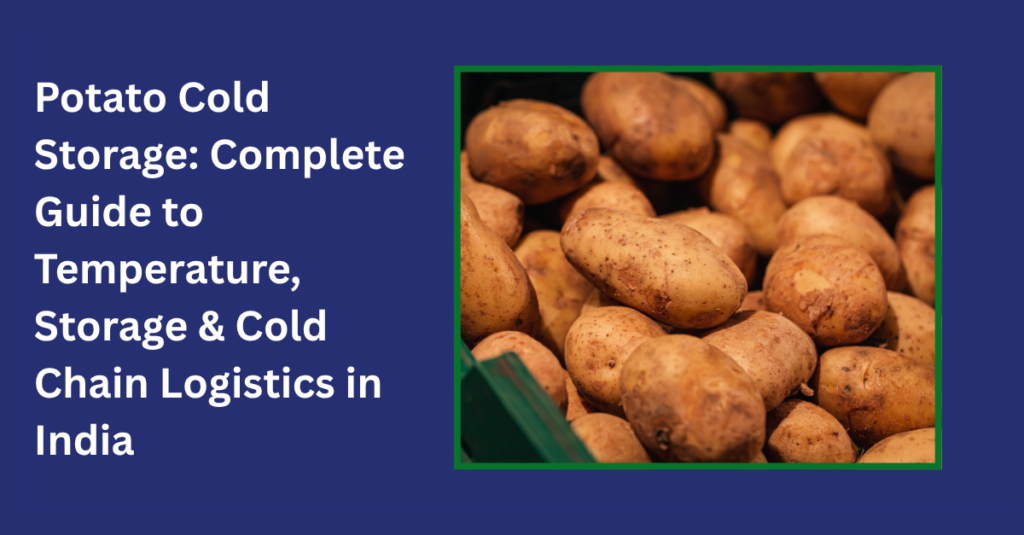
Potato cold storage helps preserve potato quality by maintaining optimal temperature, humidity, and airflow, thereby reducing post-harvest losses and extending shelf life. When combined with efficient cold chain logistics, it ensures potatoes reach retailers, processors, and consumers in optimal condition while strengthening India’s potato supply chain.
Potato cold storage is the most effective way to protect harvested potatoes from spoilage, sprouting, and quality deterioration while supporting a reliable supply chain. For food businesses, combining scientific storage with dependable transportation is equally important. At JustDeliveries, we help businesses maintain temperature integrity through specialized cold-chain logistics, ensuring fresh produce moves efficiently from storage facilities to distribution hubs and retail destinations. Businesses new to this space often start by understanding what is cold storage warehouse infrastructure and how it applies to root vegetables like potatoes. Here’s how modern potato storage works—and why it matters more than ever.
What is Potato Cold Storage?
Potatoes remain biologically active even after harvesting. Without proper environmental control, they lose moisture, begin sprouting, or become susceptible to microbial damage. Potato cold storage is a temperature-controlled storage system designed to slow these natural processes and preserve freshness over extended periods.
Unlike traditional warehouses, modern cold storage facilities regulate temperature, humidity, ventilation, and air circulation to create stable conditions that protect potato quality. These facilities are essential for farmers, wholesalers, food processors, retailers, and exporters looking to reduce losses and maintain year-round availability. Many of these same principles apply broadly to cold storage for vegetables, where stable humidity and airflow are equally critical to preserving quality.
Why Potato Cold Storage is Important for India’s Supply Chain
India is one of the world’s largest potato-producing countries, yet significant quantities are lost after harvest due to inadequate storage and transportation.
Scientific cold storage offers several advantages:
- Reduces post-harvest losses
- Preserves texture, weight, and nutritional quality
- Maintains year-round availability despite seasonal harvests
- Supports food processing industries producing chips, fries, and frozen products
- Helps stabilize market prices by balancing seasonal supply
An efficient storage network also enables businesses to respond quickly to changing demand while minimizing waste throughout the potato supply chain.
Ideal Potato Storage Temperature and Humidity
Maintaining the correct potato storage temperature is one of the most important factors affecting shelf life and quality.
| Potato Type | Recommended Temperature | Relative Humidity | Typical Storage Duration |
| Fresh consumption | 4–7°C | 90–95% | 4–8 months |
| Seed potatoes | 2–4°C | 90–95% | Several months |
| Processing potatoes | 8–12°C | 90–95% | Up to 8 months |
Besides temperature, high relative humidity helps reduce moisture loss, while consistent airflow prevents condensation and hot spots within storage rooms. Proper lighting control is equally important, as prolonged exposure to light can cause potatoes to turn green and develop undesirable compounds.
Continuous monitoring through automated sensors ensures storage conditions remain stable throughout the storage period. This same level of monitoring underpins reliable cold food storage practices across other perishable food categories as well.
How Does Potato Cold Storage Work?
Modern storage follows a carefully managed process rather than simply refrigerating harvested potatoes.
Harvest and Inspection
Potatoes are sorted to remove damaged, diseased, or bruised produce before entering storage.
Curing
Freshly harvested potatoes undergo curing to strengthen their skins and heal minor surface injuries, improving their resistance to spoilage.
Pre-Cooling
Gradual cooling reduces field heat while preventing temperature shock that may affect product quality.
Controlled Storage
Potatoes are stored under regulated temperature, humidity, and ventilation conditions with continuous environmental monitoring.
Inventory Management
Most facilities follow the First In, First Out (FIFO) method to ensure older inventory is dispatched first, reducing storage losses.
Essential Components of a Modern Cold Storage Facility
A reliable storage facility combines several integrated systems:
- High-performance insulated cold rooms
- Energy-efficient refrigeration units
- Humidity control systems
- Mechanical ventilation for uniform airflow
- Digital temperature and humidity sensors
- Backup power systems
- Warehouse Management Systems (WMS)
These technologies help maintain consistent storage conditions while improving operational efficiency and traceability.
Common Storage Challenges
Even well-designed facilities require careful management to avoid common issues.
Sprouting
Incorrect storage temperatures may accelerate sprouting, reducing market value.
Moisture Loss
Low humidity causes dehydration and weight loss.
Poor Air Circulation
Uneven airflow creates temperature variations that can affect product quality.
Condensation
Moisture accumulation encourages microbial growth and spoilage.
Mechanical Damage
Improper handling during loading and unloading can reduce shelf life.
Regular inspections and preventive maintenance help minimize these risks.
The Role of Potato Cold Chain Logistics in India
Storage alone cannot protect product quality if transportation conditions are compromised. This is where potato cold chain logistics India becomes essential.
Temperature-controlled logistics maintain product integrity from the storage facility to processing plants, retail distribution centres, wholesalers, and food service businesses. Reliable frozen food transportation India networks follow this same principle to protect processed potato products like fries and chips as they move through the supply chain.
A modern cold chain typically includes:
Farm → Collection Centre → Cold Storage → Distribution Hub → Retailer / Food Processor
Real-time monitoring, insulated vehicles, route optimization, and trained handling teams ensure temperature consistency throughout transit, minimizing spoilage and maintaining food safety standards. In major metro markets, dedicated frozen food transport Mumbai services reflect how this consistency is maintained across high-volume distribution networks.
Building a Strong Potato Supply Chain
A successful potato supply chain depends on seamless coordination across procurement, storage, transportation, inventory management, and final distribution.
Technology now plays an increasingly important role in improving visibility across every stage of the journey.
JustDeliveries supports food businesses through its HQ App, a centralized operational dashboard that enables brands to monitor live vehicle locations, temperature compliance, service-level agreements (SLAs), billing, and AI-driven performance insights in real time. This level of visibility allows businesses to identify delays early, monitor cold-chain performance, and make faster operational decisions.
The growth of quick commerce has further increased the need for reliable cold logistics. Consumers now expect groceries and fresh food to arrive within minutes rather than days.
To support this evolving ecosystem, JustDeliveries powers temperature-controlled logistics for Swiggy Instamart, Zepto, Blinkit, Amazon, JioMart, and BigBasket, managing hub-to-hub transportation and dark store deliveries with real-time tracking and strict temperature control. This helps food businesses maintain freshness while meeting increasingly demanding delivery timelines. In high-density regions, dependable frozen food transport Delhi services illustrate how this network supports rapid replenishment cycles.
As highlighted by Mansi Mahansaria, maintaining cold-chain visibility is no longer optional, it has become a critical requirement for businesses seeking to reduce wastage and improve customer satisfaction.
Future Trends in Potato Cold Storage
The industry continues to evolve with smarter technologies that improve operational efficiency.
Emerging innovations include:
- IoT-enabled environmental monitoring
- AI-based demand forecasting
- Automated warehouse systems
- GPS-enabled fleet management
- Energy-efficient refrigeration technologies
- Integrated third-party cold-chain logistics platforms
Together, these innovations are creating more resilient and sustainable food supply networks across India.
Conclusion
An effective potato cold storage system protects quality, minimizes losses, and supports year-round market availability. However, preserving freshness does not end inside the warehouse. Reliable transportation, continuous temperature monitoring, and end-to-end visibility are equally important for maintaining product quality throughout the journey.
As Mansi Mahansaria explains, businesses that integrate scientific storage with technology-enabled logistics are better positioned to build resilient supply chains, reduce operational losses, and consistently deliver fresh products to customers.
Whether you’re supplying retailers, food processors, or quick commerce platforms, investing in dependable cold-chain infrastructure is essential for long-term success. In southern markets, established frozen food transport Bangalore services show how this same infrastructure scales to meet growing regional demand.
Choose JustDeliveries for Reliable Cold-Chain Logistics
Cold storage is only one part of a successful supply chain. Moving temperature-sensitive products safely and efficiently is equally critical.
JustDeliveries provides specialized B2B cold-chain logistics solutions for food businesses across India, combining refrigerated transportation, real-time temperature monitoring, advanced fleet visibility, and technology-driven operations. From warehouse transfers to distribution hubs, quick commerce fulfilment, and dark store deliveries, our integrated logistics solutions help businesses maintain freshness, improve efficiency, and reduce wastage throughout the supply chain.
Frequently Asked Questions
Q1. How long can potatoes remain in cold storage?
When stored under the correct temperature and humidity conditions, potatoes can typically remain in cold storage for four to eight months, depending on their intended use.
Q2. What is the ideal potato storage temperature?
The ideal potato storage temperature generally ranges from 4°C to 7°C for fresh-consumption potatoes, while processing and seed potatoes may require different temperature ranges.
Q3. Why is humidity important during potato storage?
High humidity helps prevent excessive moisture loss, maintaining potato weight, texture, and overall quality throughout storage.
Q4. Can potatoes be transported without refrigerated vehicles?
Short-distance transport may be possible under suitable weather conditions, but refrigerated vehicles are recommended for long-distance transportation and commercial supply chains to maintain quality.
Q5. Is cold storage necessary for all potatoes?
Not always. Potatoes intended for immediate local sale may not require long-term storage, but commercial distribution and processing generally depend on controlled storage conditions.
Q6. Will improper storage affect potato quality?
Yes. Incorrect temperature, humidity, or ventilation can lead to sprouting, dehydration, spoilage, discoloration, and reduced shelf life.
Q7. How does cold-chain logistics reduce potato wastage?
By maintaining consistent temperatures throughout transportation, cold-chain logistics minimizes spoilage, extends freshness, and protects product quality from storage to final delivery.
Q8. What industries benefit from potato cold storage?
Fresh produce distributors, food processors, quick-service restaurants, retailers, exporters, and quick commerce platforms all benefit from reliable cold storage and temperature-controlled logistics.

Mansi Mahansaria
I’m Mansi Mahansaria, CEO and Founder of JustDeliveries, a B2B logistics company specializing in the food and beverage sector. With a background in Chemical Technology (ICT Mumbai), an MBA (FMS Delhi), and experience at IDFC Private Equity and Tata Group, I’ve built a plug-and-play logistics network helping F&B brands scale efficiently. I also share insights on entrepreneurship and logistics at industry and academic events.