
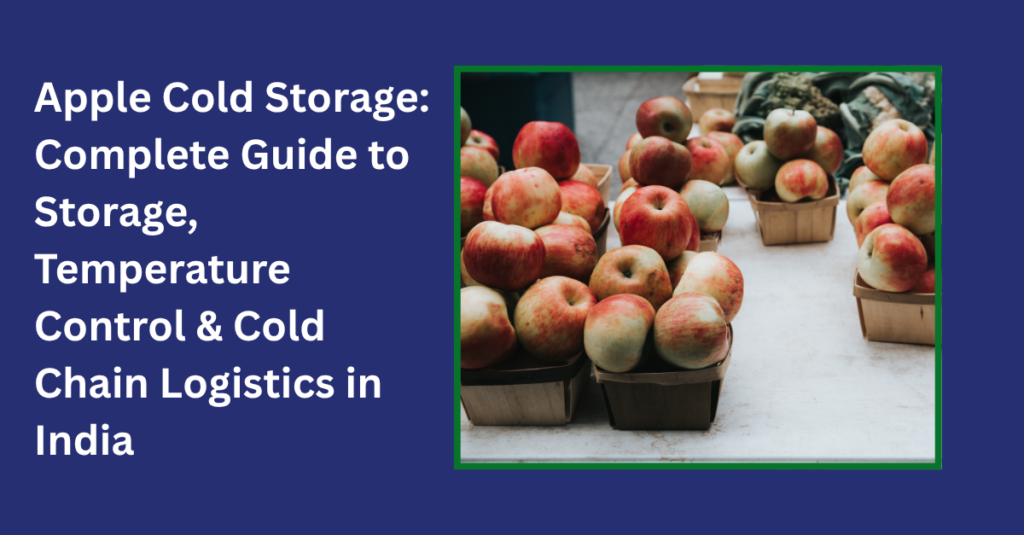
Apple cold storage is a temperature- and humidity-controlled storage system that preserves apple freshness, slows ripening, and extends shelf life. Combined with an efficient cold chain, the right storage conditions help reduce post-harvest losses, maintain quality during transport, and ensure apples reach consumers in excellent condition.
Apple cold storage plays a vital role in preserving the quality of harvested apples by maintaining the ideal storage environment from orchard to market. However, storage alone is not enough. A reliable cold chain ensures freshness throughout transportation and distribution. At JustDeliveries, businesses can strengthen their temperature-controlled supply chain with dependable cold logistics solutions that keep apples moving safely from farms to retailers. These same principles closely mirror mango cold storage practices, where controlled temperature and humidity are equally critical to preserving fruit quality. But what truly makes an efficient apple supply chain successful?
What Is Apple Cold Storage?
Apple cold storage is a specialised storage system designed to slow the natural ripening process of apples by maintaining carefully controlled temperatures, humidity levels, and airflow. Unlike conventional warehousing, cold storage helps preserve texture, flavour, colour, and nutritional value for extended periods.
After harvesting, apples continue to respire, which gradually affects their quality. Proper cold storage reduces this respiration rate, allowing growers, wholesalers, retailers, and exporters to store apples for months without significant quality loss. Root vegetables face a similar challenge, which is why proper cold storage for vegetables relies on the same careful control of temperature and humidity to slow natural deterioration.
Modern facilities may also use Controlled Atmosphere (CA) technology, where oxygen and carbon dioxide levels are carefully regulated to further extend storage life.
Why Apple Cold Storage Is Essential in India
India is one of the world’s leading apple-producing countries, with major cultivation concentrated in Jammu & Kashmir, Himachal Pradesh, and Uttarakhand. Since harvesting is seasonal, a large volume of apples enters the market within a short period.
Without proper apple cold storage, growers often face:
- Rapid quality deterioration
- Price fluctuations due to oversupply
- Increased food wastage
- Reduced profitability
- Distribution challenges across long distances
By extending storage life, cold storage enables producers to supply markets steadily throughout the year rather than selling immediately after harvest.
Apple Storage Temperature: Finding the Right Balance
Maintaining the correct apple storage temperature is one of the most important factors in preserving fruit quality.
For most apple varieties:
- Temperature: Approximately 0°C to 4°C
- Relative Humidity: 90–95%
- Good air circulation is essential to minimise moisture loss and maintain freshness.
Storage conditions may vary slightly depending on the apple variety and intended storage duration, but consistency is crucial. Frequent temperature fluctuations can accelerate ripening and reduce shelf life. The same holds true for tuber crops, where reliable potato cold storage depends on consistent conditions to prevent sprouting and moisture loss.
| Storage Method | Approximate Shelf Life |
| Ambient Storage | 2–4 weeks |
| Refrigerated Cold Storage | 3–6 months |
| Controlled Atmosphere Storage | Up to 9–12 months (variety dependent) |
How Apple Cold Storage Works
An efficient apple cold storage process involves multiple stages rather than simply placing fruit inside a refrigerated room.
Harvesting at the Right Stage
Apples should be harvested at optimum maturity to maximise storage potential while retaining flavour and texture.
Sorting and Grading
Damaged or diseased fruit is separated to reduce the risk of spoilage spreading throughout the batch.
Pre-Cooling
Freshly harvested apples are quickly cooled to remove field heat before entering storage facilities.
Packaging
Proper ventilation and food-grade packaging help protect fruit during storage and transportation.
Temperature Monitoring
Continuous monitoring ensures storage conditions remain stable throughout the storage period.
Dispatch Planning
Careful scheduling reduces unnecessary handling and keeps apples within the desired temperature range until delivery.
Apple Cold Chain India: Storage Is Only One Part of the Journey
A successful apple cold chain India depends on maintaining uninterrupted temperature control from orchard to retailer.
The cold chain typically includes:
- Farm collection
- Pre-cooling facilities
- Cold storage warehouses
- Refrigerated transportation
- Distribution centres
- Retail outlets
Even a short break in temperature control can affect freshness, making integrated logistics just as important as storage infrastructure. This is why reliable frozen food transportation India networks apply the same level of discipline when moving temperature-sensitive products across long distances.
Apple Supply Chain Logistics: Protecting Freshness from Farm to Shelf
Effective apple supply chain logistics connects every stage of the distribution process.
The journey generally includes:
- Collection from orchards
- Temperature-controlled warehousing
- Refrigerated transport
- Regional distribution hubs
- Retail replenishment
With India’s growing demand for fresh produce, businesses require logistics partners capable of maintaining temperature compliance while ensuring timely deliveries.
This becomes even more important as quick commerce continues to reshape consumer expectations.
Today, platforms such as Swiggy Instamart, Zepto, Blinkit, Amazon, JioMart, and BigBasket require rapid replenishment of dark stores and fulfilment hubs. JustDeliveries powers temperature-controlled hub-to-hub and dark store deliveries for these leading quick commerce networks with real-time vehicle tracking, strict temperature control, and operational visibility, helping businesses keep perishable products fresh even within accelerated delivery timelines. In major metro markets, dedicated frozen food transport Mumbai services reflect how this network supports high-volume replenishment.
Technology Is Making Cold Chains Smarter
Modern cold chains increasingly rely on digital monitoring rather than manual inspections.
One example is the HQ App by JustDeliveries, a central dashboard built for food and beverage businesses. It provides live visibility into vehicle locations, temperature compliance, service-level agreements (SLAs), billing, and AI-driven performance insights in one place. This enables supply chain teams to monitor operations in real time, identify potential issues early, and improve overall logistics performance.
Digital visibility helps businesses make informed decisions while maintaining product quality throughout transportation. In high-density regions, dependable frozen food transport Delhi services illustrate how this visibility supports rapid, reliable replenishment cycles.
Best Practices for Efficient Apple Cold Storage
To maximise storage performance, businesses should follow proven operational practices:
- Harvest apples at the correct maturity stage.
- Maintain consistent storage temperatures.
- Monitor humidity regularly.
- Use appropriate food-grade packaging.
- Rotate stock using FIFO (First In, First Out).
- Reduce unnecessary door openings in storage rooms.
- Plan refrigerated transportation in advance.
- Inspect inventory periodically for quality assurance.
These practices help minimise waste while preserving market value. The same operational discipline underpins broader cold food storage practices used across other perishable food categories as well.
Choosing the Right Cold Storage and Logistics Partner
Selecting the right logistics partner involves more than comparing warehouse capacity.
Businesses should evaluate:
- Temperature-controlled infrastructure
- Reliable refrigerated fleet
- Real-time shipment tracking
- Food safety compliance
- Distribution network coverage
- Digital monitoring capabilities
- Experience handling temperature-sensitive food products
As highlighted by Mansi Mahansaria, author at JustDeliveries, successful cold chain management depends on integrating storage, transportation, visibility, and operational discipline rather than relying on refrigeration alone.
Conclusion
Apple cold storage is an essential part of preserving fruit quality, extending shelf life, and reducing post-harvest losses. However, its effectiveness depends on a well-managed cold chain that maintains the right conditions throughout transportation and distribution.
With increasing demand from modern retail and quick commerce, businesses need logistics partners capable of delivering consistent temperature control and operational visibility. In southern markets, established frozen food transport Bangalore services show how this same reliability scales to meet growing regional demand. As Mansi Mahansaria explains through insights shared by JustDeliveries, combining smart cold storage with dependable refrigerated logistics creates a stronger, more resilient fresh produce supply chain.
Keep Your Apple Supply Chain Moving with JustDeliveries
Whether you’re supplying supermarkets, wholesalers, distributors, or quick commerce platforms, maintaining temperature integrity from storage to delivery is critical. JustDeliveries provides technology-enabled B2B cold chain logistics with refrigerated transportation, warehousing support, real-time tracking, and temperature monitoring designed specifically for food businesses. From hub-to-hub movements to dark store replenishment, JustDeliveries helps businesses reduce spoilage, improve operational efficiency, and deliver fresh products with confidence.
Frequently Asked Questions
Q1. How long can apples be stored in cold storage?
Depending on the storage method and variety, apples can typically remain fresh for 3–6 months in refrigerated storage and up to 12 months in controlled atmosphere facilities.
Q2. Can apples be stored without refrigeration?
Yes, but only for a short period. At room temperature, apples generally remain fresh for two to four weeks before quality begins to decline.
Q3. Is humidity important in apple cold storage?
Yes. Maintaining high relative humidity helps reduce moisture loss, preserve firmness, and prevent apples from shrivelling during storage.
Q4. Will temperature fluctuations affect apple quality?
Yes. Frequent changes in storage temperature can accelerate ripening, reduce shelf life, and increase the likelihood of spoilage.
Q5. What is the ideal apple storage temperature?
Most apple varieties are best stored between 0°C and 4°C with 90–95% relative humidity, although exact conditions may vary depending on the variety.
Q6. What is the difference between cold storage and the cold chain?
Cold storage refers to temperature-controlled warehousing, while the cold chain includes every refrigerated stage from harvesting and storage to transportation and retail delivery.
Q7. Why is the apple cold chain important in India?
India’s long transportation routes and seasonal apple production make an uninterrupted cold chain essential for reducing post-harvest losses and maintaining consistent fruit quality.
Q8. Why should businesses invest in integrated apple supply chain logistics?
Integrated logistics helps maintain product quality, improve delivery reliability, minimise wastage, and ensure apples reach retailers and consumers in optimal condition.

Mansi Mahansaria
I’m Mansi Mahansaria, CEO and Founder of JustDeliveries, a B2B logistics company specializing in the food and beverage sector. With a background in Chemical Technology (ICT Mumbai), an MBA (FMS Delhi), and experience at IDFC Private Equity and Tata Group, I’ve built a plug-and-play logistics network helping F&B brands scale efficiently. I also share insights on entrepreneurship and logistics at industry and academic events.