
Blog
Reefer Vehicle vs Normal Van for Food Delivery in India: Which Is Better?
26 October 2026By Abhishek Kumar
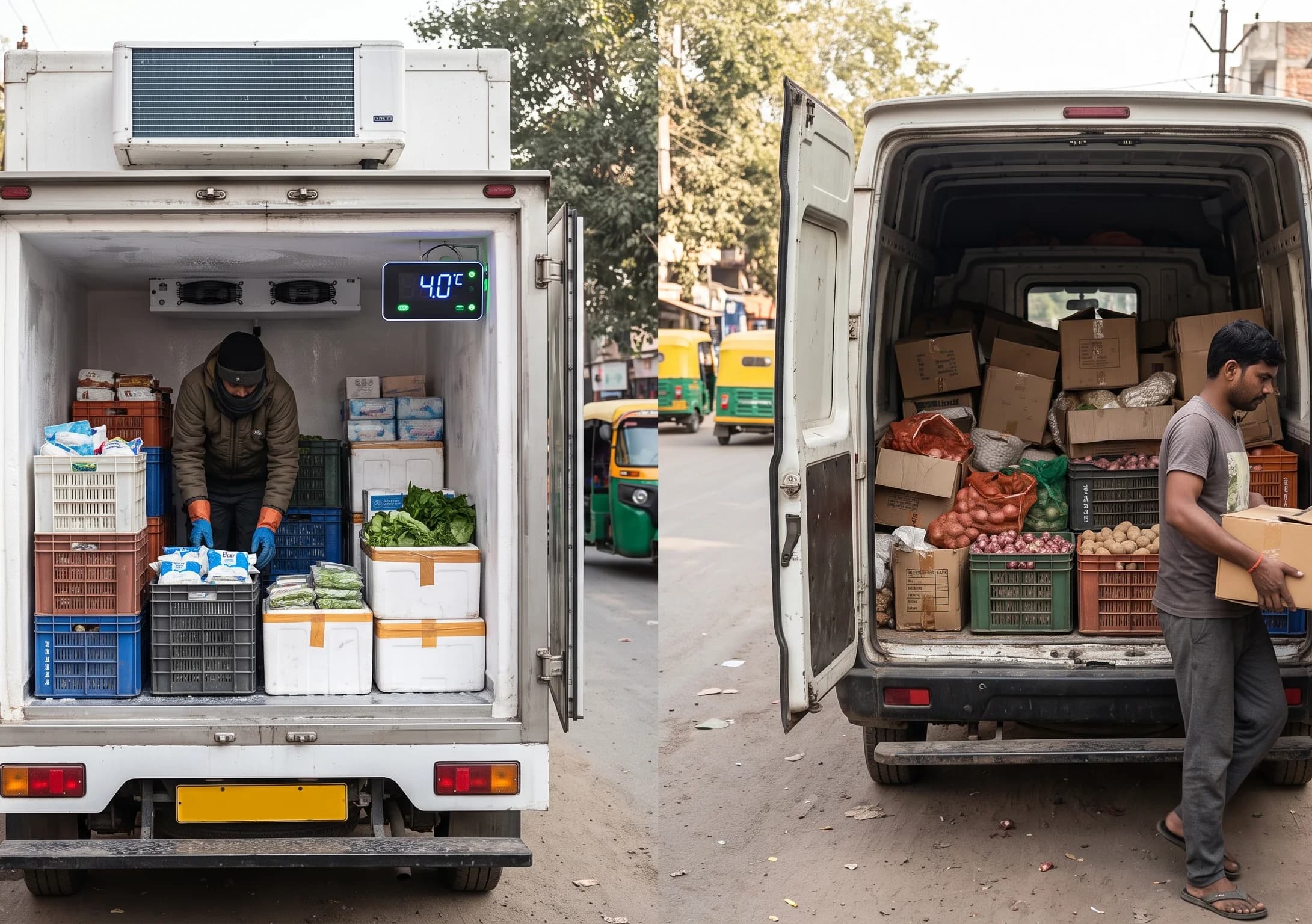
A reefer vehicle is the better choice for transporting food that requires controlled chilled or frozen temperatures, while a normal van is suitable for products that remain stable under ambient conditions. The right option depends on food type, delivery duration, route conditions, temperature requirements and total operating costs. For a closer look at what to weigh, you can read about perishable goods transportation in more detail.
Choosing a reefer vehicle vs normal van food delivery India solution is an important decision for food brands managing quality, distribution and customer expectations. A normal van may work for ambient products, but temperature-sensitive shipments need appropriate refrigeration and monitoring. With JustDeliveries, businesses can explore dedicated and on-demand cold-chain logistics. The difference becomes especially important as delivery networks expand. Brands that prefer outsourcing can also look at a third party logistics company india for wider support.
What Is the Difference Between a Reefer Vehicle and a Normal Van?
A reefer vehicle is fitted with an active refrigeration system that helps maintain a specified temperature inside its cargo compartment. A normal van generally carries goods without active refrigeration.
For food businesses, the distinction affects product quality, handling requirements and delivery planning.
| Factor | Reefer vehicle | Normal van |
| Temperature control | Active refrigeration within equipment limits | No active refrigeration in a standard configuration |
| Suitable products | Chilled and frozen foods requiring temperature control | Ambient-stable packaged foods and dry ingredients |
| Equipment | Refrigeration unit and insulated cargo body | Standard cargo compartment |
| Operating considerations | Refrigeration energy, maintenance and temperature monitoring | Vehicle fuel, maintenance and ordinary cargo handling |
| Best suited for | Temperature-sensitive distribution | Products that do not require refrigerated transit |
An insulated van can slow temperature changes, but insulation alone does not actively cool the cargo. Businesses should confirm the vehicle’s actual capabilities before selecting it.
When evaluating reefer vehicle vs normal van food delivery India requirements, consider the product’s specified transport conditions rather than choosing a vehicle based on price alone.
Why Do Food Businesses Need Reefer Vehicles in India?
Food distribution involves more than moving products from one location to another. Ambient heat, traffic congestion, loading delays, and repeated door openings can affect temperature-sensitive shipments. If you want practical handling tips, this guide on how to transport frozen food is a helpful read.
Protecting perishable products
Dairy products, frozen meals, ice cream, meat and seafood may require specific chilled or frozen conditions. A suitable reefer vehicle helps maintain those conditions during transit when correctly operated.
Managing India’s heat and delivery delays
High outdoor temperatures can make temperature management more challenging. Refrigerated transportation provides active cooling, but its effectiveness depends on equipment capacity, insulation, cargo loading, and operating practices. For frozen shipments in the capital region, frozen food transport delhi is another city to explore.
Supporting growing distribution networks
Food brands supplying restaurants, retail outlets, warehouses and quick-commerce dark stores need consistent replenishment schedules. Temperature-controlled vehicles can support these operations when products require refrigerated handling. For frozen shipments in southern India, frozen food transport bangalore shows how a city-level setup can work.
This is why why use reefer vehicle for perishables India is an important consideration for brands expanding their distribution beyond a single outlet or city.
What Are the Benefits of a Cold Van for Food Delivery?
The main cold van benefits food delivery India businesses should evaluate go beyond keeping products cool.
- Temperature control: Helps maintain product-specific conditions throughout the journey.
- Product quality: Reduces the risk of temperature-related deterioration when combined with proper storage and handling.
- Delivery consistency: Supports scheduled replenishment for restaurants, cloud kitchens, bakeries and retail outlets.
- Operational visibility: Temperature records and vehicle tracking help teams identify delays or deviations.
- Better inventory management: Reliable transport helps businesses coordinate dispatches with receiving schedules and stock requirements.
A reefer vehicle does not automatically guarantee food safety. Products must also be stored, loaded, handled, and delivered according to their specific requirements.
For brands considering reefer vehicle vs normal van food delivery India, the key question is whether the product can safely tolerate the conditions of the planned journey without active refrigeration.
Which Food Products Need Temperature-Controlled Transport?
Not every food product requires a refrigerated vehicle. The correct choice depends on its composition, processing, packaging, storage instructions, and intended use.
Dairy products and beverages
Milk, certain dairy products, and temperature-sensitive beverages may need chilled transportation. Follow the product’s specified temperature range.
Ice cream and frozen foods
Frozen desserts and frozen meals require conditions that preserve their frozen state. Suitable refrigeration equipment and disciplined loading practices are essential. For more on this, see how to transport ice cream without melting india in practice.
Meat, poultry and seafood
These products often require carefully controlled chilled or frozen transport to maintain appropriate food safety conditions.
Bakery products and desserts
Cakes, cream-filled pastries and other refrigerated desserts may need temperature-controlled transport. Shelf-stable bread and dry bakery products may not.
Fresh produce and ready-to-eat foods
Temperature requirements vary considerably between produce types and prepared foods. A product-specific transport plan is more reliable than applying one temperature to every shipment.
A suitable reefer vehicle for food transport India should match the required temperature range, cargo volume and journey duration.
Reefer Vehicle vs Normal Van: Which Is More Cost-Effective?
A normal van generally has fewer refrigeration-related operating requirements. However, the lowest vehicle cost does not always translate into the lowest overall distribution cost.
Compare the total operating cost
Consider these factors before making a decision:
- Vehicle rental or ownership costs.
- Fuel consumption and refrigeration operating requirements.
- Preventive maintenance and potential equipment repairs.
- Cargo value and the consequences of temperature-related losses.
- Delivery frequency, distance and number of stops.
- Monitoring, documentation and service requirements.
For ambient-stable goods, paying for refrigeration may add unnecessary expense. For products requiring chilled or frozen conditions, a normal van may be unsuitable regardless of its lower cost.
Businesses with fluctuating volumes can also compare dedicated vehicles with on-demand transport. Dedicated arrangements may suit recurring daily routes, while per-trip services can help accommodate occasional deliveries or demand peaks. For frozen shipments in western India, frozen food transport mumbai is worth a look.
The right reefer vehicle vs normal van food delivery India decision should account for total distribution costs, product requirements and service reliability, not just the initial vehicle rate.
How Should Food Brands Choose a Temperature-Controlled Vehicle?
Before booking or contracting a vehicle, use this checklist:
- Confirm the temperature requirement. Identify the product’s required chilled or frozen range.
- Assess route duration. Include traffic, waiting time, loading and unloading.
- Match the vehicle to the shipment. Consider cargo dimensions, weight, volume and packaging.
- Check monitoring capabilities. Ask about temperature records, live tracking and alerts.
- Review operating arrangements. Understand vehicle availability, contingency support and delivery service levels.
- Choose the right contract model. Compare dedicated fleet arrangements with on-demand bookings based on delivery frequency.
For a temperature controlled vehicle India food brand requirement, refrigeration capability should be verified against the actual product and operating conditions. A vehicle that works for one chilled product may not be appropriate for a frozen shipment.
How JustDeliveries Supports Modern Food Logistics
As quick commerce expands, food brands must replenish warehouses, fulfilment hubs and dark stores more frequently. Swiggy Instamart, Zepto, Blinkit, Amazon, JioMart and BigBasket operate within this fast-moving ecosystem, where reliable inventory movement and shipment visibility are important.
JustDeliveries supports temperature-controlled logistics for these platforms, handling hub-to-hub transportation and dark store deliveries with real-time tracking and temperature monitoring. This helps coordinate replenishment while maintaining the required transport conditions.
Technology-enabled logistics with the HQ App
The JustDeliveries HQ App gives food and beverage brands a central dashboard to monitor:
- Live vehicle locations.
- Temperature compliance.
- Service-level agreements (SLAs).
- Billing information.
- AI-driven performance insights in real time.
This visibility helps operations teams identify delays, review service performance and make informed decisions across their logistics network.
Mansi Mahansaria, founder of JustDeliveries, brings a food-logistics perspective to the challenge of connecting reliable physical operations with technology-enabled visibility.
Dedicated and on-demand logistics options
JustDeliveries offers different arrangements for different operational needs:
- JD Regular: Dedicated drivers and vehicles on annual contracts for businesses with recurring delivery volumes.
- JD Instant: On-demand, temperature-controlled vehicle bookings on a per-trip basis. Availability depends on the service area; JD Instant currently operates within Mumbai city limits.
- JD Storage: Cold storage, warehousing and inventory management for businesses that need support beyond transportation.
These options allow businesses to evaluate logistics support based on their delivery frequency, storage needs and distribution model.
As Mansi Mahansaria’s food-logistics approach recognises, dependable distribution requires more than a suitable vehicle. It also requires visibility, operational coordination and consistent execution.
Choose the Right Vehicle for Your Food Business
The right delivery vehicle depends on what you transport, how far it travels and the conditions it must maintain. A normal van can be practical for ambient products, while temperature-sensitive food often needs a suitable refrigerated vehicle and reliable monitoring.
Ready to strengthen your food distribution operations? Explore JustDeliveries to discuss dedicated fleet requirements, on-demand refrigerated transportation and integrated cold-chain support for your business.
Frequently Asked Questions
Q1. How does a reefer vehicle differ from a normal van?
A reefer vehicle uses active refrigeration to maintain specified cargo temperatures. A normal van generally transports goods without active cooling and is suitable for products that do not require refrigerated transit.
Q2. Can a normal van deliver perishable food?
Yes, if the product’s requirements and the transport conditions permit it. Food requiring controlled chilled or frozen temperatures generally needs an appropriate temperature-controlled solution.
Q3. Is a reefer vehicle necessary for every food delivery?
No. Ambient-stable products may travel safely in a normal van, while temperature-sensitive products may require refrigeration.
Q4. Will a reefer vehicle prevent food spoilage?
It can help reduce temperature-related deterioration when correctly selected and operated, but it cannot guarantee food safety without appropriate storage, handling and hygiene practices.
Q5. What foods need a refrigerated van in India?
Depending on their specifications, these may include dairy products, meat, seafood, frozen foods, ice cream and refrigerated desserts.
Q6. Why are cold vans useful for quick-commerce deliveries?
They help maintain required temperatures during replenishment trips between distribution hubs, warehouses and dark stores for products that need chilled or frozen handling.
Q7. What should food brands check before booking a reefer vehicle?
Check temperature capability, cargo capacity, journey duration, monitoring, delivery requirements and the provider’s operational support.
Q8. How can JustDeliveries help with temperature-controlled food delivery?
JustDeliveries offers dedicated and on-demand refrigerated transportation, alongside cold storage and inventory management services. Businesses can contact its team to discuss their logistics requirements.