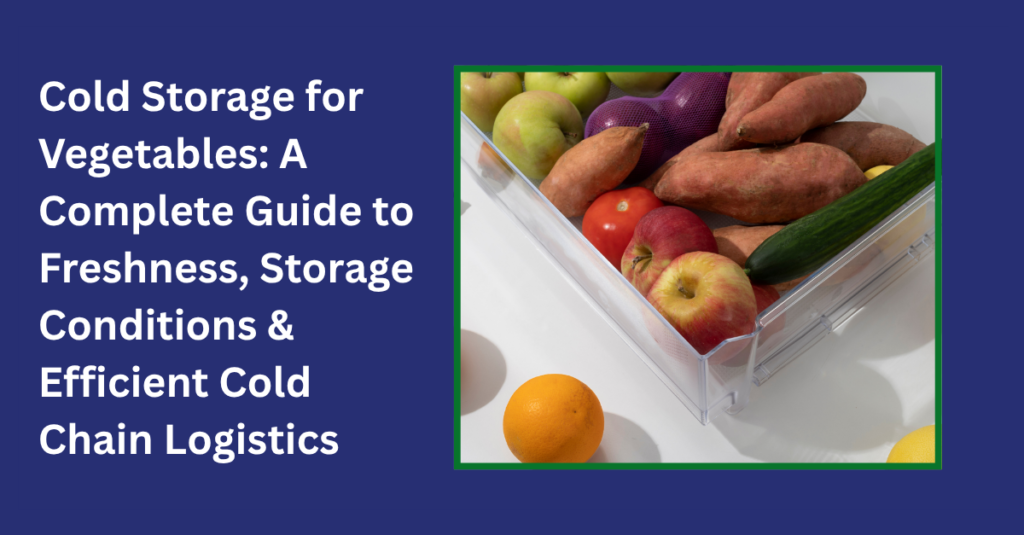
Cold storage for vegetables helps preserve freshness, reduce post-harvest losses, maintain nutritional quality, and extend shelf life by storing produce under controlled temperature and humidity. Combined with a reliable cold chain logistics partner, it ensures vegetables reach retailers, restaurants, and consumers in optimal condition while minimizing spoilage throughout the supply chain.
Fresh vegetables begin losing quality soon after harvest. Cold storage for vegetables is one of the most effective ways to maintain freshness, reduce waste, and support uninterrupted supply. Beyond storage, temperature-controlled transportation is equally important. JustDeliveries helps food businesses maintain an unbroken cold chain with reliable refrigerated logistics solutions across India. This guide, authored by Mansi Mahansaria, explains everything you need to know about vegetable cold storage and efficient cold chain management. Businesses operating in western India can rely on dedicated cold chain logistics mumbai services to keep produce fresh from storage to delivery.
What is Cold Storage for Vegetables?
Cold storage for vegetables refers to storing fresh produce in temperature-controlled environments that slow natural respiration, reduce moisture loss, and delay spoilage. These facilities maintain ideal conditions for different types of vegetables so they remain fresh for longer without compromising quality.
Unlike ordinary warehouses, cold storage facilities continuously monitor temperature, humidity, and airflow to create stable storage conditions. This helps businesses preserve product quality from harvest until distribution.
Why Cold Storage for Vegetables Matters
Investing in cold storage for vegetables offers significant advantages across the food supply chain.
Extends Shelf Life
Proper storage slows the natural ageing process, allowing vegetables to remain market-ready for longer periods.
Minimises Post-Harvest Losses
India experiences considerable post-harvest losses due to improper storage and transportation. Temperature-controlled storage helps reduce unnecessary wastage.
Maintains Freshness and Nutritional Value
Stable storage conditions help preserve texture, colour, and nutritional quality while reducing dehydration.
Improves Inventory Management
Businesses gain greater flexibility in planning procurement, distribution, and seasonal inventory without rushing products to market.
Supports Consistent Supply
Cold storage enables suppliers to maintain availability even when harvesting schedules fluctuate due to weather or seasonal demand.
Cold Storage for Vegetables and Fruits: Can They Be Stored Together?
Many businesses require cold storage for vegetables and fruits, but storing them together requires careful planning.
Although both need controlled temperatures, different commodities have unique storage requirements. Certain fruits release ethylene gas, which accelerates the ripening of nearby vegetables. Produce should therefore be grouped according to compatible storage conditions.
Best practices include:
- Separate ethylene-producing fruits from sensitive vegetables.
- Maintain recommended humidity levels for each commodity.
- Ensure adequate airflow throughout the storage area.
- Rotate inventory using the First In, First Out (FIFO) method.
Proper segregation helps preserve freshness while reducing spoilage.
Ideal Cold Storage Conditions for Vegetables
The effectiveness of cold storage for vegetables depends on maintaining appropriate environmental conditions.
Temperature
Different vegetables require different storage temperatures. Leafy greens generally need lower temperatures than potatoes or onions.
Relative Humidity
Adequate humidity prevents excessive moisture loss and helps vegetables retain their firmness.
Air Circulation
Continuous airflow ensures uniform cooling and prevents temperature variations inside the storage facility.
Pre-Cooling
Removing field heat immediately after harvest significantly improves storage performance and shelf life.
Continuous Monitoring
Digital monitoring systems allow operators to identify temperature fluctuations before they affect product quality.
Types of Cold Storage Systems
Several storage solutions are available depending on business requirements.
- Walk-in cold rooms
- Modular cold storage units
- Multi-commodity cold storage
- Controlled atmosphere storage
- Distribution cold storage facilities
The ideal system depends on storage capacity, product mix, distribution frequency, and operational requirements. Consulting experienced cold storage manufacturers in india can help businesses choose the right system for their specific needs.
Vegetables That Benefit Most from Cold Storage
| Vegetable | Storage Requirement | Benefits |
| Leafy Greens | Low temperature, high humidity | Longer freshness |
| Cabbage | Cool storage | Reduced wilting |
| Carrots | High humidity | Better texture retention |
| Cauliflower | Controlled cooling | Longer shelf life |
| Capsicum | Moderate cooling | Preserves firmness |
| Cucumbers | Controlled humidity | Reduces moisture loss |
| Green Peas | Refrigerated storage | Maintains quality |
| Tomatoes | Carefully managed temperature | Slows ripening |
Vegetable Cold Storage Project Cost: What Influences the Investment?
When evaluating a vegetable cold storage project cost, several factors influence the total investment. Understanding the typical cold storage cost in india can help businesses budget more accurately before starting a project.
Key considerations include:
- Storage capacity
- Refrigeration equipment
- Insulation quality
- Automation systems
- Energy efficiency
- Monitoring technology
- Facility location
- Backup power systems
Operating expenses such as electricity, maintenance, servicing, and labour should also be considered when planning long-term operations. Rather than focusing solely on initial investment, businesses should evaluate overall operational efficiency and lifecycle costs.
Common Challenges in Vegetable Cold Storage
Even modern facilities can encounter operational issues if storage conditions are not managed properly.
Common challenges include:
- Temperature fluctuations
- Moisture loss
- Equipment downtime
- Improper pallet stacking
- Poor airflow
- Power interruptions
- Inadequate monitoring
Regular maintenance, preventive servicing, and continuous monitoring help minimise these risks.
Best Practices for Efficient Vegetable Storage
Businesses can improve storage performance by following proven operational practices.
- Pre-cool vegetables before storage.
- Maintain recommended temperatures consistently.
- Monitor humidity levels regularly.
- Separate incompatible commodities.
- Follow FIFO inventory rotation.
- Train warehouse personnel.
- Inspect refrigeration systems periodically.
- Use digital monitoring tools for better visibility.
Following these practices helps maximise storage efficiency while reducing product losses.
Why Cold Storage Alone Isn’t Enough
While cold storage for vegetables preserves produce inside the warehouse, maintaining temperature during transportation is equally critical. This is especially true for frozen food transportation india networks, where consistent temperatures make the difference between fresh delivery and spoilage.
Every loading, unloading, or transit stage presents a risk of temperature variation. An uninterrupted cold chain ensures vegetables retain their quality until they reach retailers, restaurants, cloud kitchens, or distribution centres.
JustDeliveries specialises in temperature-controlled logistics for the food and beverage industry, helping businesses move perishable products safely across their supply chain. Businesses in the capital region can access dedicated cold chain logistics delhi support for seamless perishable transport.
Its refrigerated fleet supports reliable transportation with real-time temperature monitoring, ensuring products remain within required storage conditions throughout transit. This includes specialised cold chain logistics bangalore services built for the region’s fast-growing food and beverage sector.
For food brands selling through e-commerce and quick commerce platforms, JustDeliveries powers cold-chain logistics for Swiggy Instamart, Zepto, Blinkit, Amazon, JioMart, and BigBasket, efficiently managing hub-to-hub and dark store deliveries with complete temperature control and real-time shipment visibility. This includes dedicated cold chain logistics hyderabad operations supporting dark stores and hub-to-hub deliveries across the city.
Businesses also benefit from the HQ App, a central dashboard that enables food brands to monitor live vehicle locations, temperature compliance, service level agreements (SLAs), billing, and AI-driven performance insights—all in real time. This level of operational visibility helps improve decision-making while maintaining cold chain integrity.
As highlighted by Mansi Mahansaria, an effective cold chain is built not only on quality storage infrastructure but also on dependable transportation that protects freshness from origin to destination.
Conclusion
Maintaining fresh vegetables requires much more than refrigeration alone. Cold storage for vegetables plays a crucial role in reducing waste, preserving quality, and extending shelf life, but transportation completes the cold chain. Businesses that combine efficient storage practices with dependable refrigerated logistics can improve product quality, minimise losses, and deliver consistently fresh produce to customers.
Whether you’re distributing to retailers, restaurants, food processors, or quick commerce hubs, partnering with an experienced cold chain logistics provider makes all the difference. Partnering with reputable cold storage suppliers in india further strengthens this cold chain, ensuring consistent quality from storage to final delivery.
Keep Your Produce Fresh Beyond Storage with JustDeliveries
Freshness shouldn’t stop at the warehouse door. JustDeliveries provides technology-enabled, temperature-controlled logistics solutions designed specifically for the food and beverage industry. From refrigerated transportation and warehousing to real-time tracking, AI-powered operational insights through the HQ App, and reliable deliveries to distribution centres, dark stores, and retail outlets, JustDeliveries helps businesses maintain an uninterrupted cold chain. If you’re looking to protect product quality while improving supply chain efficiency, JustDeliveries is ready to support your growth.
Frequently Asked Questions
Q1. What is cold storage for vegetables?
Cold storage for vegetables is a temperature-controlled facility that helps preserve freshness, extend shelf life, and reduce spoilage by maintaining optimal storage conditions.
Q2. Why is cold storage important for vegetables?
It slows natural deterioration, reduces post-harvest losses, maintains quality, and supports efficient distribution across the supply chain.
Q3. How does cold storage help extend shelf life?
By controlling temperature, humidity, and airflow, cold storage slows respiration and moisture loss, allowing vegetables to remain fresh for longer.
Q4. How is vegetable cold storage project cost determined?
Project costs depend on storage capacity, refrigeration systems, insulation, automation, energy efficiency, monitoring technology, and facility location.
Q5. Can fruits and vegetables be stored together?
Yes, but only when compatible temperature, humidity, and ethylene sensitivity requirements are carefully managed.
Q6. Can cold chain logistics reduce food waste?
Yes. Maintaining consistent temperatures during transportation significantly reduces spoilage and preserves product quality until delivery.
Q7. Is cold storage suitable for all vegetables?
Most vegetables benefit from refrigerated storage, although recommended temperatures and humidity levels vary by commodity.
Q8. Will refrigerated transportation improve product quality?
Yes. Reliable refrigerated transportation prevents temperature fluctuations during transit, helping vegetables arrive fresher and with a longer remaining shelf life.

Mansi Mahansaria
I’m Mansi Mahansaria, CEO and Founder of JustDeliveries, a B2B logistics company specializing in the food and beverage sector. With a background in Chemical Technology (ICT Mumbai), an MBA (FMS Delhi), and experience at IDFC Private Equity and Tata Group, I’ve built a plug-and-play logistics network helping F&B brands scale efficiently. I also share insights on entrepreneurship and logistics at industry and academic events.