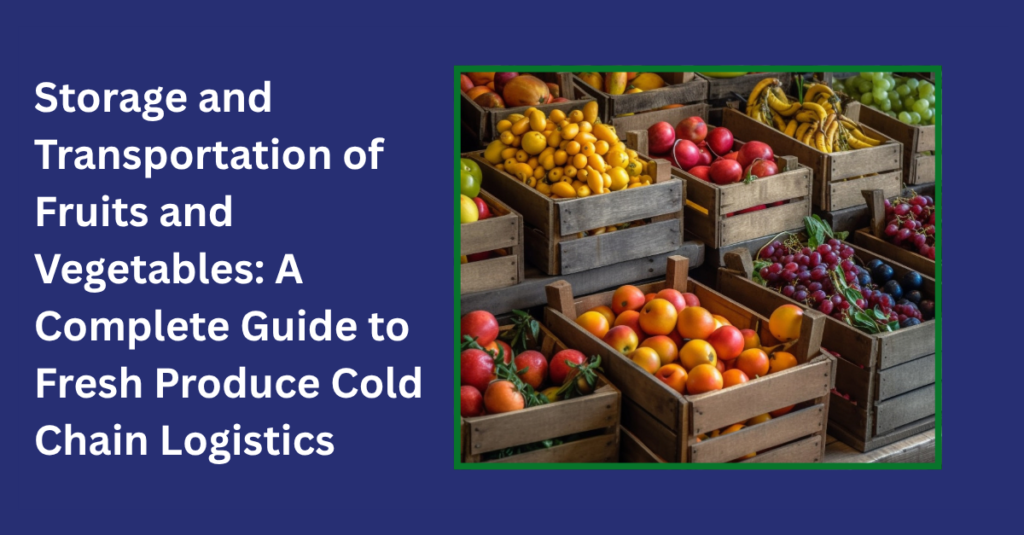
Storage and transportation of fruits and vegetables relies on maintaining the right temperature, humidity, handling practices, and uninterrupted cold chain from harvest to delivery. Proper storage reduces spoilage, preserves freshness, and extends shelf life, while temperature-controlled transportation ensures produce reaches retailers and consumers in the best possible condition.
Fresh produce is highly perishable, making storage and transportation of fruits and vegetables one of the most critical aspects of the food supply chain. From maintaining freshness to reducing post-harvest losses, every stage matters. At JustDeliveries, we help food businesses move temperature-sensitive products safely through reliable cold-chain logistics. These same principles apply broadly across cold food storage practices for other perishable food categories as well. Read on to discover the best practices that keep produce fresher for longer.
Why Proper Storage and Transportation of Fruits and Vegetables Matters
Fresh fruits and vegetables continue to respire even after harvest. Without proper temperature management and handling, they lose moisture, nutritional value, texture, and shelf life much faster.
Effective storage and transportation of fruits and vegetables helps businesses:
- Minimise post-harvest losses
- Preserve freshness and nutritional quality
- Maintain food safety standards
- Reduce product wastage
- Improve customer satisfaction
- Increase profitability across the fresh produce supply chain
According to industry estimates, poor storage and inefficient logistics account for a significant percentage of fresh produce losses worldwide, making cold-chain infrastructure more important than ever. This is equally true for tropical fruits, where effective mango cold storage practices depend on the same discipline to prevent significant post-harvest losses.
Understanding Produce Cold Chain Logistics
Produce cold chain logistics refers to maintaining a continuous temperature-controlled environment throughout the journey of fruits and vegetables—from harvest to the final delivery point.
A typical fresh produce supply chain includes:
- Harvesting
- Pre-cooling
- Sorting and grading
- Cold storage
- Packaging
- Refrigerated transportation
- Distribution centres
- Retail outlets or food businesses
Any break in the cold chain can accelerate spoilage, increase microbial growth, and reduce product quality. Consistent monitoring throughout transit ensures produce remains fresh and market-ready.
Best Practices for Storage of Fruits and Vegetables
Proper storage is the foundation of successful storage and transportation of fruits and vegetables. Every commodity has unique storage requirements, making temperature and humidity management essential.
Maintain Commodity-Specific Temperatures
Different fruits and vegetables require different storage temperatures. Leafy greens thrive in near-freezing conditions, while tropical fruits such as bananas can suffer chilling injuries if stored too cold.
Control Relative Humidity
High humidity prevents moisture loss in vegetables, while carefully controlled humidity levels help maintain texture and appearance in many fruits.
Ensure Proper Air Circulation
Uniform airflow prevents hot spots inside cold rooms and allows refrigeration systems to maintain consistent temperatures throughout stored inventory.
Separate Ethylene Producers
Fruits such as apples, bananas, and mangoes release ethylene gas, which speeds up ripening. Sensitive vegetables should be stored separately to prevent premature spoilage. This same sensitivity applies to dairy products, where reliable cold storage for milk India operations require careful separation from strong-smelling or ethylene-emitting goods during storage and transit.
Monitor Conditions Continuously
Temperature and humidity should never rely on manual checks alone. Digital monitoring systems provide real-time visibility and immediate alerts if conditions deviate from safe limits.
Fruits and Vegetables Transport Best Practices
Transportation plays an equally important role in preserving quality. Following fruits and vegetables transport best practices helps maintain freshness throughout transit.
Pre-Cool Before Loading
Produce should be cooled immediately after harvest before entering refrigerated vehicles. Removing field heat significantly slows respiration.
Use Temperature-Controlled Vehicles
Refrigerated vehicles maintain stable conditions throughout transit, protecting fresh produce from temperature fluctuations. The same reliability defines strong frozen food transportation India networks, where consistent transit temperatures are just as critical to protecting product quality.
Load Correctly
Proper stacking allows air to circulate freely. Overloading or blocking airflow can create uneven cooling and accelerate spoilage.
Minimise Transit Time
Faster deliveries reduce exposure to changing environmental conditions and improve shelf life at destination.
Avoid Excessive Handling
Every transfer increases the risk of bruising and contamination. Efficient loading and unloading processes help preserve product quality.
Common Challenges in the Fresh Produce Supply Chain
Managing the fresh produce supply chain comes with several operational challenges.
Some of the most common include:
- Temperature fluctuations during transportation
- Delays caused by traffic or route disruptions
- Improper packaging
- Inadequate cold storage capacity
- Seasonal demand spikes
- Manual tracking systems
- Poor visibility across logistics operations
Businesses that invest in technology-enabled cold-chain logistics are better positioned to overcome these challenges while maintaining product quality. In major metro markets, dedicated frozen food transport Mumbai services reflect how this technology-driven approach scales across high-volume distribution networks.
Technology is Transforming Produce Cold Chain Logistics
Modern cold-chain logistics is powered by data, automation, and real-time visibility.
Technologies improving produce cold chain logistics include:
- IoT-based temperature sensors
- GPS-enabled vehicle tracking
- AI-powered route optimisation
- Warehouse Management Systems (WMS)
- Digital proof of delivery
- Live shipment monitoring
At JustDeliveries, technology is central to operational excellence. The HQ App provides food and beverage brands with a central dashboard to monitor live vehicle locations, temperature compliance, service-level agreements (SLAs), billing, and AI-driven performance insights—all in real time. This level of visibility helps businesses make faster decisions and maintain complete control over temperature-sensitive shipments.
As highlighted by Mansi Mahansaria, efficient cold-chain operations increasingly depend on data-driven monitoring alongside physical infrastructure to minimise losses and improve supply chain efficiency.
Temperature Guide for Common Produce
Although storage requirements vary by commodity, the following general guidelines are widely followed:
| Produce | Ideal Temperature | Humidity |
| Leafy Greens | 0–2°C | High |
| Apples | 0–4°C | High |
| Grapes | 0–1°C | High |
| Carrots | 0–2°C | High |
| Tomatoes | 12–15°C | Moderate |
| Bananas | 13–15°C | Moderate |
Following these recommendations improves the overall storage and transportation of fruits and vegetables, helping maintain freshness throughout distribution. In high-density regions, dependable frozen food transport Delhi services illustrate how this same discipline supports rapid, reliable replenishment cycles.
Choosing the Right Cold Chain Logistics Partner
Selecting the right logistics partner goes beyond refrigerated vehicles.
Businesses should evaluate:
- Temperature-controlled transportation
- Cold storage capabilities
- Real-time shipment tracking
- Food-grade handling processes
- Regulatory compliance
- Nationwide operational scalability
- Technology-enabled visibility
- Dedicated customer support
A reliable logistics partner becomes an extension of your supply chain rather than simply a transportation provider.
How JustDeliveries Supports the Fresh Produce Supply Chain
As quick commerce continues to reshape food retail, fresh produce businesses require faster, more reliable cold-chain logistics than ever before.
JustDeliveries powers temperature-controlled logistics for leading quick commerce platforms including Swiggy Instamart, Zepto, Blinkit, Amazon, JioMart, and BigBasket, managing hub-to-hub movements and dark store deliveries with real-time tracking and strict temperature control. This enables food businesses to maintain freshness while meeting increasingly shorter delivery timelines.
Beyond transportation, JustDeliveries combines refrigerated vehicles, cold storage, technology-enabled monitoring, and operational expertise into one integrated logistics solution built specifically for the food industry. In southern markets, established frozen food transport Bangalore services show how this integrated model scales to meet growing regional demand.
The company’s digital HQ App gives businesses complete visibility over vehicle movement, compliance metrics, billing, SLAs, and operational performance, helping teams proactively manage cold-chain operations.
As Mansi Mahansaria frequently emphasises, resilient cold chains depend on both disciplined execution and intelligent technology that provides complete transparency across every stage of delivery.
Conclusion
The storage and transportation of fruits and vegetables is far more than moving produce from one location to another. It requires careful temperature management, proper storage infrastructure, efficient handling, and continuous monitoring throughout the journey.
Businesses that invest in robust produce cold chain logistics, adopt proven fruits and vegetables transport best practices, and strengthen every stage of the fresh produce supply chain can significantly reduce waste, improve food safety, extend shelf life, and deliver consistently high-quality products to customers.
Keep Your Fresh Produce Moving with Confidence
Fresh produce deserves a cold chain that works as hard as you do. Whether you’re supplying retailers, quick commerce platforms, distributors, cloud kitchens, or foodservice businesses, JustDeliveries provides dependable temperature-controlled transportation, cold storage, real-time visibility, and technology-driven logistics solutions tailored for the food industry. Partner with JustDeliveries to strengthen your fresh produce supply chain, minimise wastage, and deliver freshness at every stage.
Frequently Asked Questions
Q1. How do fruits and vegetables stay fresh during transportation?
They remain fresh through refrigerated transportation, proper humidity control, careful handling, and continuous temperature monitoring.
Q2. How does produce cold chain logistics reduce food waste?
Maintaining uninterrupted cold-chain conditions slows spoilage, preserves quality, and reduces losses throughout distribution.
Q3. Can fruits and vegetables be transported without refrigeration?
Some produce can tolerate short journeys without refrigeration, but most fresh fruits and vegetables benefit from temperature-controlled transport to maintain quality.
Q4. Can technology improve the fresh produce supply chain?
Yes. Real-time tracking, IoT sensors, AI-powered analytics, and digital monitoring improve visibility, reduce delays, and maintain product integrity.
Q5. Is temperature monitoring important during transportation?
Yes. Continuous monitoring ensures produce remains within safe temperature ranges and helps prevent spoilage caused by unexpected fluctuations.
Q6. Will proper storage increase the shelf life of fruits and vegetables?
Yes. Maintaining the right temperature, humidity, and ventilation significantly extends shelf life and preserves freshness.
Q7. What are the biggest challenges in the storage and transportation of fruits and vegetables?
Temperature fluctuations, poor handling, inadequate packaging, delayed transportation, and breaks in the cold chain are among the most common challenges.
Q8. Why is choosing the right logistics partner important for fresh produce?
An experienced cold-chain logistics partner helps maintain product quality, reduce losses, improve delivery reliability, and provide visibility across the entire supply chain.

Mansi Mahansaria
I’m Mansi Mahansaria, CEO and Founder of JustDeliveries, a B2B logistics company specializing in the food and beverage sector. With a background in Chemical Technology (ICT Mumbai), an MBA (FMS Delhi), and experience at IDFC Private Equity and Tata Group, I’ve built a plug-and-play logistics network helping F&B brands scale efficiently. I also share insights on entrepreneurship and logistics at industry and academic events.