IQF technology frozen food industry applications enable individual food pieces to be rapidly frozen, helping preserve quality, texture, appearance, and portion flexibility. As India’s demand for frozen, ready-to-cook, and food-service products grows, IQF adoption is becoming more relevant, while dependable cold-chain logistics remains essential for protecting products after processing.
IQF technology frozen food industry growth are closely connected to India’s changing food habits, expanding food processing sector, and demand for convenient products. Individual Quick Freezing helps food businesses preserve products piece by piece, but processing is only the beginning. From cold storage to transportation, every stage matters, and that is where the right logistics partner can make a difference.
What Is IQF Technology?
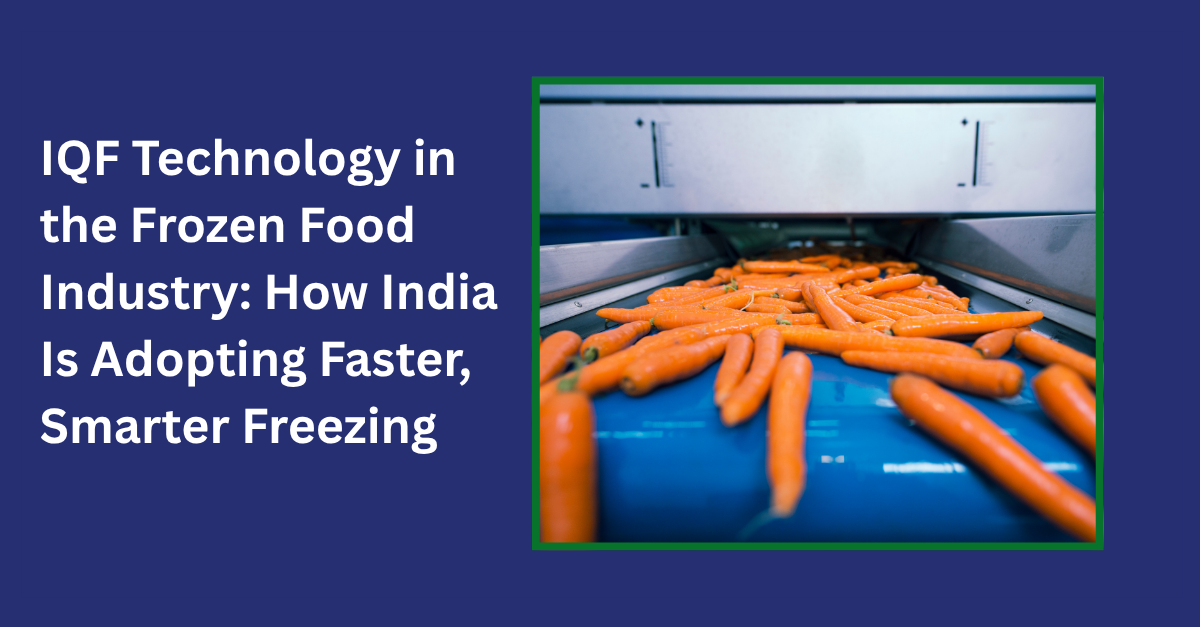
Individual Quick Freezing, commonly called IQF, is a freezing method in which individual pieces of food are frozen rapidly rather than being frozen together as one solid block. Fruits, vegetables, seafood, meat, poultry, and ready-to-cook foods can be processed using IQF, depending on their characteristics and processing requirements.
The main idea is simple: freeze products quickly and separately so they remain individually usable after freezing. This can make it easier for businesses and consumers to take only the quantity they need without thawing an entire batch.
Unlike conventional block freezing, IQF is particularly useful where portion control, product separation, and convenience are important. For food manufacturers, this can support more flexible inventory handling and product applications across retail and food service.
How Does IQF Technology Work?
The IQF process generally involves several carefully controlled stages:
1. Product Preparation
Food is sorted, cleaned, and prepared according to the product. Fruits and vegetables may be cut or blanched where required, while meat and seafood undergo product-specific preparation.
2. Rapid Freezing
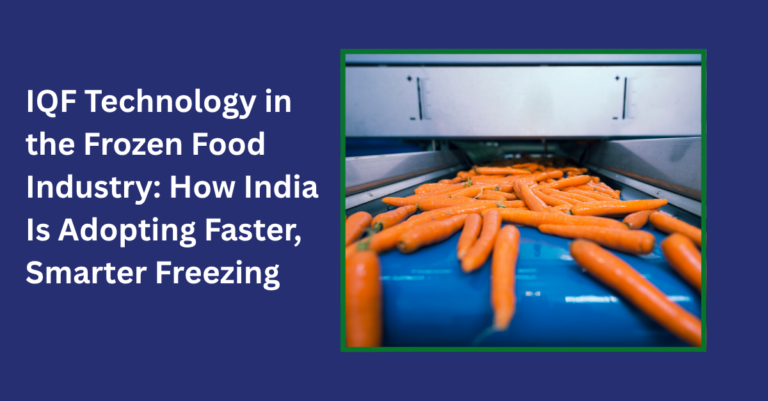
Prepared food enters an IQF freezer where controlled cold air or another freezing mechanism rapidly lowers its temperature. The speed of freezing is important because smaller ice crystals can help minimise damage to product structure.
3. Individual Separation
Instead of freezing into one large mass, individual pieces remain separated. This is one of the defining characteristics of IQF and contributes to easier portioning and handling.
4. Packaging and Storage
Once frozen, products are packaged and moved into suitable frozen storage. Consistent temperature management is important because freezing alone does not guarantee quality throughout the supply chain.
5. Transportation
Frozen products then need temperature-controlled transportation to reach distribution centres, stores, restaurants, QSRs, or other destinations. This final stage is where processing quality meets logistics execution.
What Are the Main IQF Processing Benefits?
The growing interest in IQF technology frozen food industry applications comes from several practical advantages.
Better Product Quality
Rapid individual freezing can help preserve the product’s texture, appearance and overall quality compared with slower freezing approaches. The exact outcome depends on the food, preparation method and freezing conditions.
Portion Control
Because individual pieces remain separate, businesses can use the required quantity without necessarily defrosting the entire batch. This is particularly useful for food-service kitchens and prepared-food manufacturers.
Convenience
IQF products are easy to portion, store and use. This suits the growing demand for convenient frozen ingredients, ready-to-cook foods and food-service products.
Reduced Product Waste
Individual portions can help businesses manage inventory more efficiently and use products according to demand. For seasonal produce, freezing can also create opportunities to make products available beyond their harvest period.
Product Versatility
IQF processing can be applied to a broad range of foods, including vegetables, fruits, seafood, meat, poultry and selected ready-to-eat or ready-to-cook products.
Why Is IQF Adoption Growing in India?
IQF adoption India is being shaped by several changes across the food ecosystem.
Urban consumers increasingly value convenience, while restaurants, QSRs, cloud kitchens and food brands need ingredients that offer consistency and operational efficiency. At the same time, food processors are looking for better ways to add value to agricultural and perishable products.
The broader IQF technology frozen food industry ecosystem also benefits from the growth of modern retail, organised food service and frozen product distribution.
For manufacturers, the opportunity is not simply about freezing food. It is about creating products that can be stored, transported, portioned, and prepared efficiently across a wider distribution network.
Frozen Food Industry Trends Shaping India
Several frozen food industry trends are influencing how businesses approach processing and distribution.
Growth of Ready-to-Cook and Ready-to-Eat Foods
Consumers increasingly seek convenient meal solutions. Frozen snacks, vegetables, seafood, meat products, and prepared foods can fit naturally into this demand.
Expansion of QSRs and Cloud Kitchens
Food-service businesses need predictable ingredients and reliable replenishment. Frozen products can support standardised preparation and inventory planning.
Increasing Demand for Frozen Fruits and Vegetables
IQF can help processors add value to produce and make products available beyond seasonal harvest periods.
Technology-Enabled Supply Chains
Visibility is becoming increasingly important. Tracking, temperature monitoring, digital reporting, and centralised logistics management can help businesses understand what is happening to shipments while they are in transit.
Greater Focus on Food Safety
Food businesses are paying closer attention to handling, storage, transportation and documentation. A frozen product needs a controlled journey, not simply a low temperature at the processing plant.
Which Foods Can Be Processed Using IQF?
The applications of IQF technology frozen food industry solutions extend across several categories.
- Fruits and vegetables: Peas, corn, berries, mango pieces, mixed vegetables, and other suitable produce.
- Seafood: Fish, shrimp, and other seafood products can be individually frozen according to product and processing requirements.
- Meat and poultry: Certain cuts and prepared products can be processed using IQF systems.
- Ready-to-cook foods: Frozen snacks, ingredients, and other prepared products can benefit from individual freezing.
The correct freezing method depends on the product’s size, composition, moisture content, preparation, and intended application.
IQF vs Block Freezing vs Blast Freezing
| Factor | IQF | Block Freezing | Blast Freezing |
| Individual pieces | Yes | Usually no | Product dependent |
| Portion control | High | Limited | Moderate |
| Product separation | High | Low | Depends on product |
| Convenience | High | Moderate | Moderate |
| Common applications | Fruits, vegetables, seafood, prepared foods | Bulk products | Various food products |
The key distinction is that IQF focuses on individually freezing pieces, whereas block freezing generally creates a frozen mass. Blast freezing describes a rapid freezing approach that can be used across different food formats.
Why Cold Chain Logistics Matters After IQF Processing
This is an important part of the IQF technology frozen food industry journey that businesses sometimes overlook.
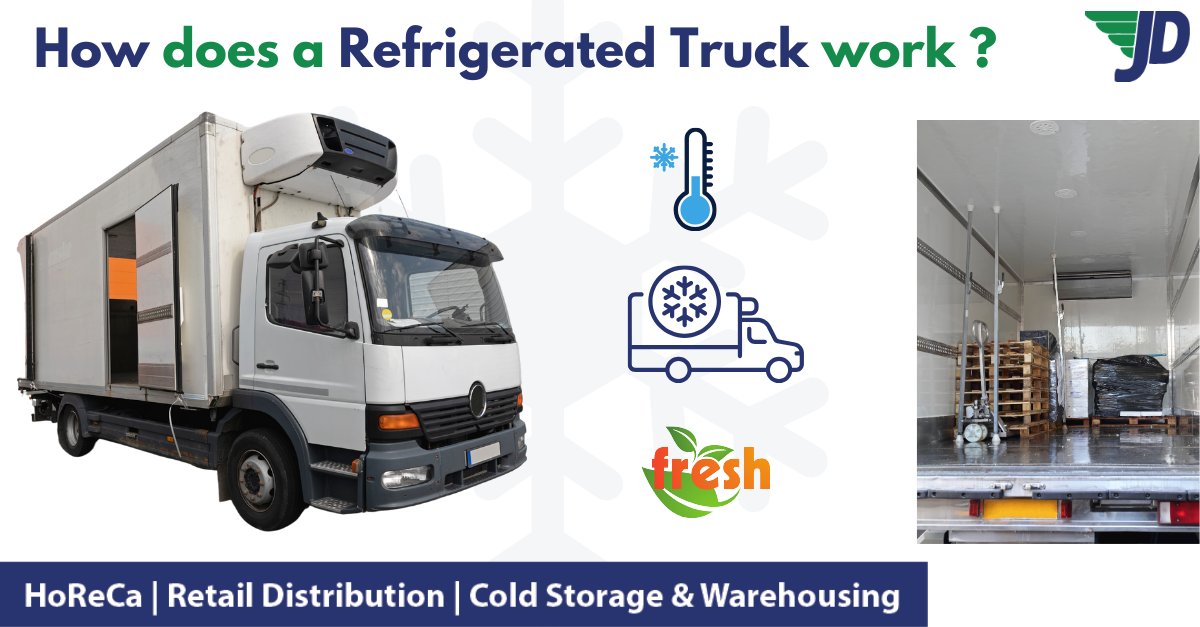
A product can leave an IQF freezer in excellent condition, but poor storage or transportation practices can undermine that quality. Frozen food therefore needs a connected cold chain covering storage, loading, transportation, and delivery.
JustDeliveries is focused specifically on B2B logistics for the F&B industry and provides temperature-controlled transportation, frozen-food transportation, cold storage, warehousing, intercity logistics and 3PL services. Its technology platform also provides real-time tracking, temperature monitoring, proof of delivery, and analytics.
For a frozen-food business, this means logistics should be treated as part of product quality rather than as a separate operational task.
How Can Businesses Build a Reliable IQF Supply Chain?
A practical approach includes:
- Standardise processing: Establish appropriate preparation and freezing procedures for each product.
- Plan frozen storage: Ensure adequate temperature-controlled storage between processing and dispatch.
- Use suitable transportation: Select vehicles designed for frozen or temperature-sensitive products.
- Monitor shipments: Use live tracking and temperature visibility wherever possible.
- Optimise delivery routes: Reduce unnecessary delays and handling points.
- Plan reverse logistics: Build processes for returned or expired material.
- Measure performance: Track delivery timelines, temperature compliance, wastage, and logistics costs.
JustDeliveries states that its logistics operations include live tracking, temperature monitoring, a control tower, cold storage, warehousing, 3PL, and intercity logistics. It also supports reverse logistics and multi-point deliveries for relevant F&B operations.
How JustDeliveries Supports Frozen Food Businesses
For brands scaling frozen products, logistics can become complicated as the number of outlets, distribution points, and delivery routes increases.
JustDeliveries provides specialised frozen-food transportation designed to maintain appropriate temperatures during movement and focuses on timely delivery. Its broader F&B logistics offering covers restaurants, QSRs, cloud kitchens, food brands and distributors.
The company’s technology-led model includes shipment visibility and temperature monitoring, while its cold storage and warehousing capabilities can support businesses that need more than transportation alone.
According to JustDeliveries, its operations also include dedicated vehicles and drivers for contracted clients, backup support, digital proof of delivery, and real-time shipment visibility.
Expert Perspective
Mansi Mahansaria, author at JustDeliveries, brings an F&B logistics perspective to the discussion around temperature-sensitive supply chains. The practical takeaway is straightforward: investing in modern food processing works best when storage and transportation are designed to protect that investment.
Conclusion
The future of India’s frozen-food market will not be shaped by processing technology alone. IQF can help businesses create convenient, individually frozen products, but those products still need a dependable journey from freezer to final destination.
As frozen food brands expand into more cities, outlets, and distribution channels, cold-chain logistics becomes a strategic part of maintaining product quality and meeting customer expectations.
Mansi Mahansaria of JustDeliveries highlights the importance of viewing logistics as an enabler of F&B growth rather than simply a delivery function.
Keep Your Frozen Products Protected From Processing to Delivery
If your business is expanding its frozen-food operations, the next step is to build a logistics network that can support that growth. JustDeliveries offers B2B F&B logistics covering frozen-food transportation, cold storage, warehousing, intercity logistics, 3PL, live tracking, and temperature monitoring.
Ready to make your cold chain more reliable? Explore JustDeliveries and discuss your F&B logistics requirements with the team.
FAQsĀ Ā
Q1. How does IQF technology work?
IQF rapidly freezes individual pieces of food separately instead of freezing them into one block. This helps maintain product separation and can support quality, portion control, and convenient handling.
Q2. Can IQF be used for fruits and vegetables?
Yes. IQF is widely suited to many fruits and vegetables, provided the product and processing conditions are appropriate. Preparation, moisture content, size, and freezing parameters influence the final result.
Q3. Is IQF better than conventional freezing?
IQF can offer advantages such as individual piece separation, portion flexibility, and convenience. However, the best freezing method depends on the food product, processing objective, equipment, and required storage conditions.
Q4. Will IQF increase the shelf life of frozen food?
IQF can help preserve food for extended frozen storage when the product is properly processed, packaged, and maintained under suitable temperature conditions. Shelf life varies by product and storage practice.
Q5. What are the main IQF processing benefits?
Key benefits include individual piece separation, portion control, convenience, quality preservation, and flexible handling. The actual benefits depend on the food type, freezing process, and downstream cold-chain management.
Q6. Why is cold-chain logistics important for IQF products?
Cold-chain logistics helps maintain the required frozen conditions after processing. Temperature-controlled storage and transportation reduce the risk of quality deterioration during movement from processing facilities to customers.
Q7. How can businesses transport IQF frozen food?
Businesses should use appropriate temperature-controlled transportation and maintain consistent handling from storage through delivery. Shipment visibility and temperature monitoring can also improve control over the frozen supply chain.
Q8. What is the future of IQF adoption in India?
IQF adoption India is likely to remain relevant as food processing, convenience foods, organised food service and frozen-product distribution continue developing. Its growth will also depend on reliable cold storage and transportation infrastructure.

Mansi Mahansaria
Iām Mansi Mahansaria, CEO and Founder of JustDeliveries, a B2B logistics company specializing in the food and beverage sector. With a background in Chemical Technology (ICT Mumbai), an MBA (FMS Delhi), and experience at IDFC Private Equity and Tata Group, Iāve built a plug-and-play logistics network helping F&B brands scale efficiently. I also share insights on entrepreneurship and logistics at industry and academic events.